Onyx Stone
All About Onyx
Do not confuse onyx with marble; they are two entirely different stones. In brief:
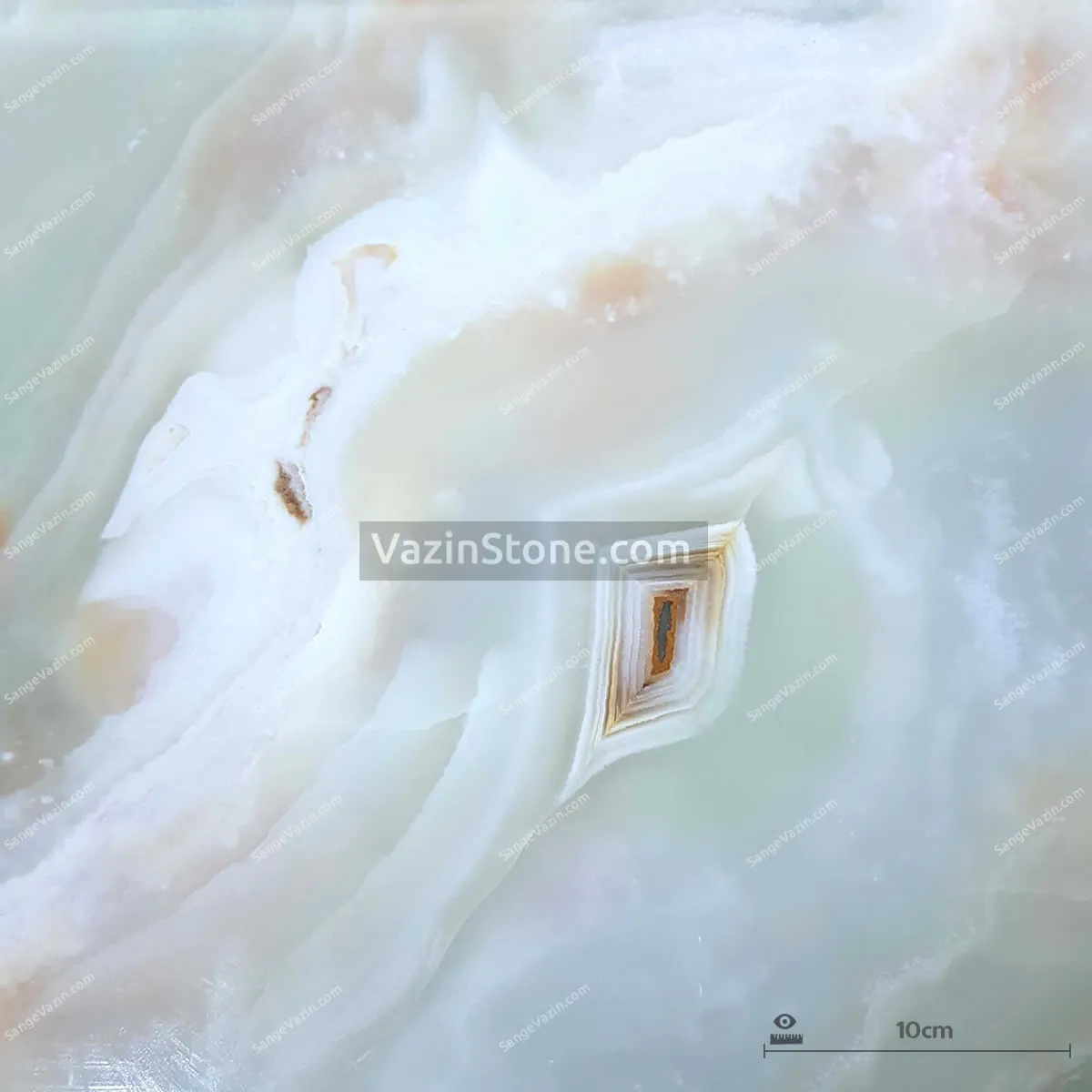
- Onyx has a transparent crystalline structure and a backlit quality.
- This stone is available in a variety of colors, including white, cream, blue, light green, and brown.
- It is one of the most expensive types of stone.
- It is commonly used in religious spaces because of the natural energy and spiritual essence inherent in it, and in luxury buildings as wall slabs.
Onyx is mostly used in slab form in spaces such as lobbies, TV walls, kitchen countertops, and tabletops, and it is also used in the production of flower pots, stone dishes, and luxury accessories. The prices of different types of onyx can be seen in the product list below.
Onyx Structure
What Type of Stone is Onyx? Onyx is a metamorphic stone formed from limestone under heat and pressure, whose main mineral is the most stable form of calcium carbonate. This mineral occurs as large, distinct crystals or as granular masses, with its most notable feature being its translucency due to high purity and clarity (unlike marble). For this reason, onyx is more expensive than other stones and is highly valued for its beauty, polishability, and exceptional translucence.
Price Of Onyx in 2026
The price range of Onyx stone in 2026, depending on the quarry and the stone’s grade and pattern, can vary from approximately $50 to $300 per square meter. The factors affecting the price of Onyx stone are examined below:
1/Impact Of Onyx Color & Pattern On Price
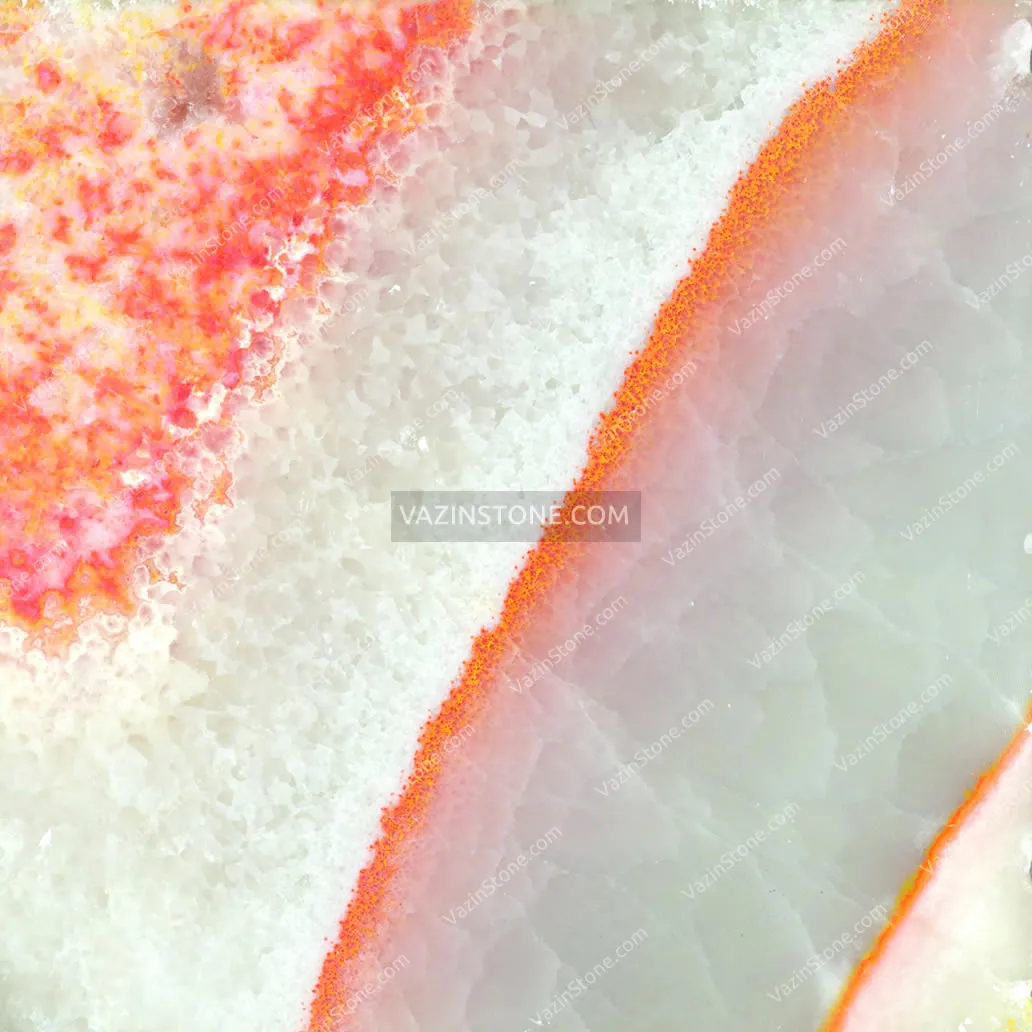
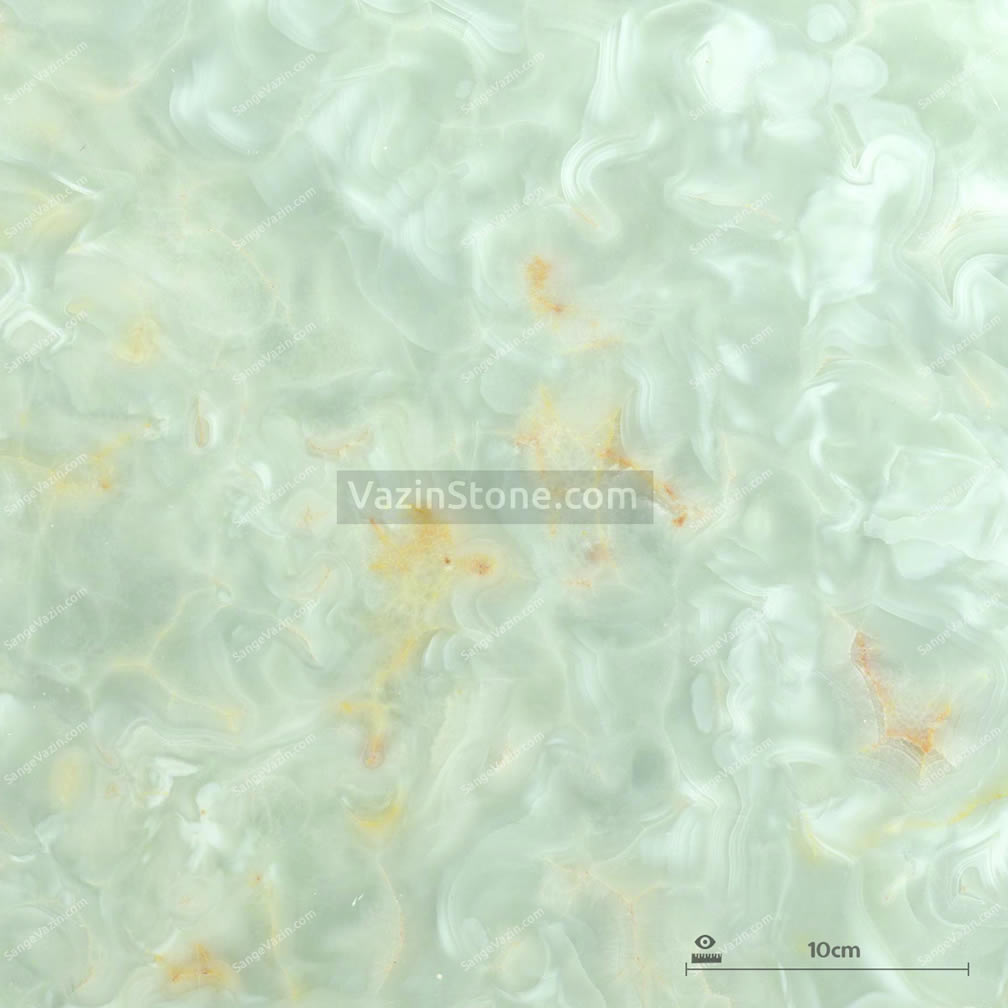
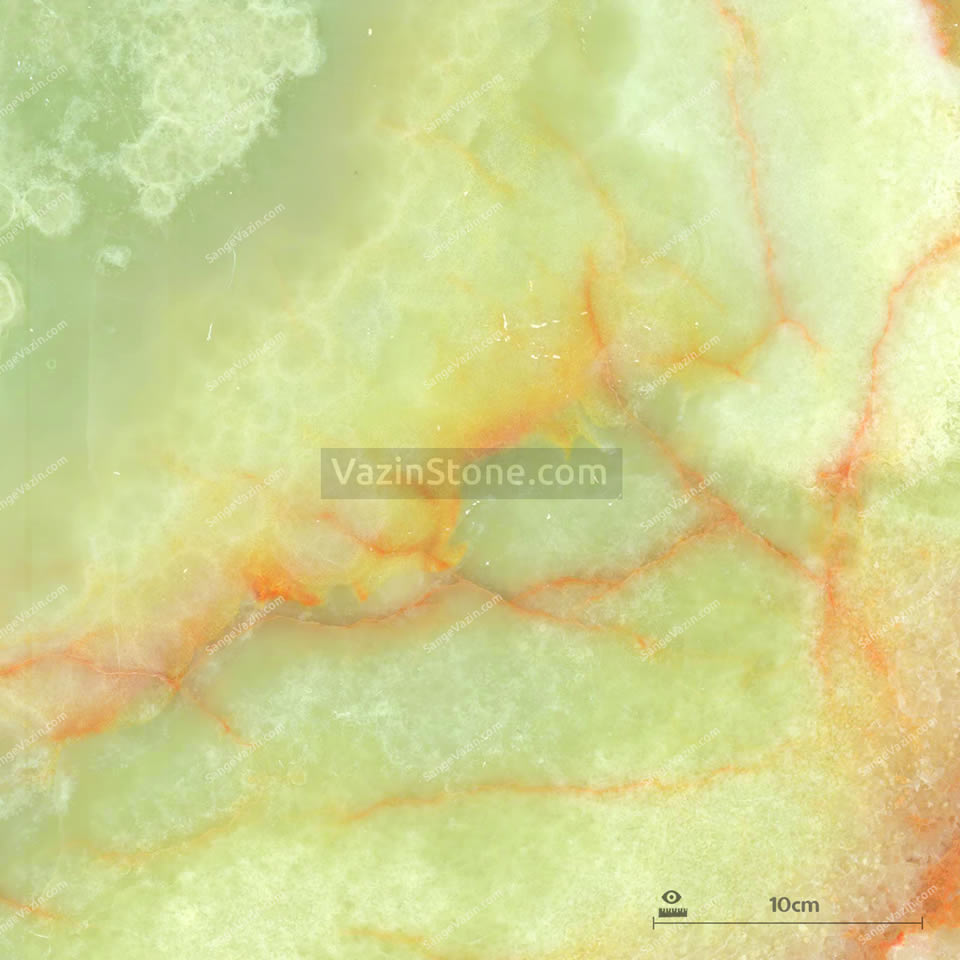
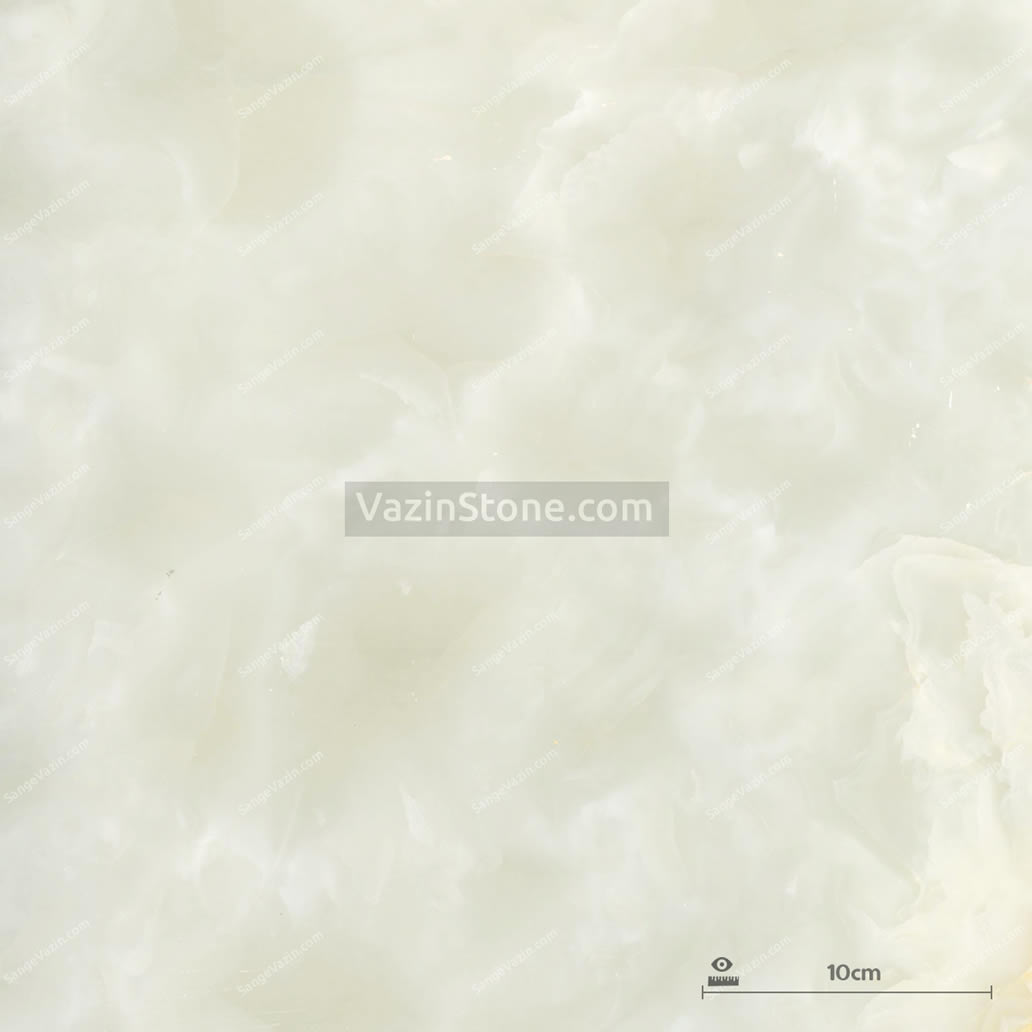
As one of the most exclusive and luxurious building stones, the value of onyx increases as its pattern becomes more unique and its veining more subtle or minimal. In some cases, perfectly uniform slabs free from nodules, halos, or visible veins (commonly referred to as “pure”) are priced two to three times higher. Moreover, the ability to process the stone in book-matched or four-matched slabs significantly enhances its overall value.
Additionally, since this stone is mostly processed in slab form, the ability to produce book-matched or four-matched slabs further increases its price.
2/ Impact of Surface Finishing on Price
The final price of onyx increases with the quality of its processing. Processing refers to all techniques and procedures used to enhance the stone’s aesthetic appeal and structural durability, including resin or epoxy application, precision cutting, accurate squaring, and high-quality grinding and polishing (surface finishing).
3/ Effect Of Size & Thickness On Onyx Price
The larger the dimensions and the greater the thickness, the higher the price. As this stone is mostly produced in slab form, bigger sizes require more precision and higher processing costs.
Onyx Ordering & Purchasing Process
1/ Determining the Required Area: Begin by consulting Vazin Stone experts or coordinating with your contractor to accurately calculate the project’s total area and the exact quantity of stone needed.
2/ Selecting the Type of Onyx Stone: Based on factors such as color, pattern, dimensions, quality, and price (e.g., slab or tile), choose your desired sample.
3/ Submitting the Order and Receiving a Proforma Invoice: Once you have finalized your stone selection, place your order and receive a proforma invoice outlining the price and purchase terms for the onyx.
4/ Order Confirmation and Initial Payment: After reviewing and approving the proforma invoice, full payment of the order amount is made. At this stage, the preparation and delivery timeline of the product will also be determined.
Advantages Of Onyx
- Unique and Distinctive Beauty: Onyx, with its transparent crystals and vibrant textures, possesses an artistic and soulful appearance unmatched by any other stone. Each piece is a naturally unique masterpiece.
- Backlit Quality: One of the unique features of onyx is its semi-translucency, allowing light to pass through the stone. This characteristic creates a luxurious and visually striking effect, especially in interior designs and lighting applications.
- Exceptional Natural Colors: Onyx features a wide range of natural warm and cool tones, formed naturally within the earth, adding unparalleled beauty to any space.
Disadvantages Of Onyx
- High Cost: Due to its rarity, unique structure, and complex processing, onyx is significantly more expensive than other stones, such as marble.
- Low Abrasion Resistance: Onyx is soft and fragile, making it unsuitable for flooring, kitchen countertops, or dining table surfaces, as it can scratch or dull quickly.
- High Stainability: Onyx easily absorbs stains and is difficult to clean; acidic substances such as lemon and vinegar can cause damage.
- Unsuitable for Outdoor Use: Sunlight and acidic rain can dull and discolor onyx, although it is still used in luxurious memorials.
- Size Limitations: Onyx is typically available only in slab form; producing it in other sizes is more difficult and costly.
- Pattern Variation: Onyx features veins and patterns that can be irregular and inconsistent with the stone’s base color.
Onyx vs. Marble Stone: Scientific Differences
Onyx is a premium natural stone distinguished by its translucent structure, allowing light to pass through its crystalline texture. Due to its relatively low durability, it is primarily used in low-traffic interior applications such as decorative wall panels, countertops, and architectural accent elements.
Marble features a more matte surface and higher durability, making it a suitable choice for flooring, wall cladding stones, facades, and stair applications.
In the market, Onyx and Marble are often confused with one another; however, from a scientific and international geological classification standpoint, these two stones differ significantly in terms of composition, structure, and physical characteristics.
| Name | Description |
| Onyx or Onyx Marble | A semi-transparent, high-value stone, primarily used for decorative applications and architectural facades. |
| Marble | A limestone, non-transparent stone, commonly used for interior flooring and wall cladding applications. |
Onyx Stone Application
Onyx as Flooring and Wall Stone
Onyx is among the most prestigious and costly decorative and building stones globally, found in a wide range of natural colors and patterns within quarries. Compared to other stones such as marble, travertine, granite, and crystal marble, it ranks lowest in practical applications for wall cladding, flooring, and stairs due to its lower durability and high cost.
Onyx stone, prized for its unique beauty and high quality, is typically cut into large single slabs, with the majority exported to other countries.
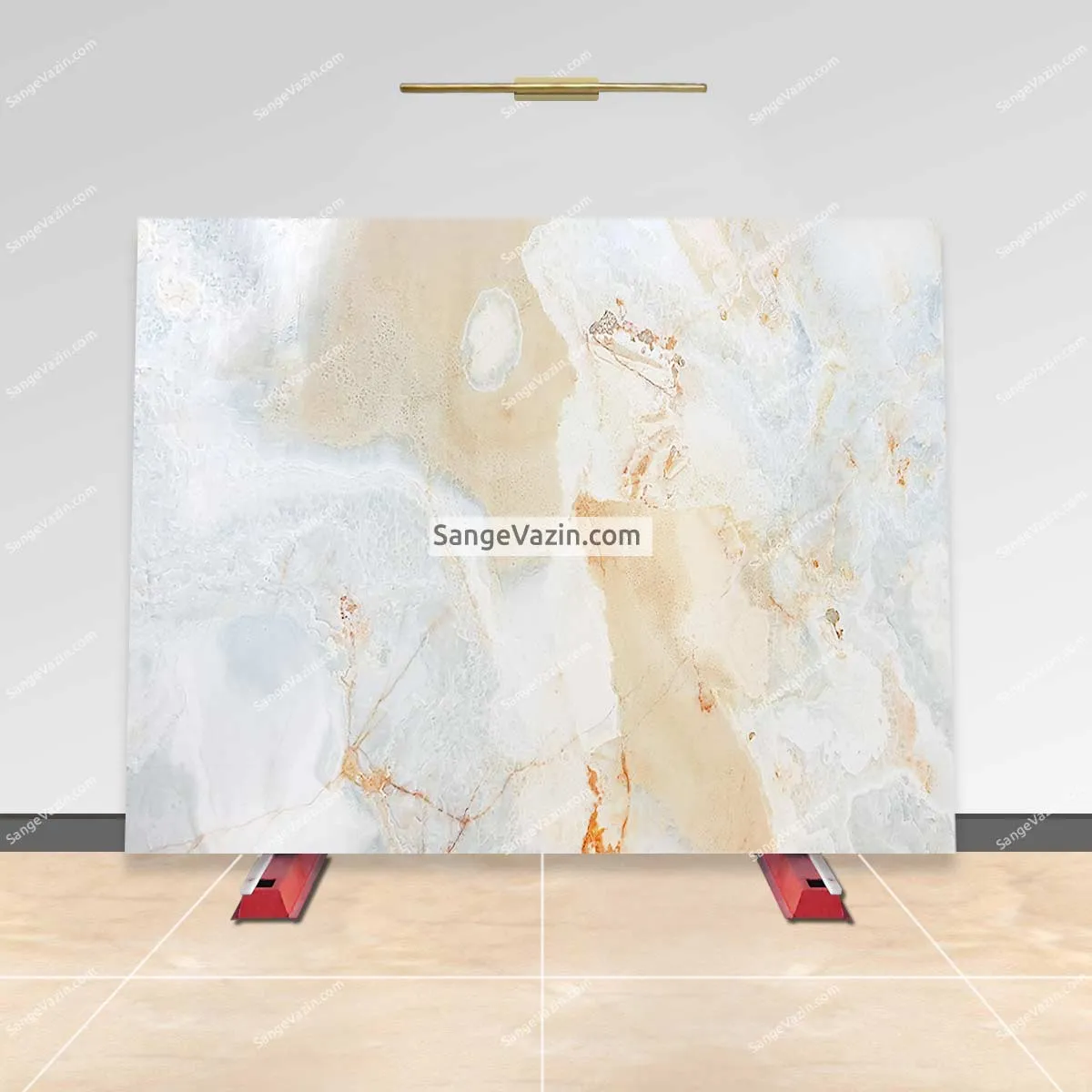
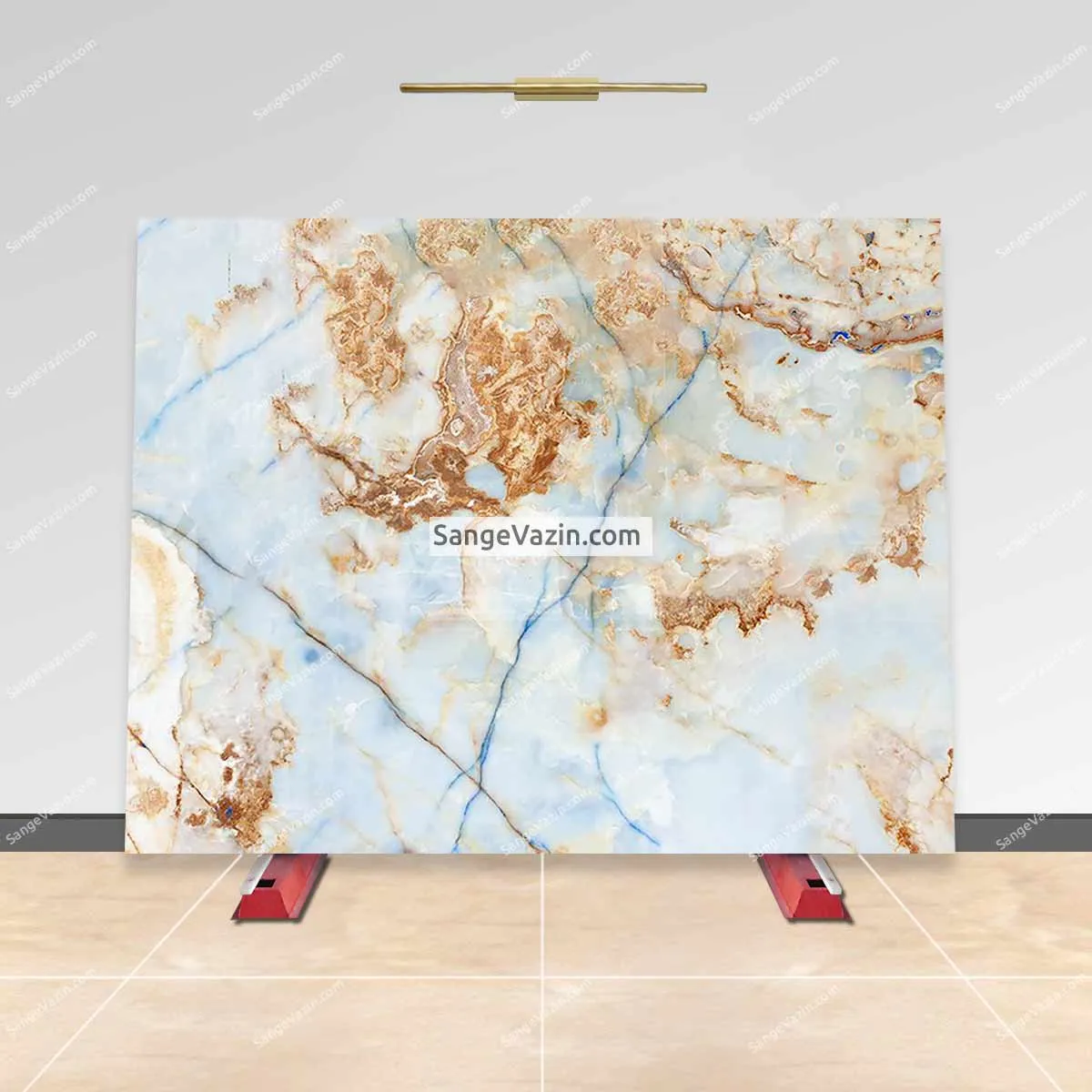
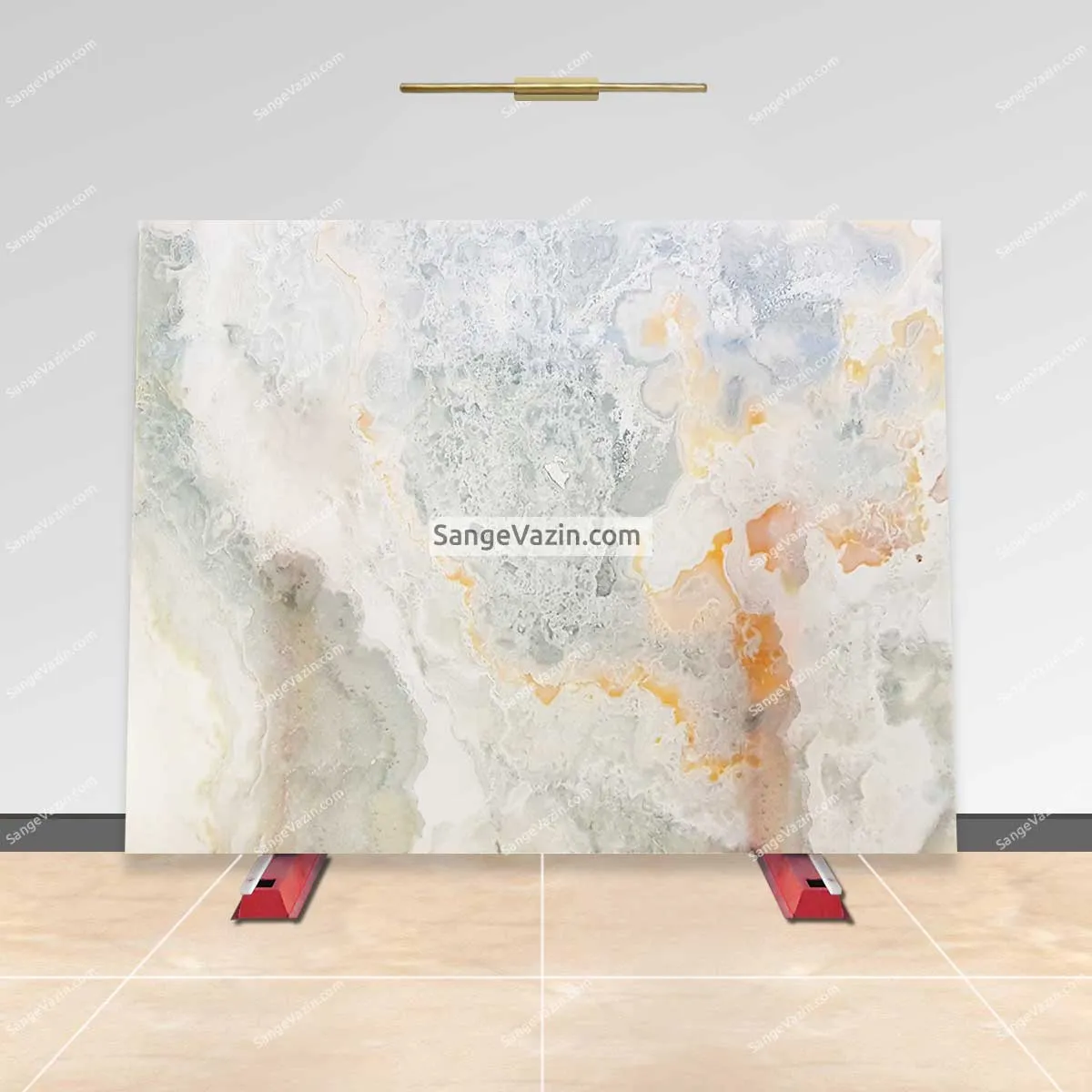
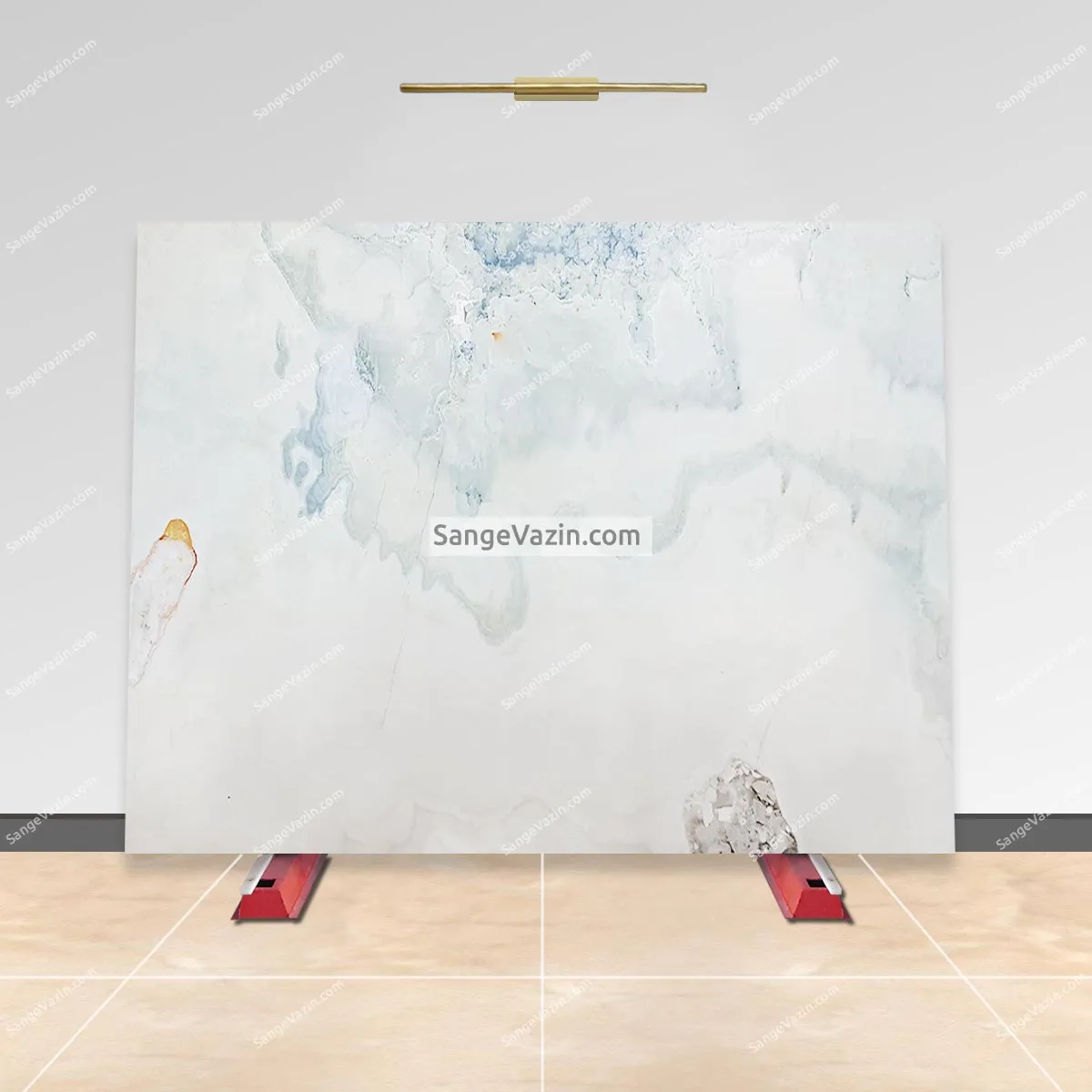
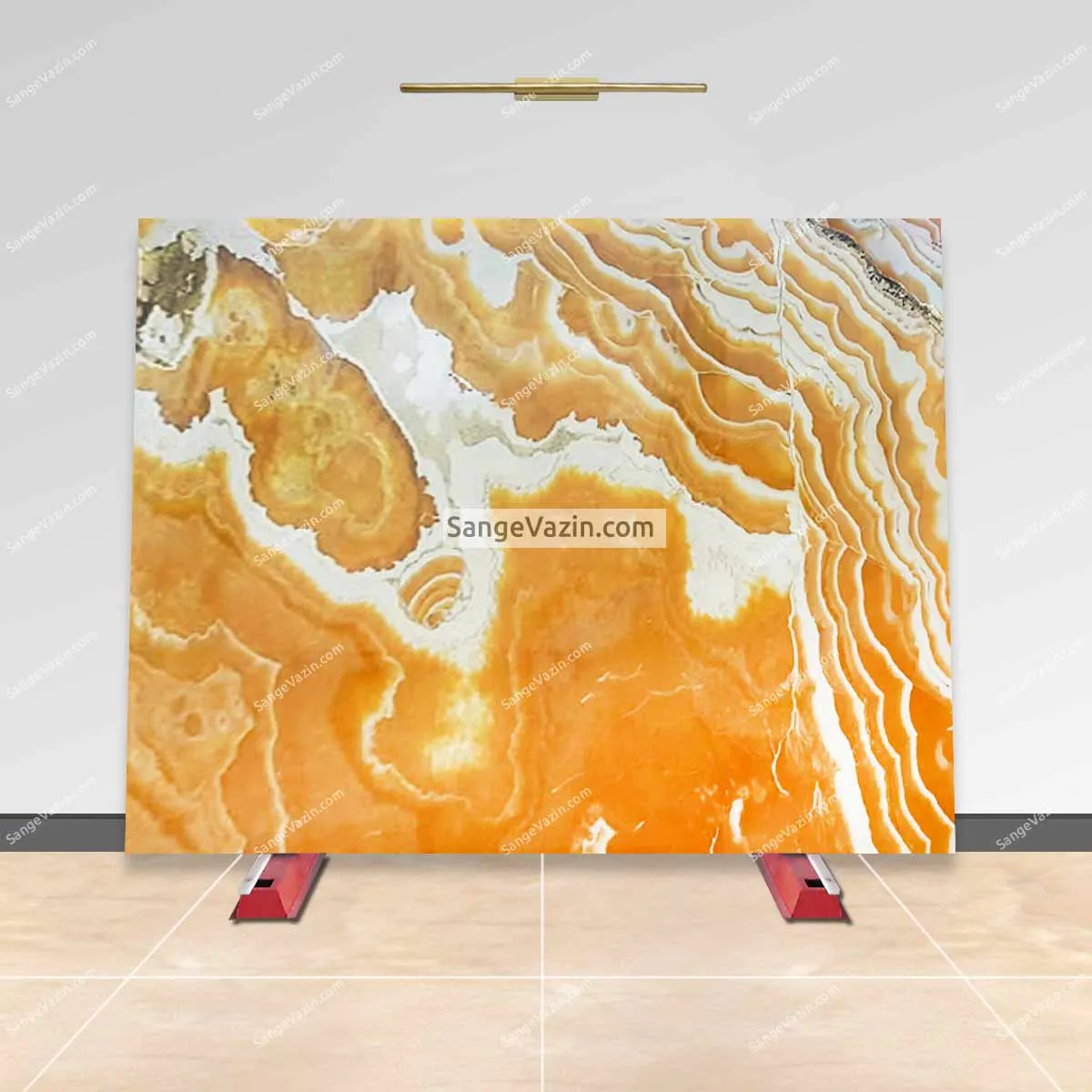
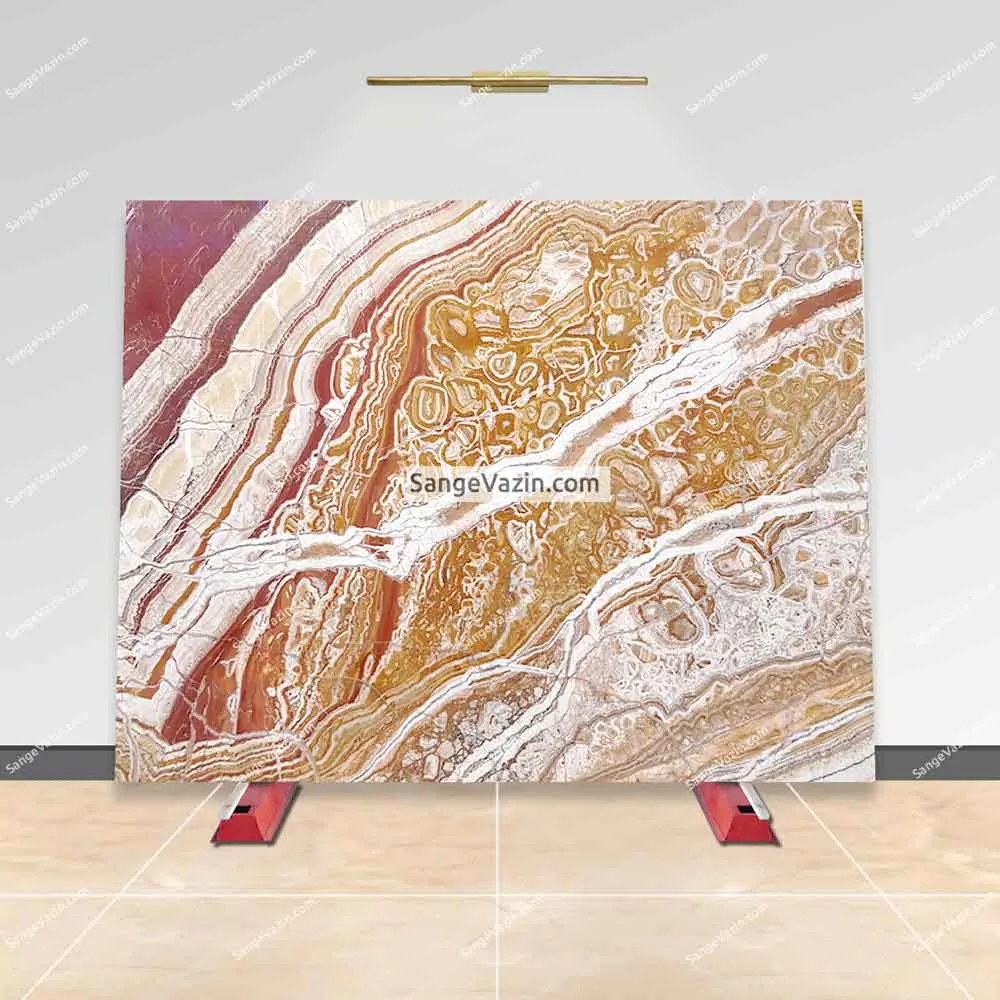
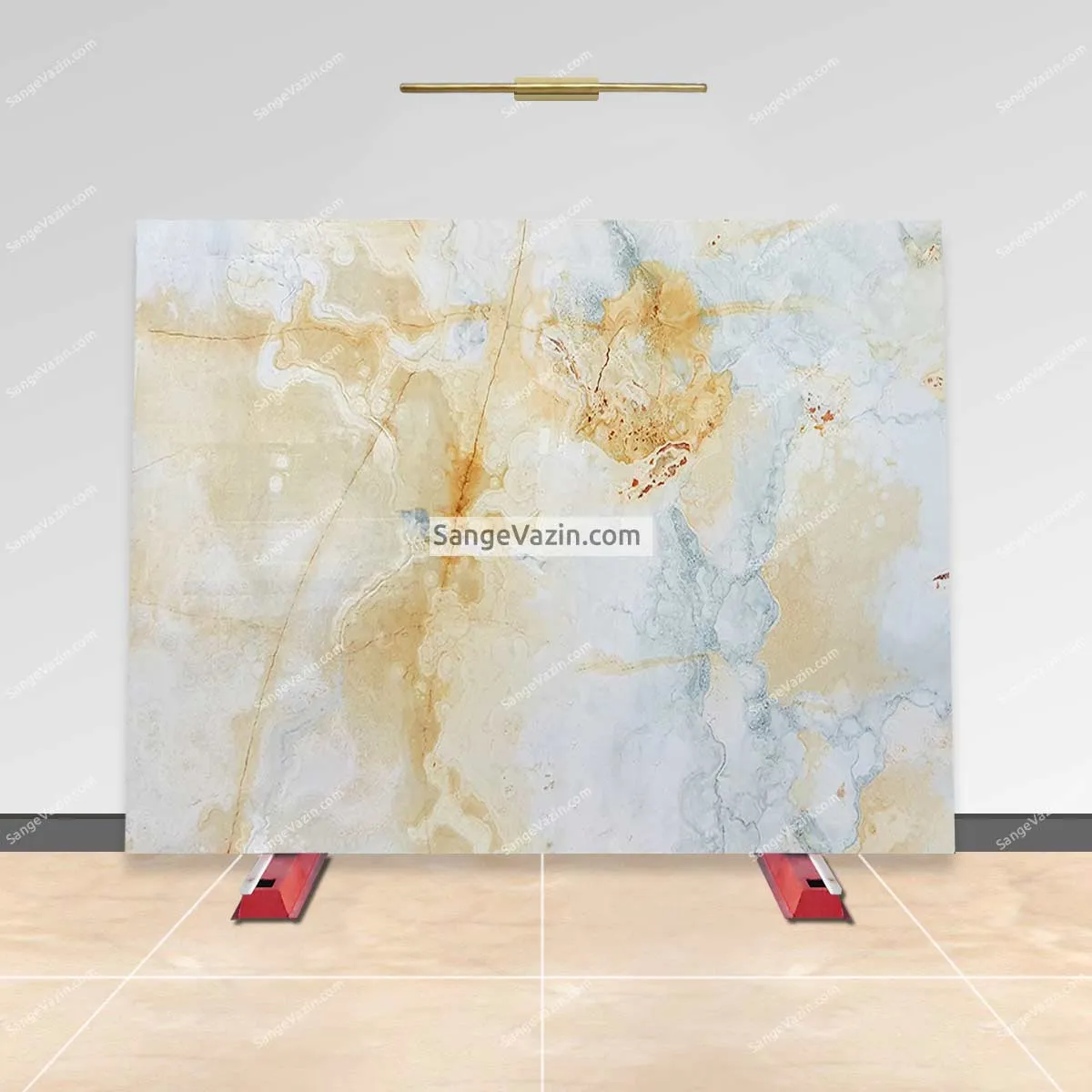
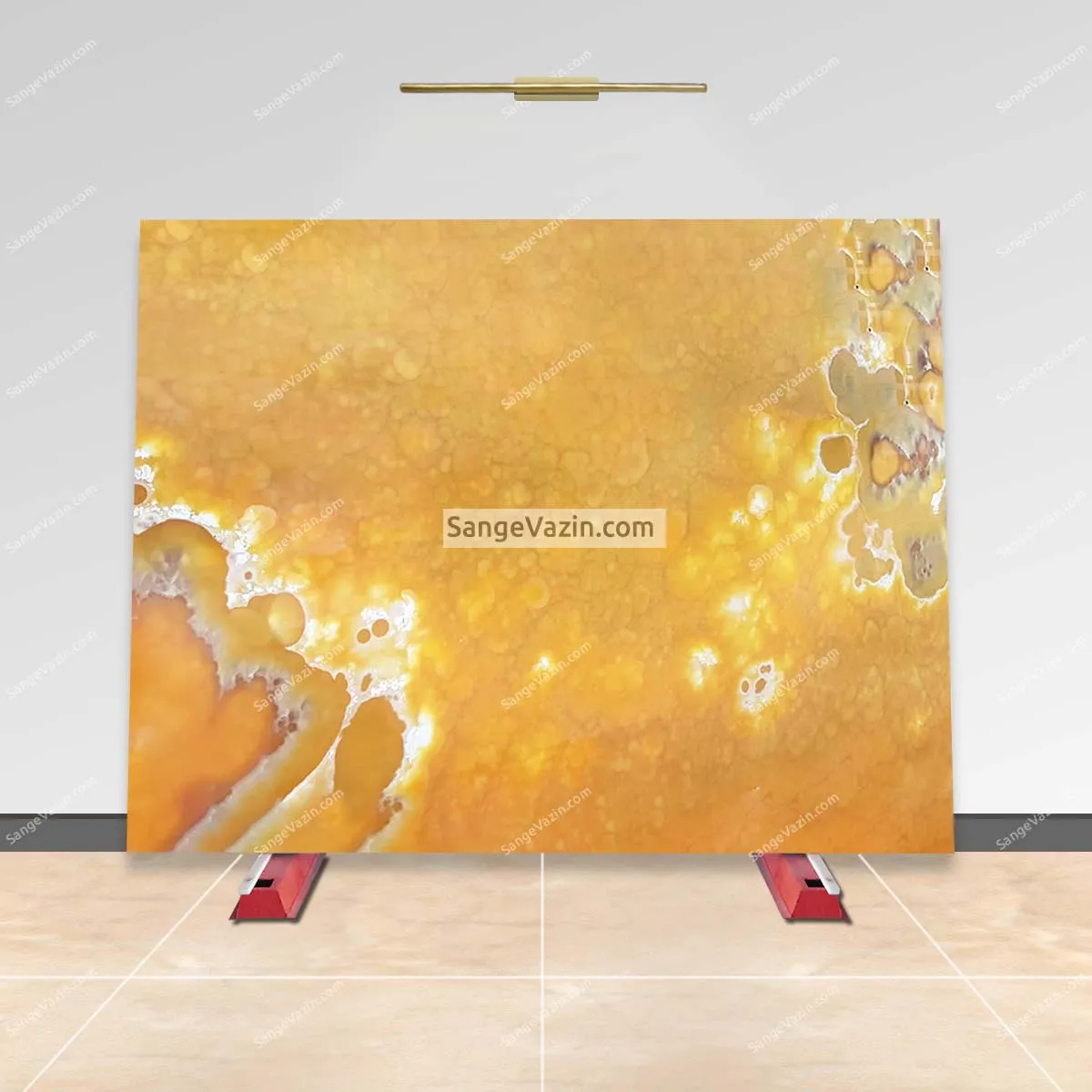
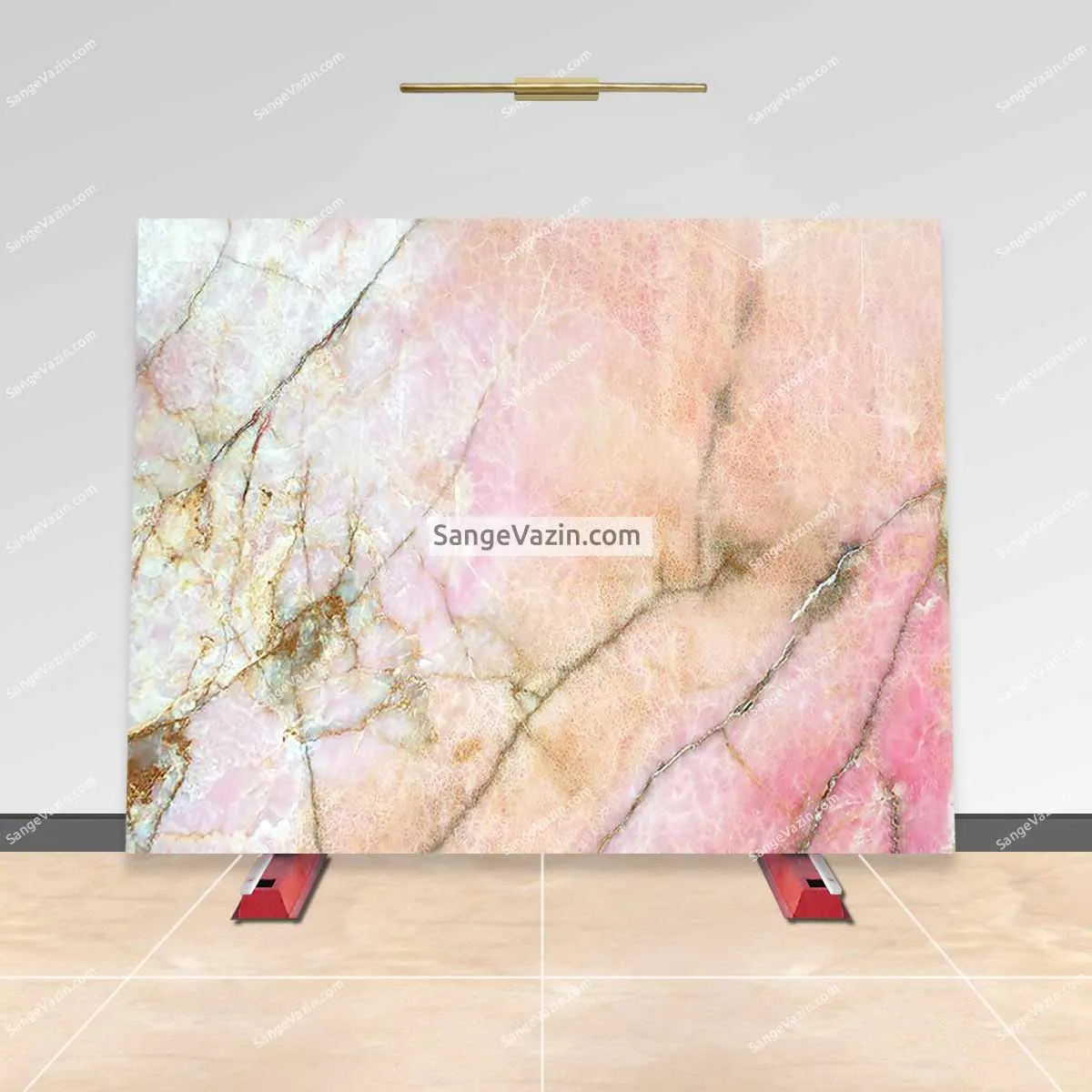
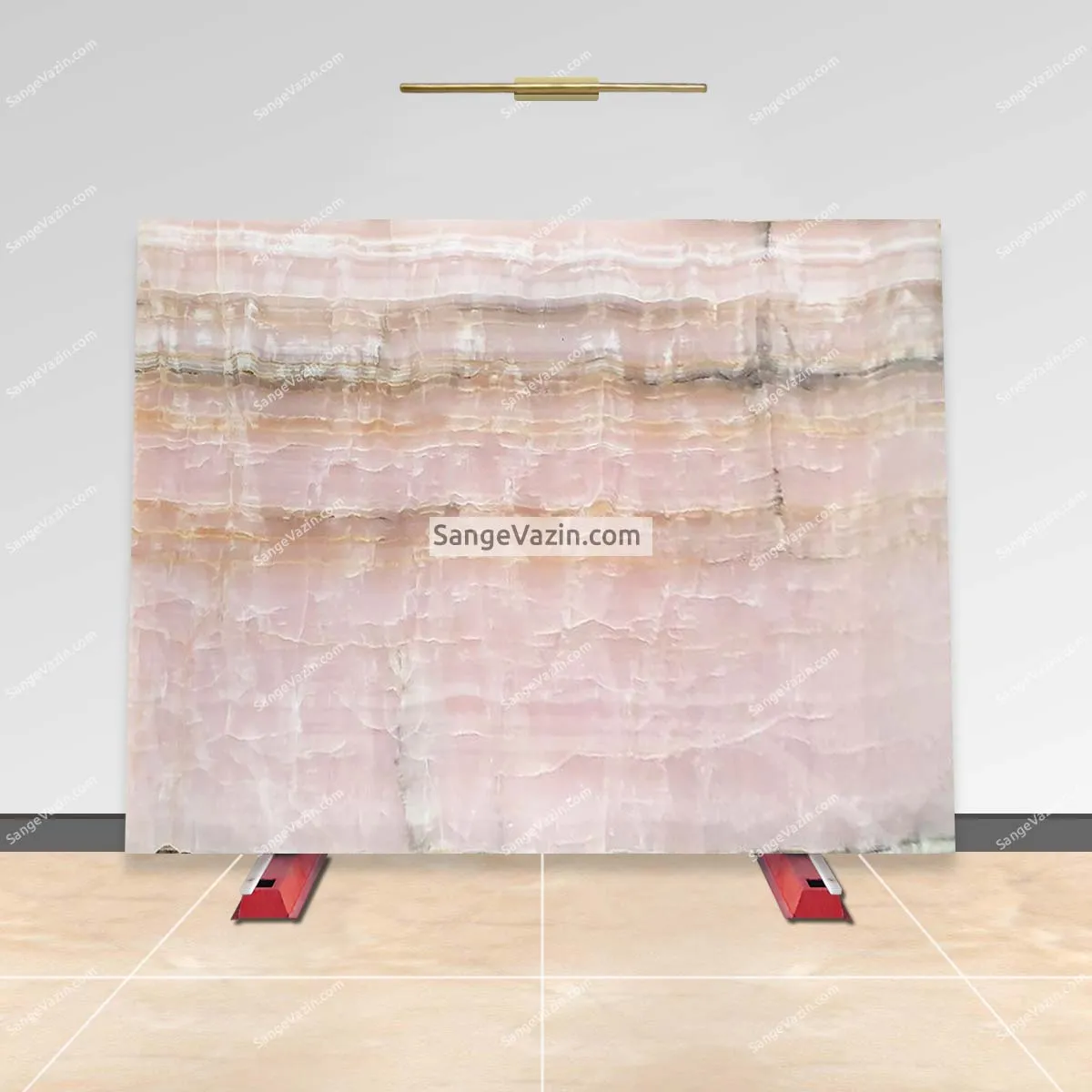
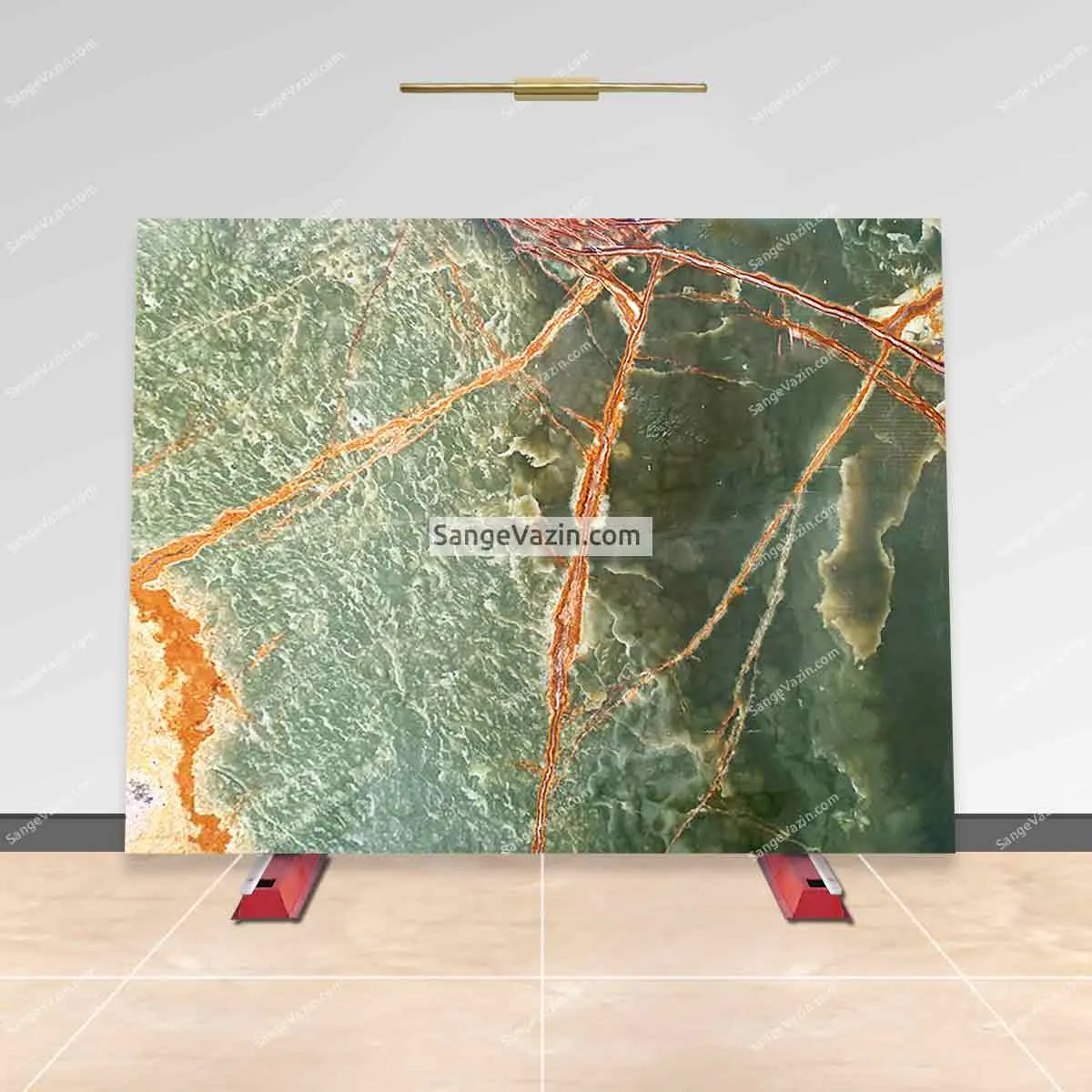
In the gallery below, you can explore a variety of Iranian onyx slabs from the Kerman and Azerbaijan quarries and place an order if desired. These export-quality slabs are expertly cut and finished to the highest standards, showcasing exceptional patterns and colors for you to admire.
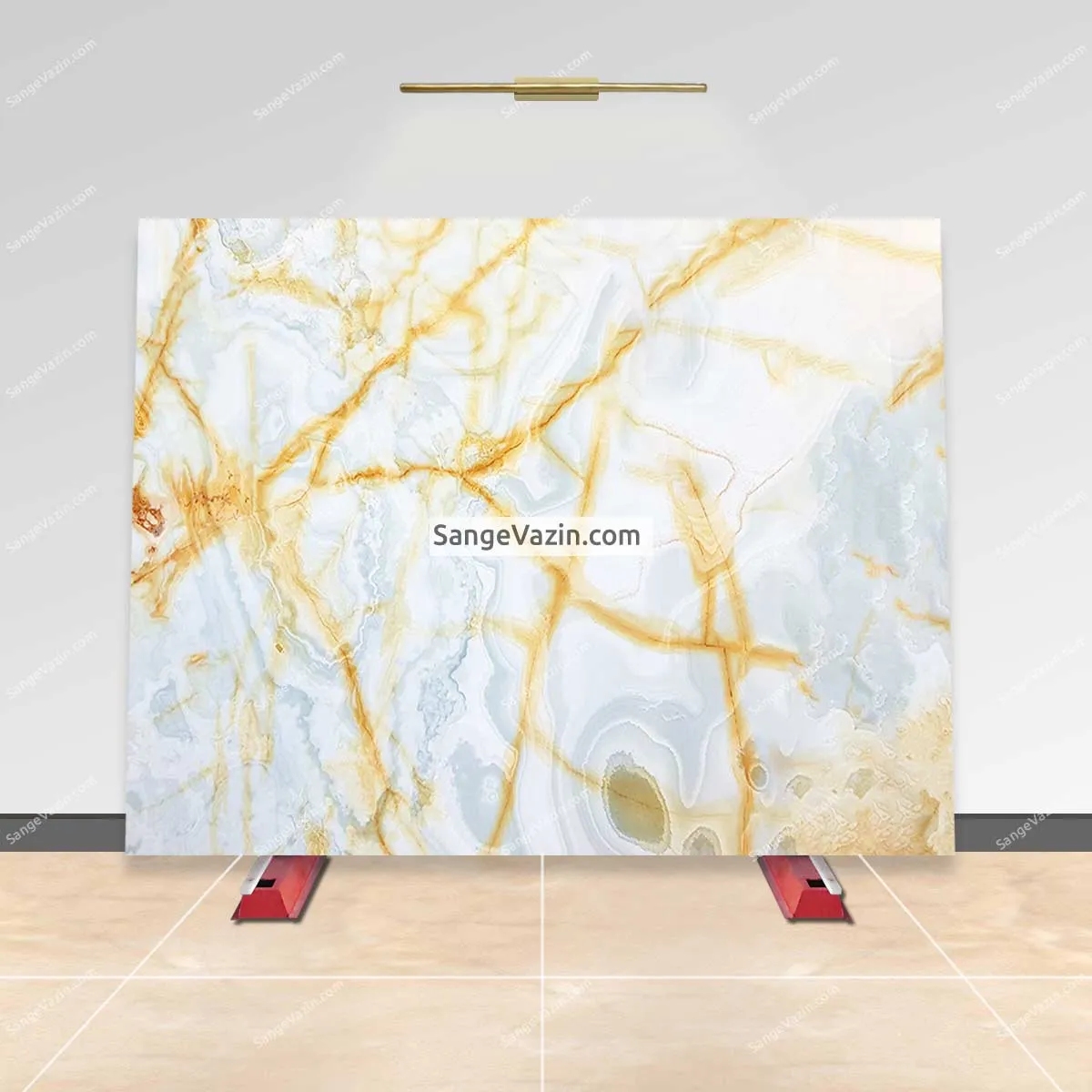
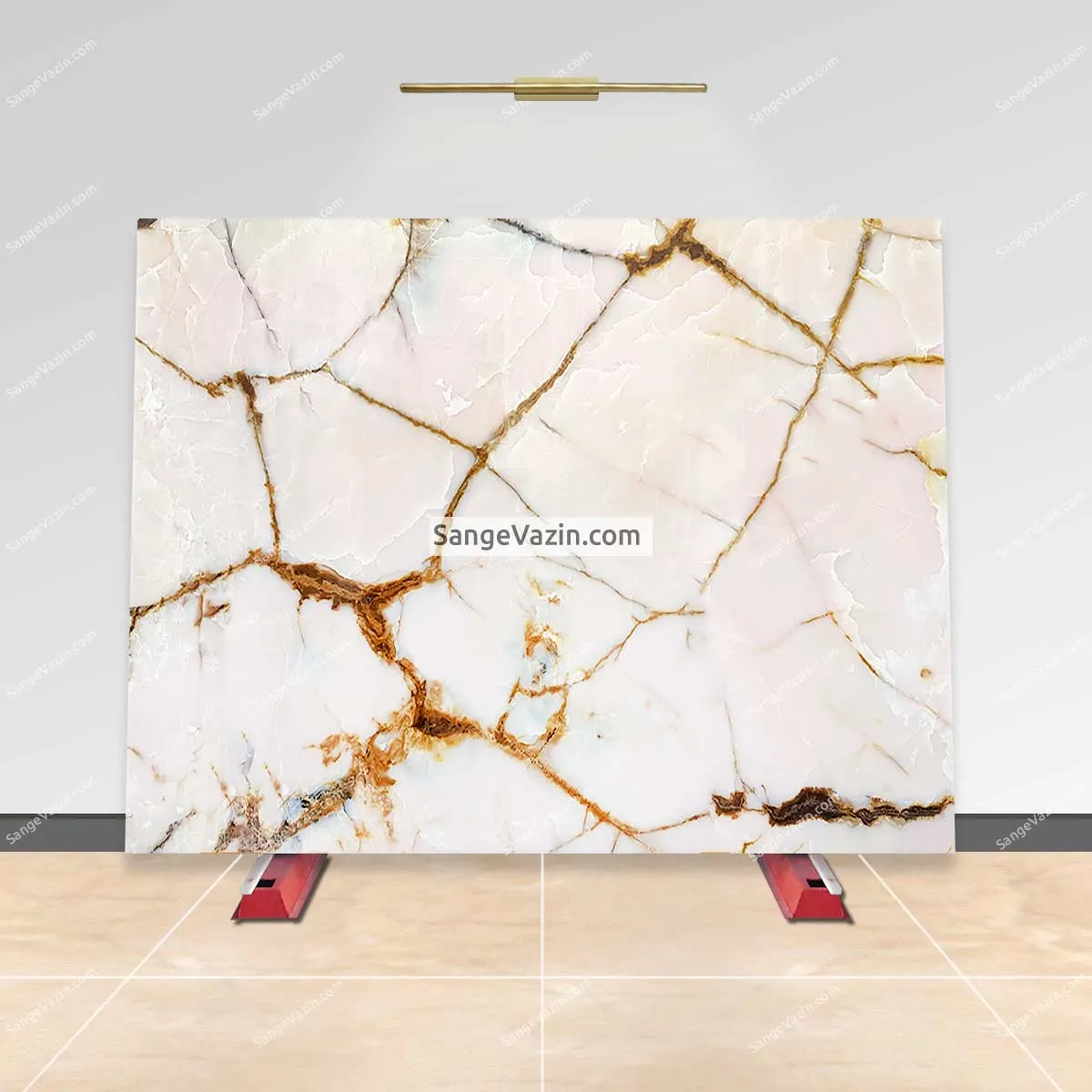
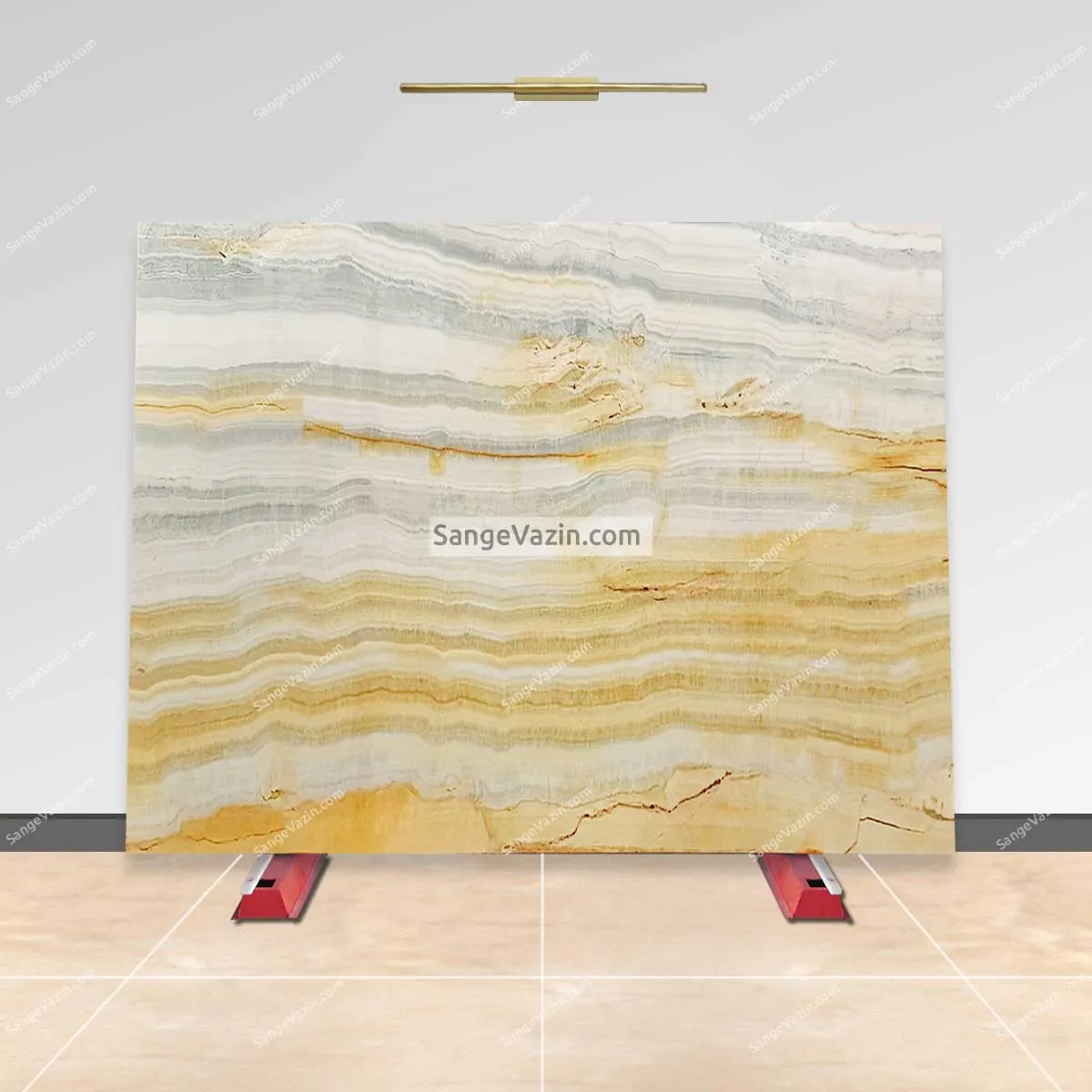
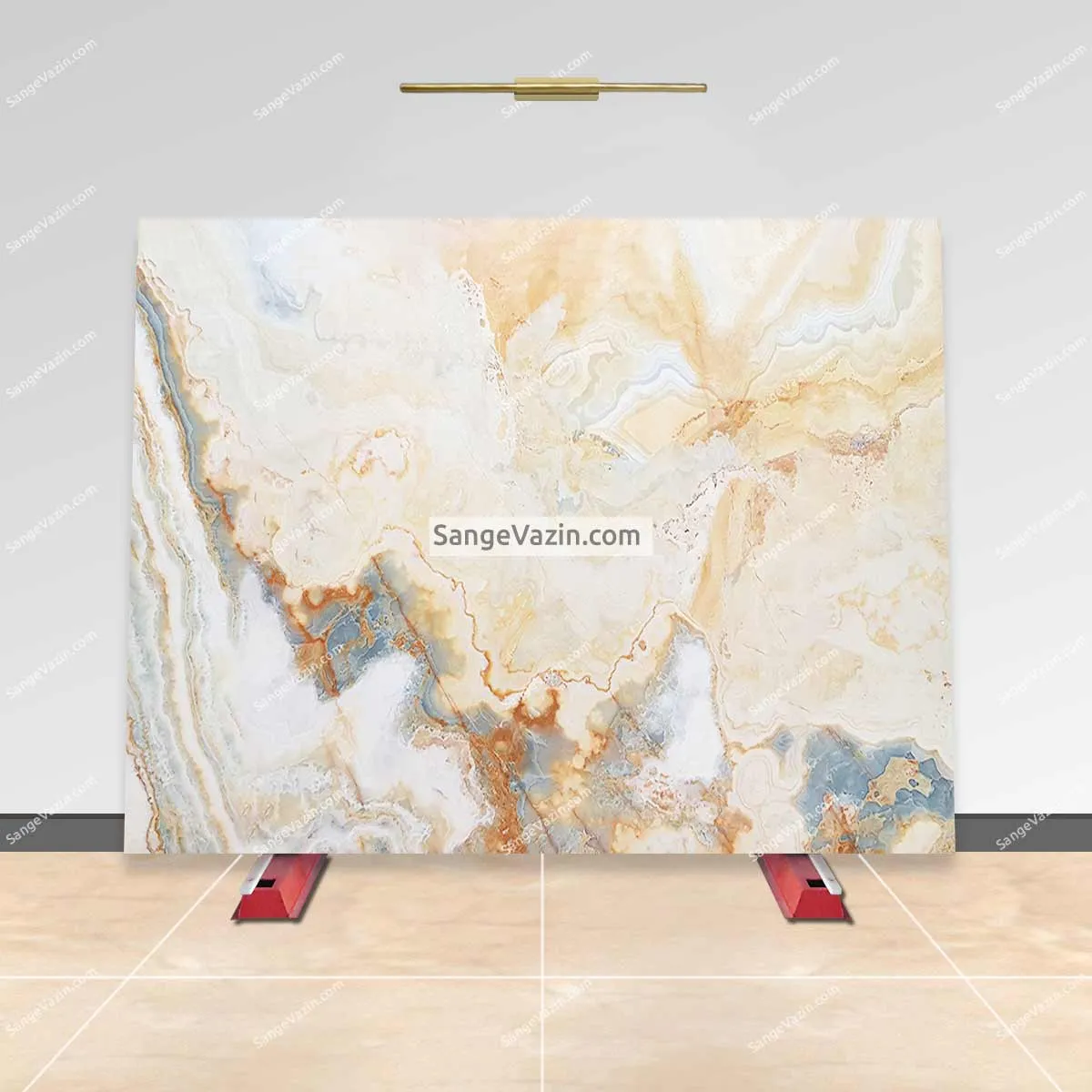
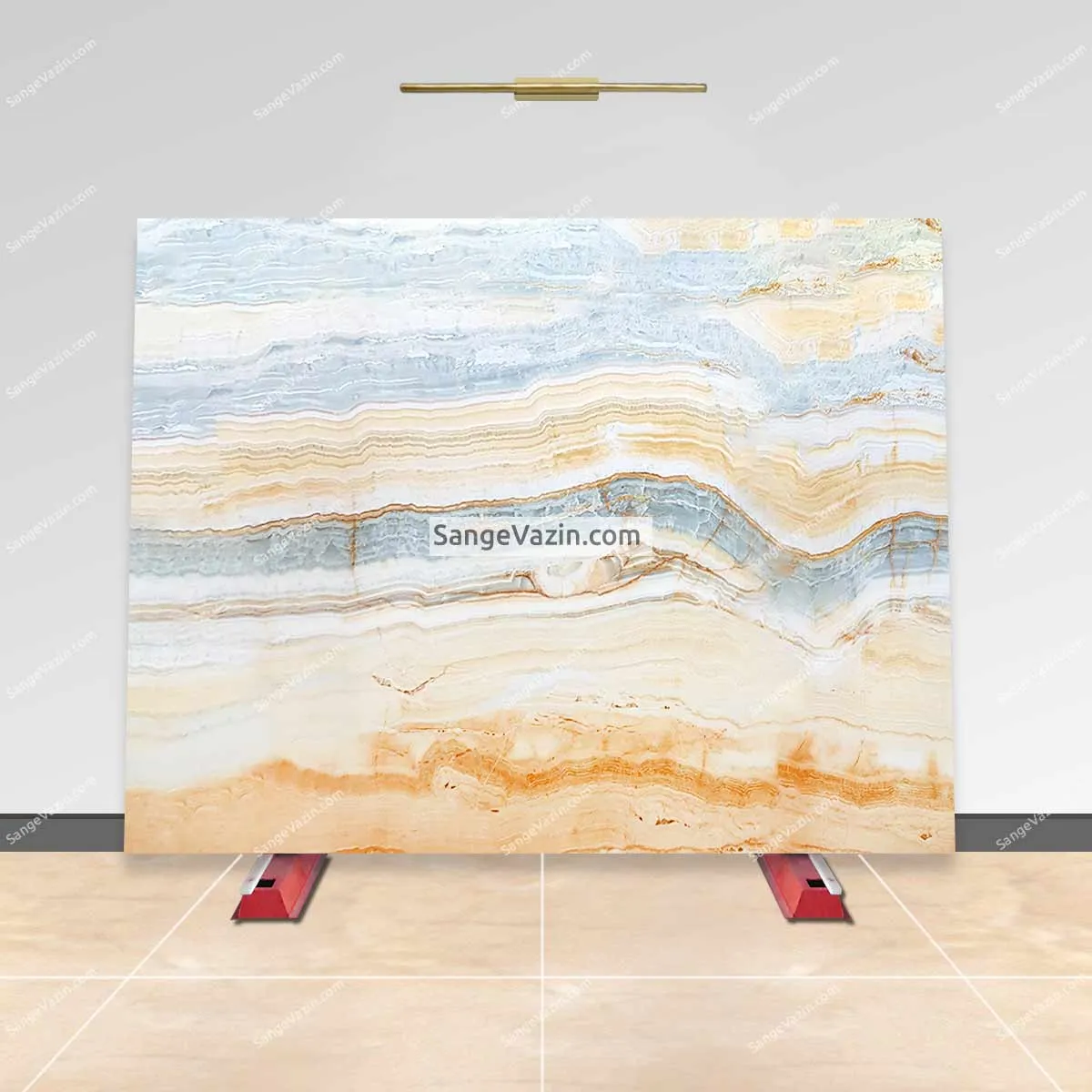
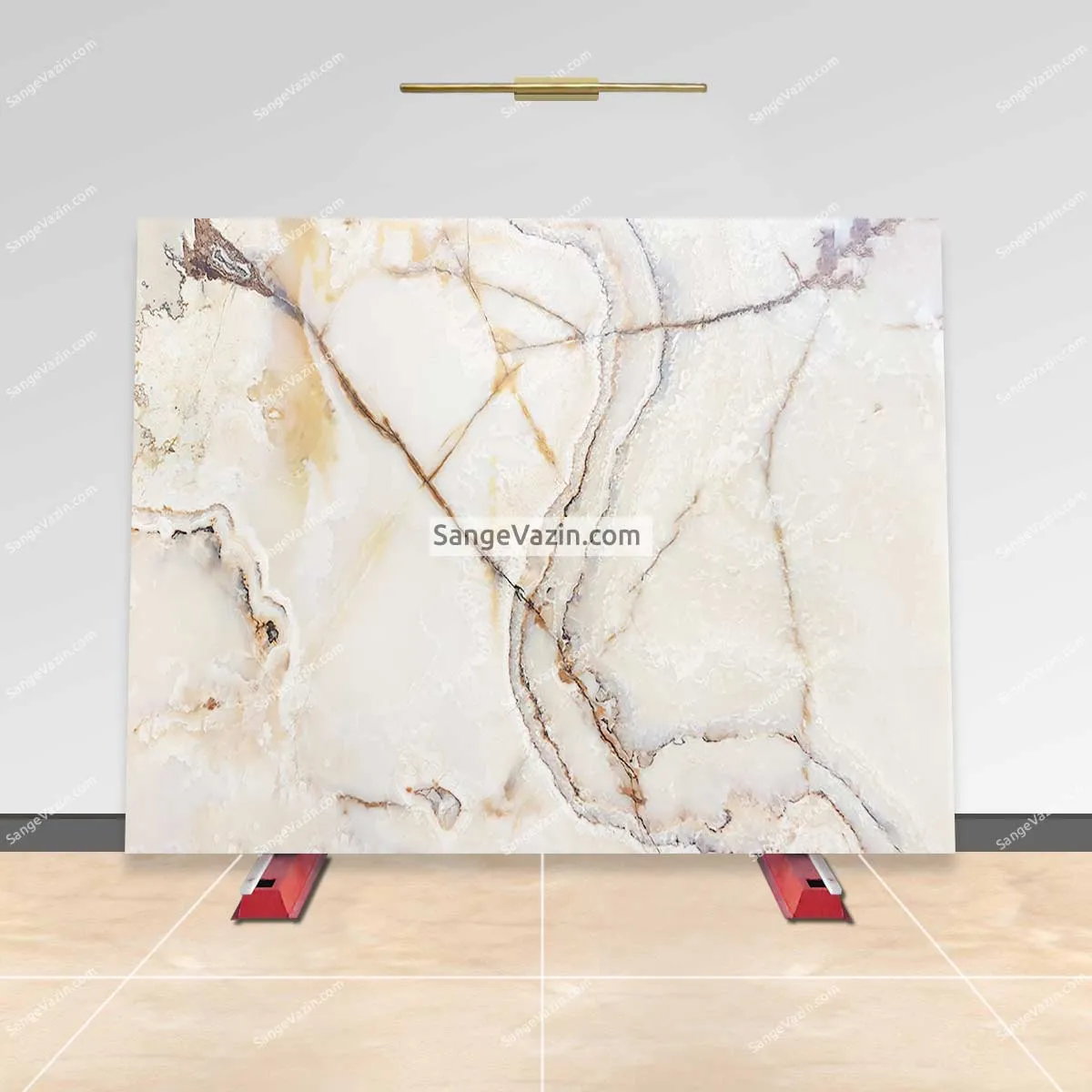
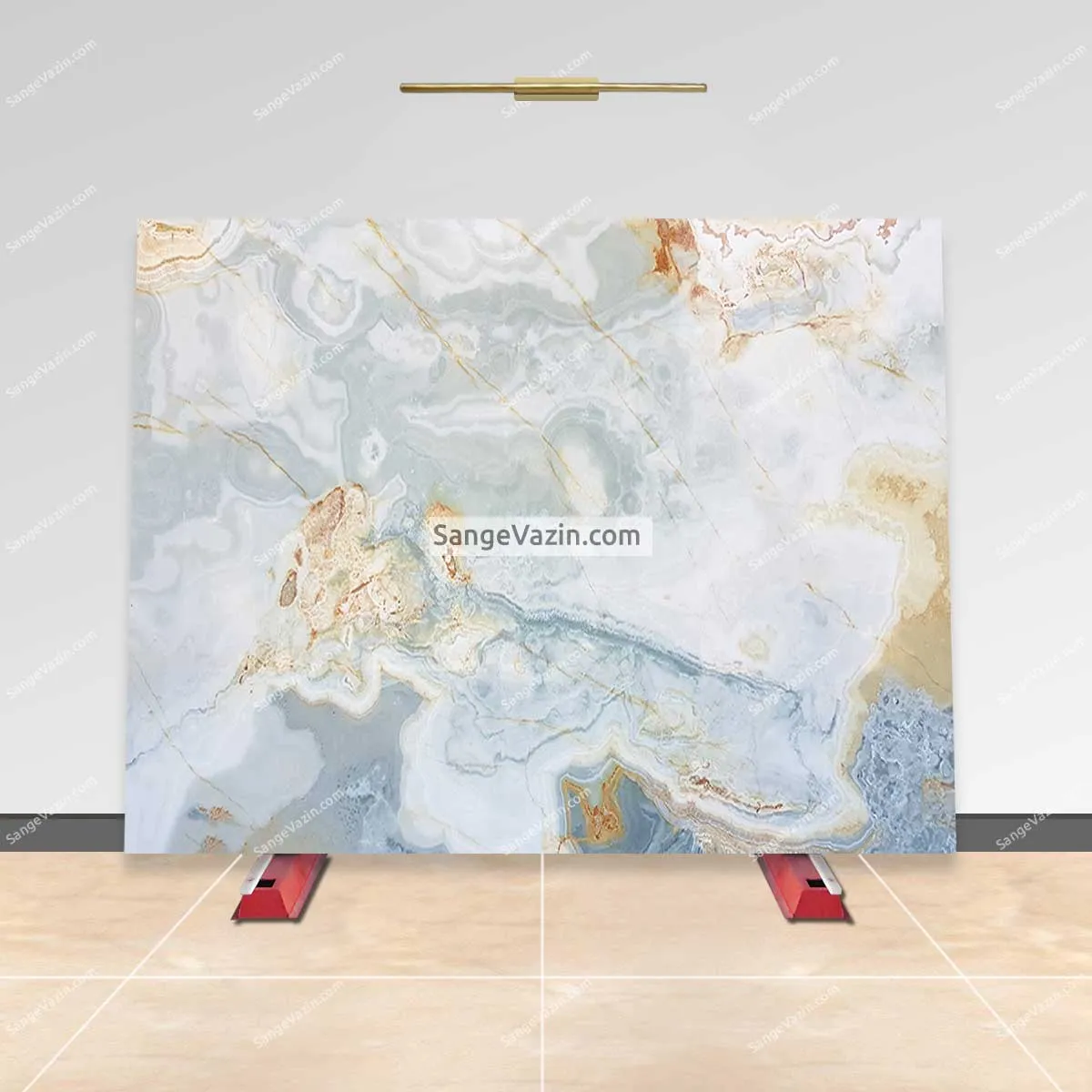
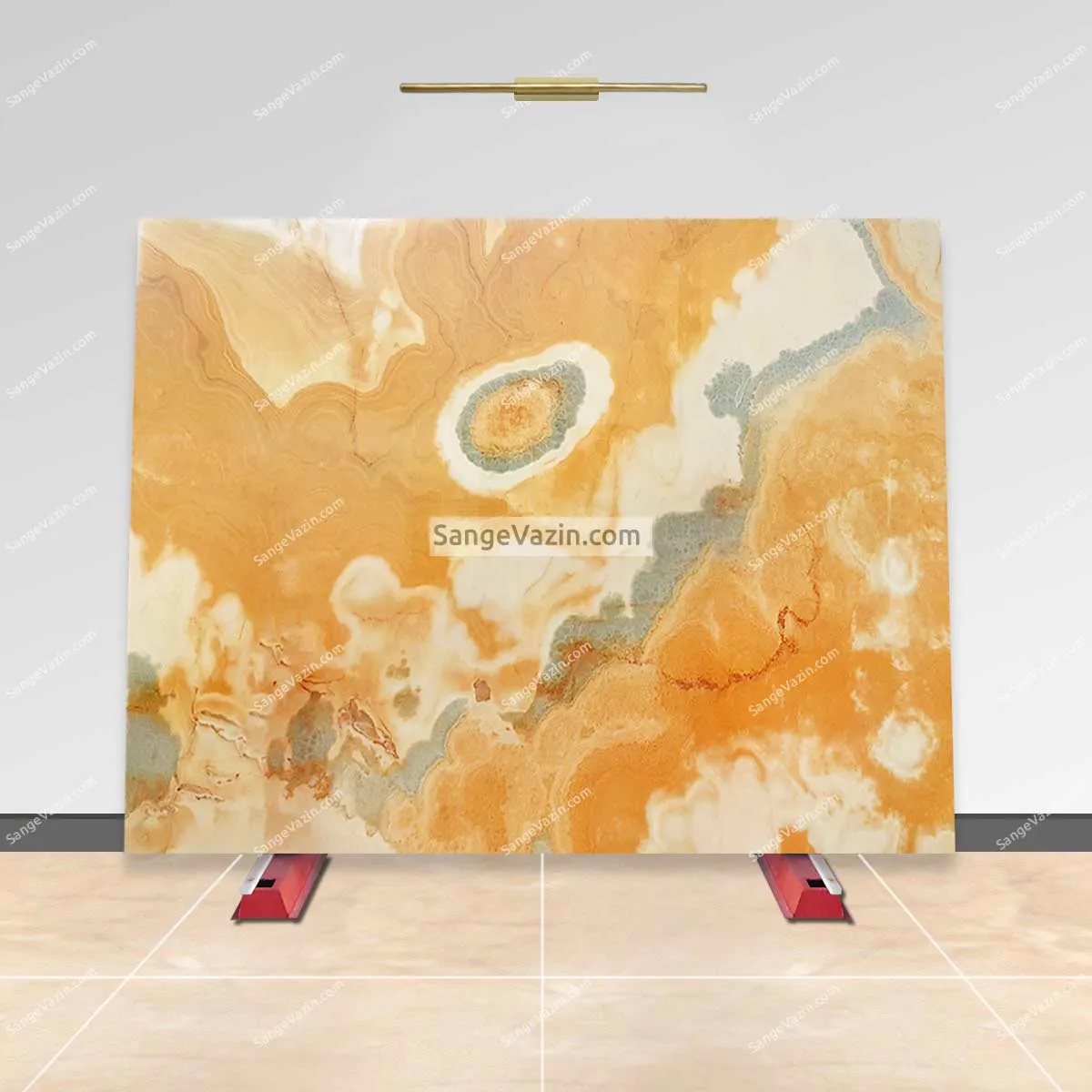
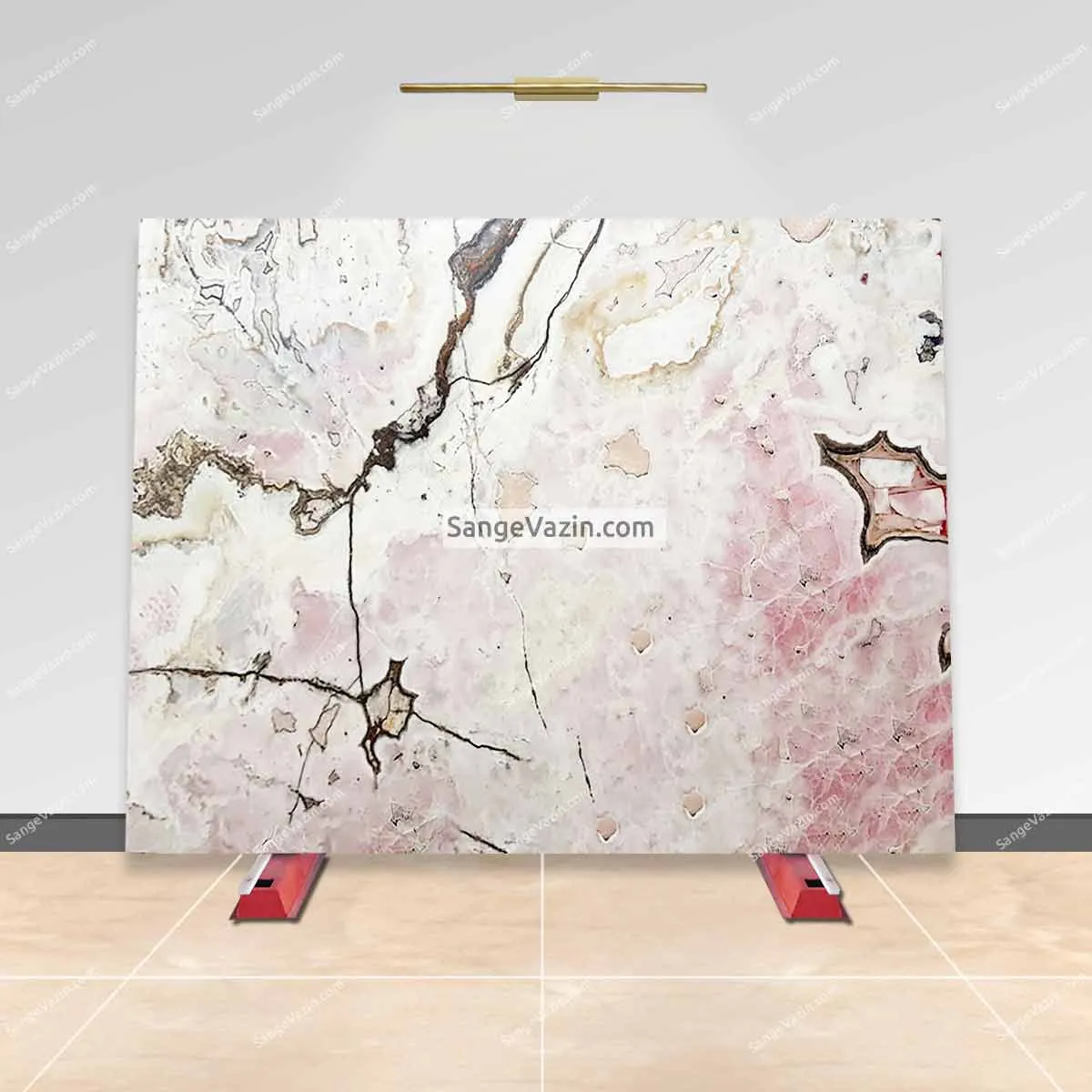
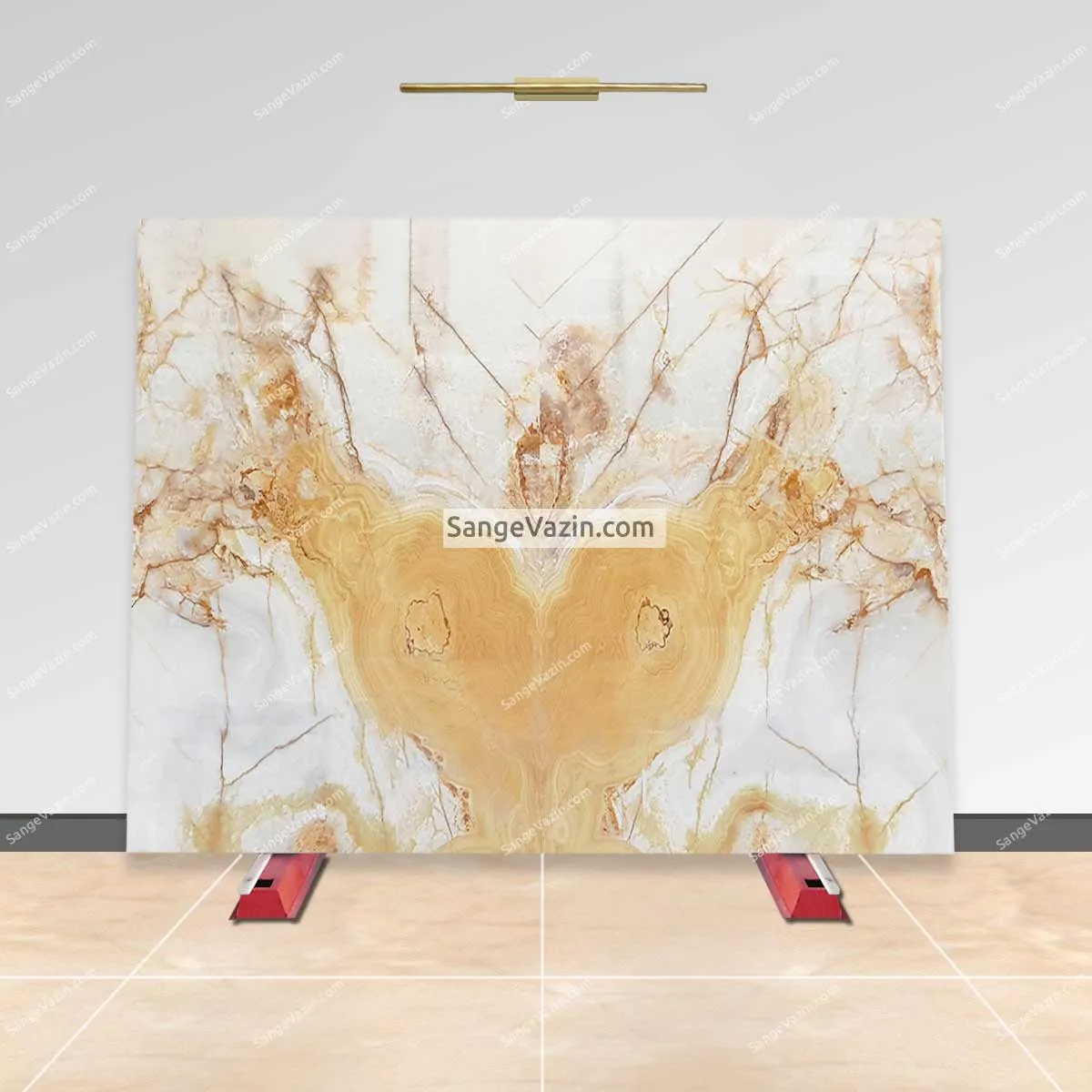
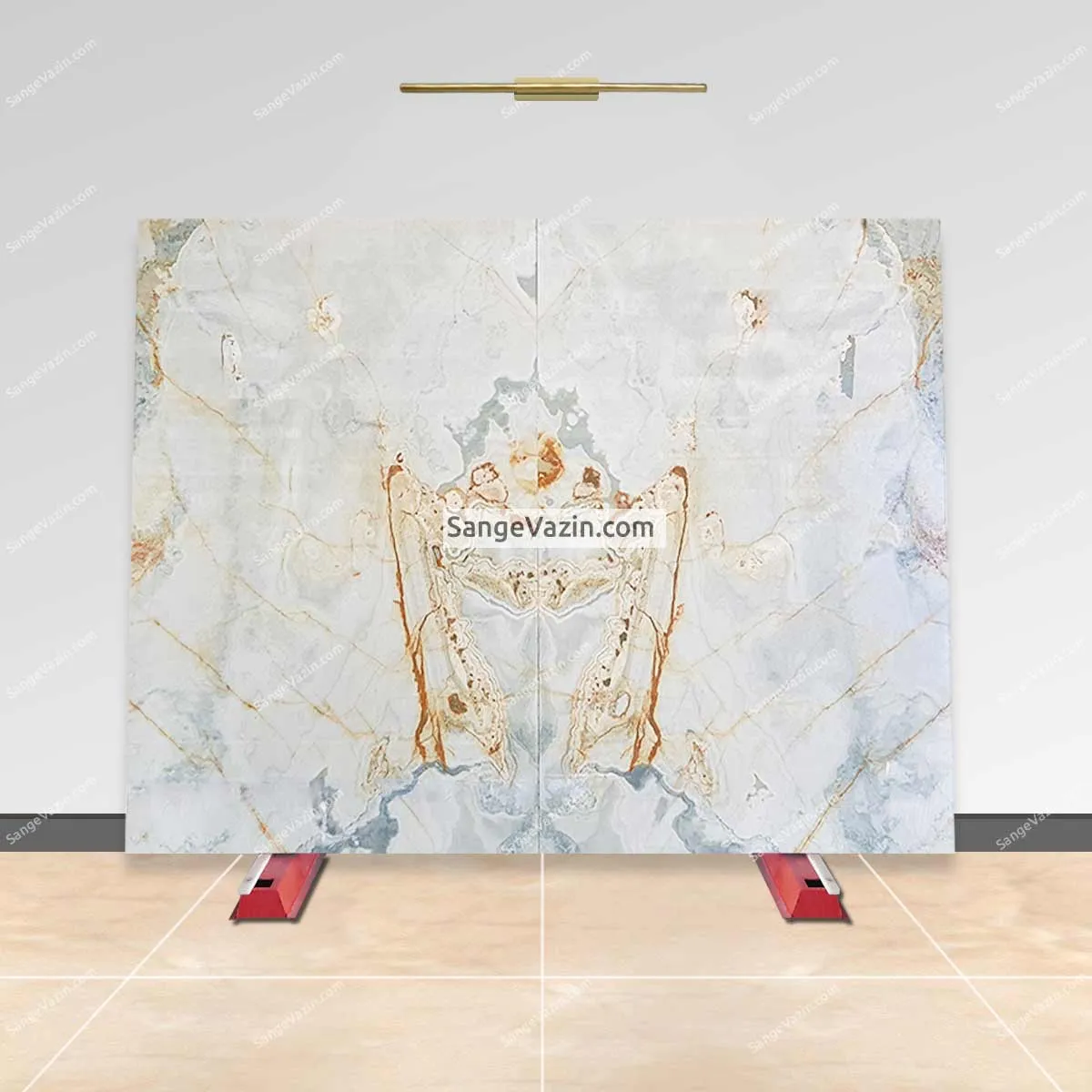
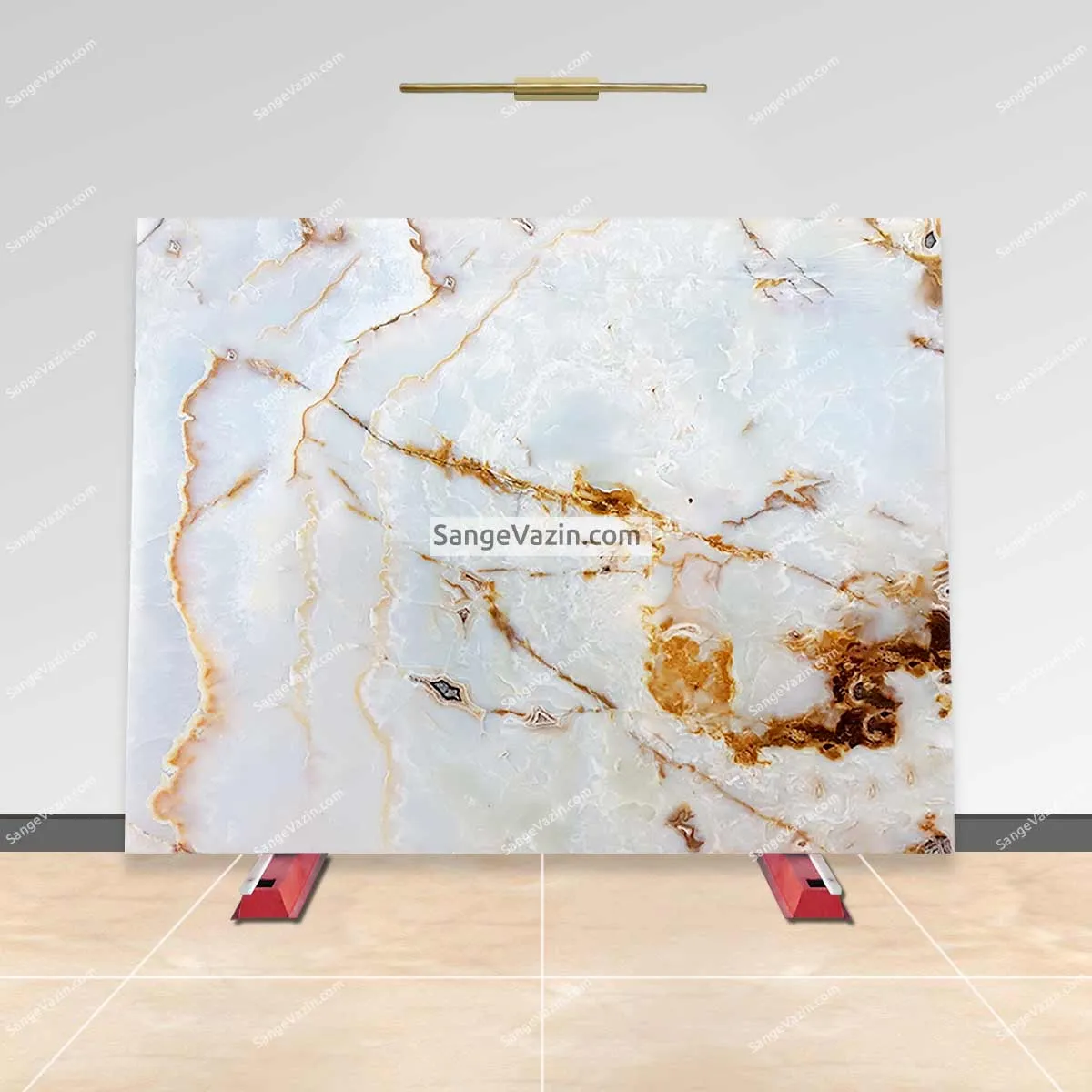
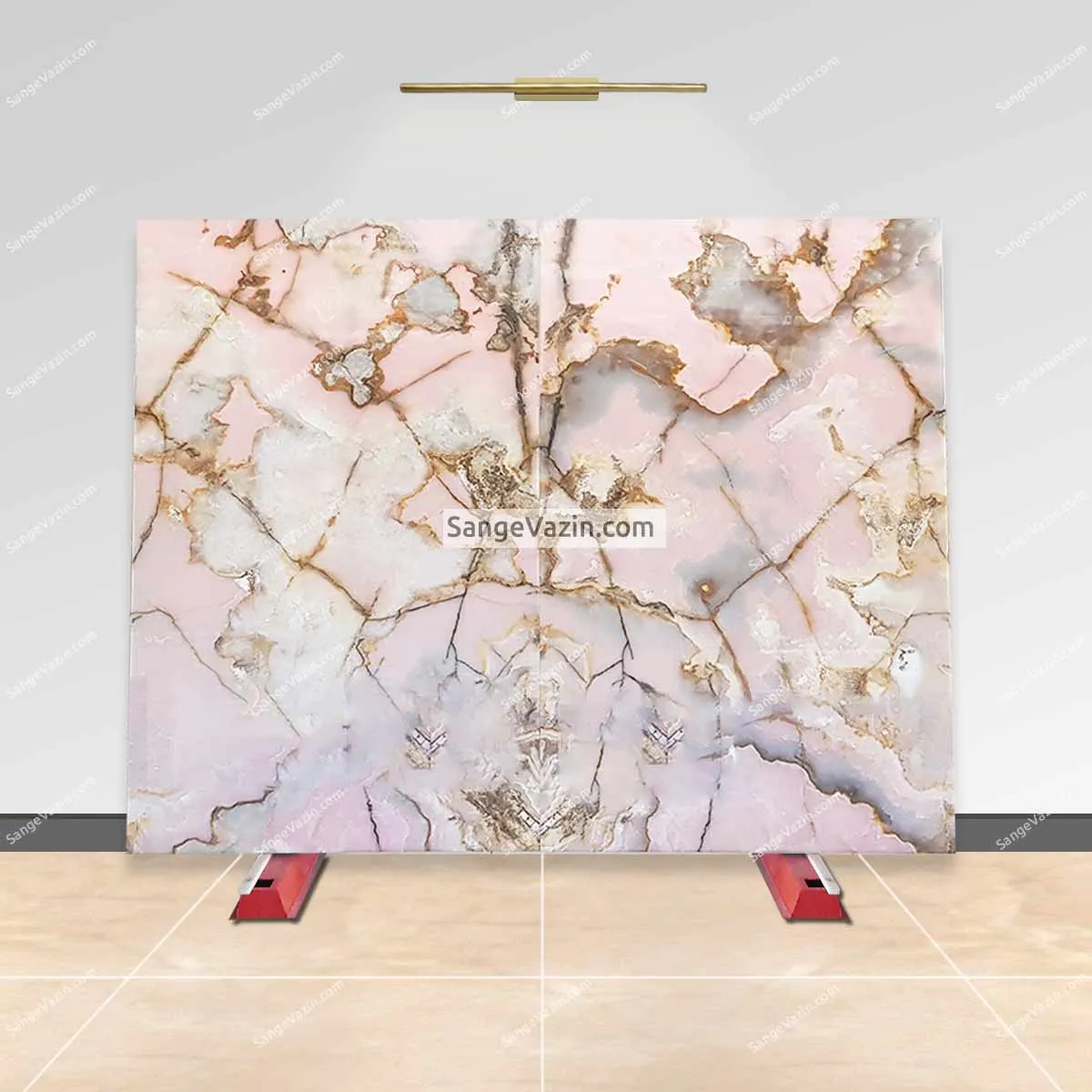
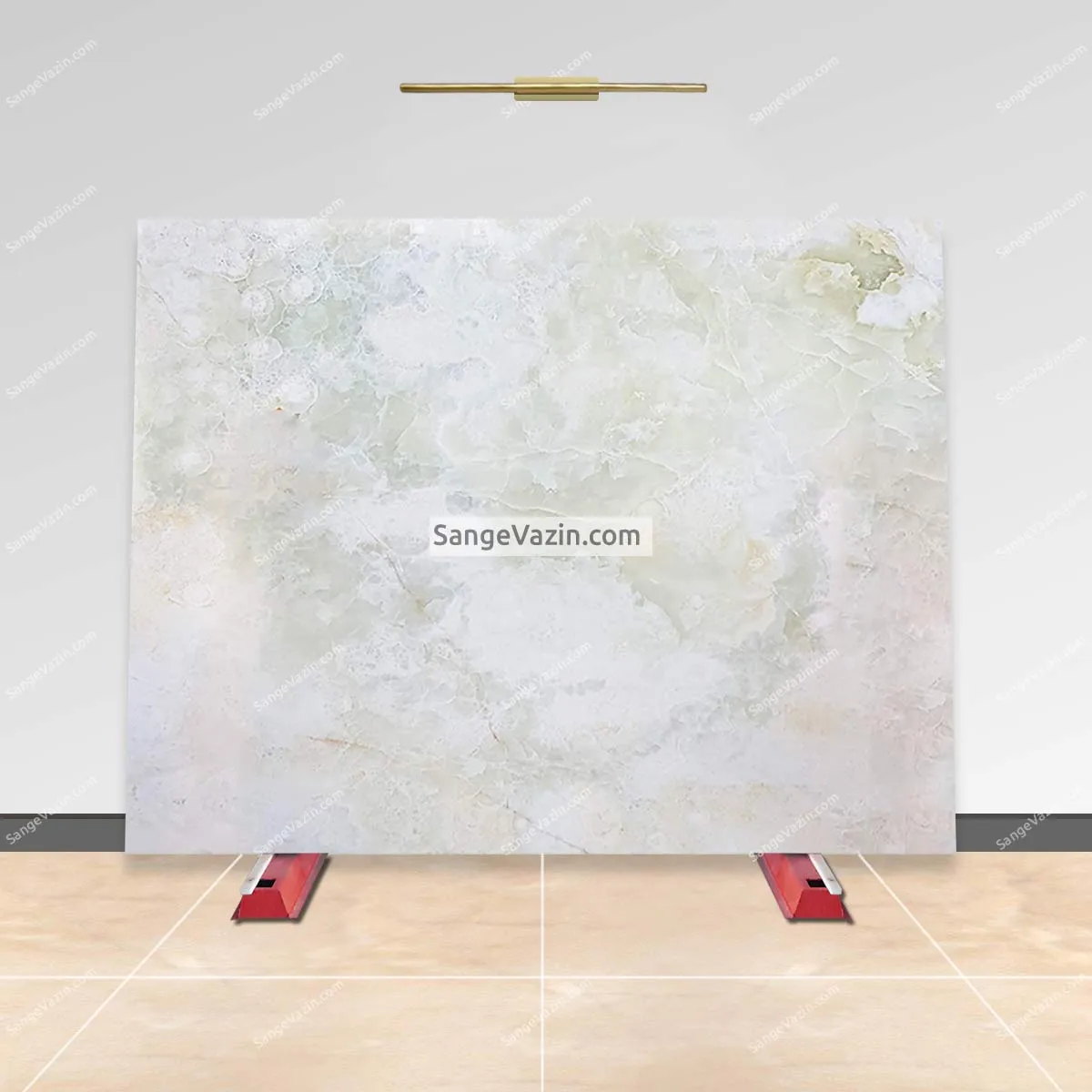
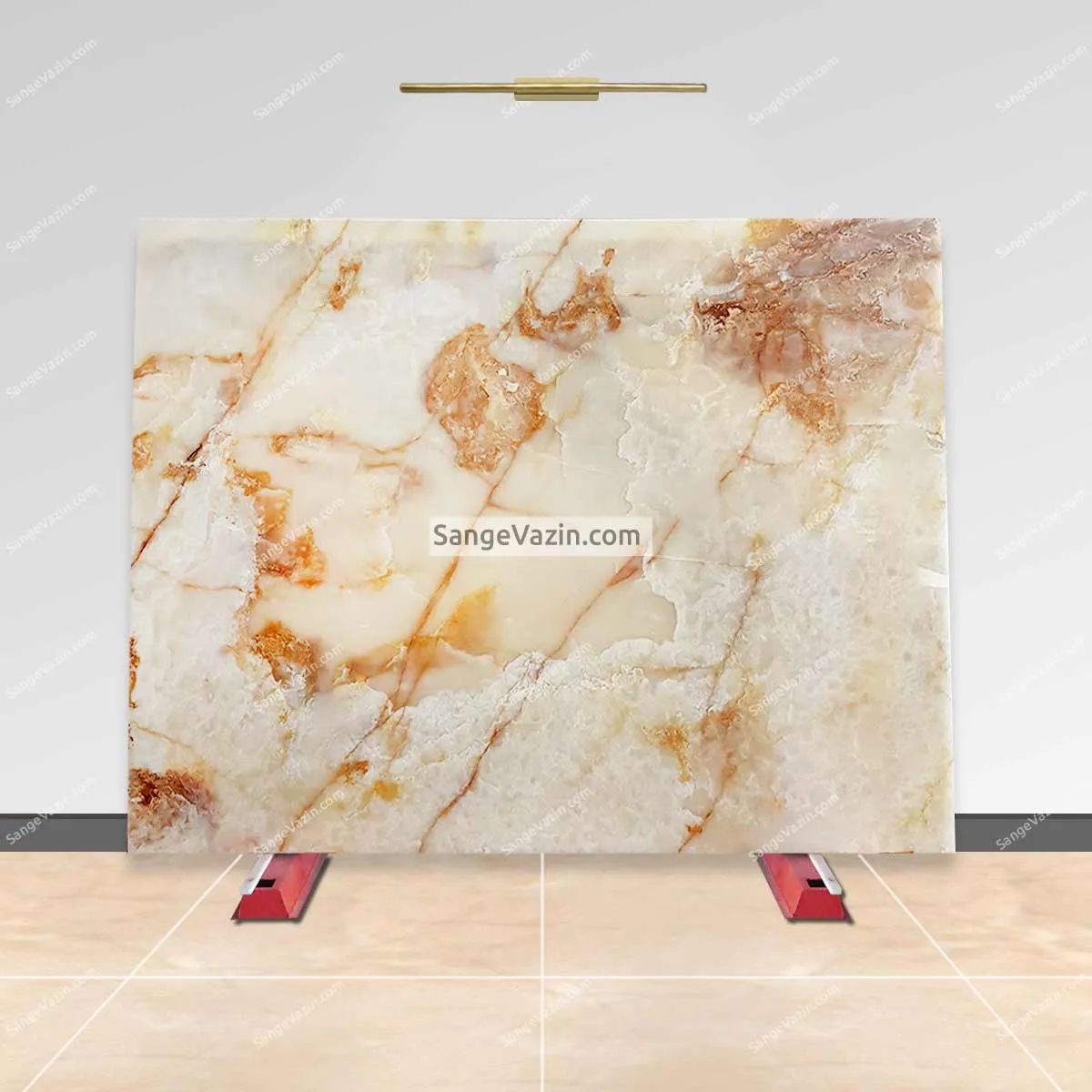
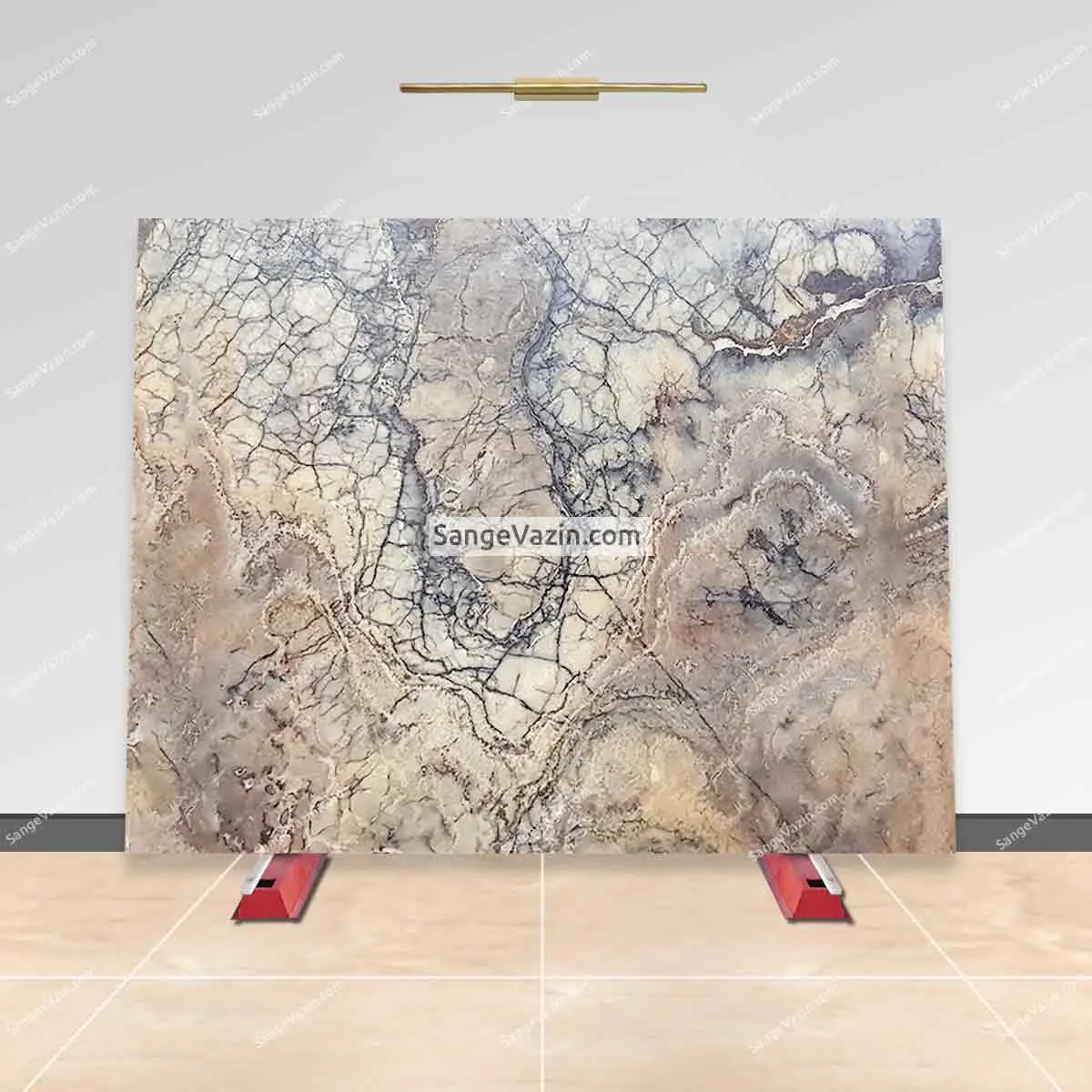
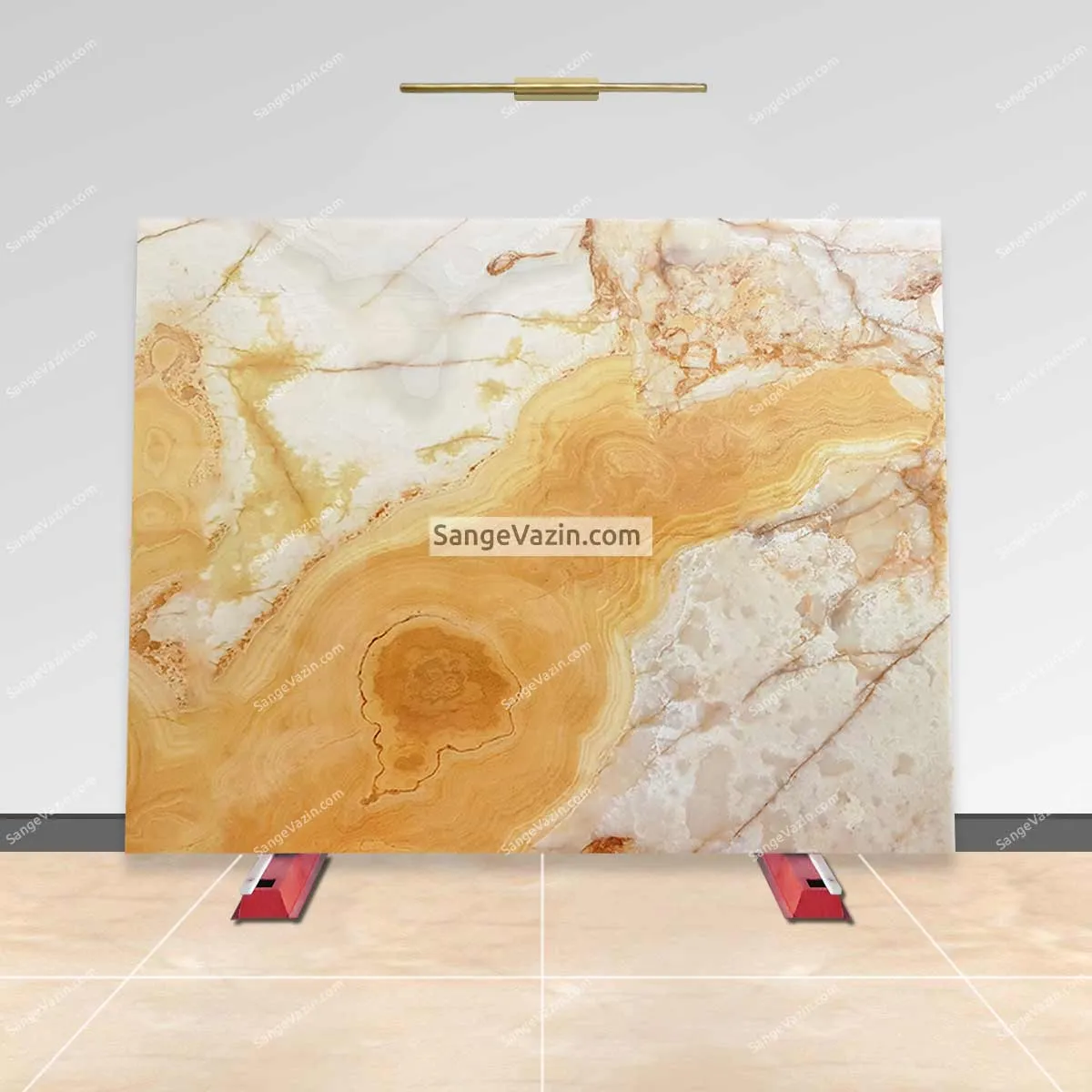
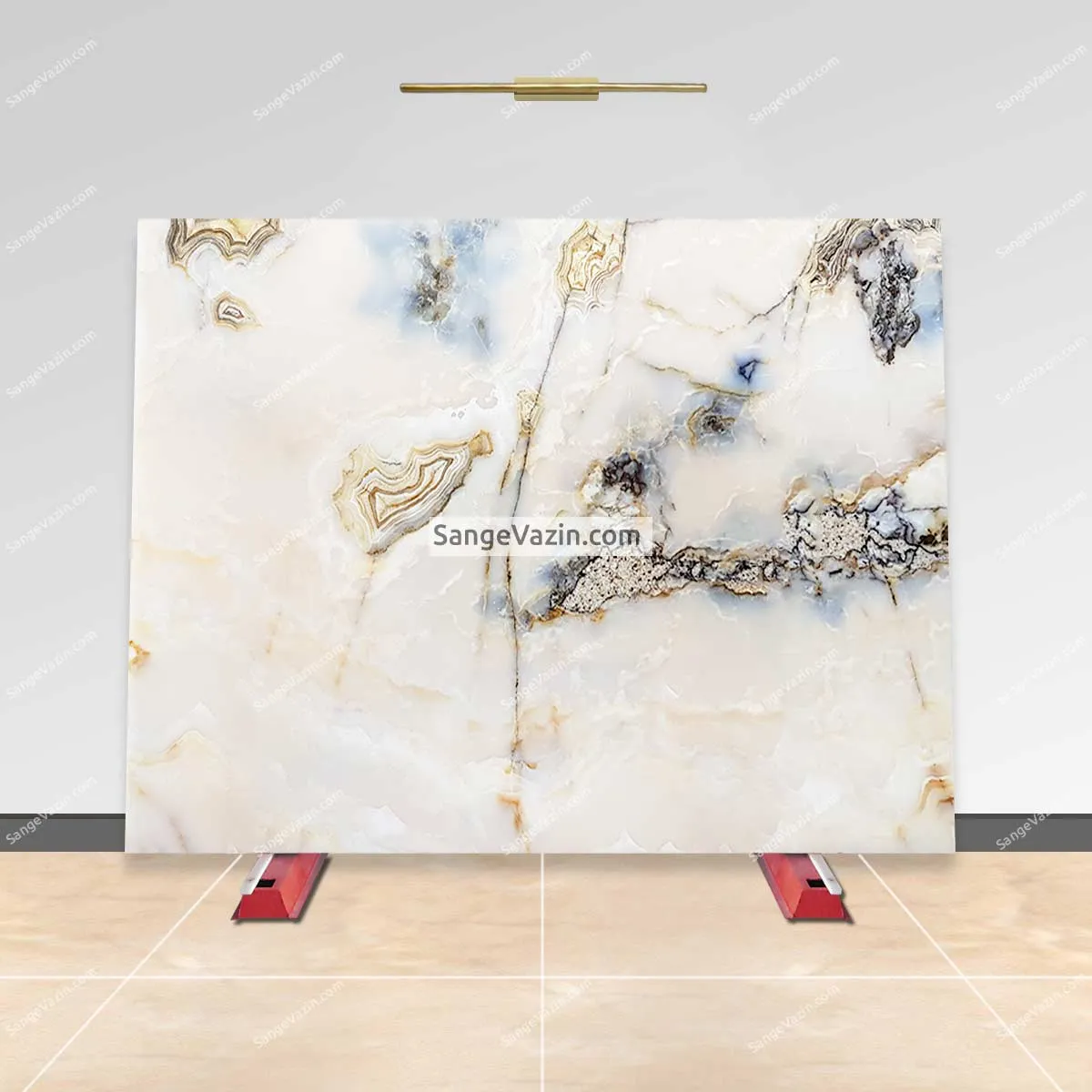
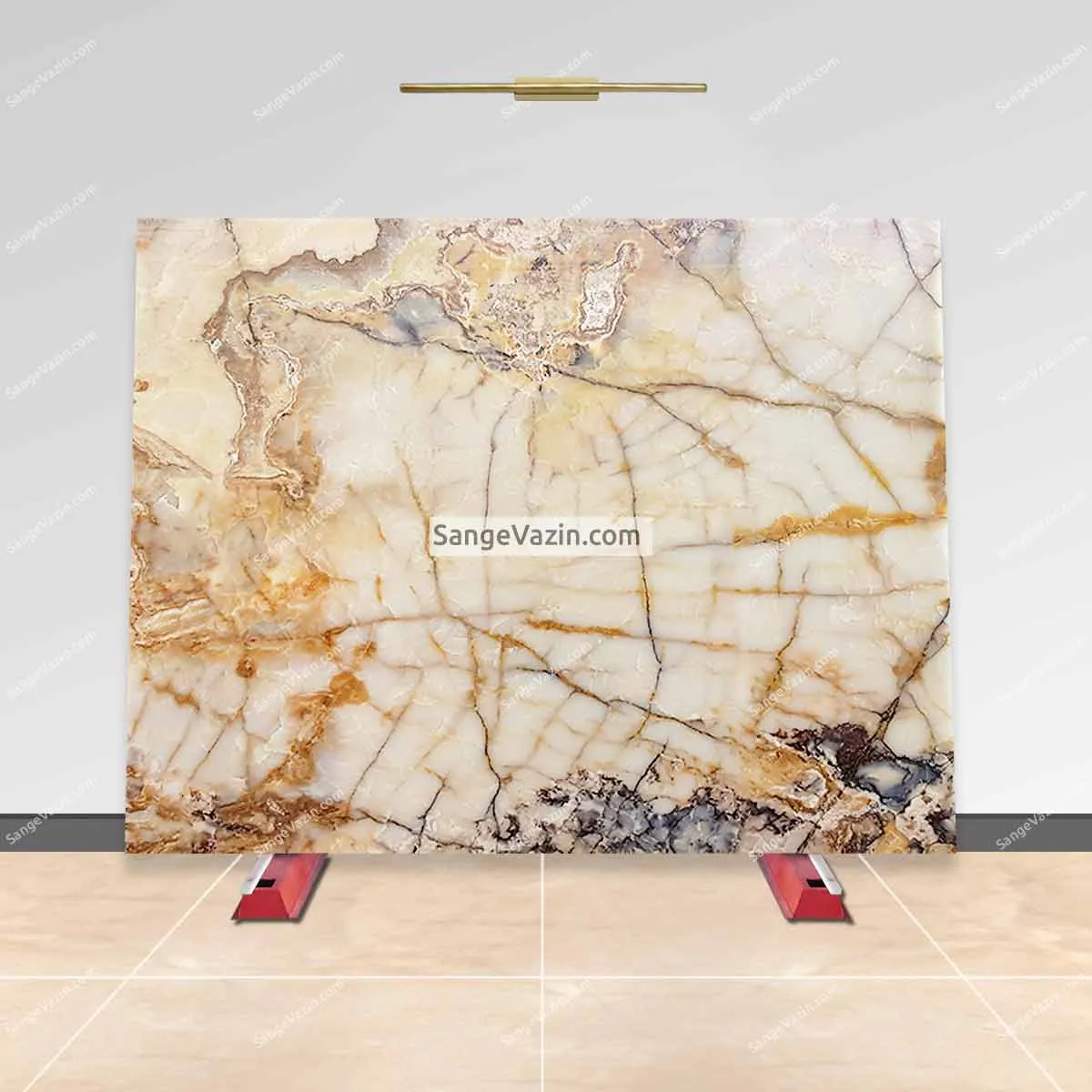
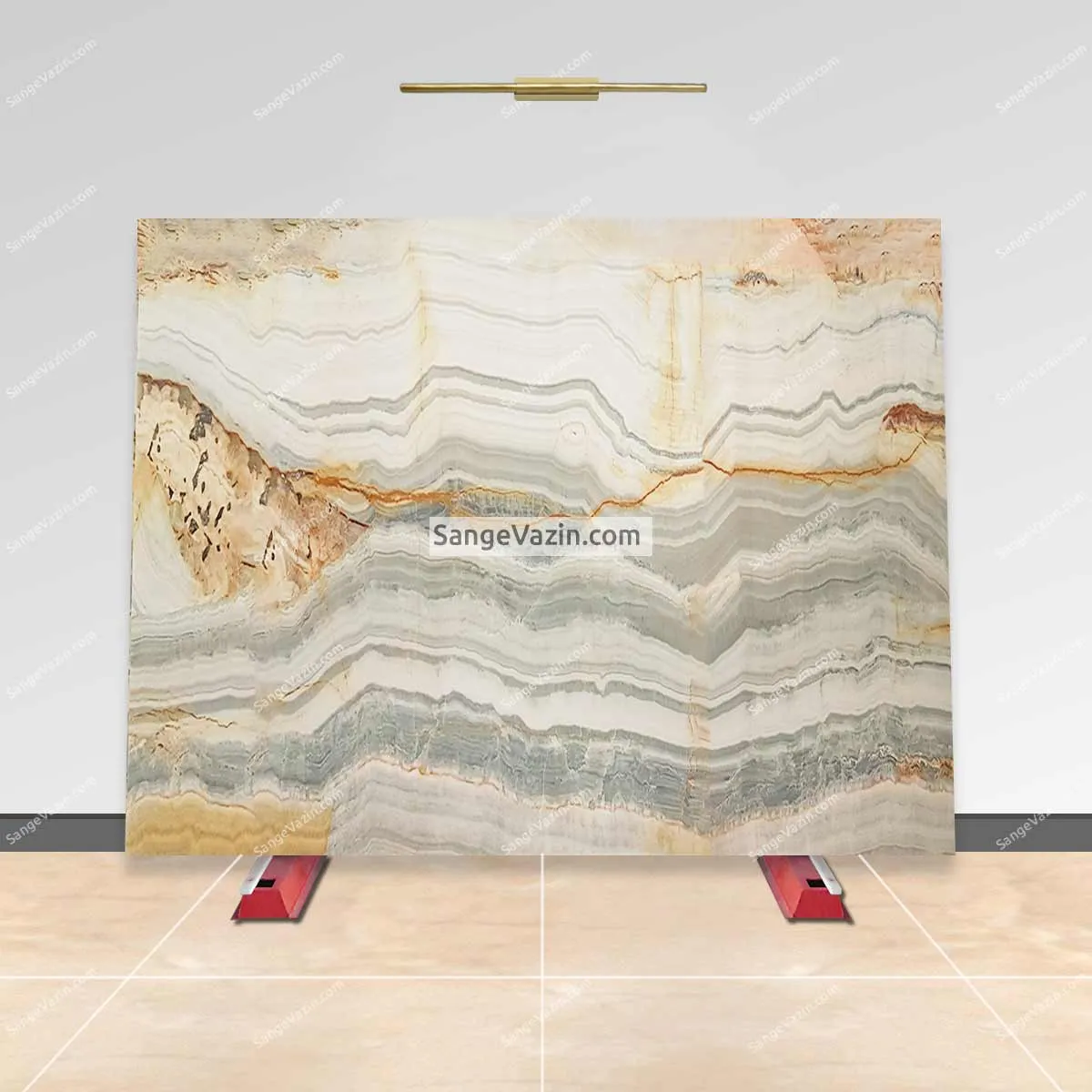
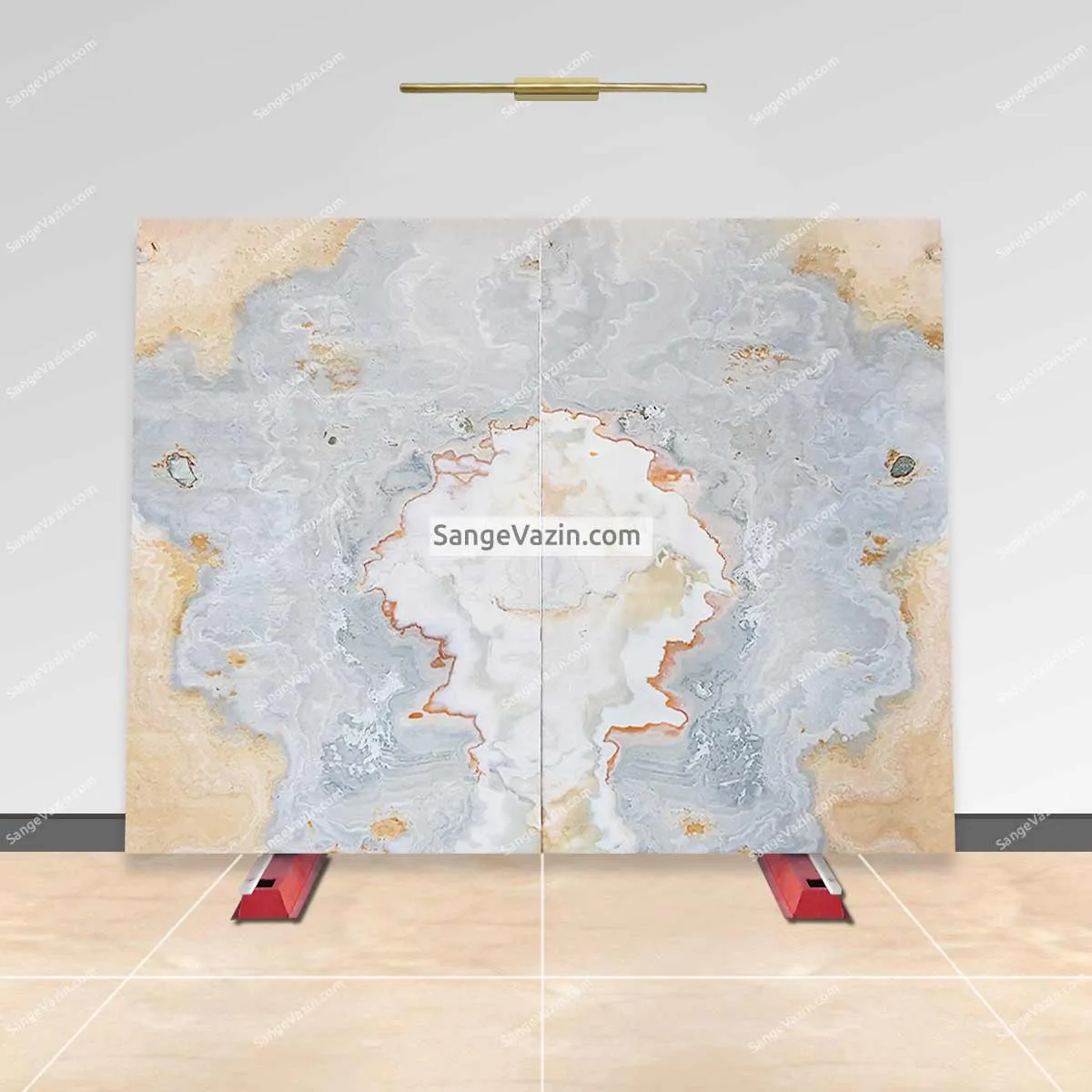
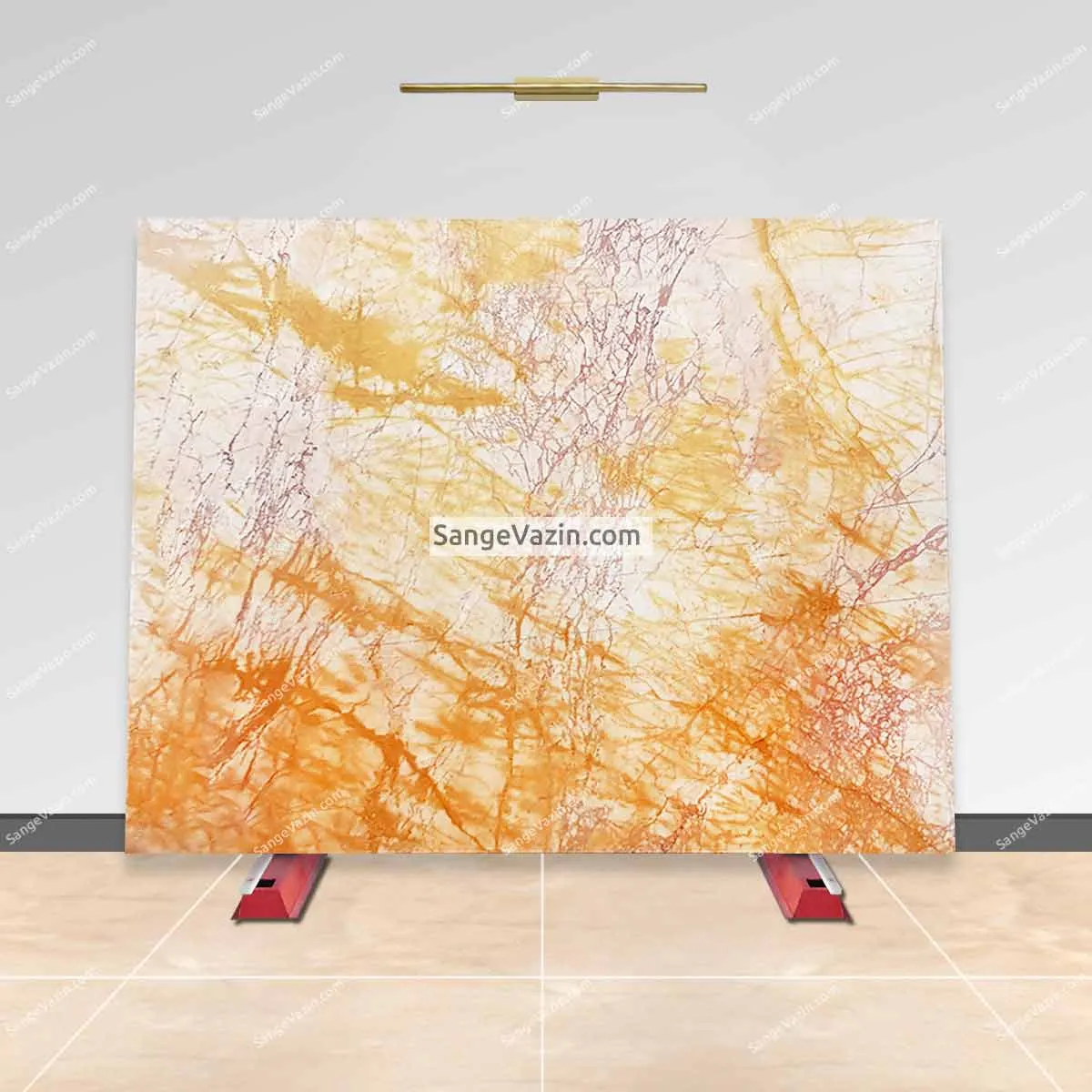
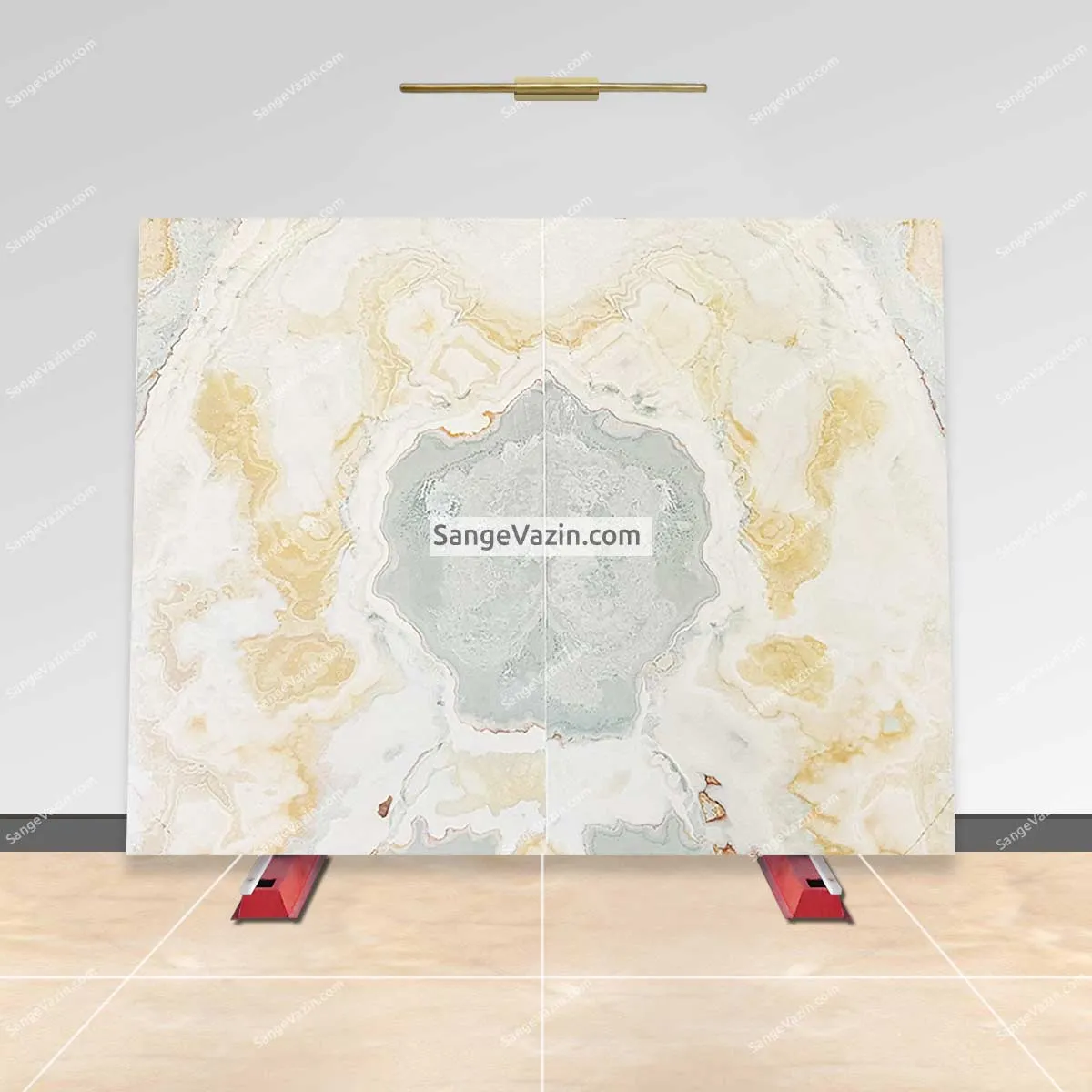
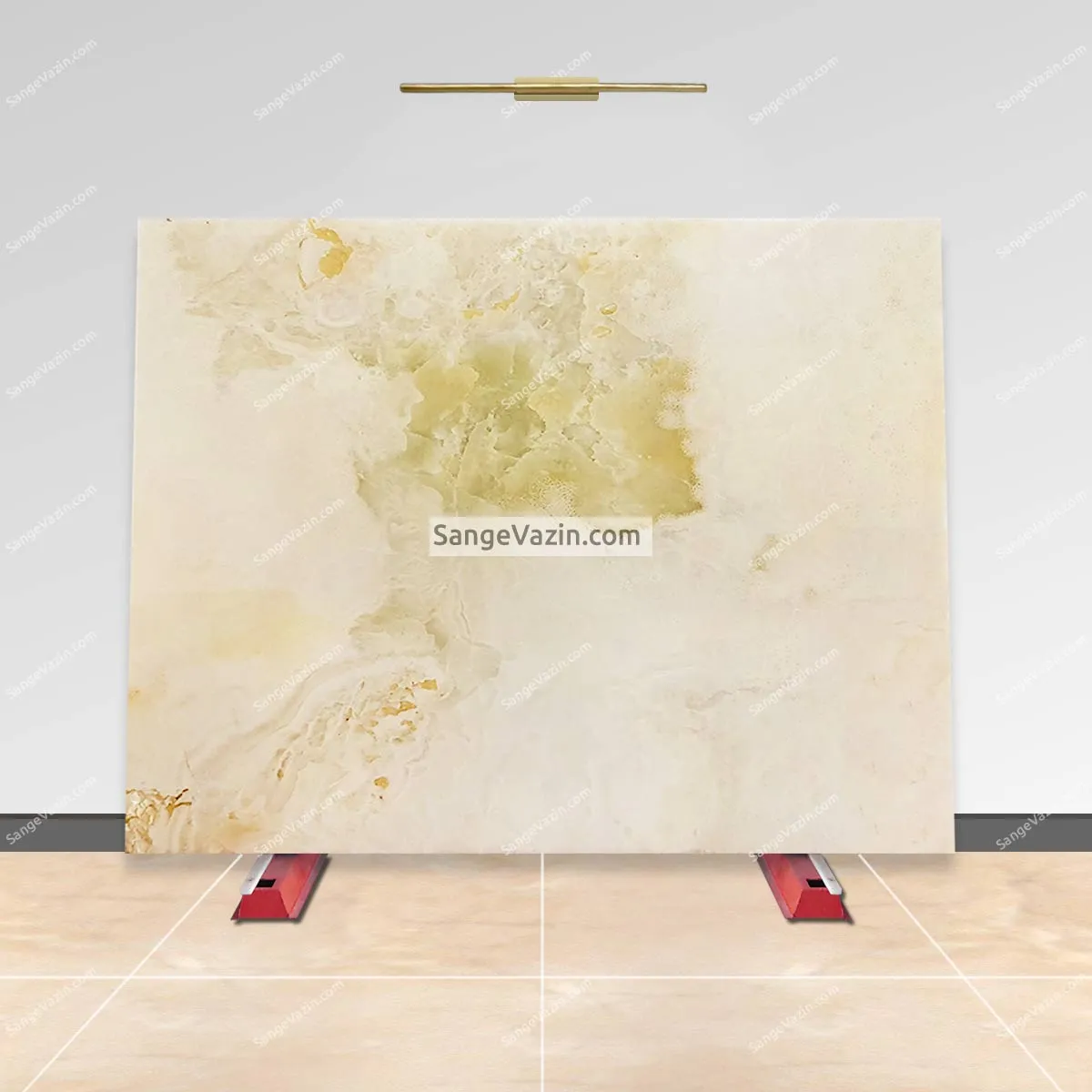
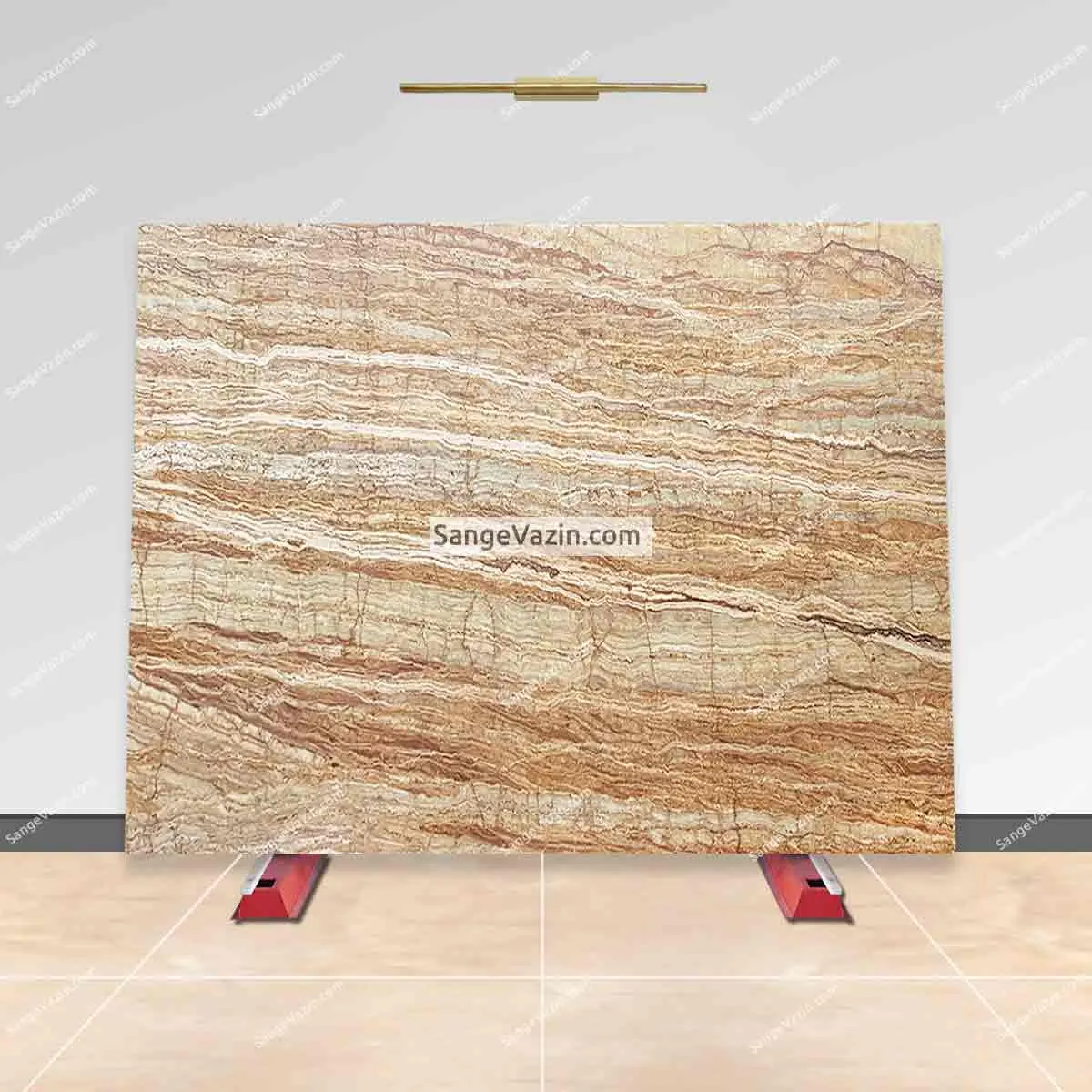
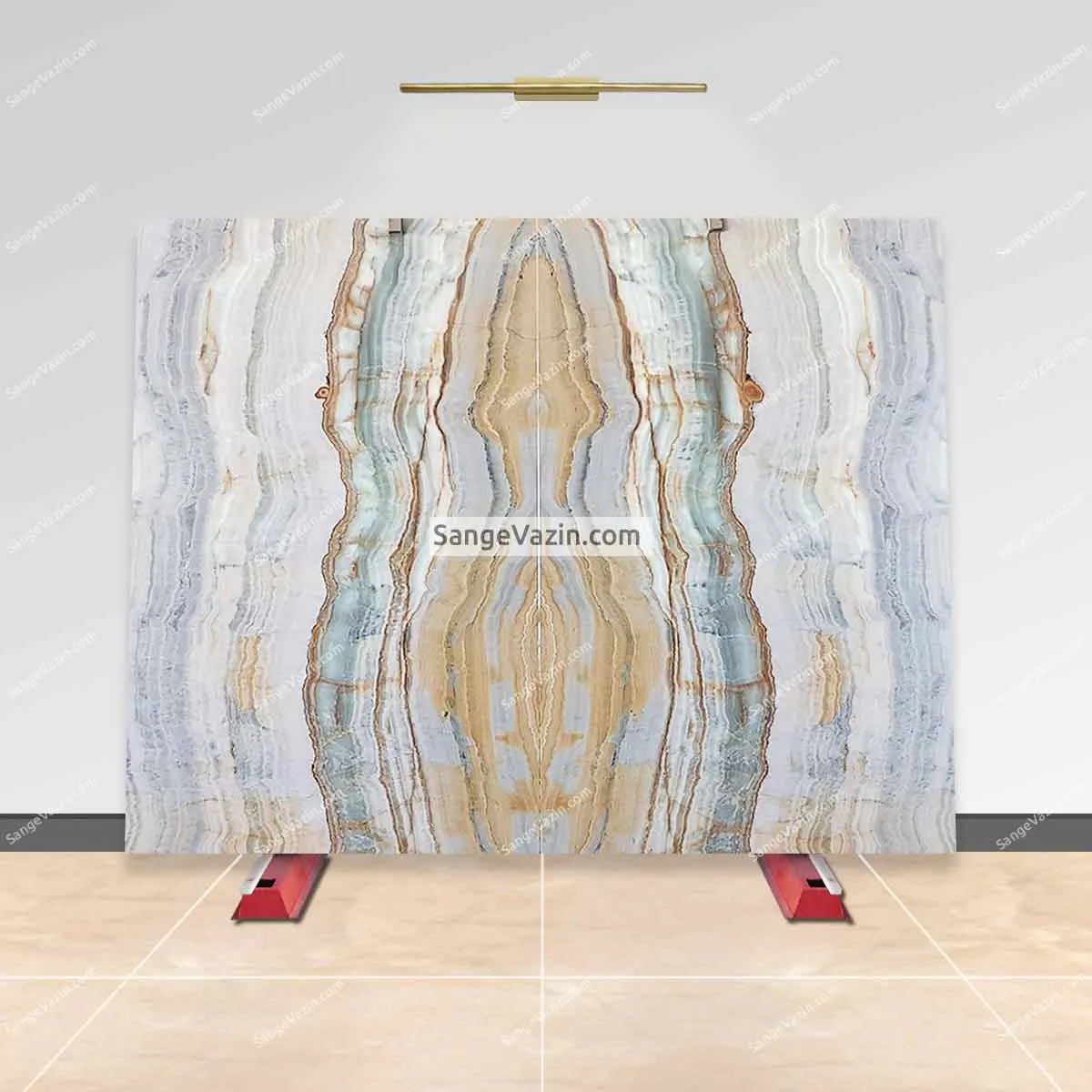
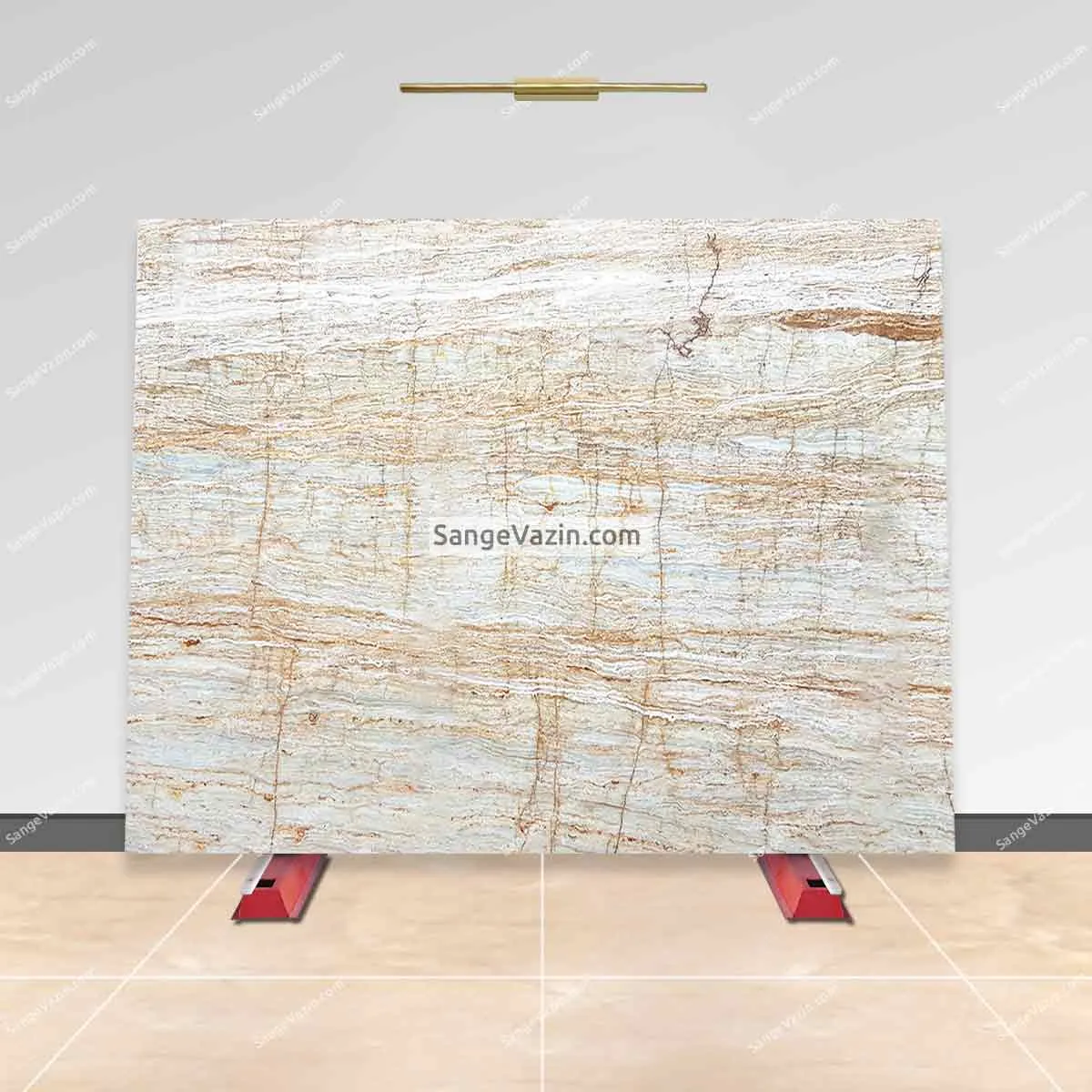
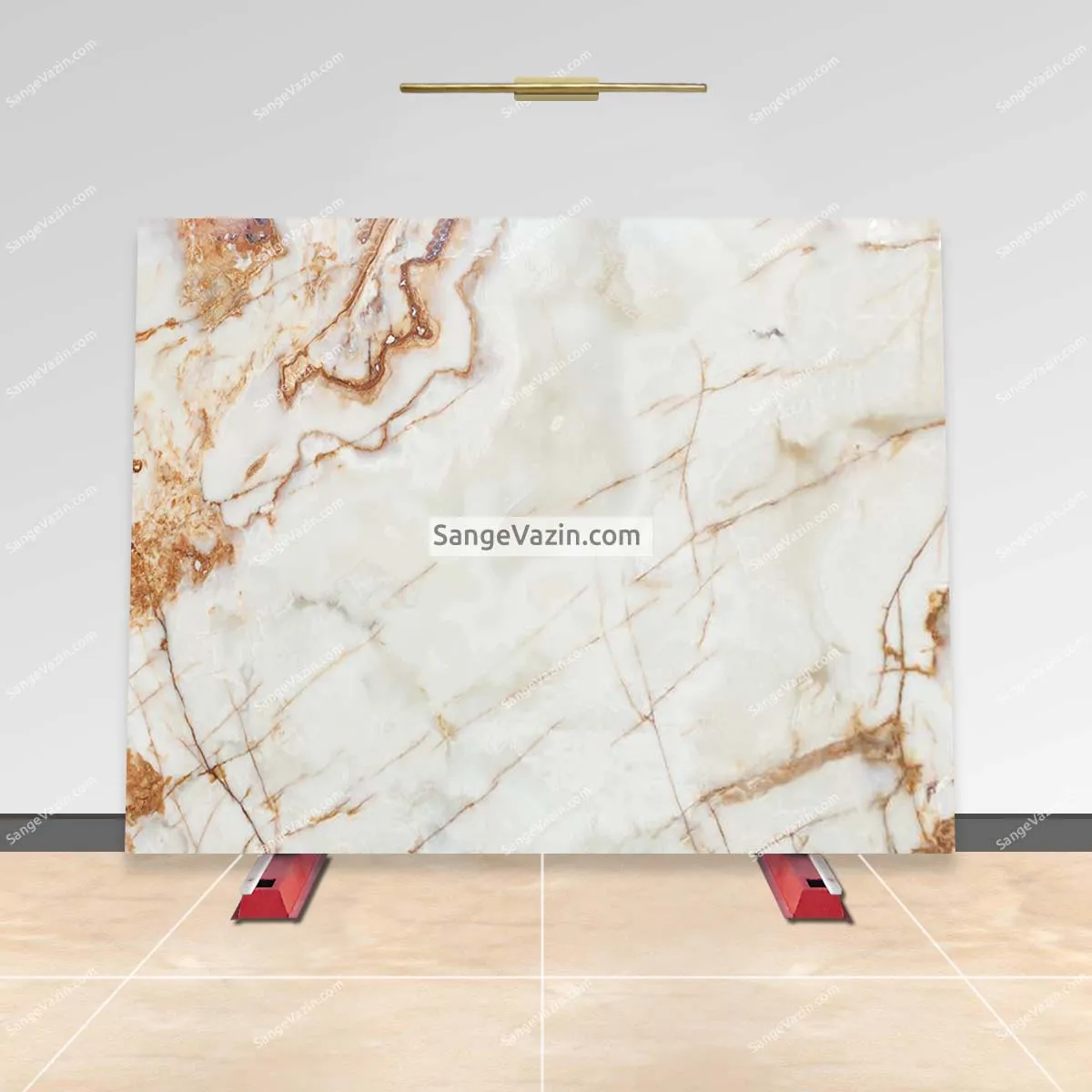
Onyx Book-Matched & Four-Matched Slabs
The symmetrical arrangement of onyx slabs in book-matched and four-matched forms greatly amplifies the visual appeal of this natural stone, making it a striking choice for residential walls, lobbies, hotels, halls, restaurants, and luxury commercial spaces, where it leaves a lasting impression on every viewer.
Onyx in Decorative Onyx Products
Due to its striking patterns, rich colors, translucent crystals, and high polishability, this stone is widely used in the production of decorative stone products.
Tabletops & Countertops
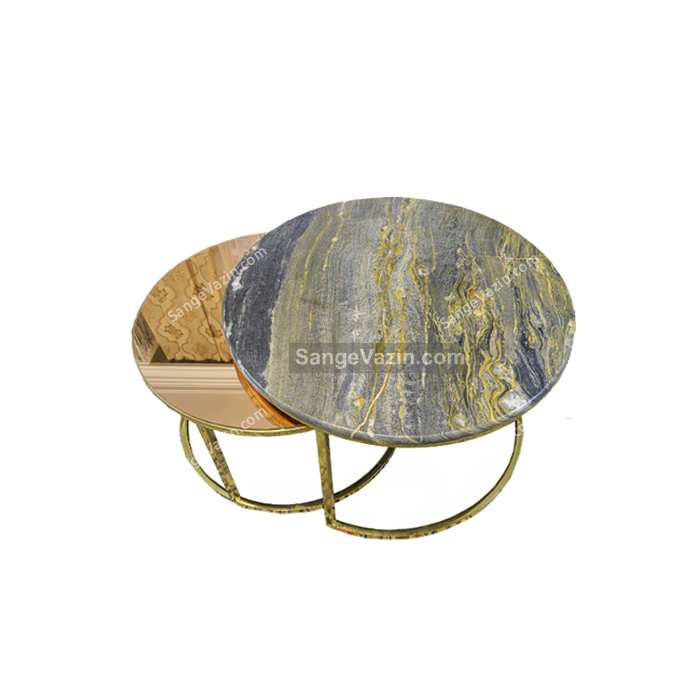
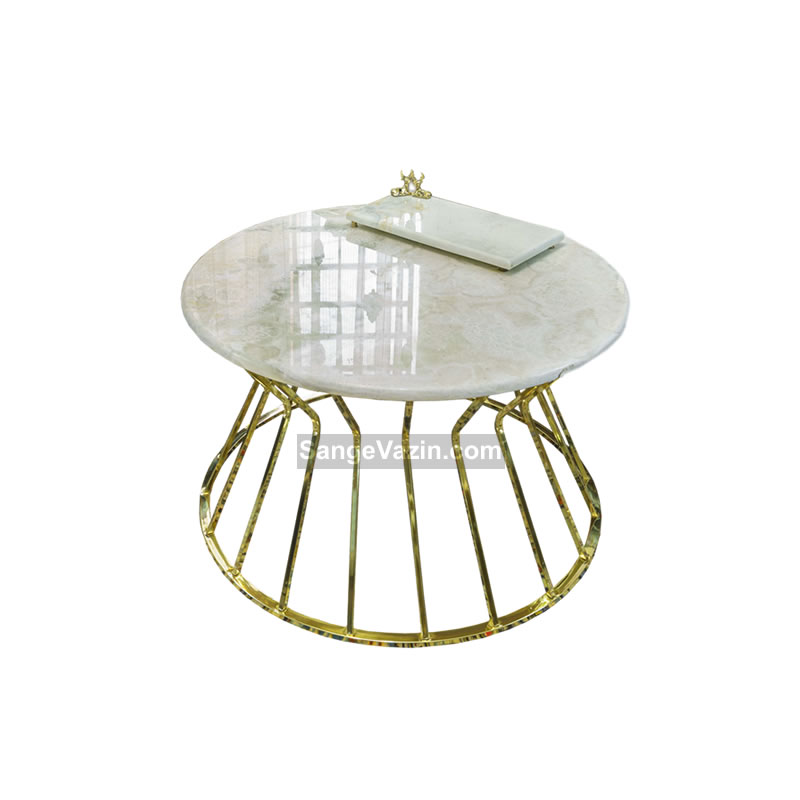
Using this stone for the surfaces of various stone tables, such as coffee tables, dining tables, side tables, stand tables, and console tables, as well as kitchen countertops, adds a refined and elegant visual appeal. In these applications, proper care and maintenance of onyx should be observed.
Lampshade
Onyx lampshades, when backlit, highlight the stone’s natural translucency, revealing its veins and texture and creating a striking visual effect.
Other Artifacts
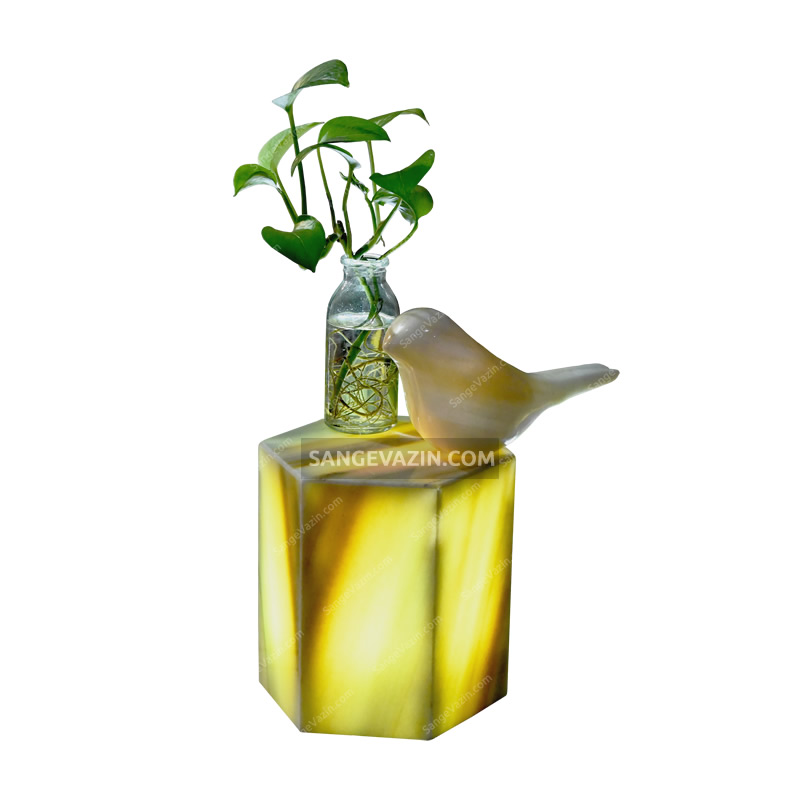
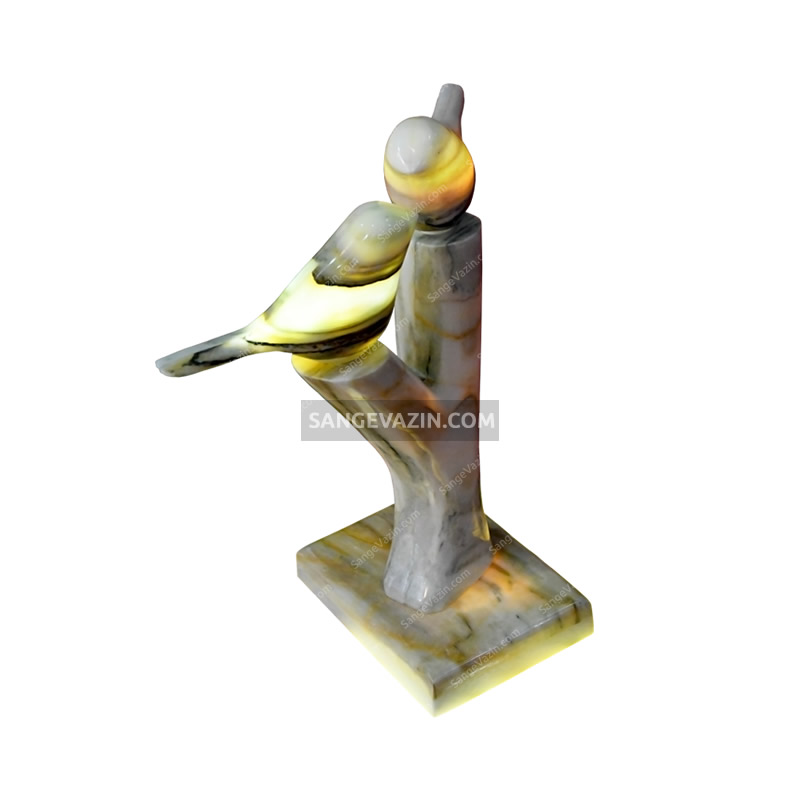
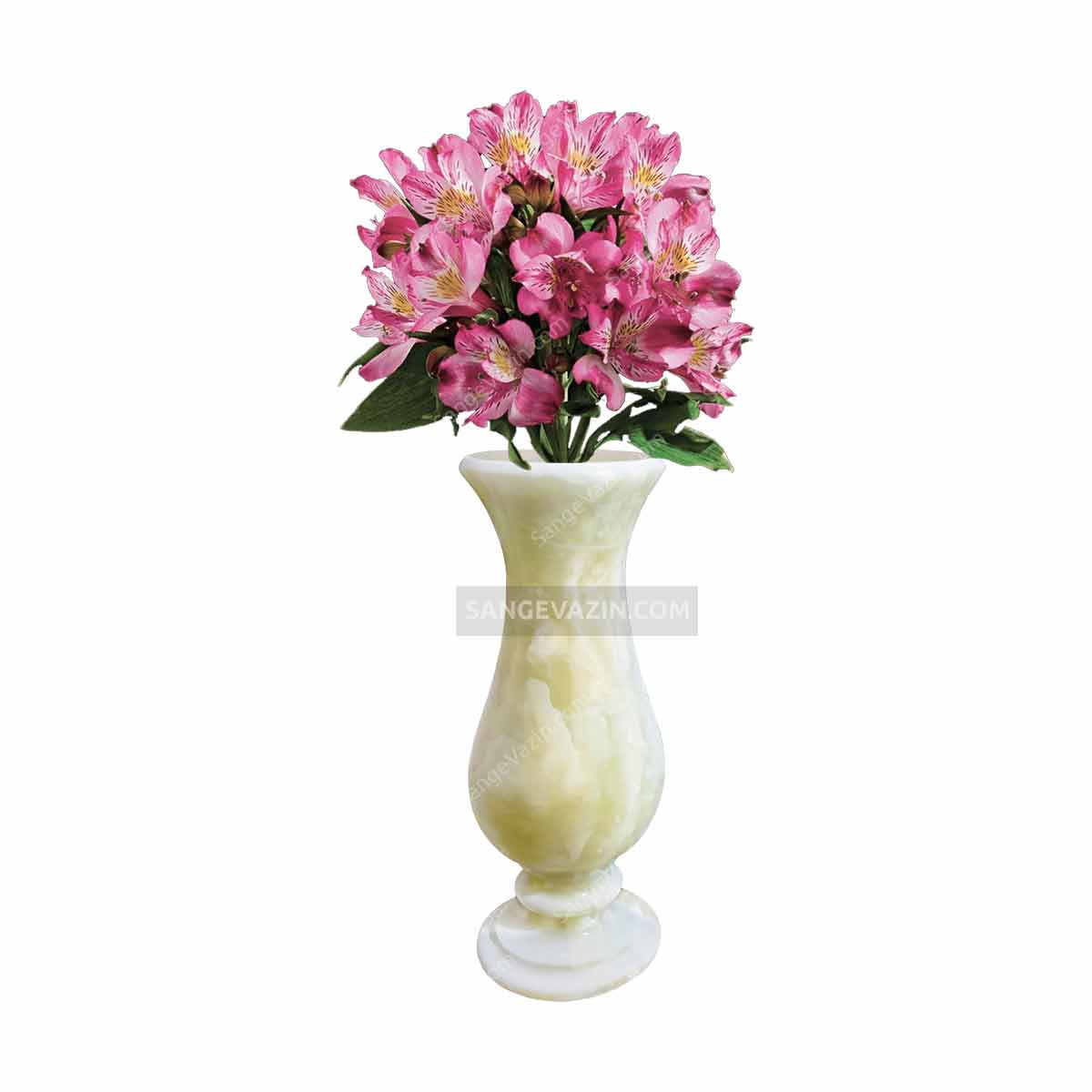
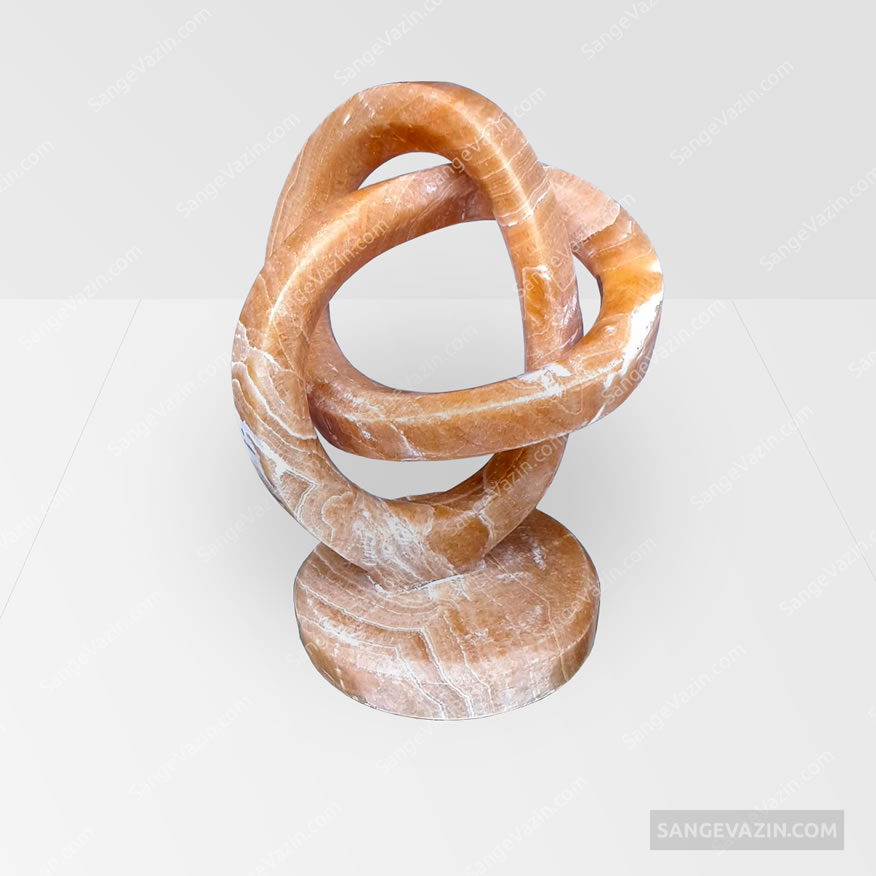
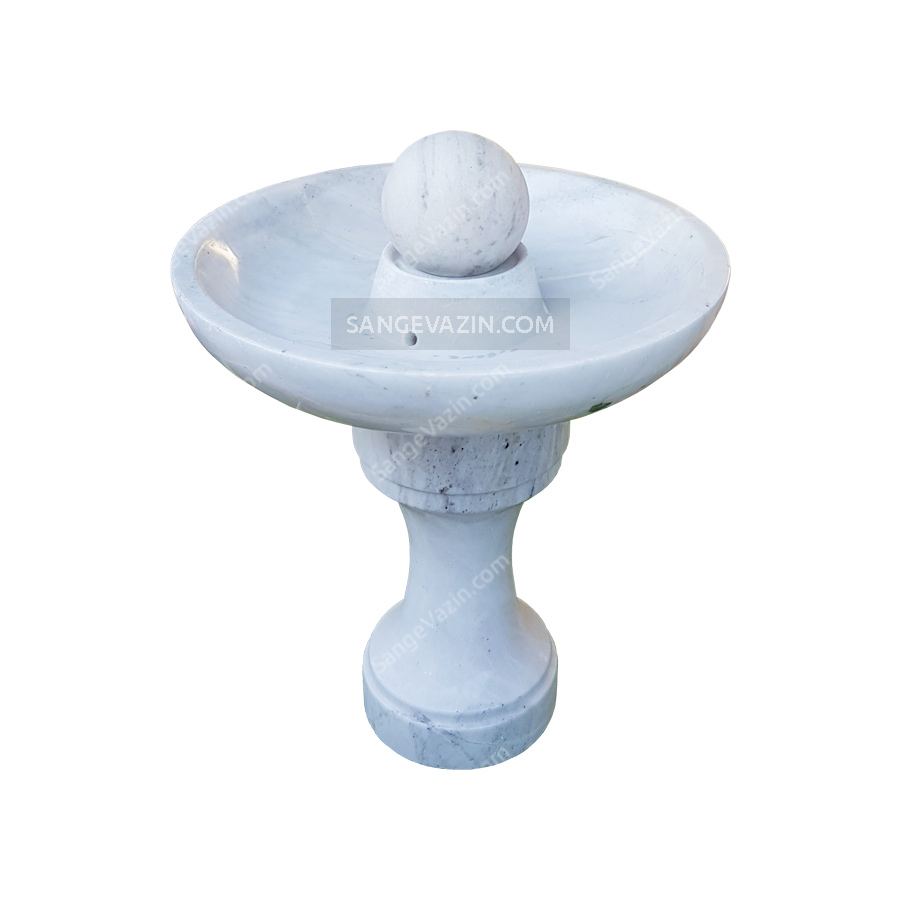
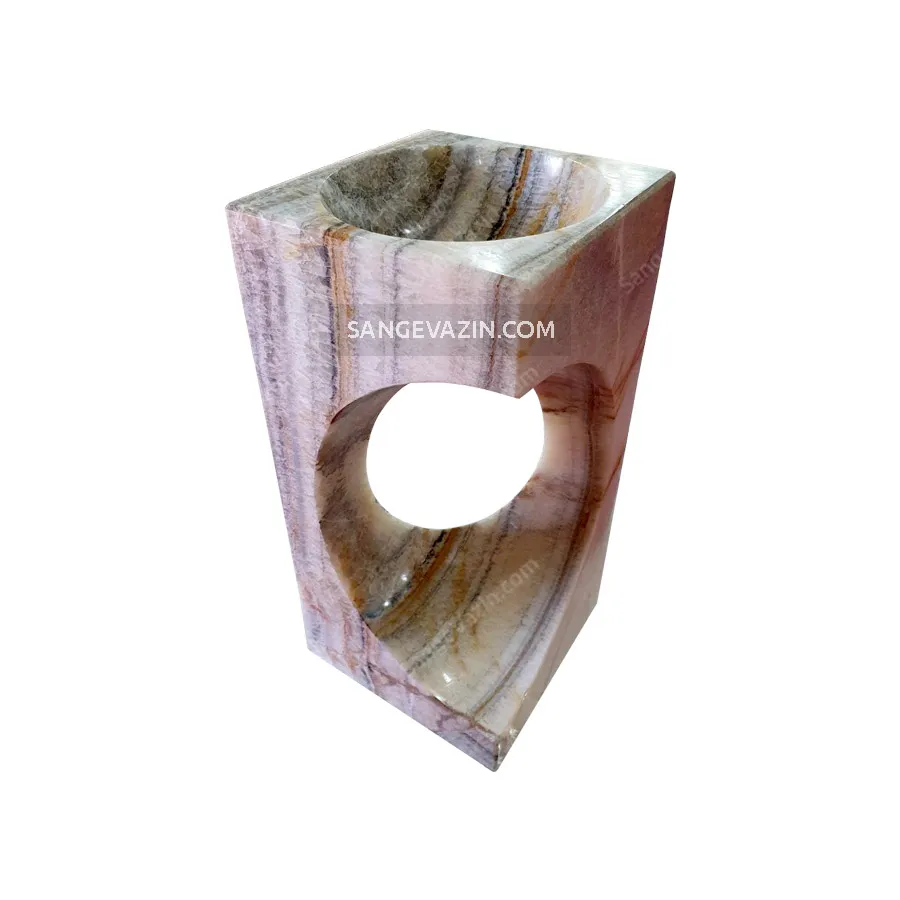
Furthermore, a wide range of decorative elements, including flower pots, sculptures, fountains, and washstands, can be crafted from onyx, showcasing its natural beauty and adding a sophisticated touch to any space.
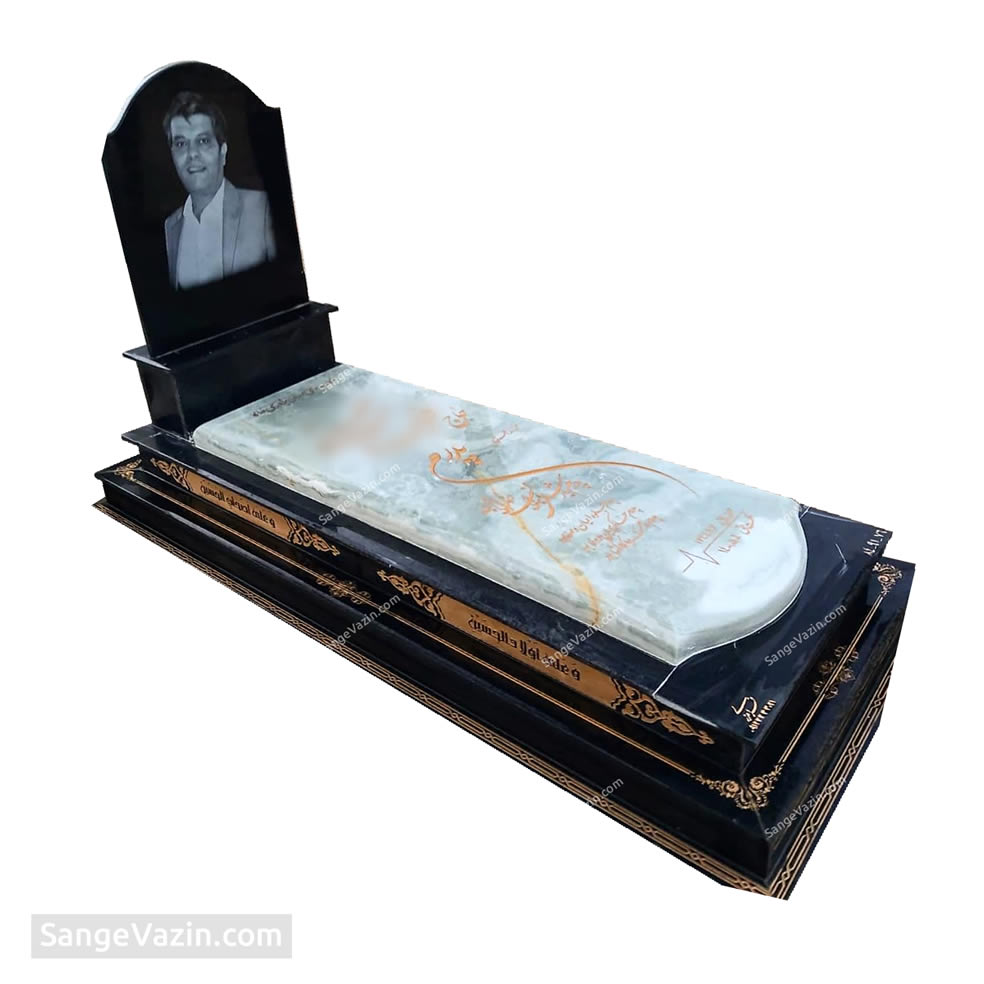
Onyx Tombstones
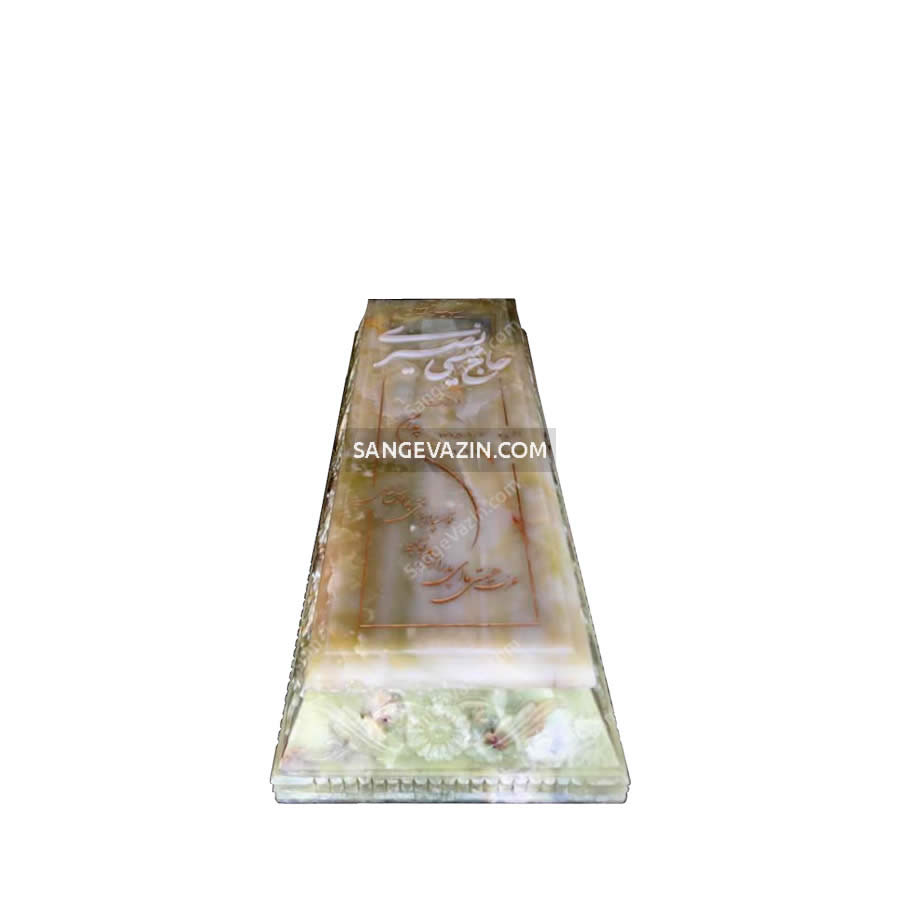
A common application of this exquisite stone is in tombstones and grave markers, valued for its naturally rich colors and the serene, timeless presence it brings.
Foreign Onyx Stones
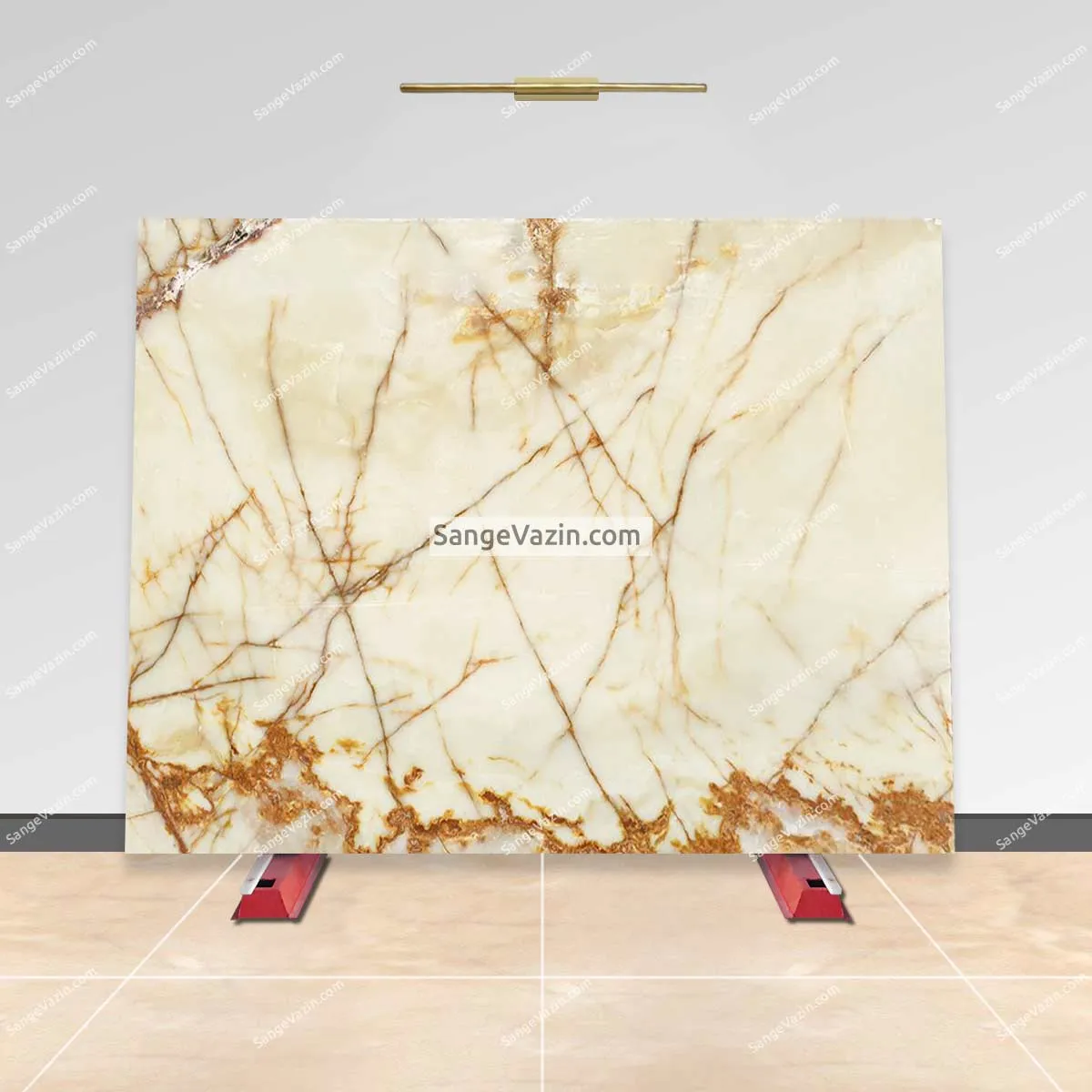
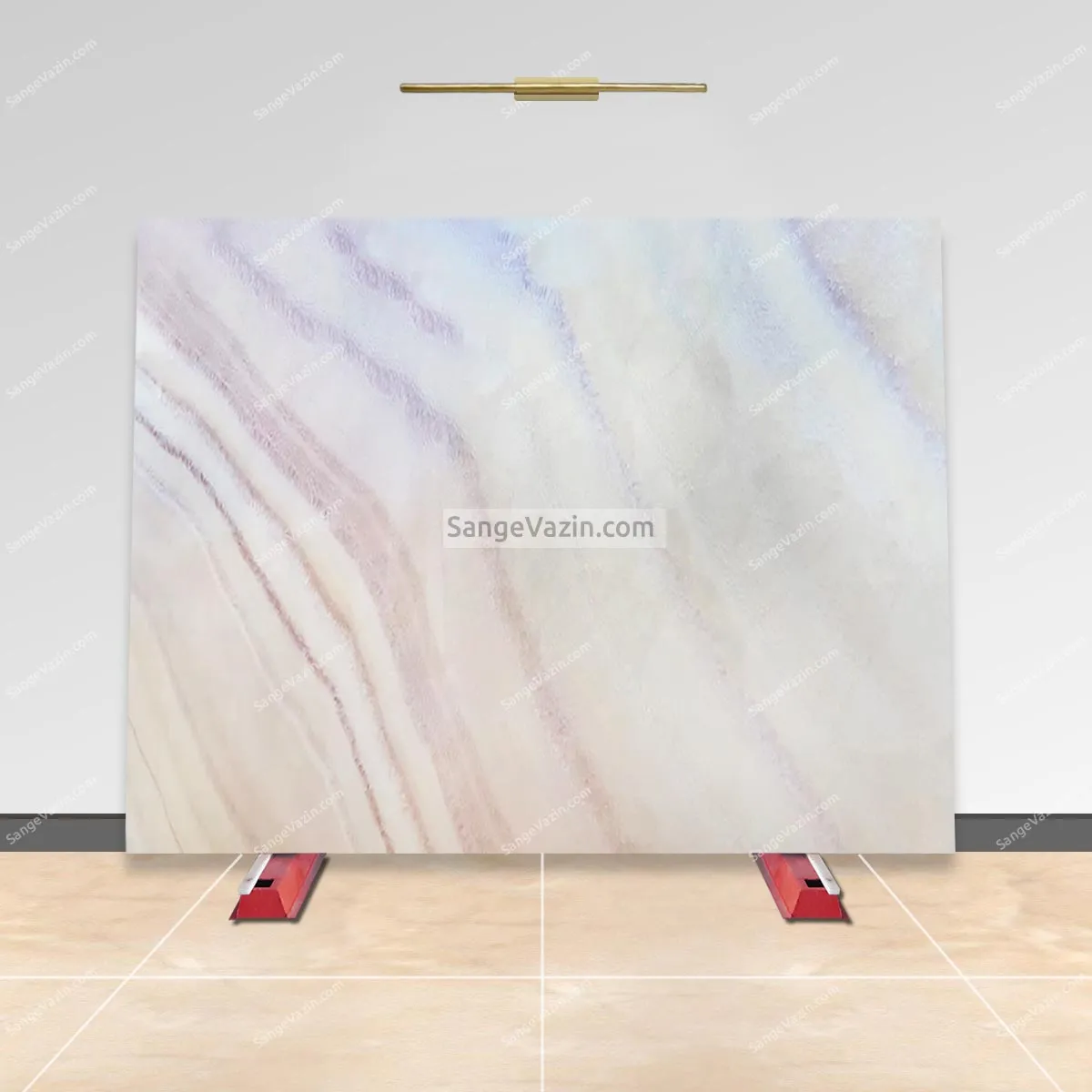
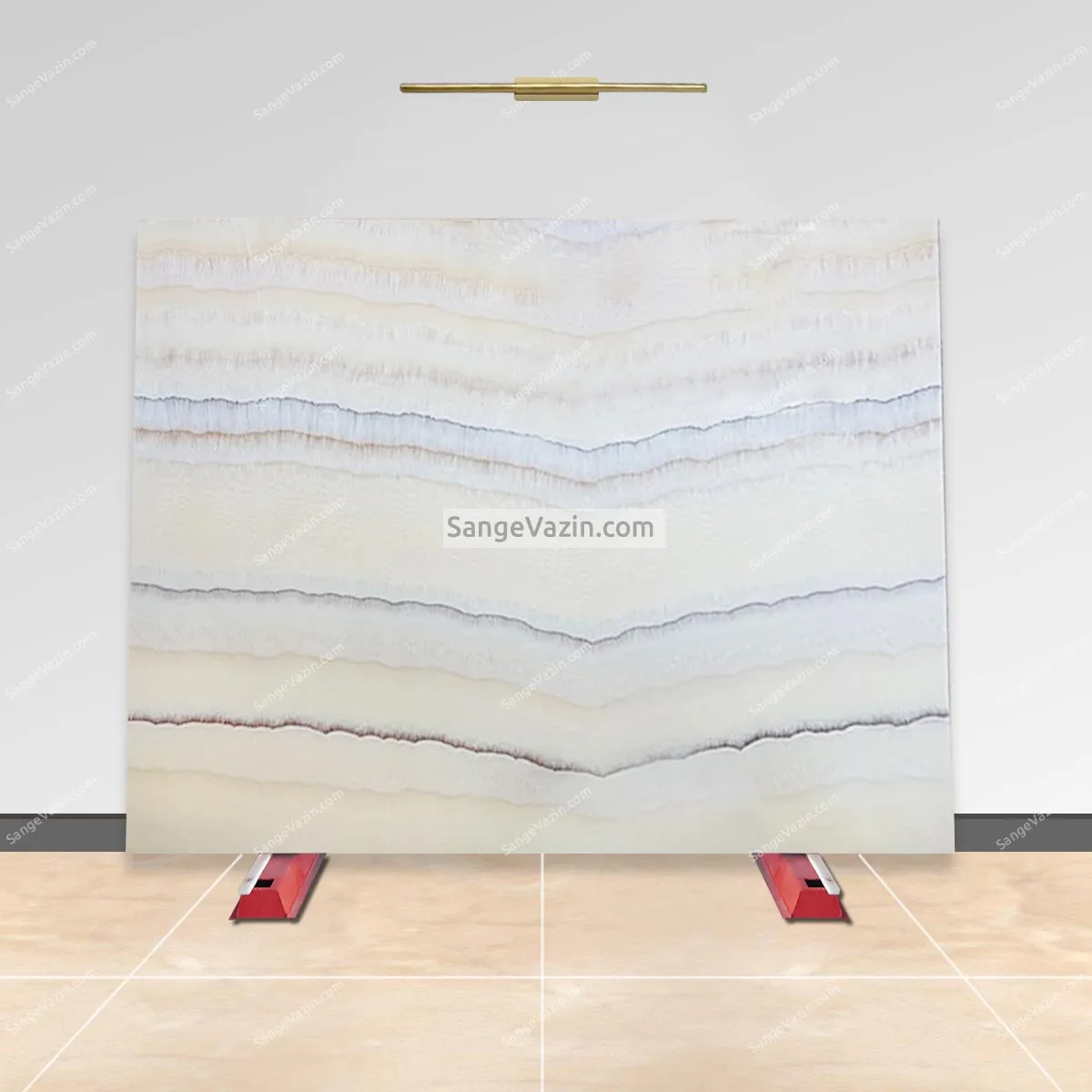
In the gallery below, you can view a selection of imported onyx stones. Due to their limited availability and foreign origin, these stones are offered in smaller quantities and at higher prices compared to Iranian onyx. As shown in the gallery, their patterns are also distinct from those of local stones.
Light Transmittance of Onyx
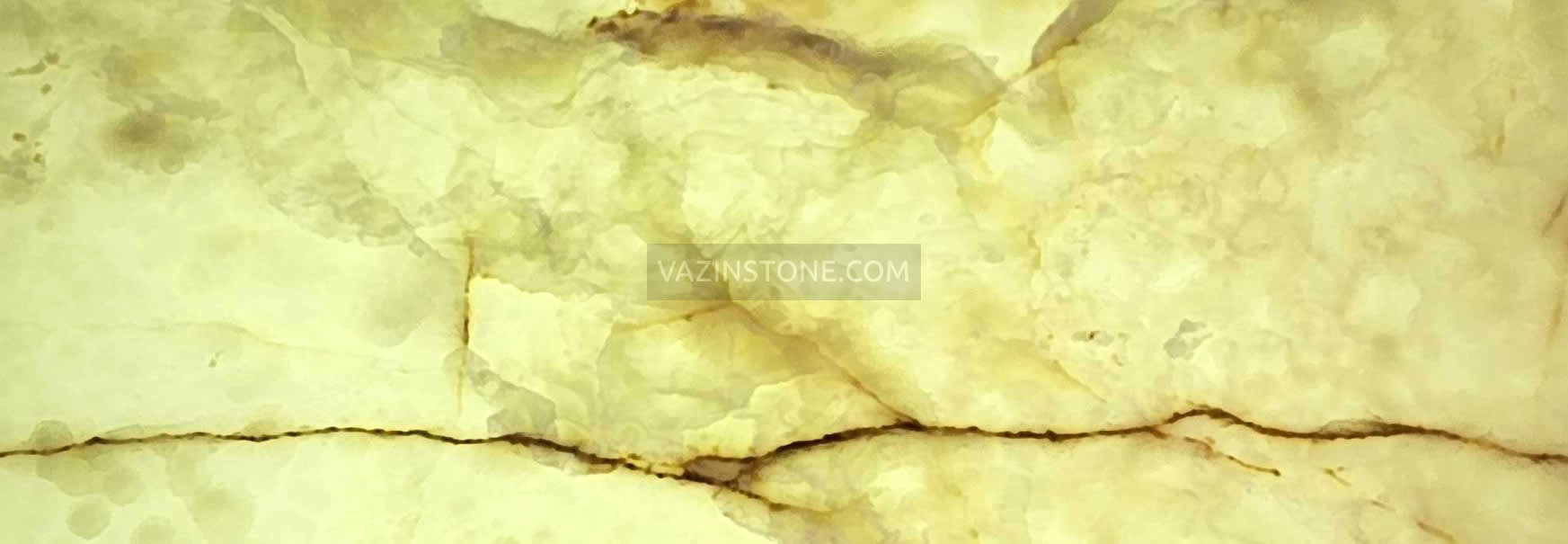
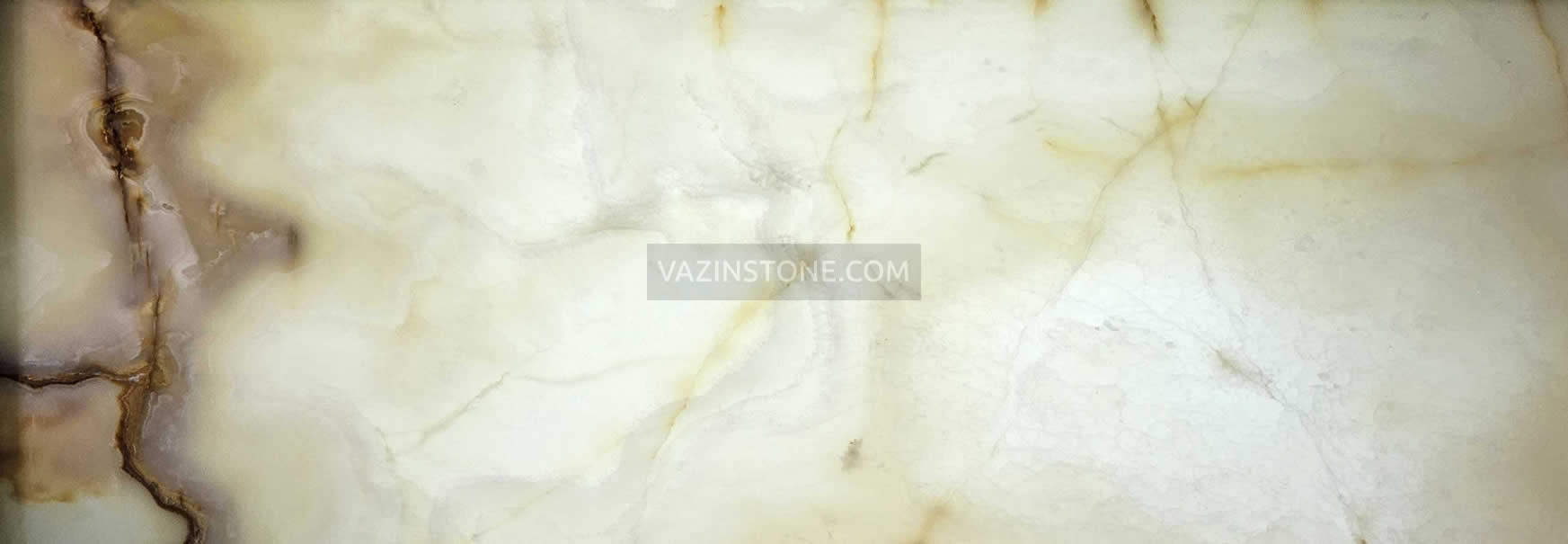
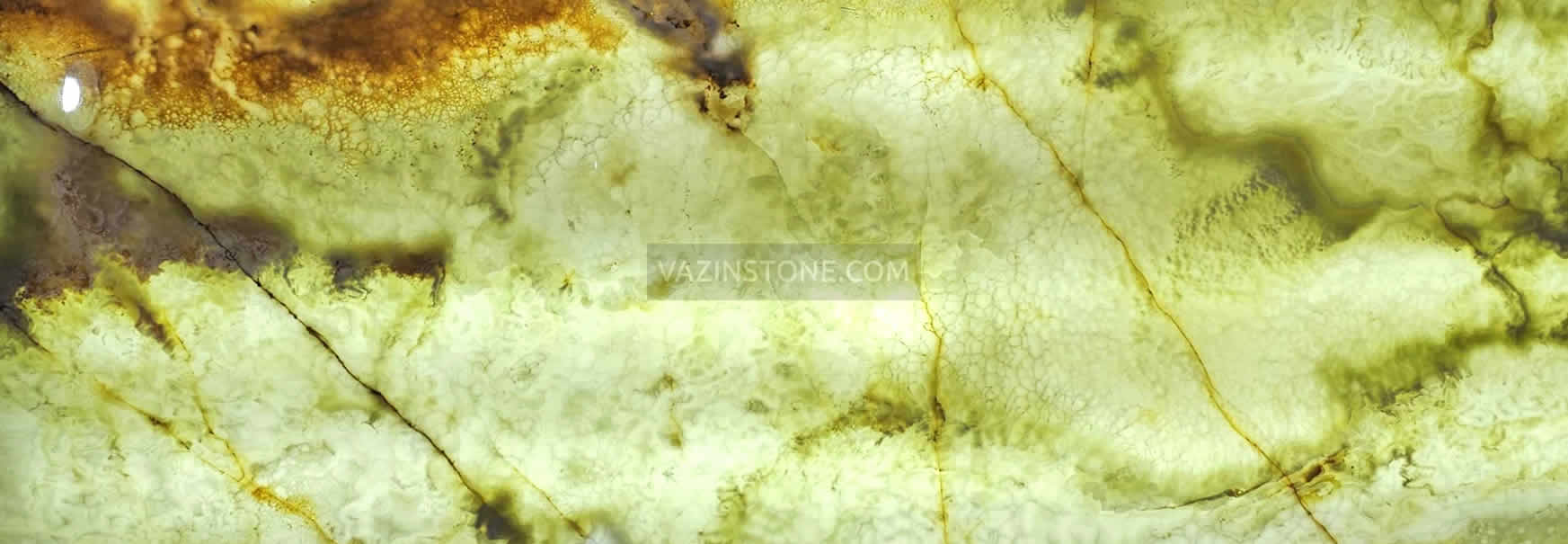
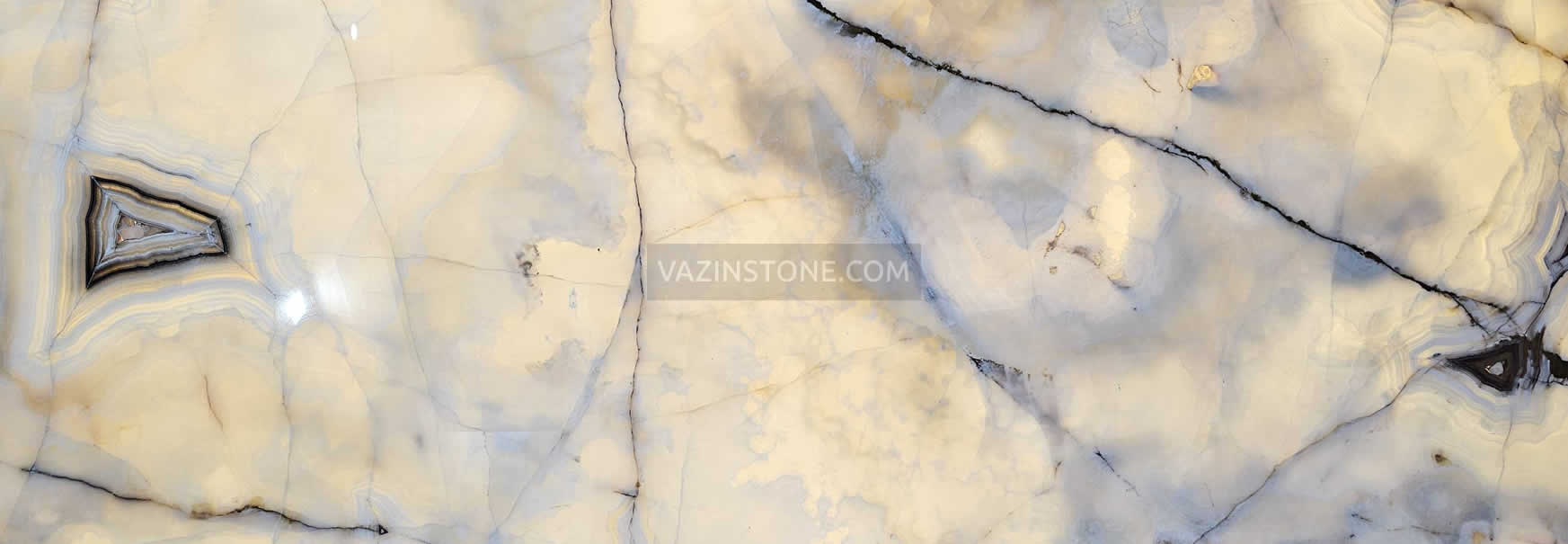
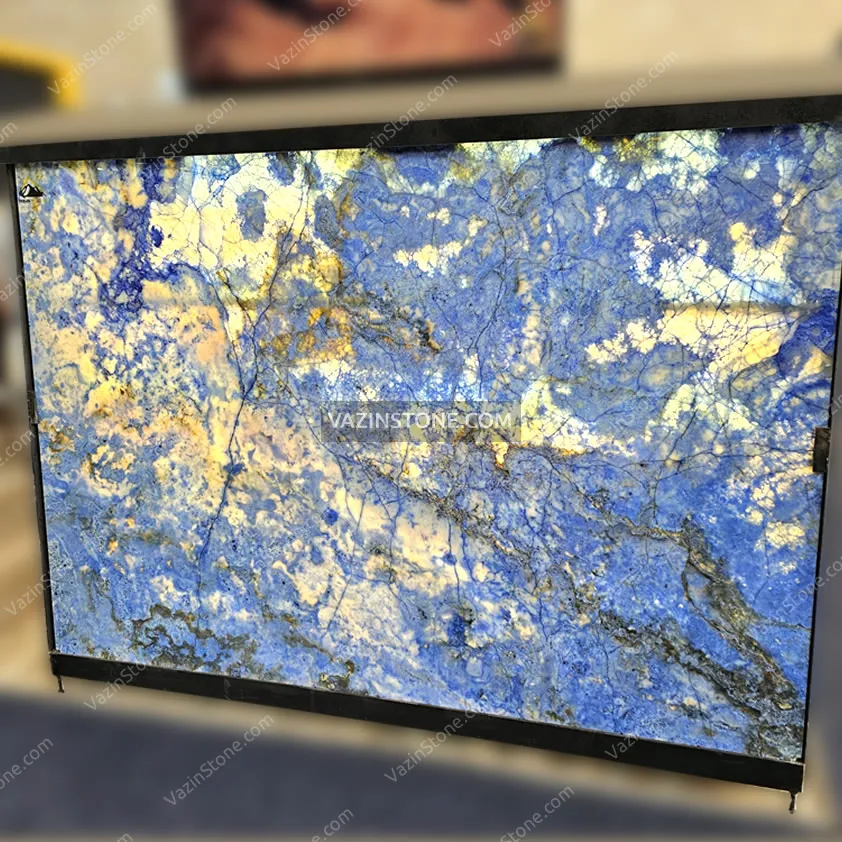
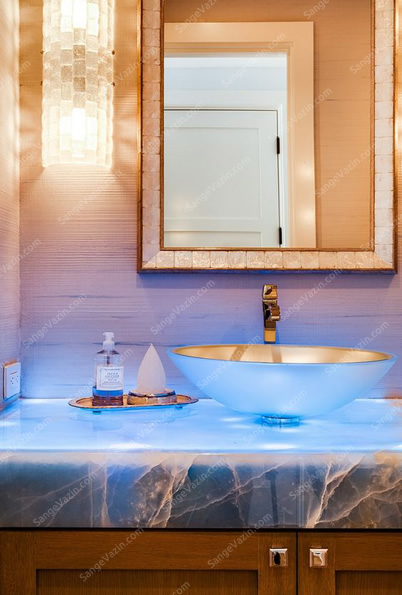
Since onyx stones have high polishability and natural light transmittance, installing LED panels behind these types of stones is an excellent choice in interior design and décor. In the section below, you can explore images of onyx stone showcasing its backlit effect.
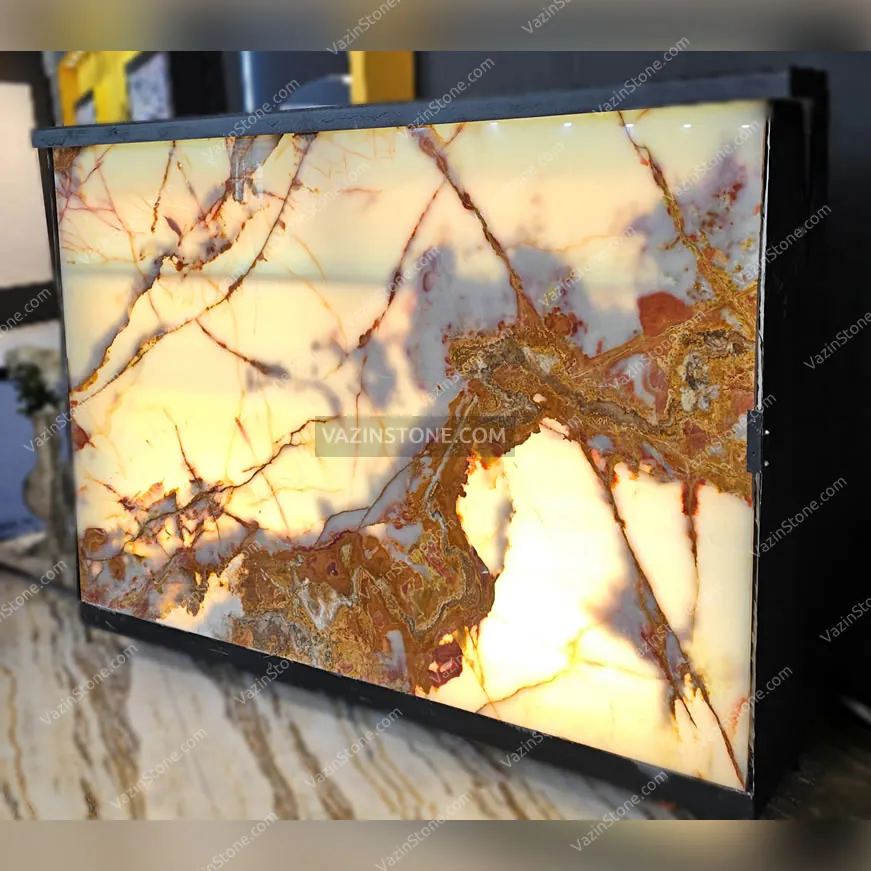
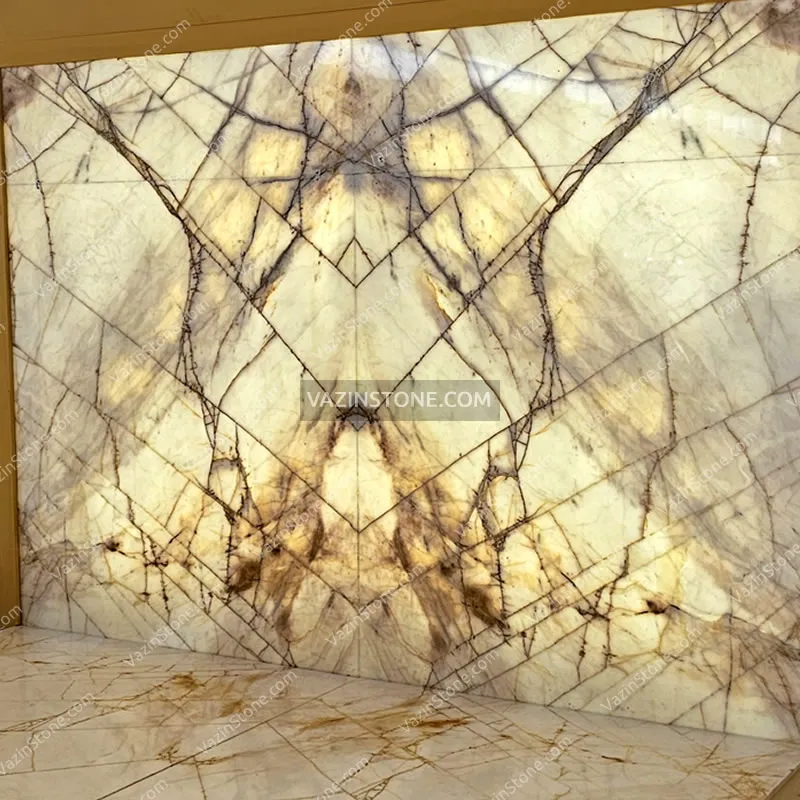
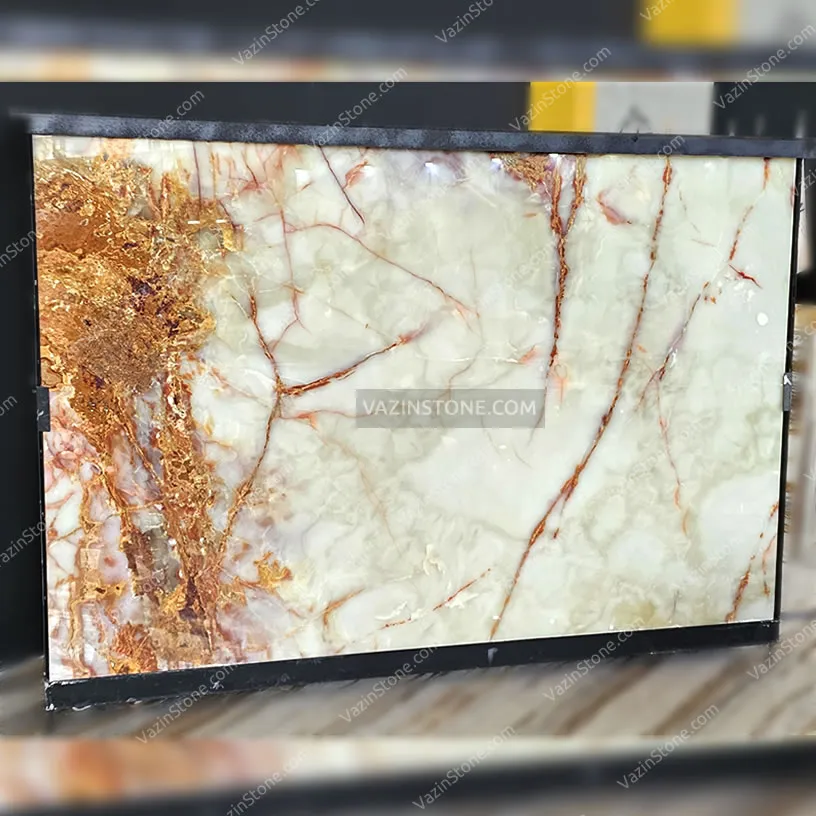
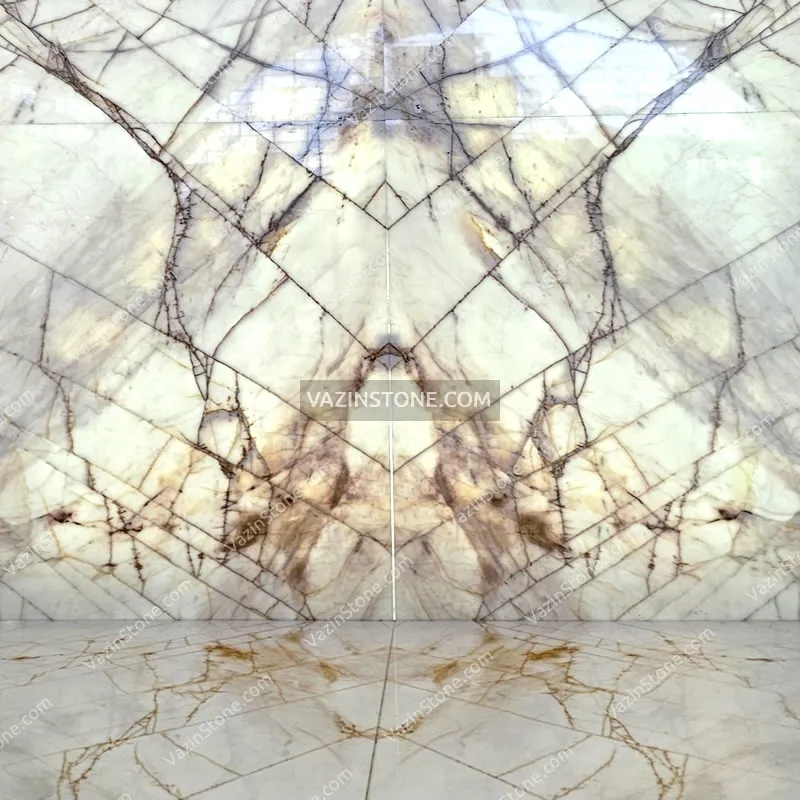
Texture & Color Of Onyx Stones
Onyx stones are mostly categorized by color. The following provides a concise overview of the different patterns and variations of onyx.
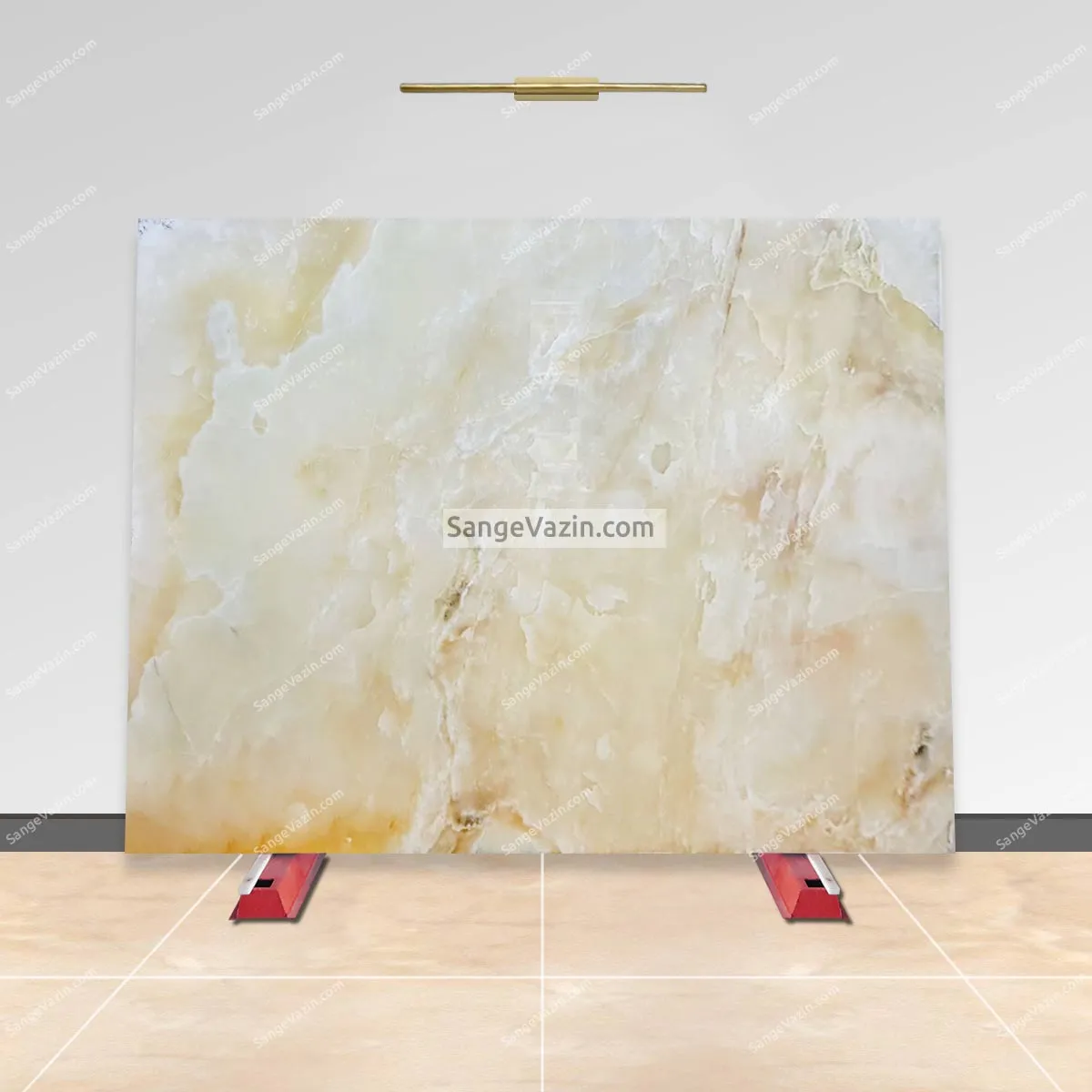
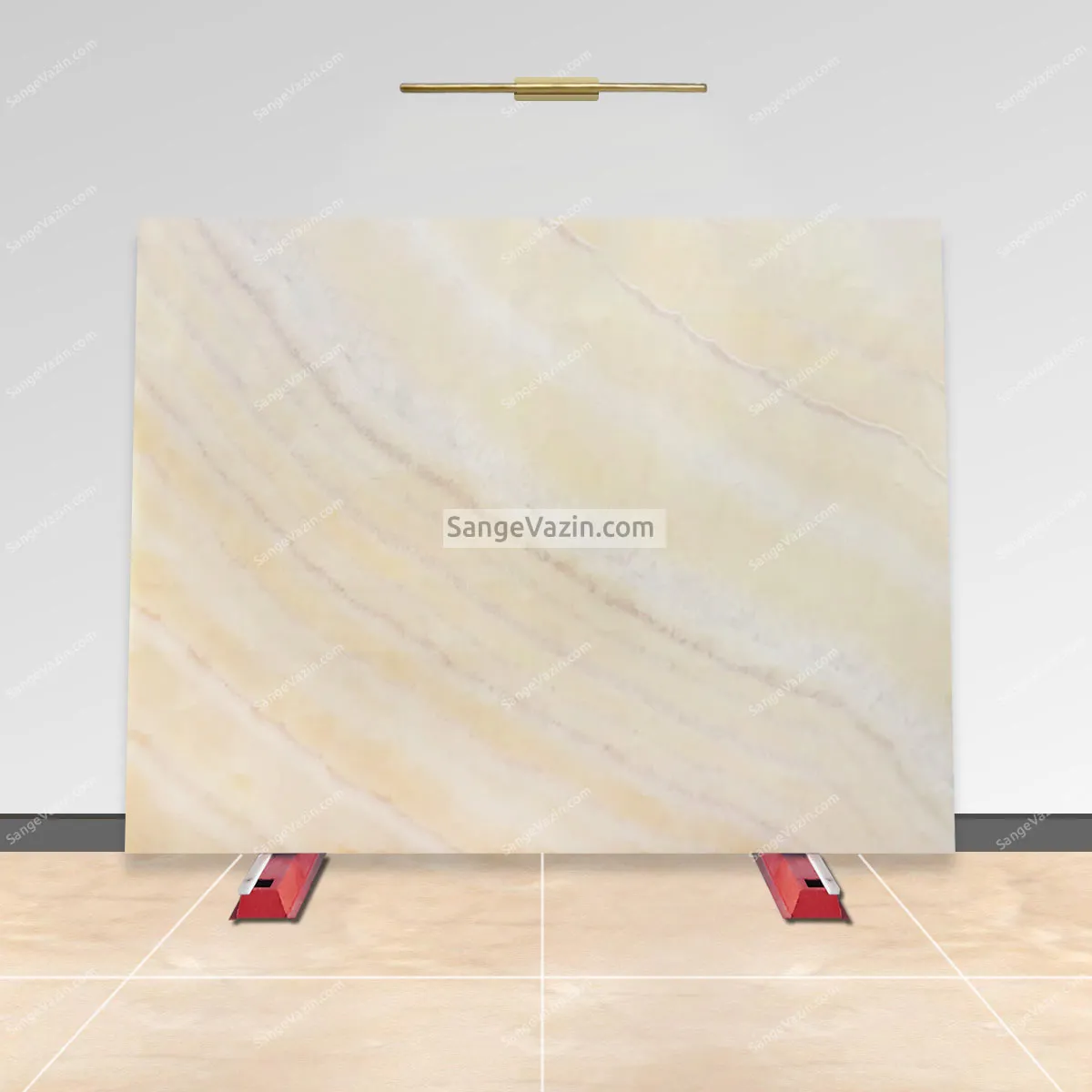
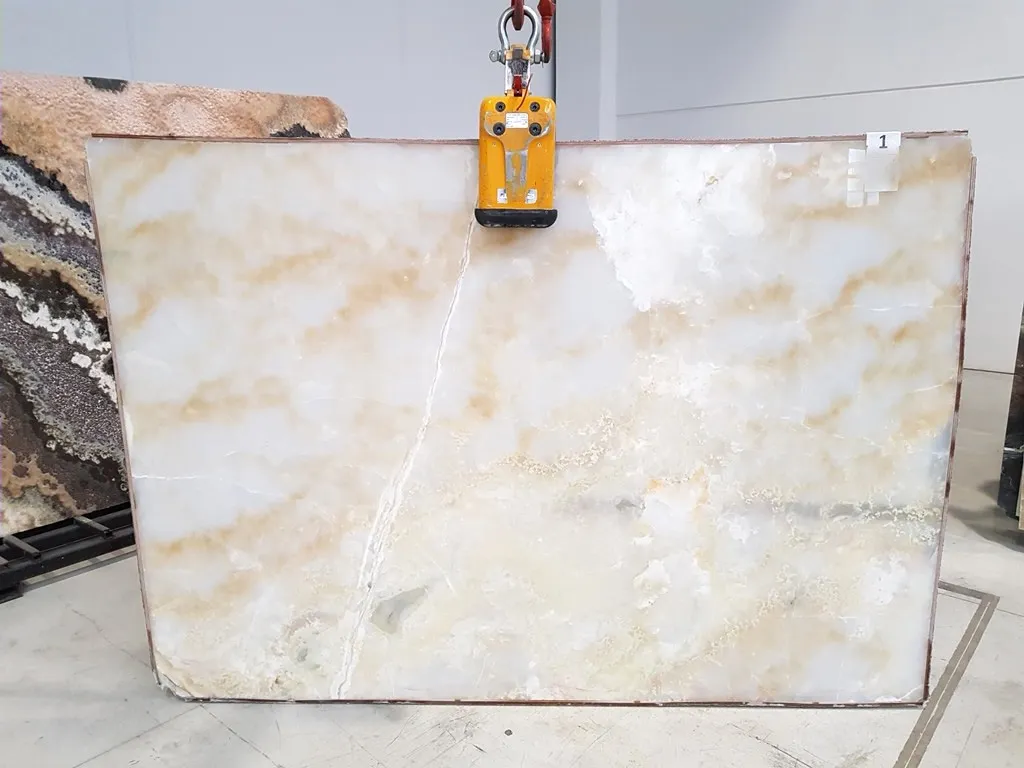
Cream Onyx
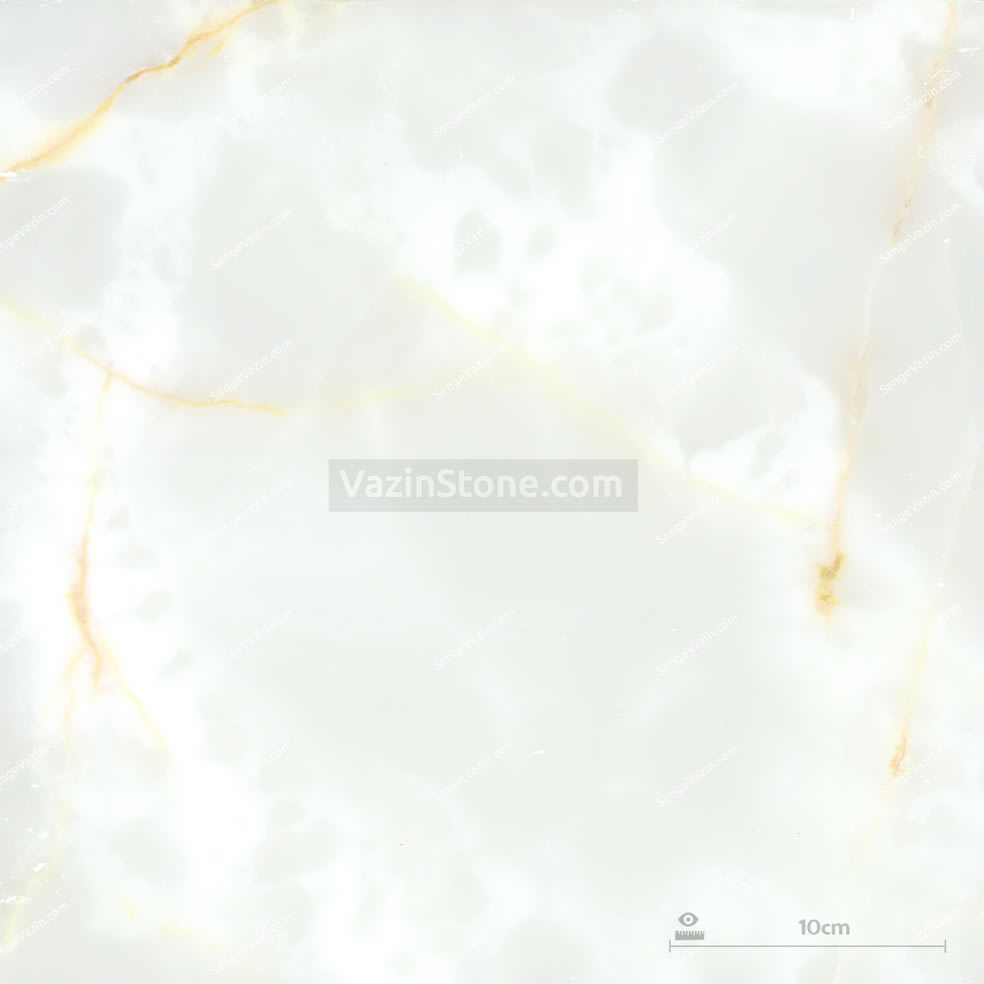
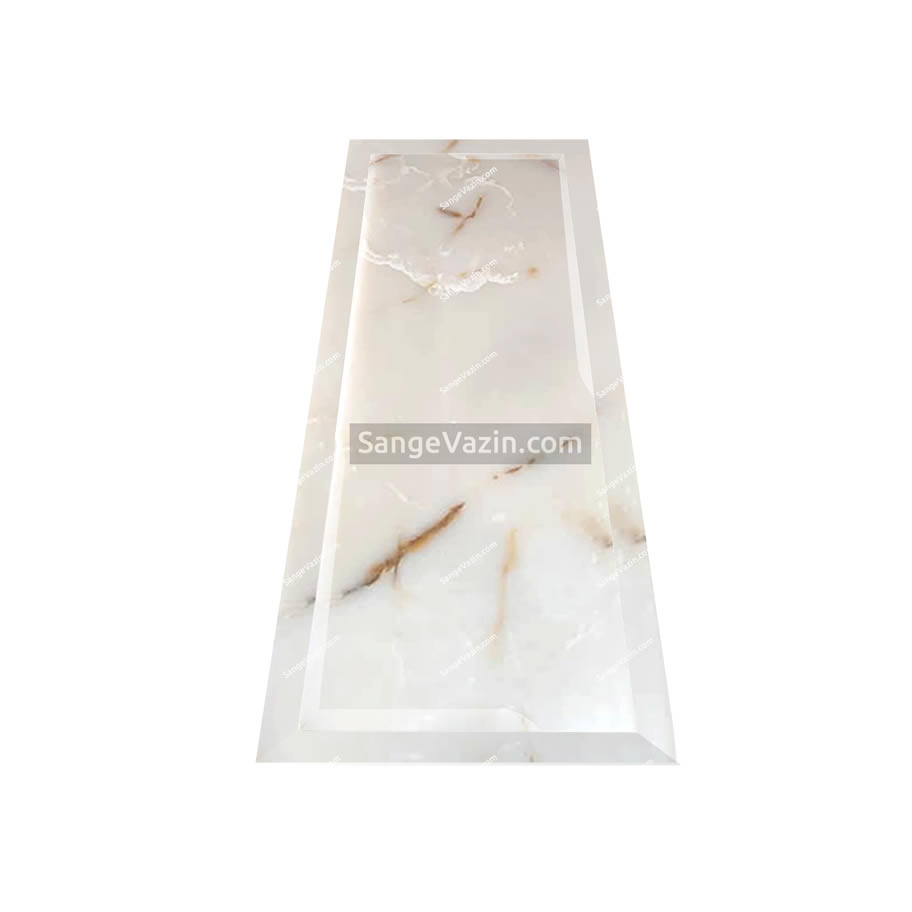
One of the most beautiful and in-demand colors of this stone is cream, which in some cases features subtle halos and light brown veins, as shown in the image below.
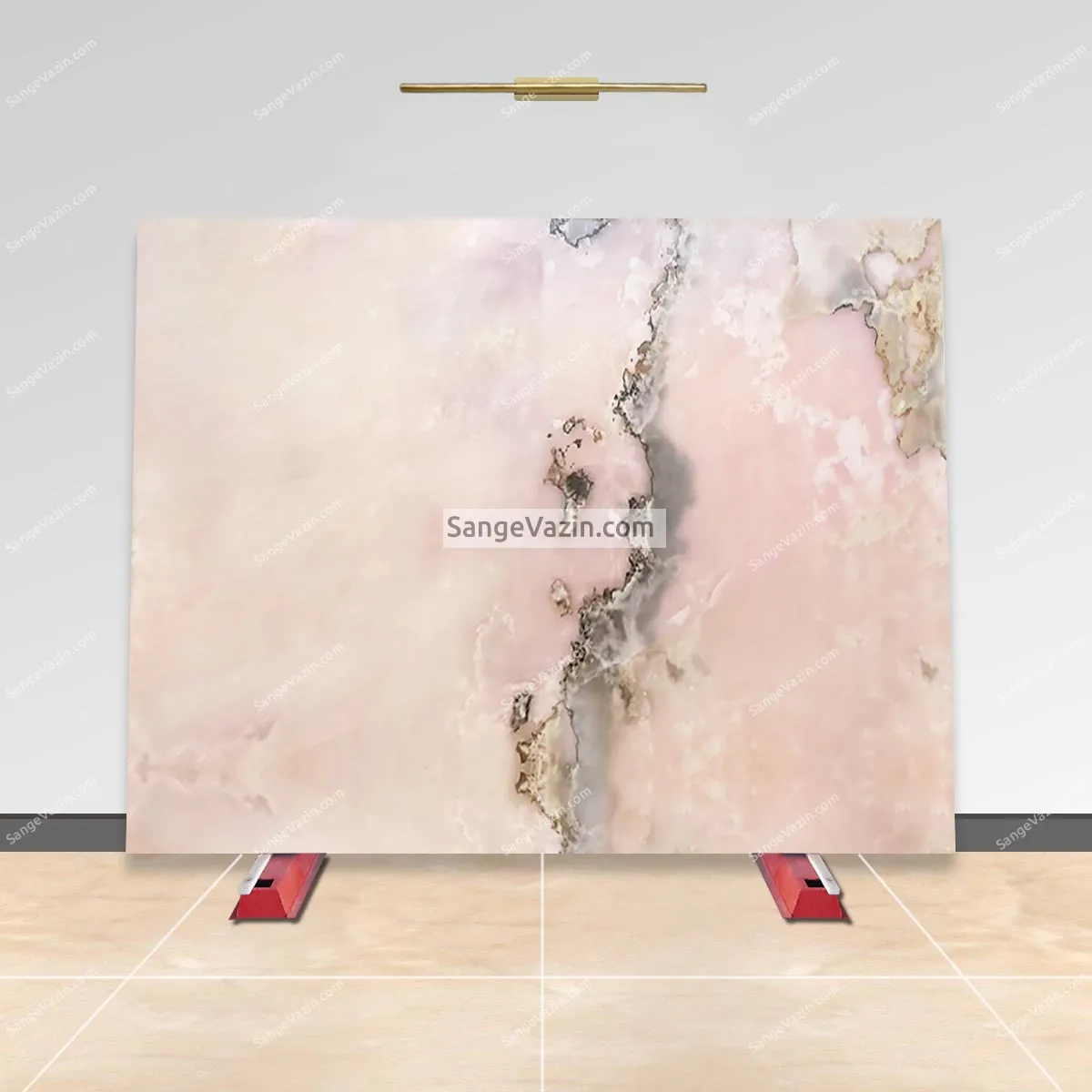
Pink Onyx
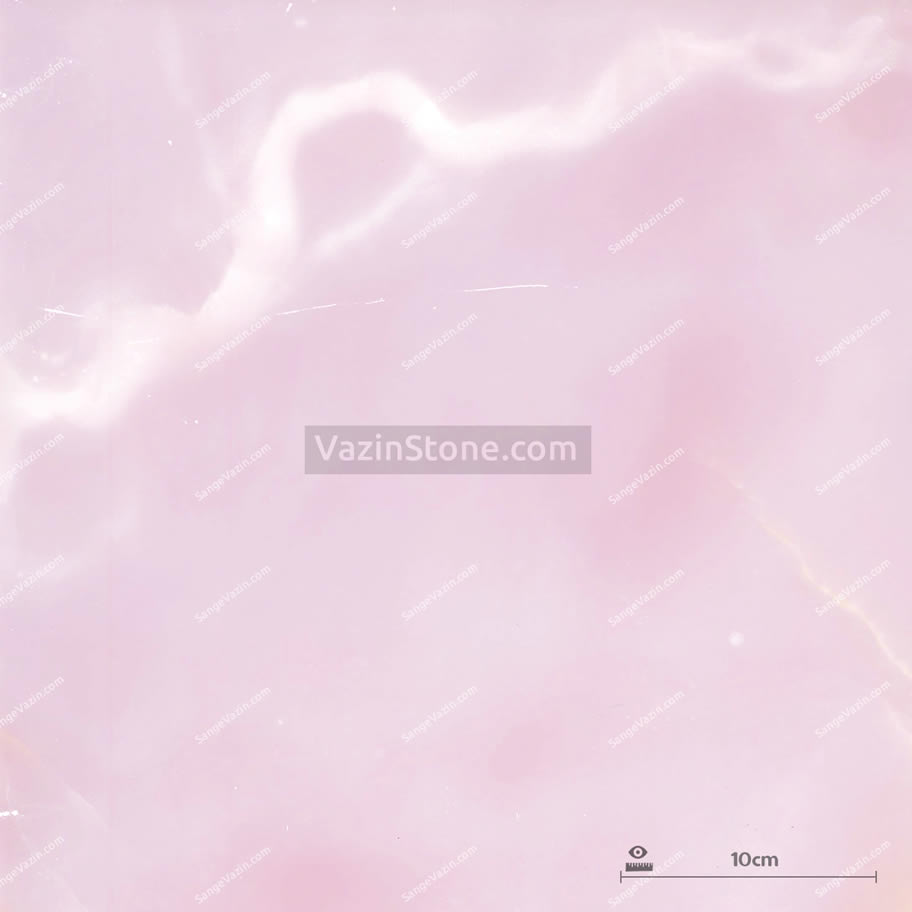
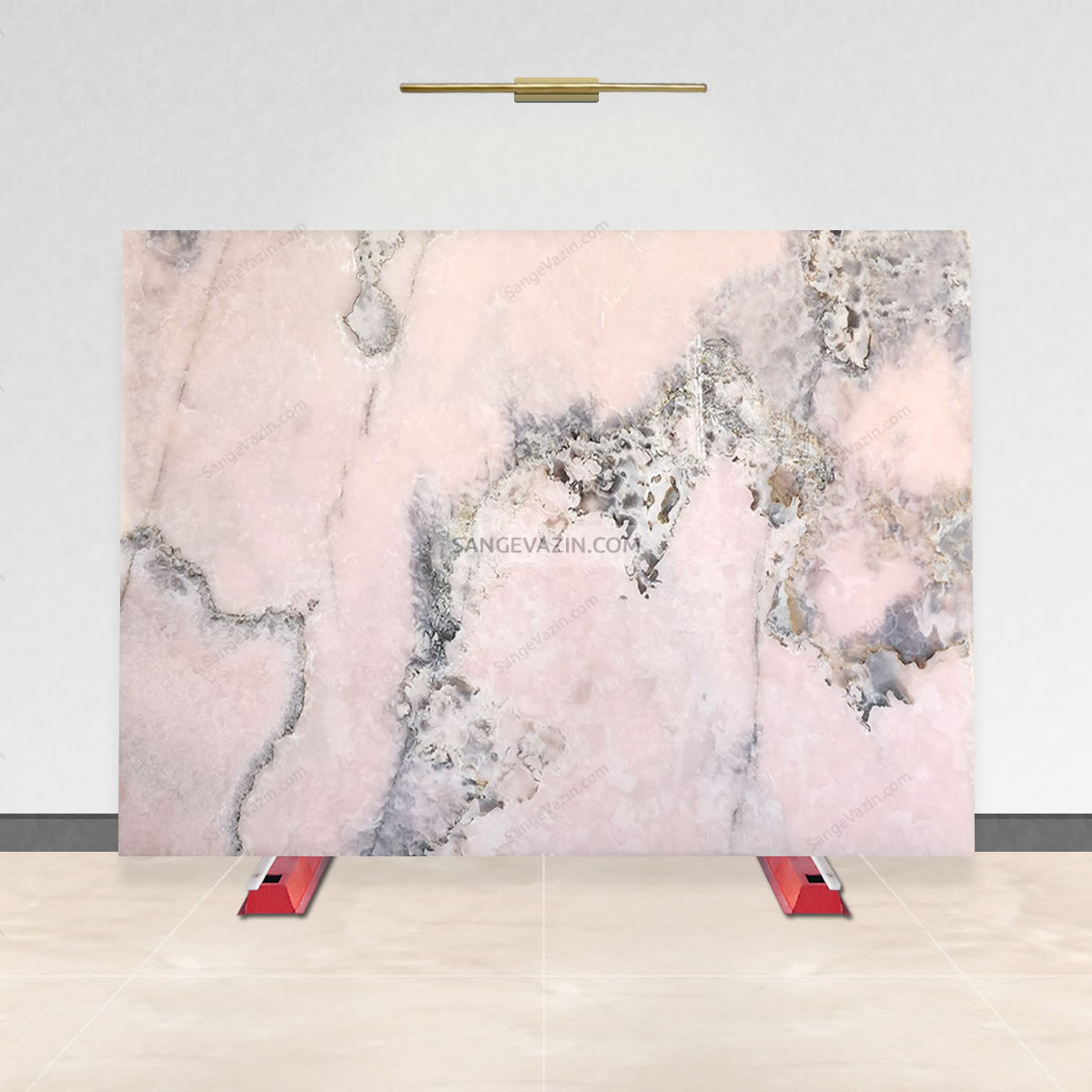
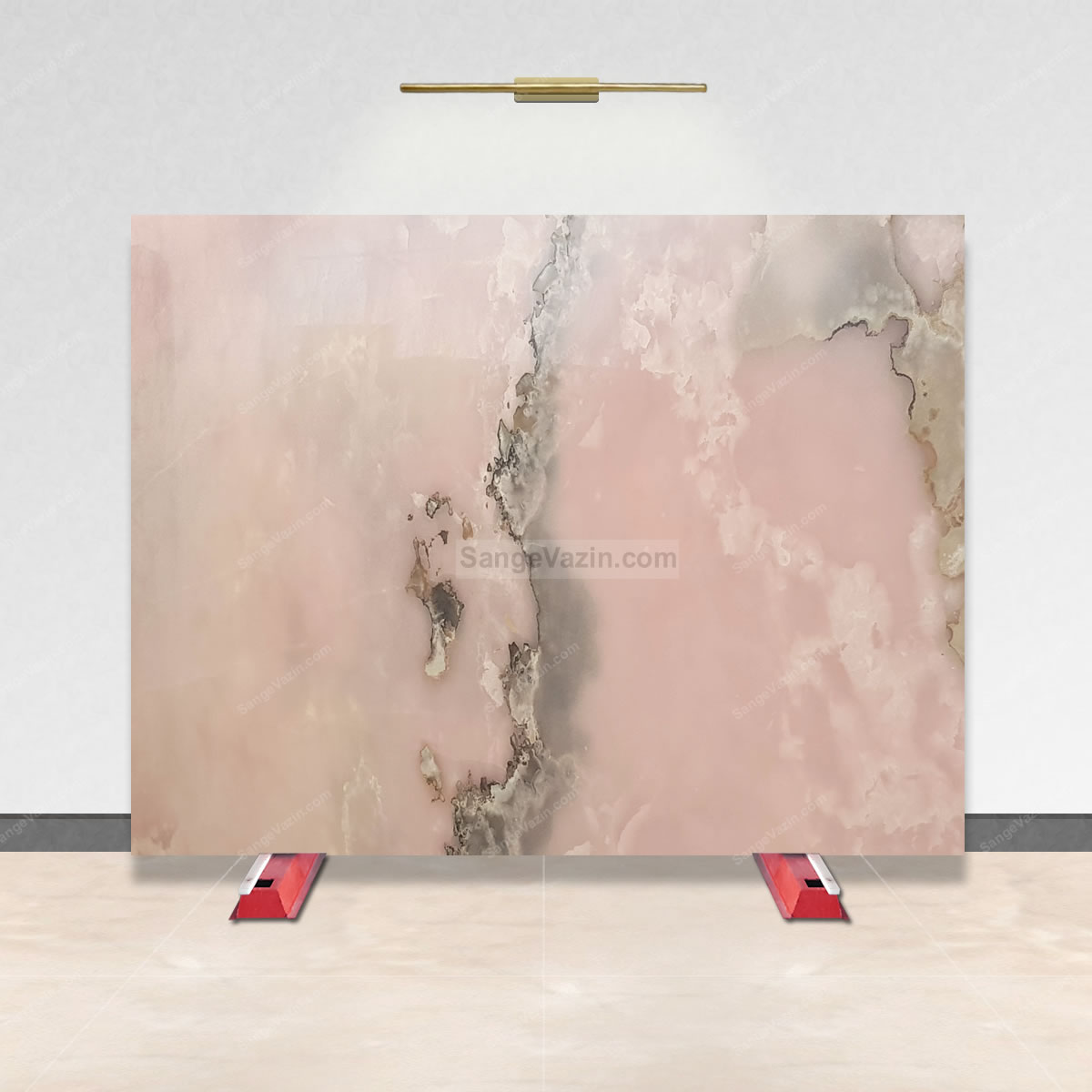
Pink onyx is regarded as one of the most exquisite and luxurious stones in the world. Its rarity, due to limited extraction and distinctive color, makes it highly valuable. This type of stone originates in Iran, with one of its main quarries located in Naqadeh, West Azerbaijan Province. The two images below showcase examples of its slabs.
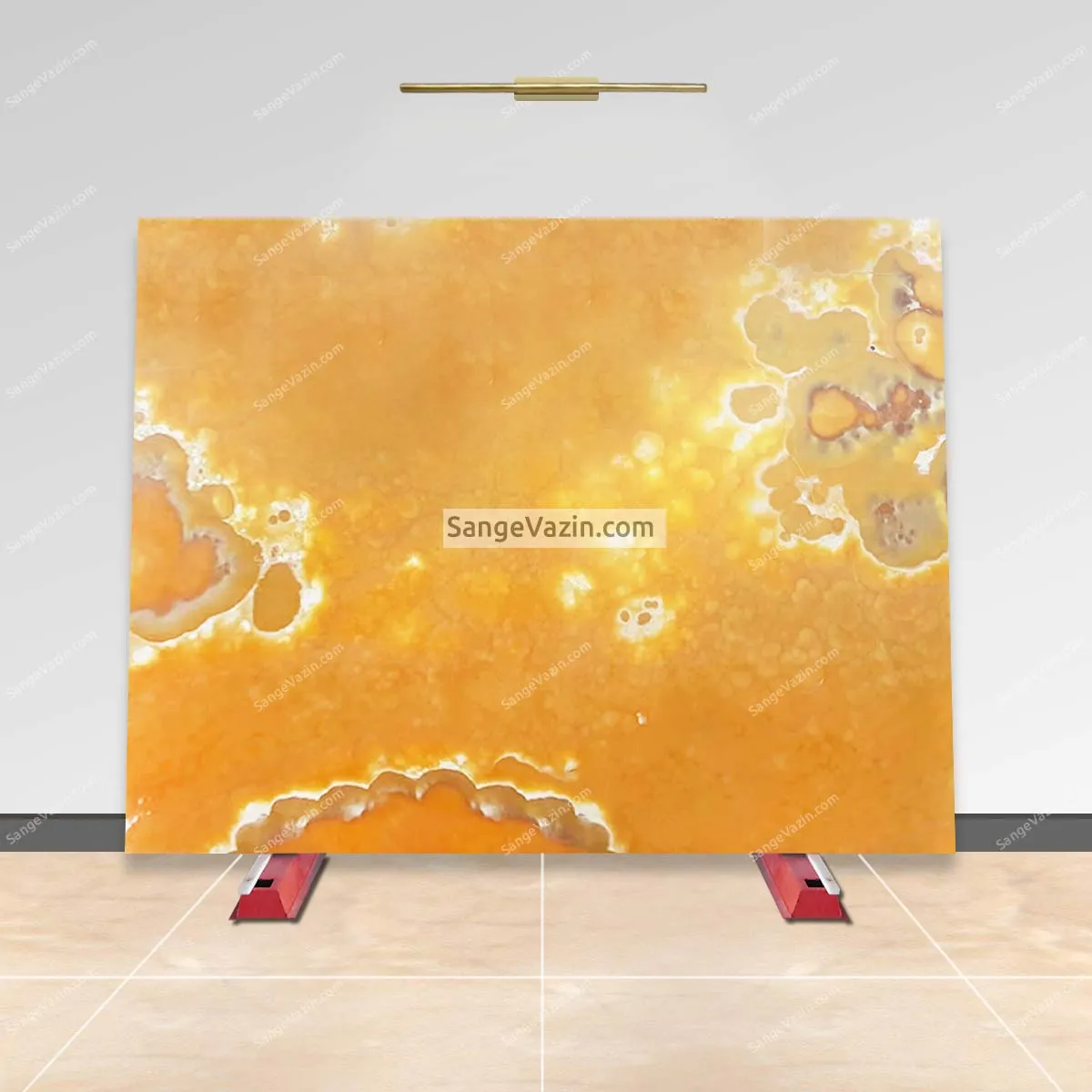
Orange Onyx
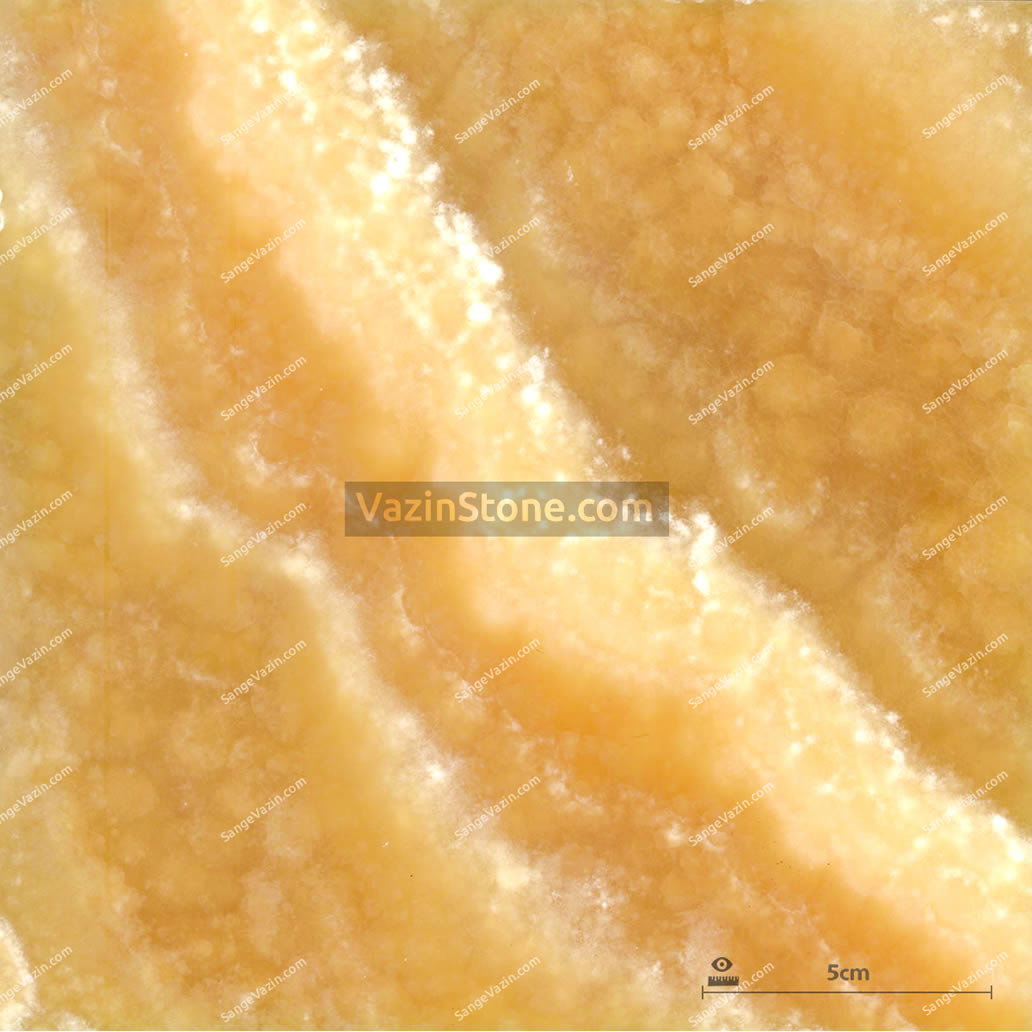
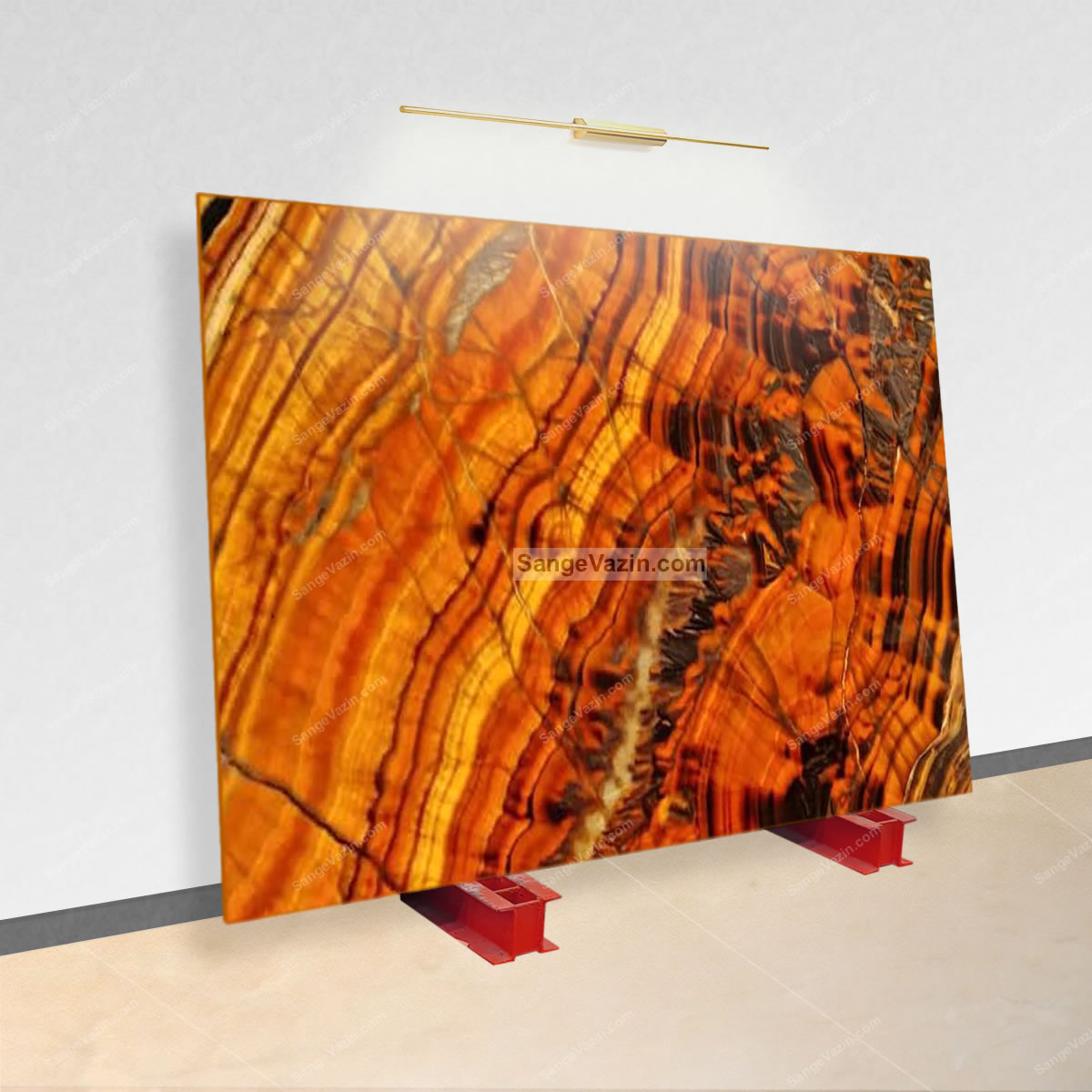
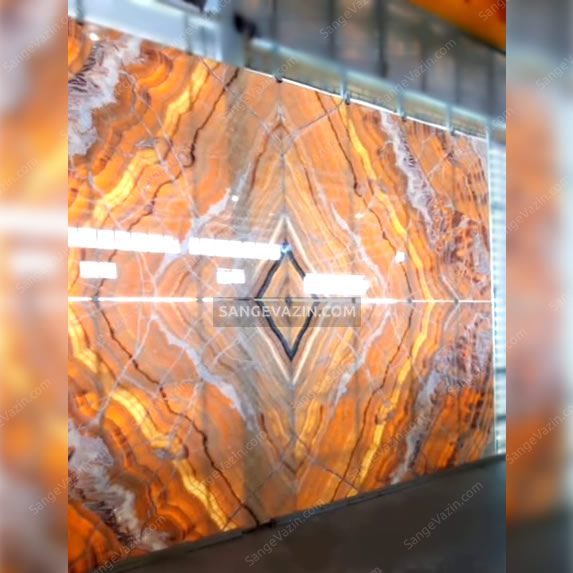
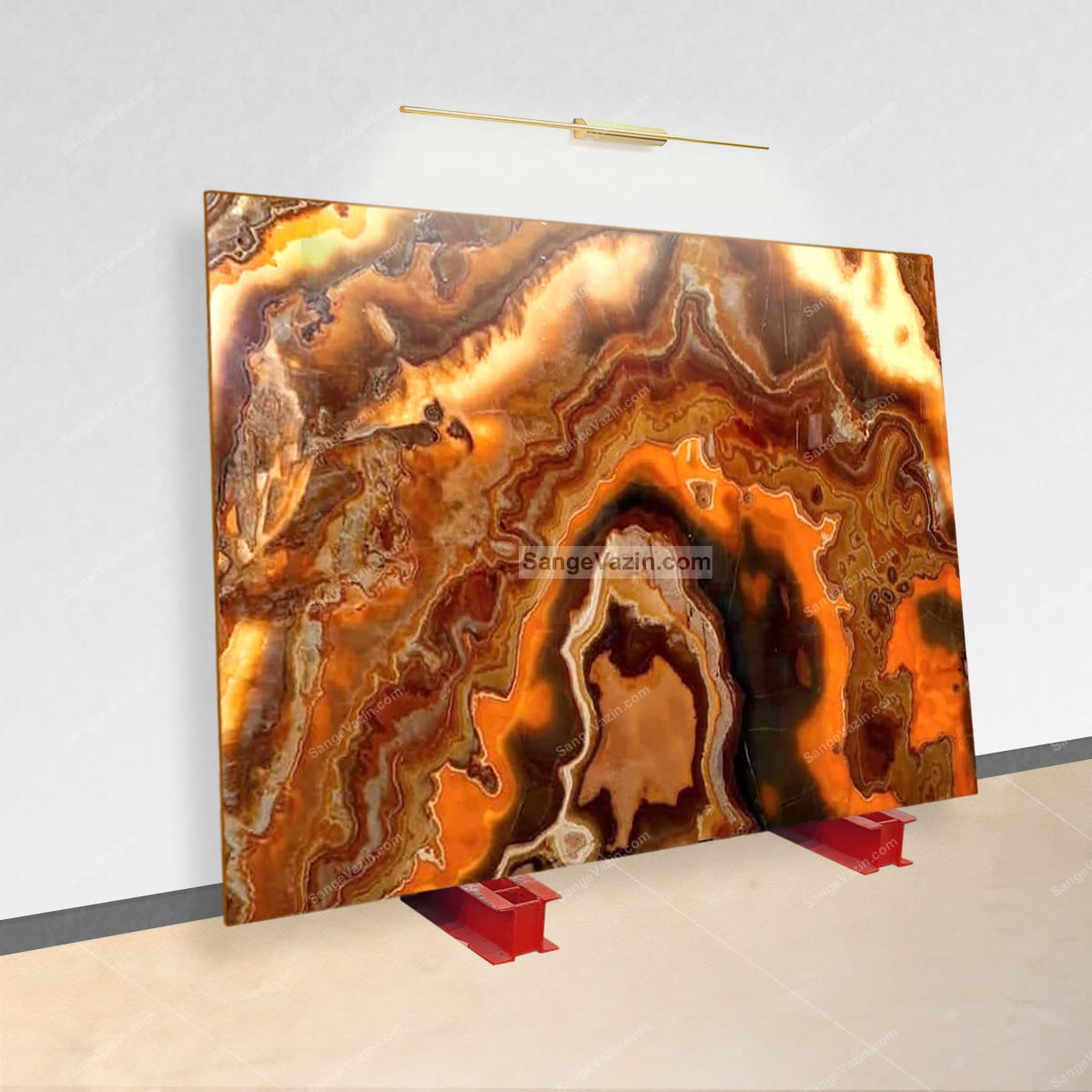
Orange onyx is among the most stunning and distinctive natural stones in the world, mainly used for decorative purposes. It is commonly employed in luxurious and high-end projects, as its high cost makes it unsuitable for standard buildings. This stone is often processed into slabs and achieves a striking appearance when arranged in book-matched and four-matched slabs.
Orange onyx slab presents an attractive option for hotel lobby walls, halls, luxury buildings, countertops, elevator door frames, and similar applications. The image below showcases an example.
White Onyx
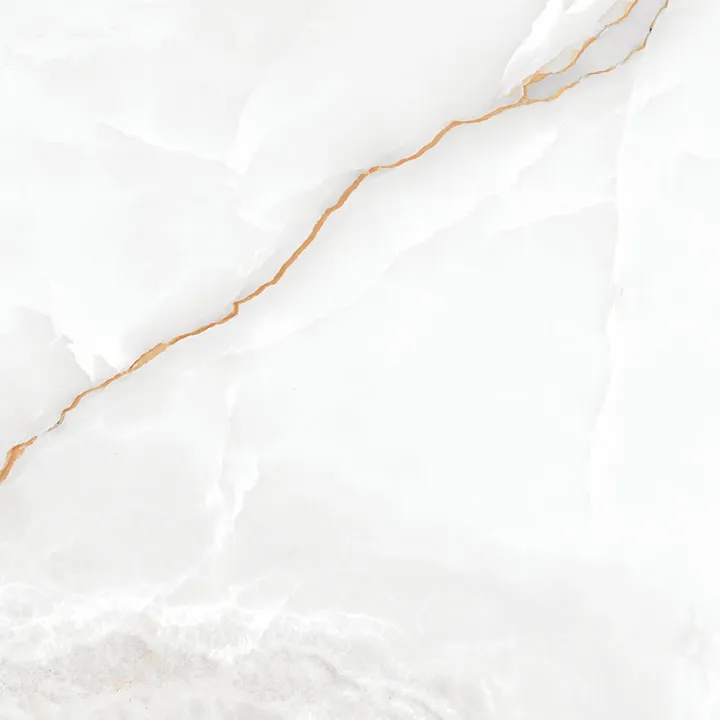
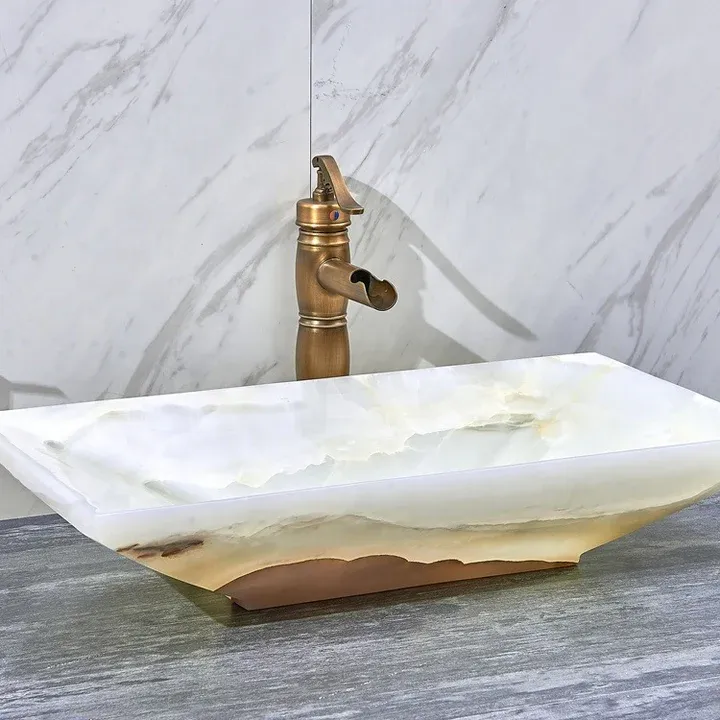
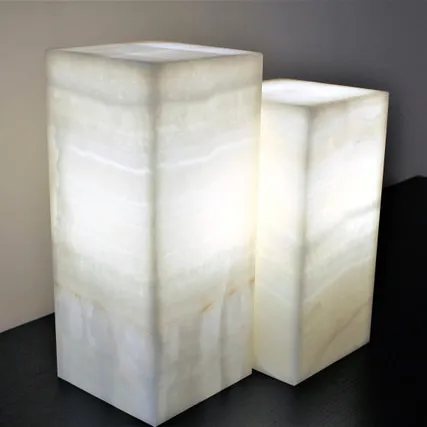
White onyx is primarily quarried in Mexico, Turkey, and Iran and comes in varying degrees of purity. Mexican and Turkish varieties typically feature yellow or golden veins, while the Iranian type, with its uniform surface and minimal or no veining, is considered among the highest quality and purest specimens. Notably, due to its exceptional characteristics, this stone commands a very high price.
Fire Onyx
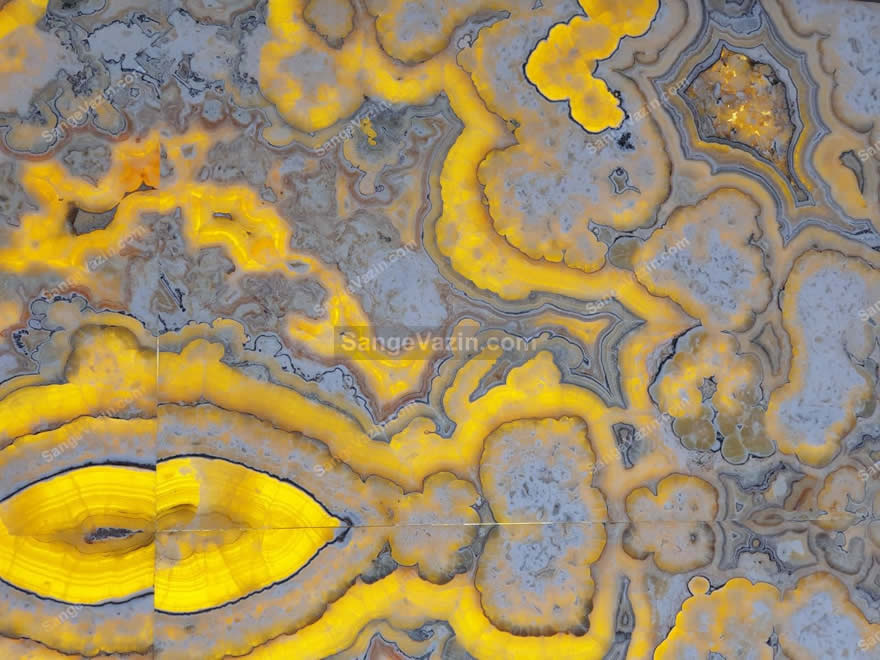
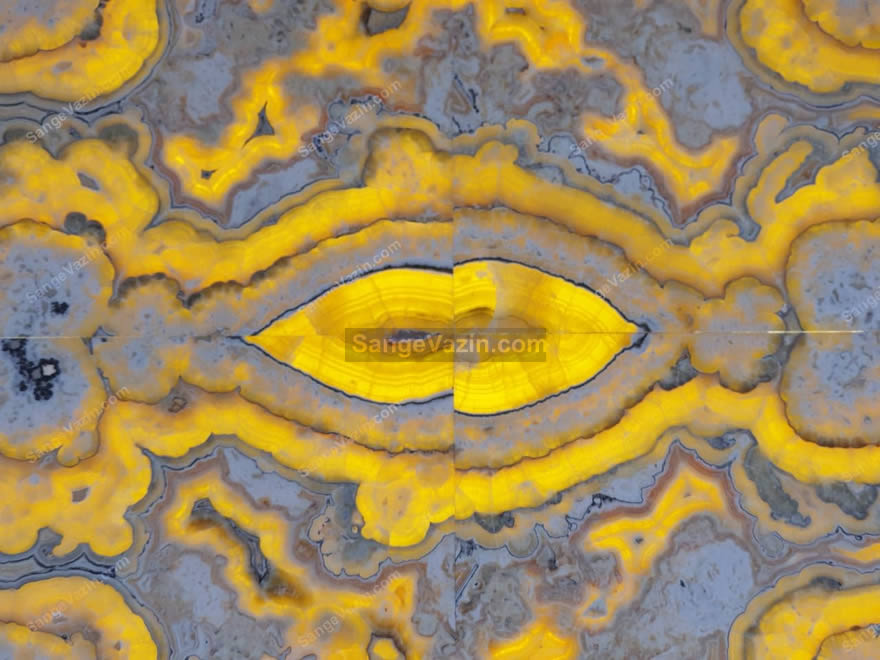
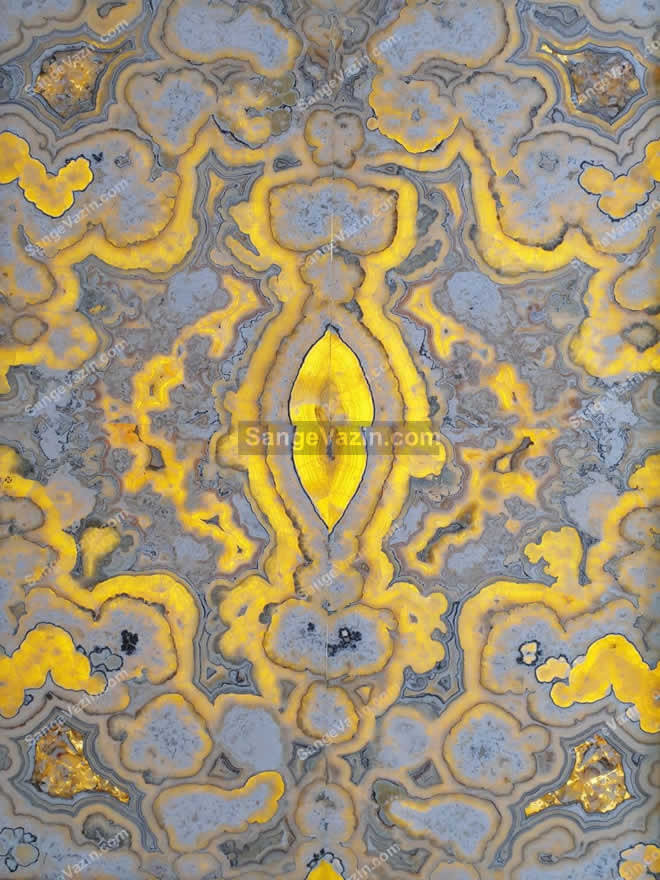
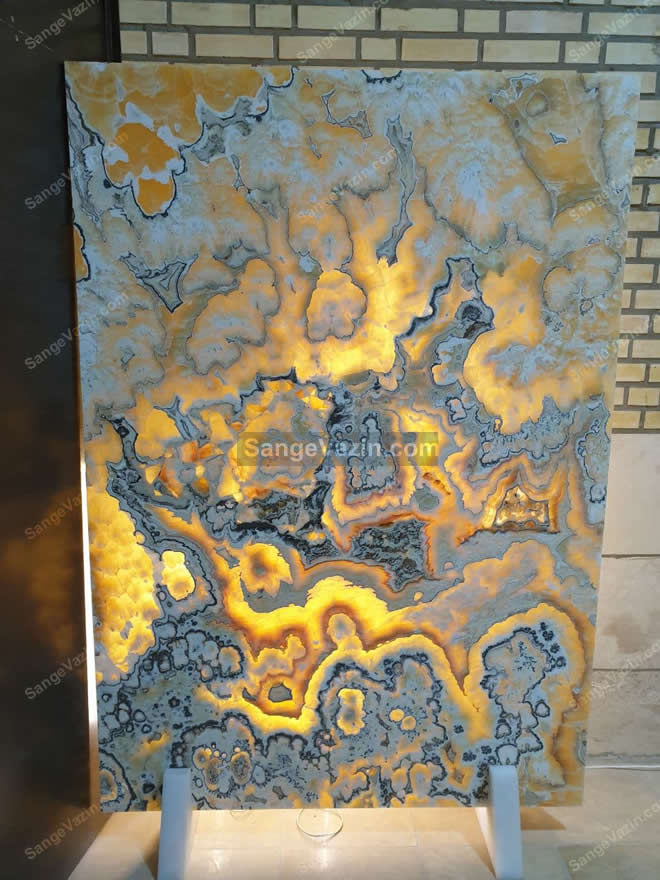
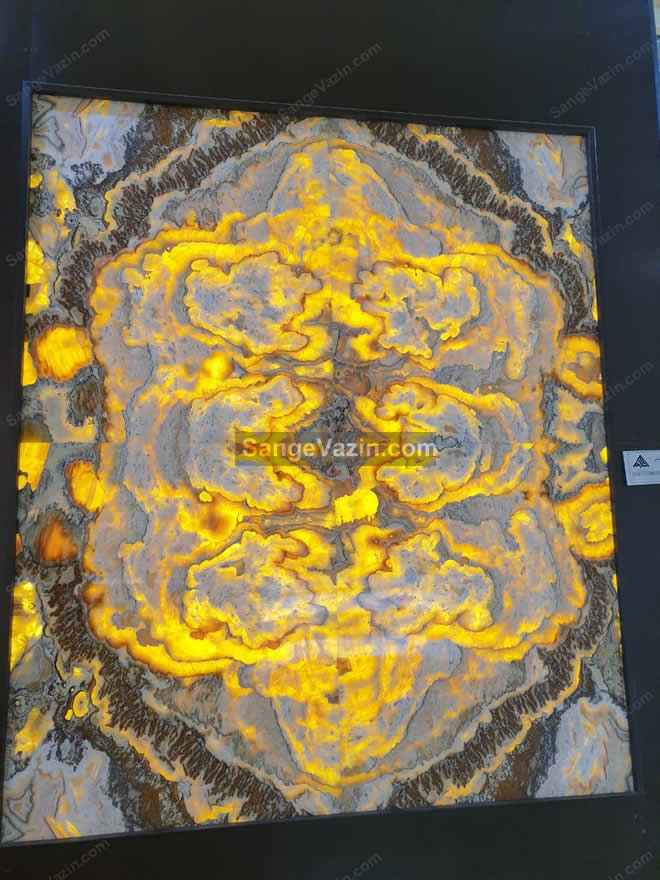
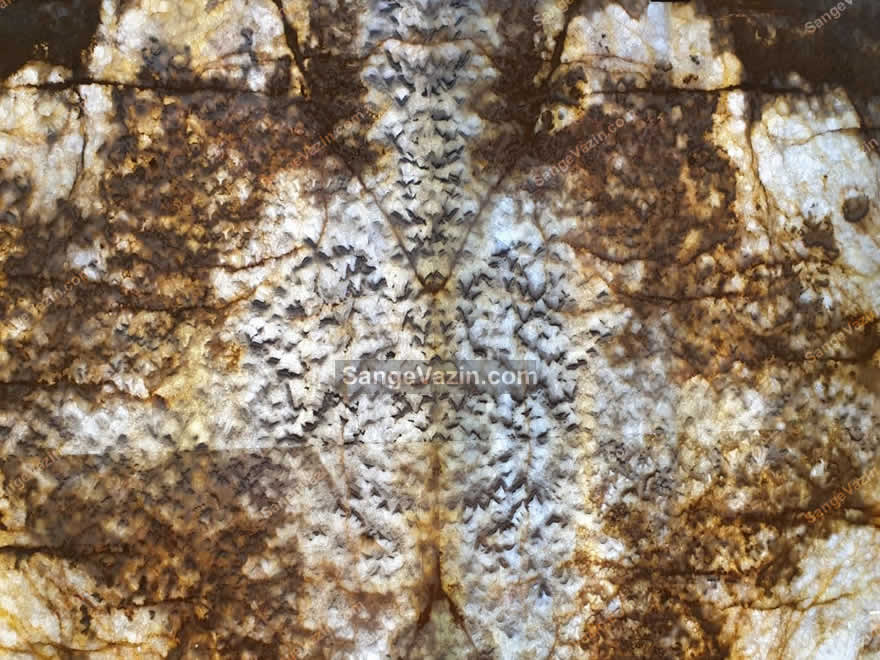
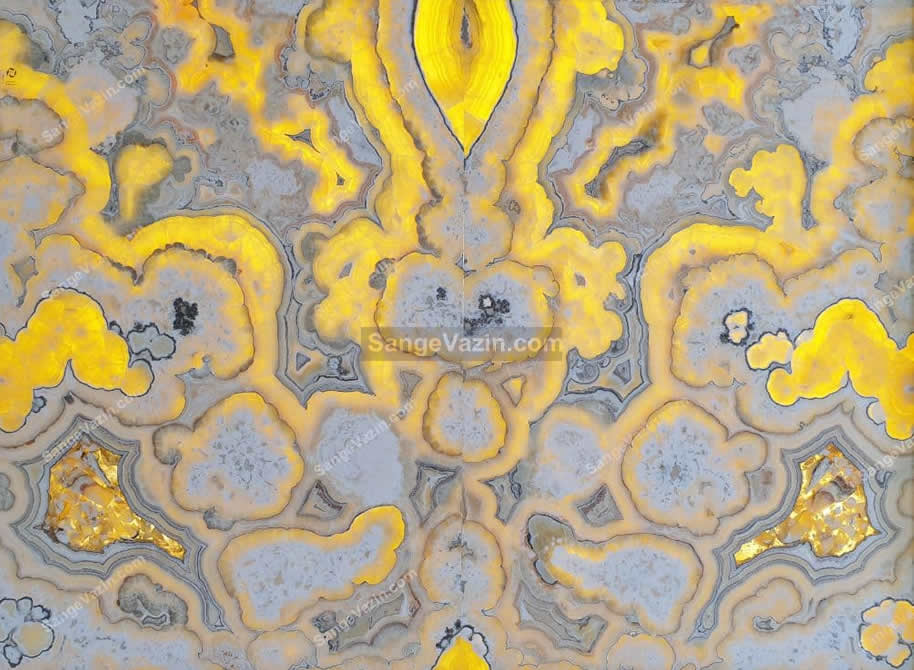
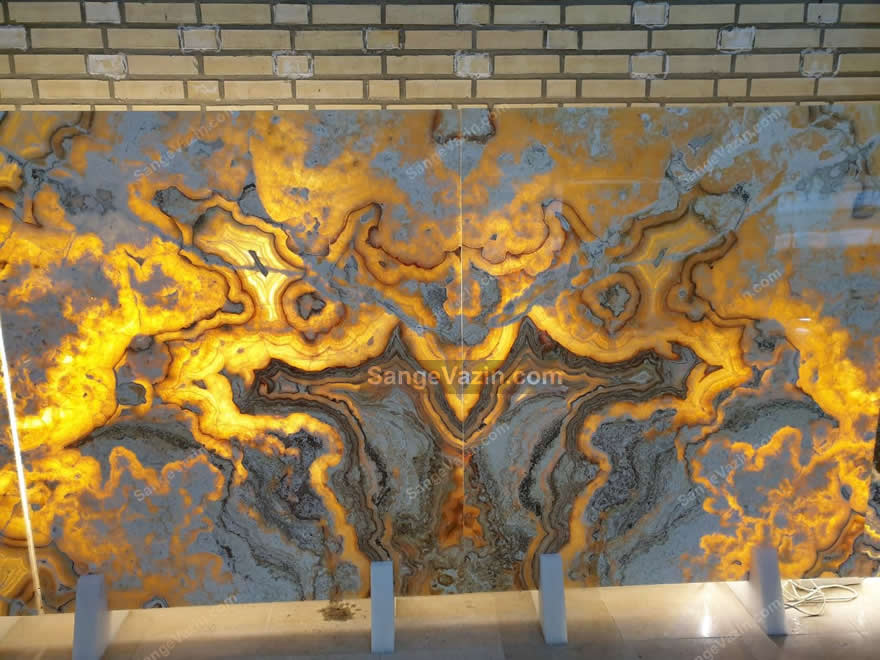
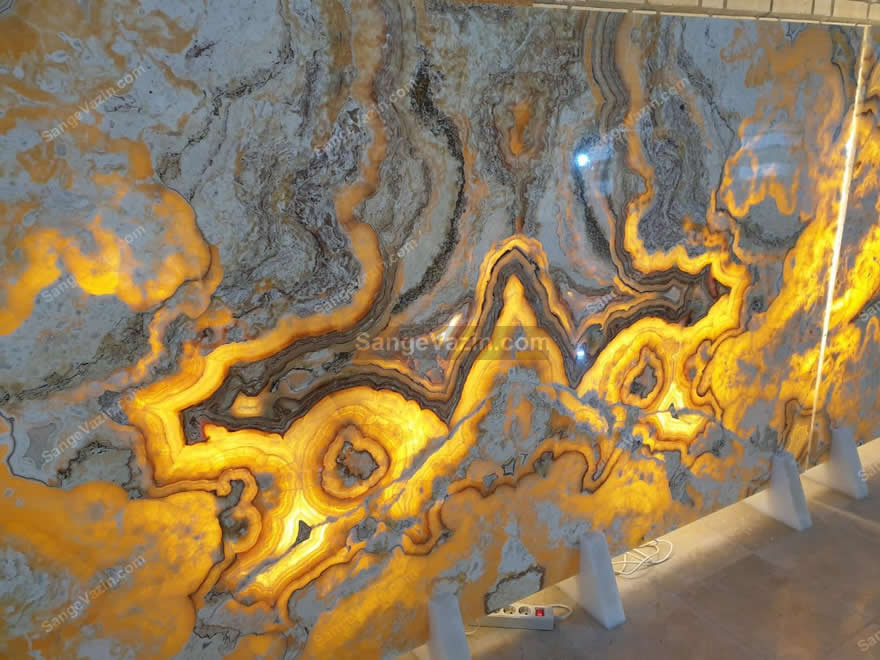
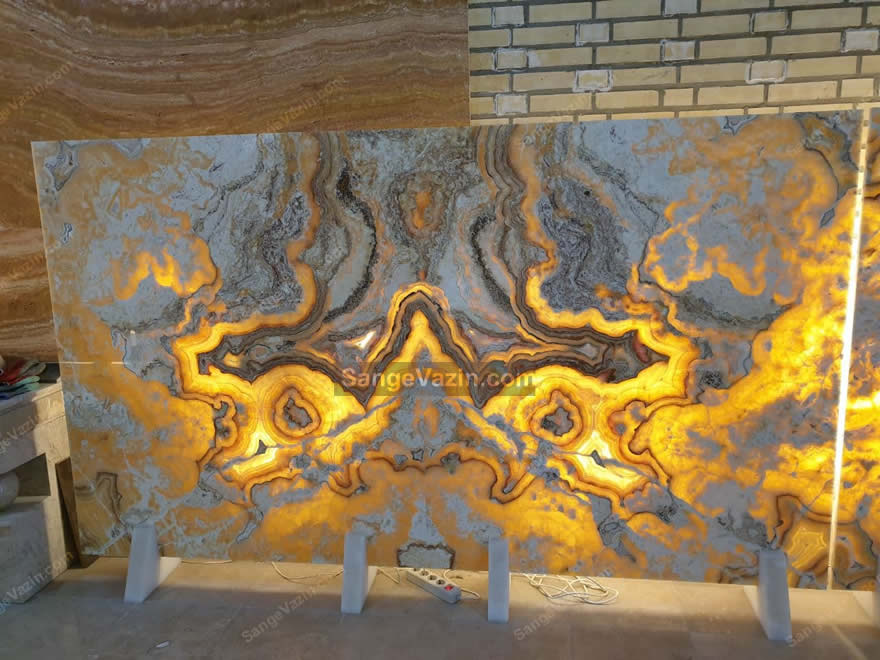
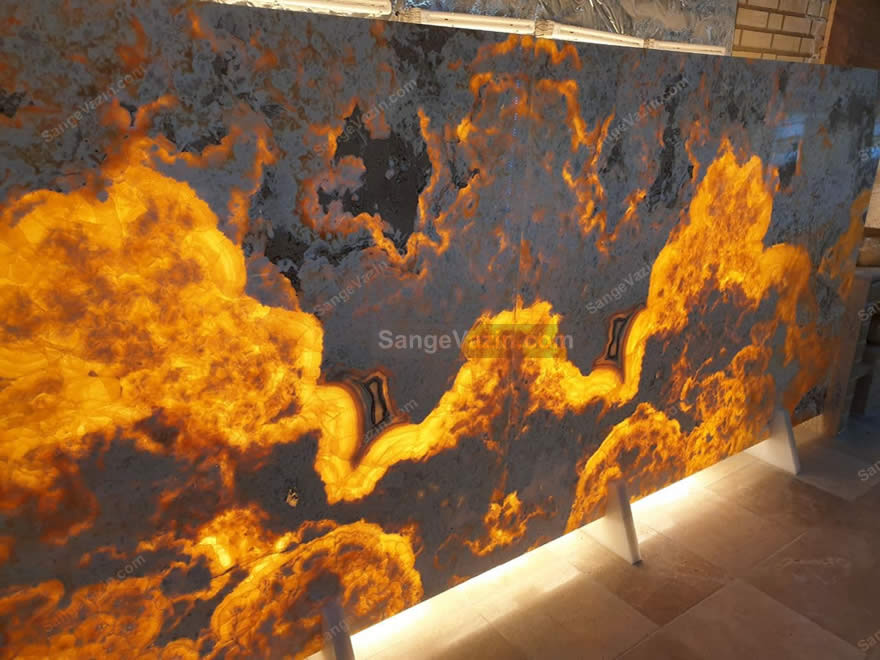
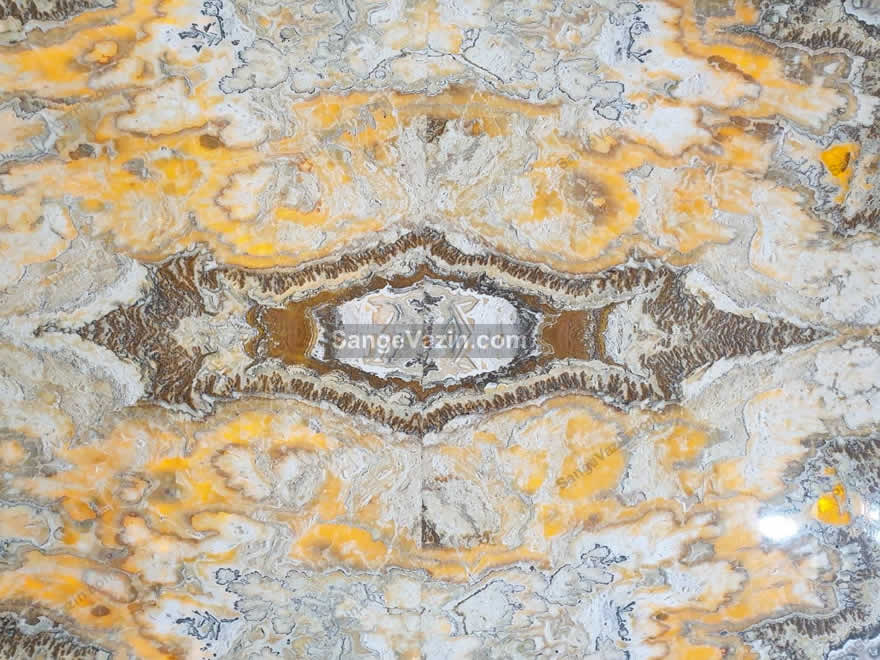
Fire onyx stones are among the most beautiful onyx varieties, featuring striking and captivating patterns. Due to their unique and non-repetitive designs, this type of stone is often processed in book-matched and four-matched slabs, and when combined with LED panels installed behind it, it achieves an even more dramatic visual effect. Fire onyx is commonly used in applications such as countertops, TV walls, and elevator door frames. In the images below, you can see samples of slabs of this onyx type.
Blue Onyx Stone
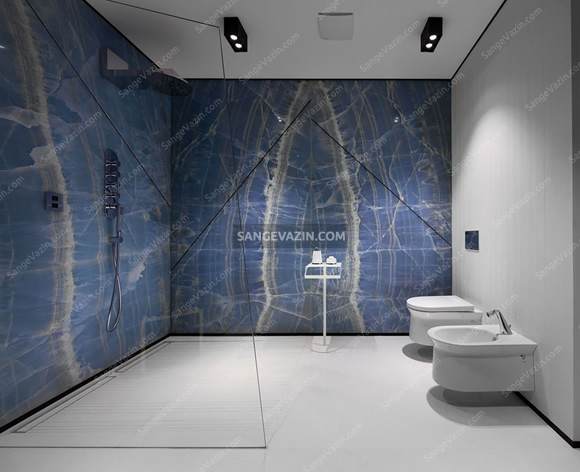
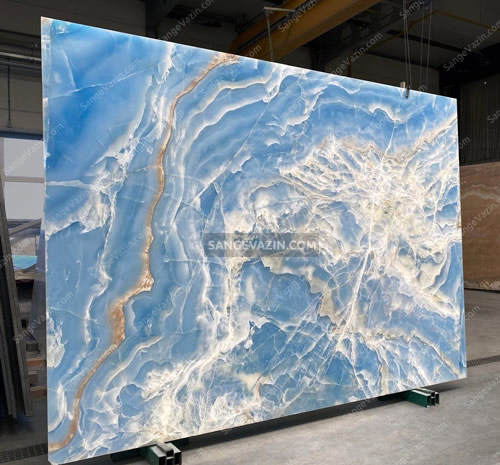
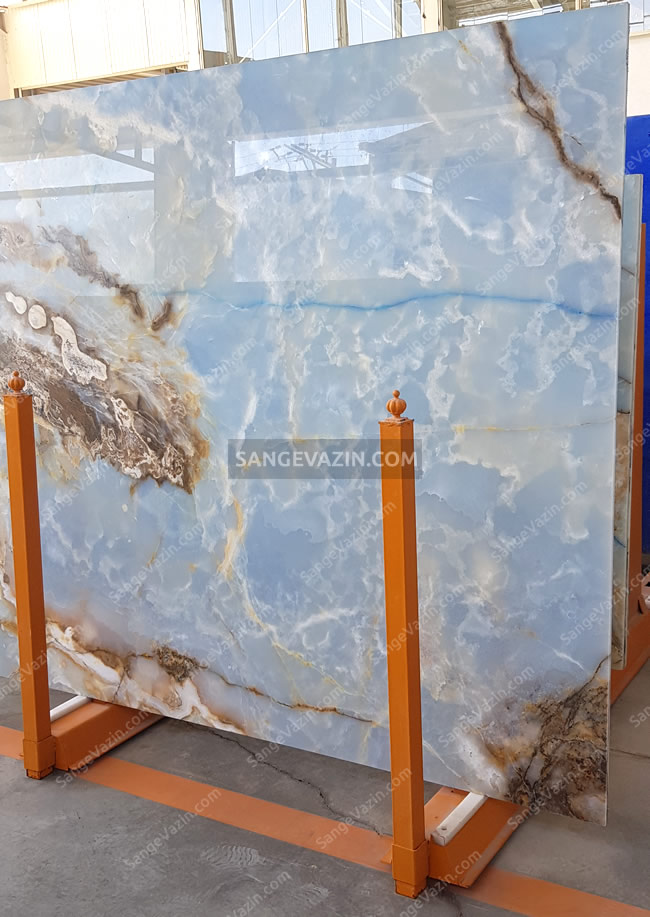
Blue onyx is one of the most exquisite and exclusive varieties of onyx, most often achieving its distinctive color through the injection of blue pigment into the stone’s natural structure or by applying color to the reverse side of the slab.
Green Onyx
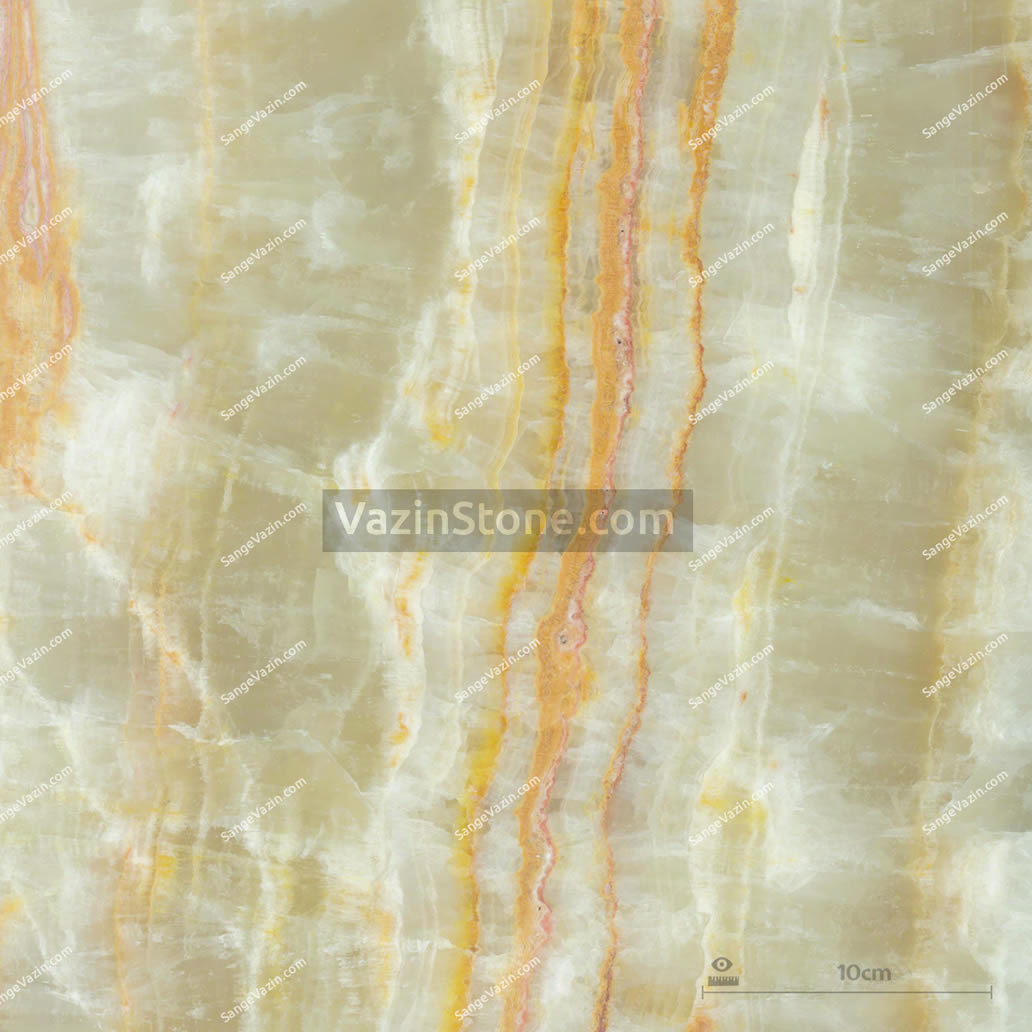
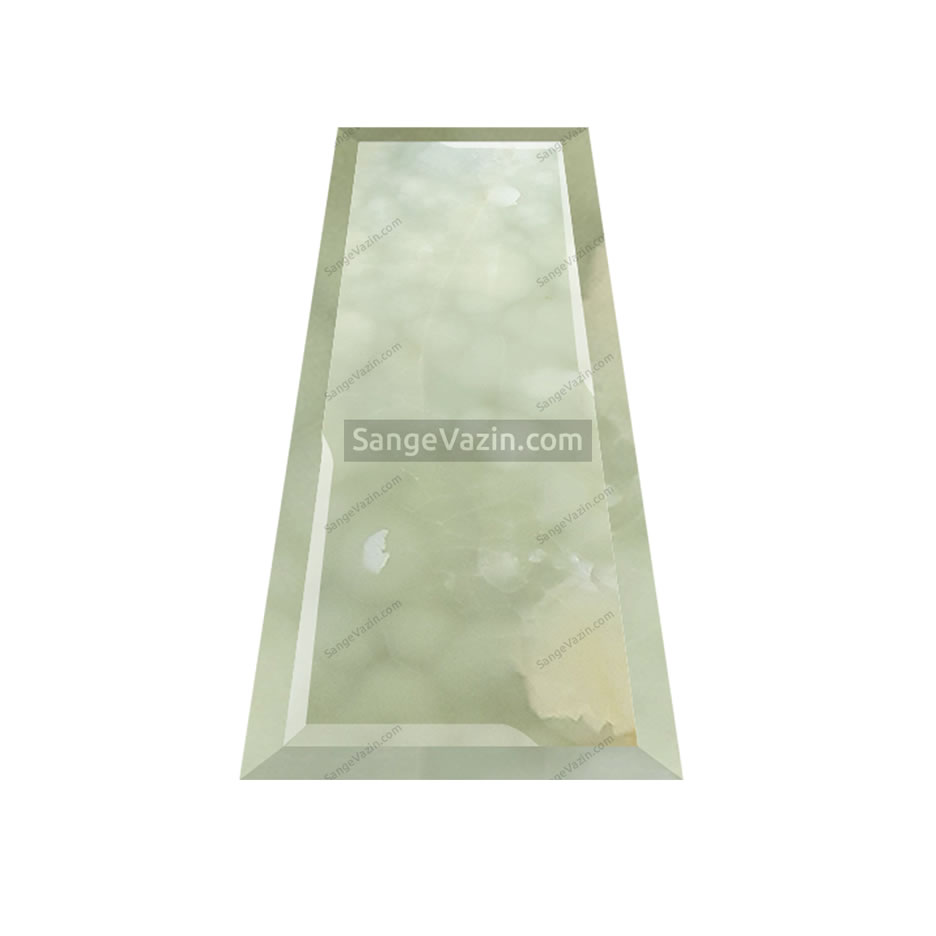
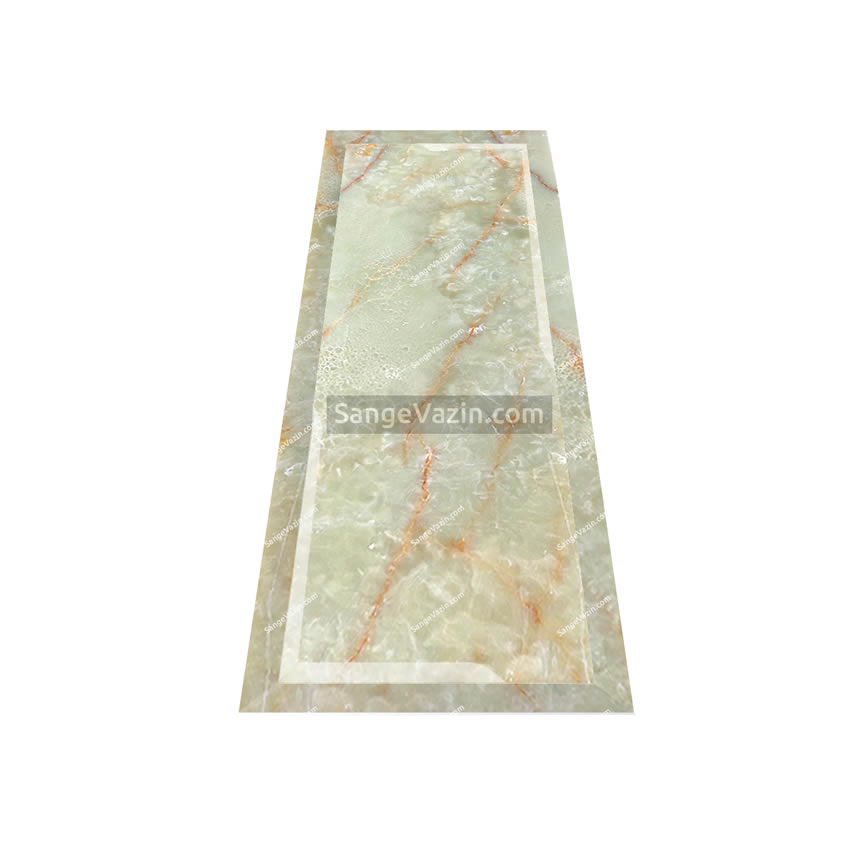
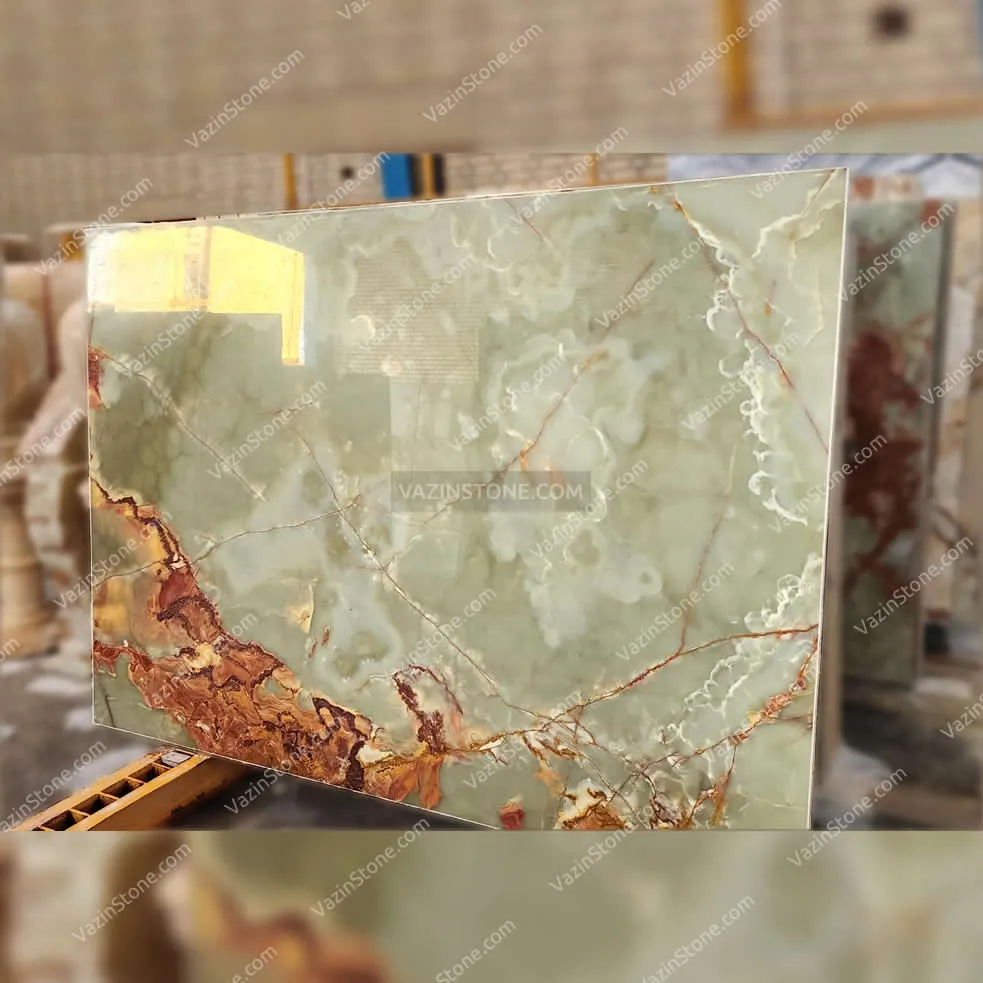
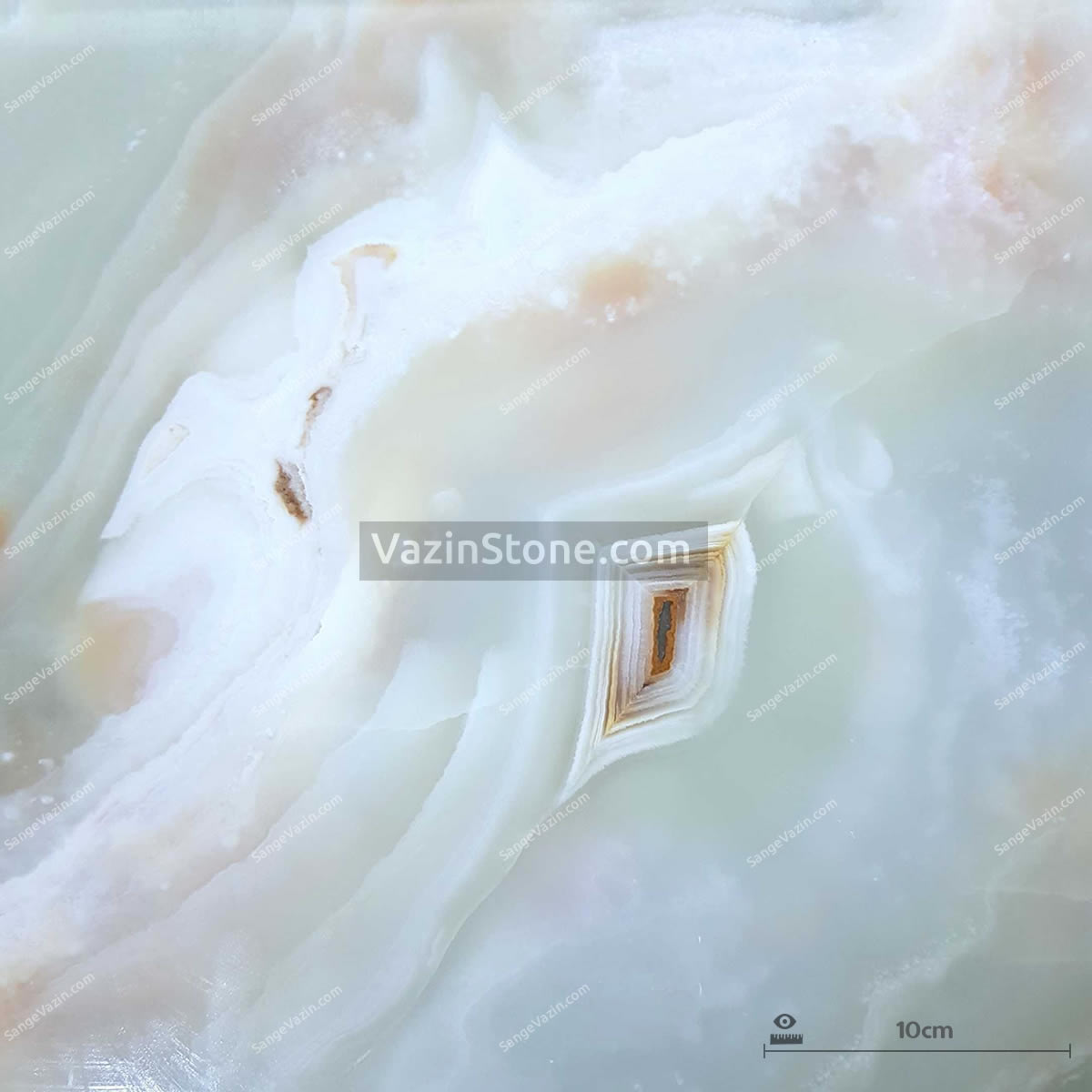
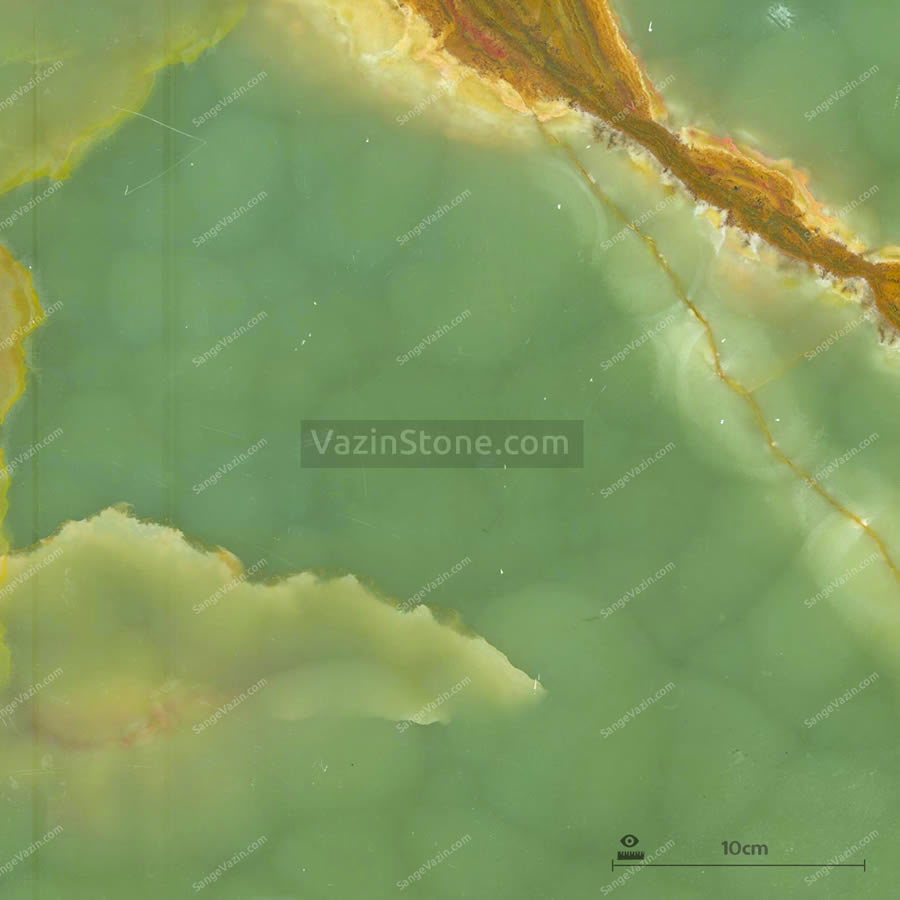
Green onyx is one of the most popular and in-demand varieties among natural stones. As shown in the image, despite veining in shades of brown and cream, green remains the dominant color, which gives the stone a refined and visually captivating appearance.
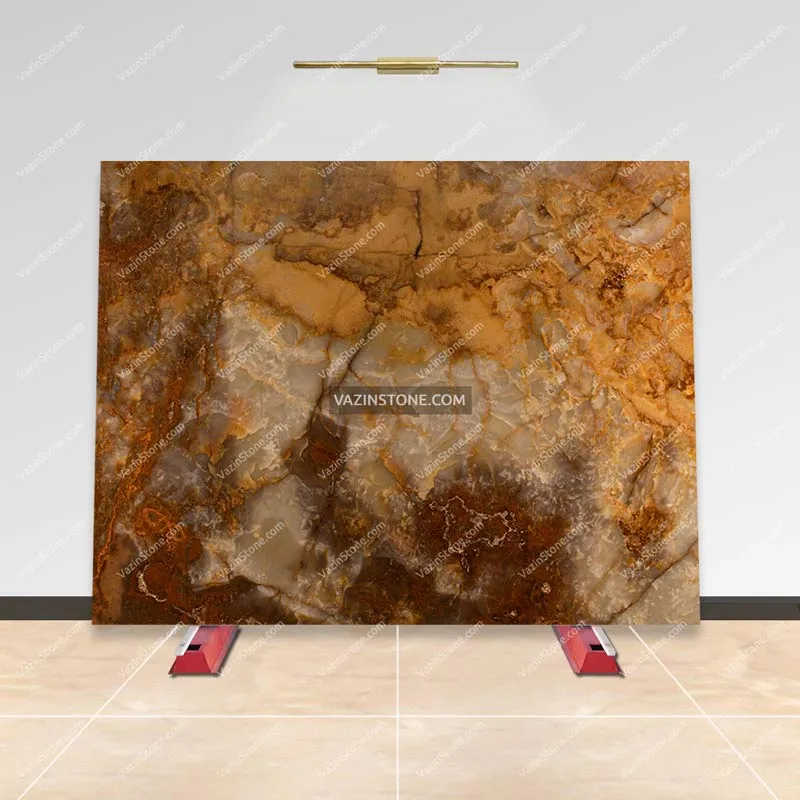
Brown Onyx
Among the wide range of colors available for this beautiful stone, brown ranks at the lowest level in terms of demand. The image below showcases a slab of this stone in brown.
Onyx Care & Maintenance
This type of stone is typically used for interior walls; therefore, it is not recommended for flooring, whether indoors or outdoors. Its high sensitivity to pressure and foot traffic can lead to scratches and surface dulling.
How to Clean Onyx
Because these stones are calcium-based, they have a softer surface than other types and are sensitive to acidic cleaning agents. Therefore, for cleaning, it is best to use pH-neutral products to avoid damaging their structure.
Maintaining Onyx Outdoors
The use of this stone outdoors is not very suitable, as environmental factors such as sunlight and weather conditions can reduce its shine, alter its color, and damage its surface. Consequently, tombstones crafted from this material are typically installed in covered mausoleums.
If used outdoors despite its limitations, protection can be enhanced by installing a glass layer over the surface. Additionally, applying a nano coating is recommended to form a protective layer that maintains the stone’s luster; this coating should be reapplied every one to two years.
Onyx Stone Frequent Questions
1. What is the onyx stone?
Onyx is a type of metamorphic stone formed from limestone, and due to its translucency and luxurious appearance, it is used in high-end designs.
2. Is there a difference between onyx and marble?
Onyx is a metamorphic stone with high translucency and backlit properties, whereas marble is a metamorphic stone with an opaque texture and regular veining.
3. What colors does onyx come in?
Common onyx colors include cream, green, white, blue, pink, and gold.
4. Is onyx suitable for use as flooring?
Onyx can be applied as flooring in low-traffic areas or when it is carefully maintained to preserve its integrity and appearance.
5. How should onyx be cared for?
To care for onyx, use mild cleaning agents and avoid contact with acidic substances.
6. What Are the Uses of Onyx?
Onyx, known for its luxurious appearance and translucency, is used in decorative spaces such as TV walls, column designs, building lobbies, stone flower pots, and dishes, as well as religious sites.
7. How much does onyx cost?
The price of onyx varies depending on its type, color, dimensions, and quality. In general, the price range at Vazin Stone for onyx slabs starts at approximately $52 and can reach up to $270 per square meter. For purchasing inquiries and to receive the latest onyx prices, please contact the Vazin Stone sales team.