Roman Facade Architecture
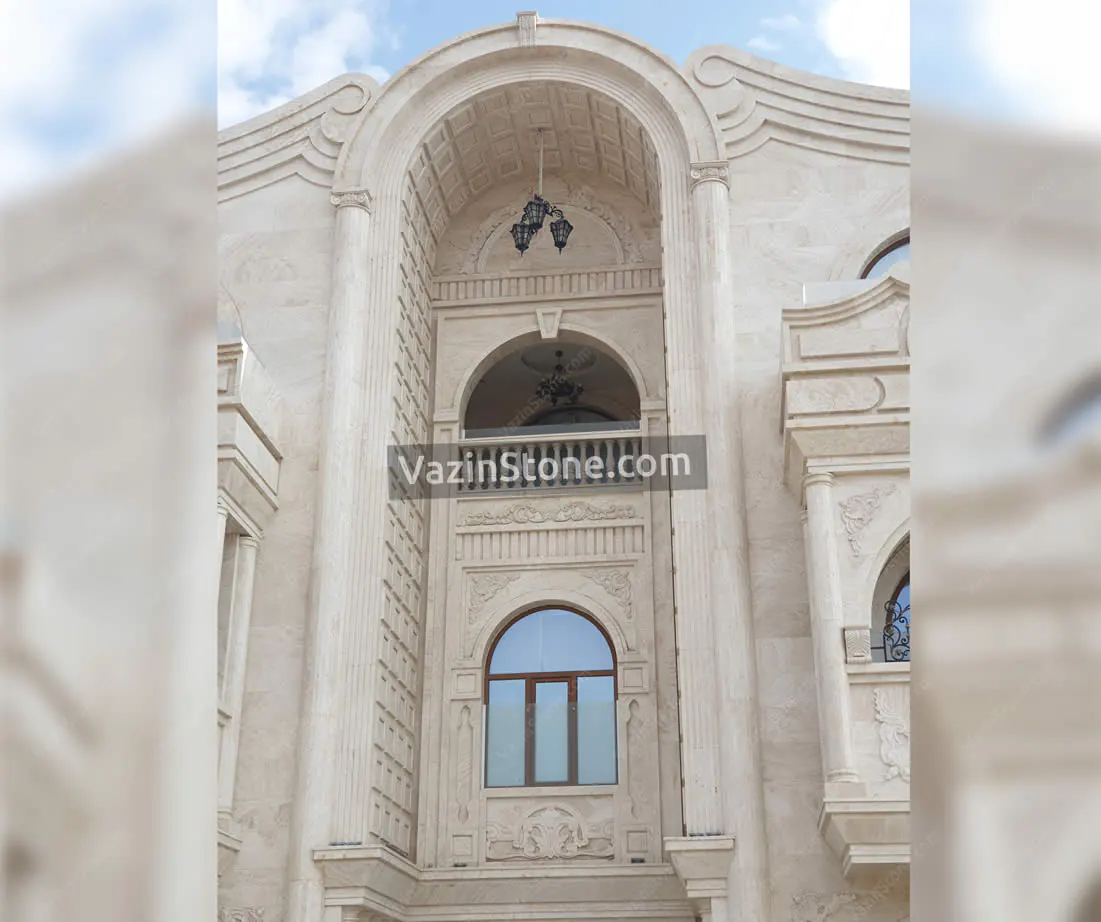
Roman building facades (or classical facades) are a grand and luxurious architectural style inspired by the architecture of Ancient Greece and Rome. Through the use of distinctive architectural elements, light-colored stone, and volumetric designs, this style has become one of the most popular building facade styles in recent years.
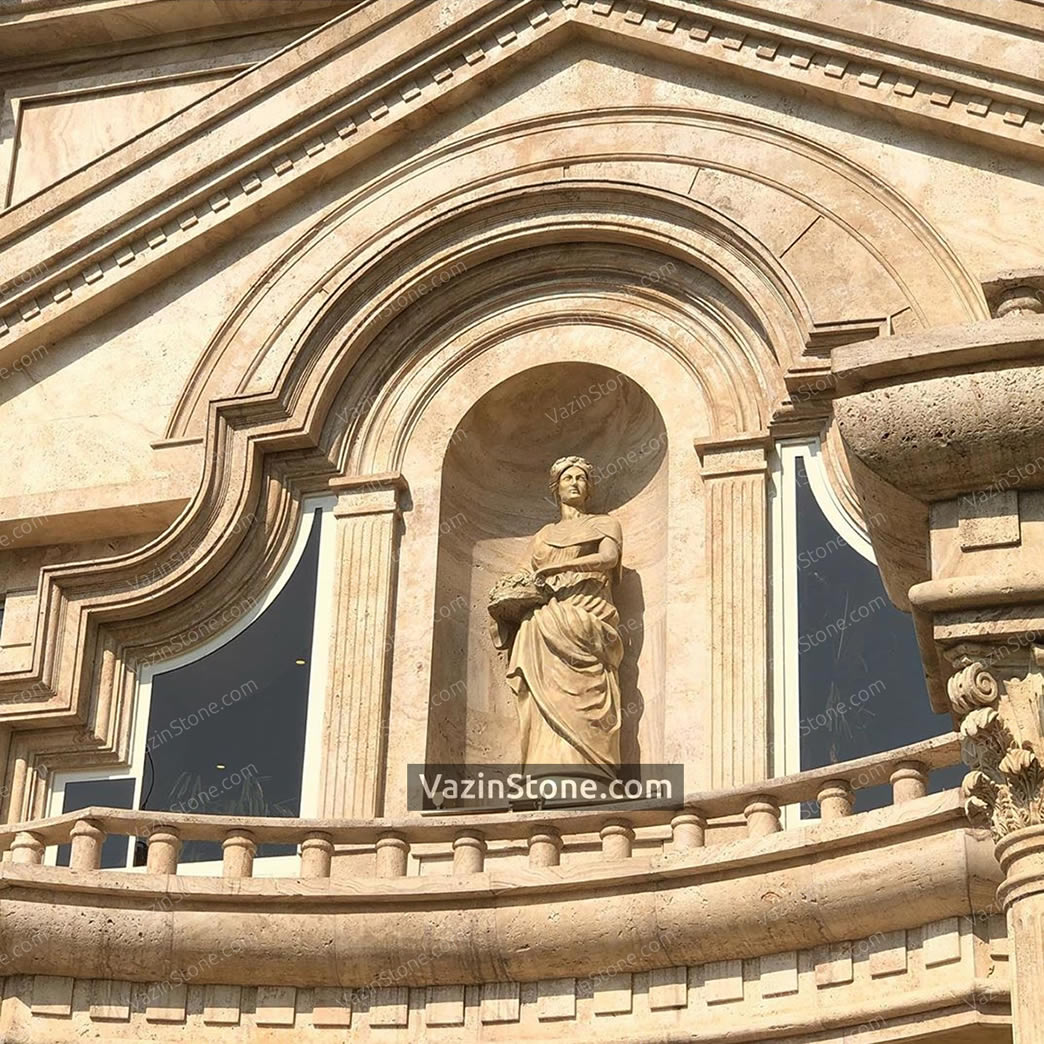
Why the Roman Facade?
A Roman facade is a distinctive and popular building facade style featuring numerous intricate elements and the use and combination of special types of stone. The popularity of this style can be attributed to its grand and majestic appearance. The complexity of designing and installing a classical stone facade is what distinguishes it from other facade styles. This complex process distinguishes this style from other stone facades and has led to the creation of the latest designs.
For this reason, Roman facades—from simple to fully classical designs, from white to chocolate-colored finishes, and across various building types, including residential buildings, villas, commercial properties, shops, and single- and two-storey buildings—have become widely used.
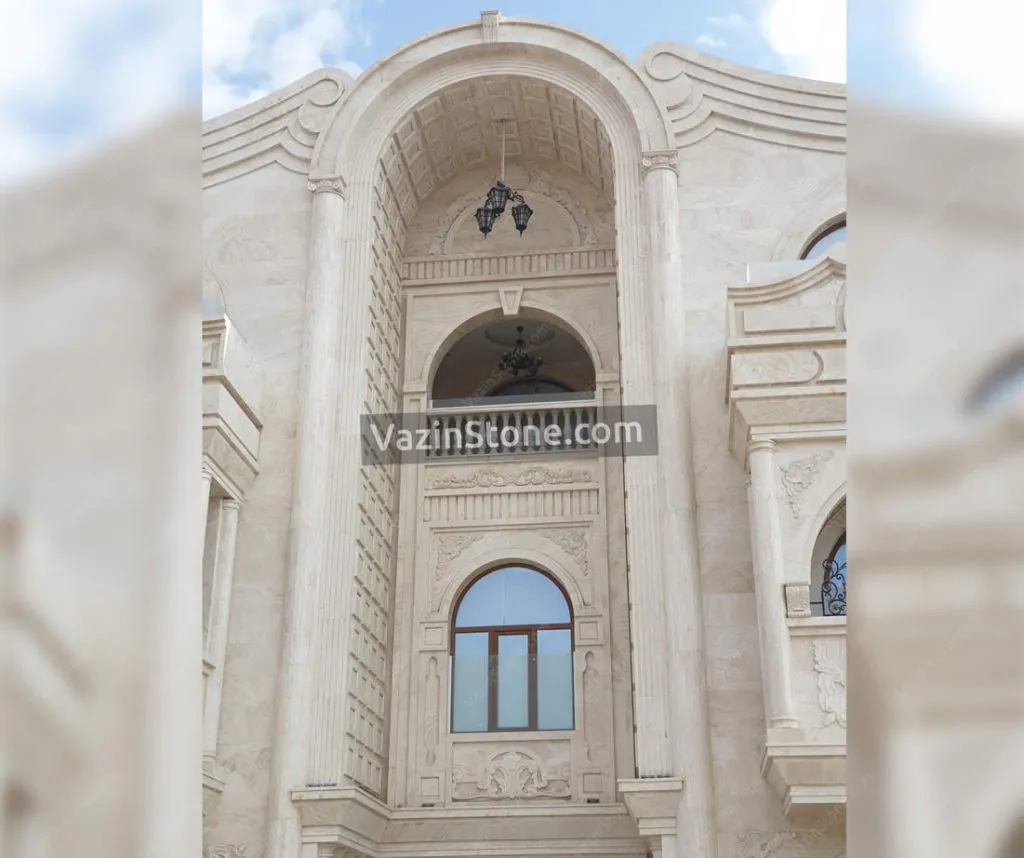
Roman Facade Gallery
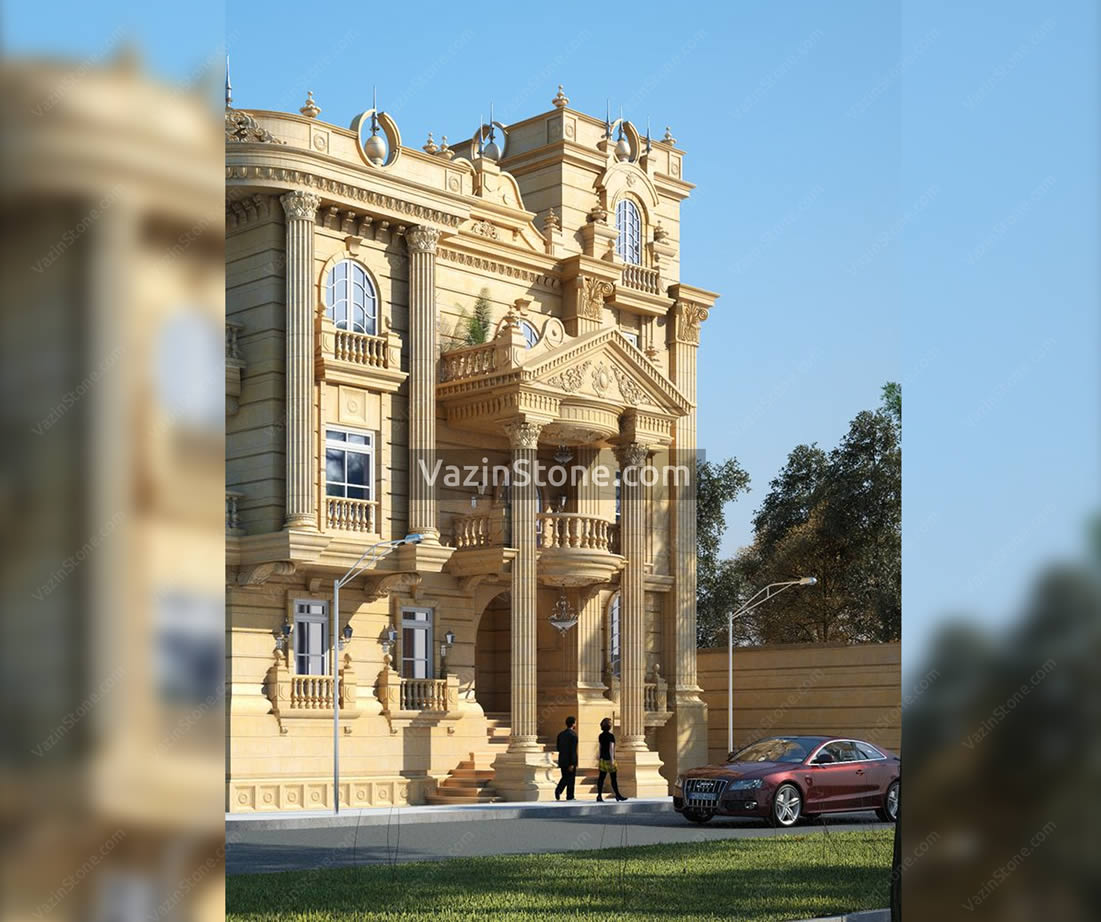
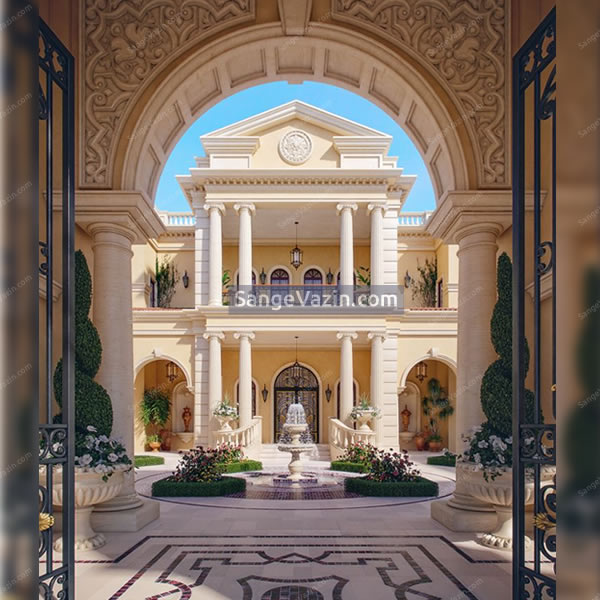
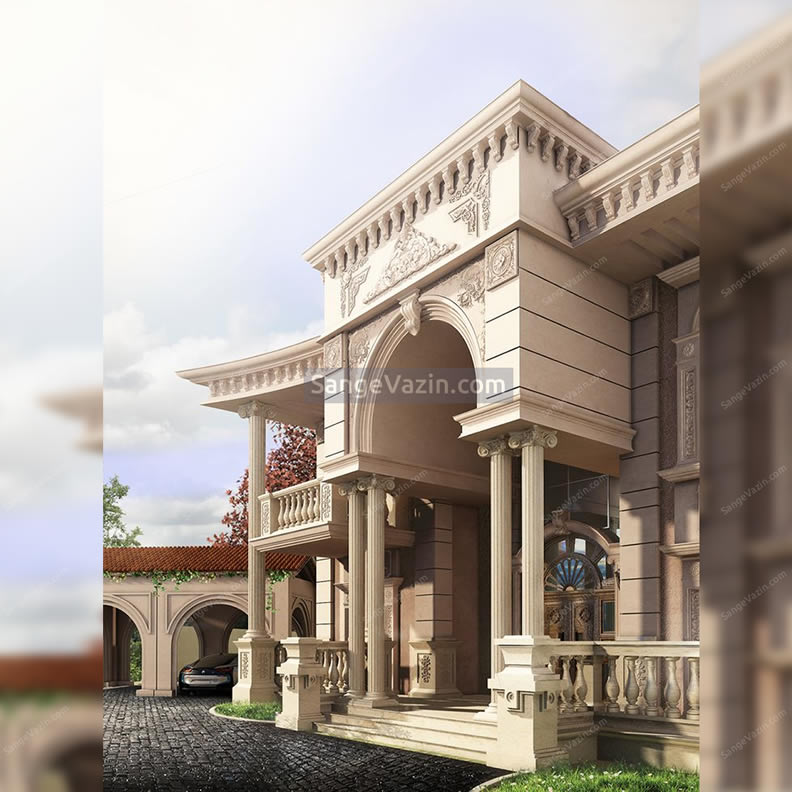
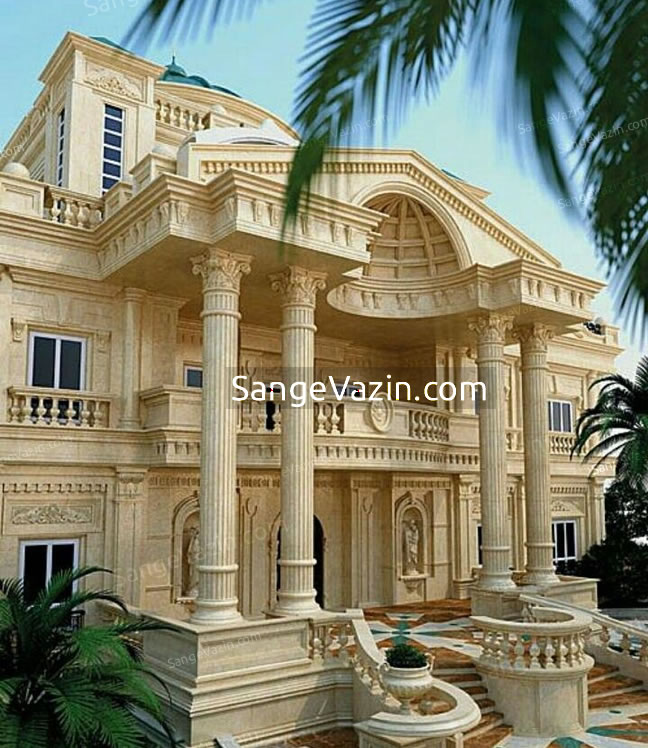
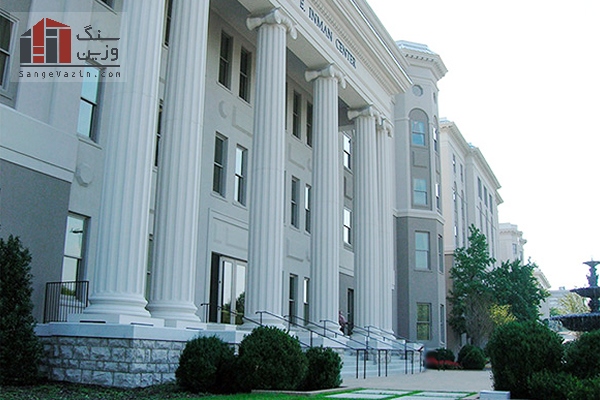
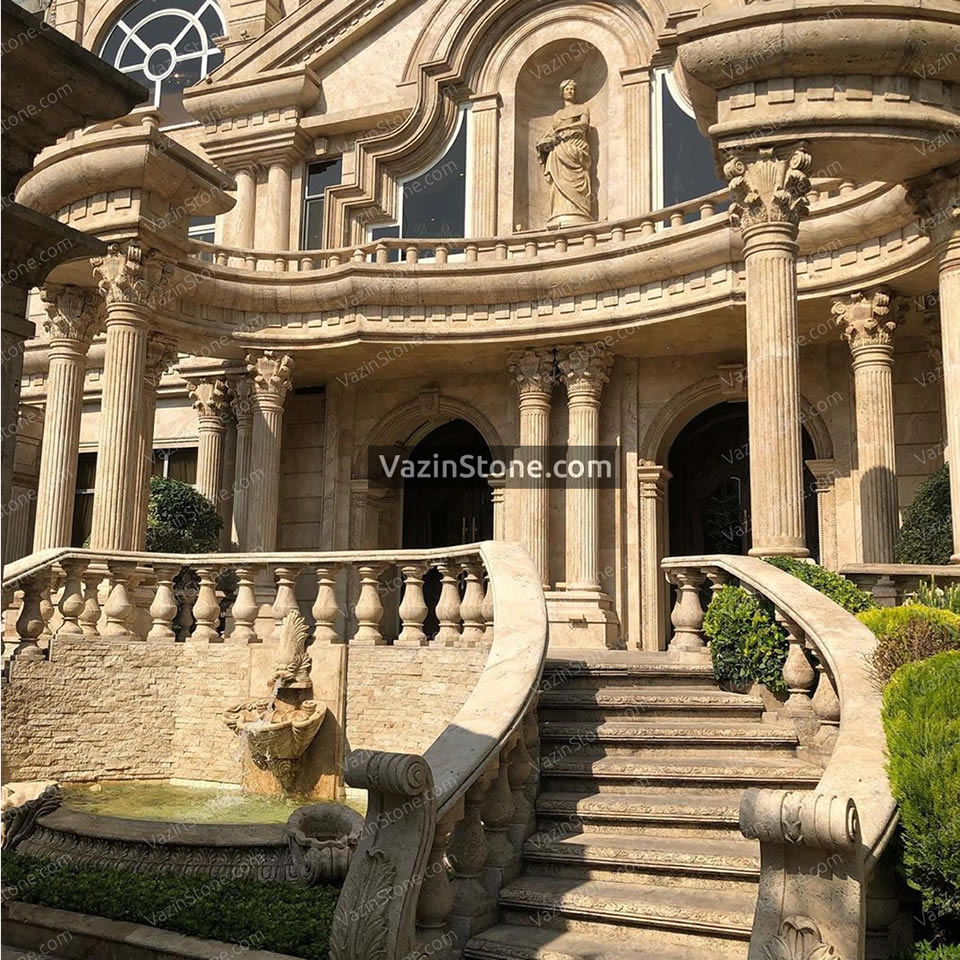
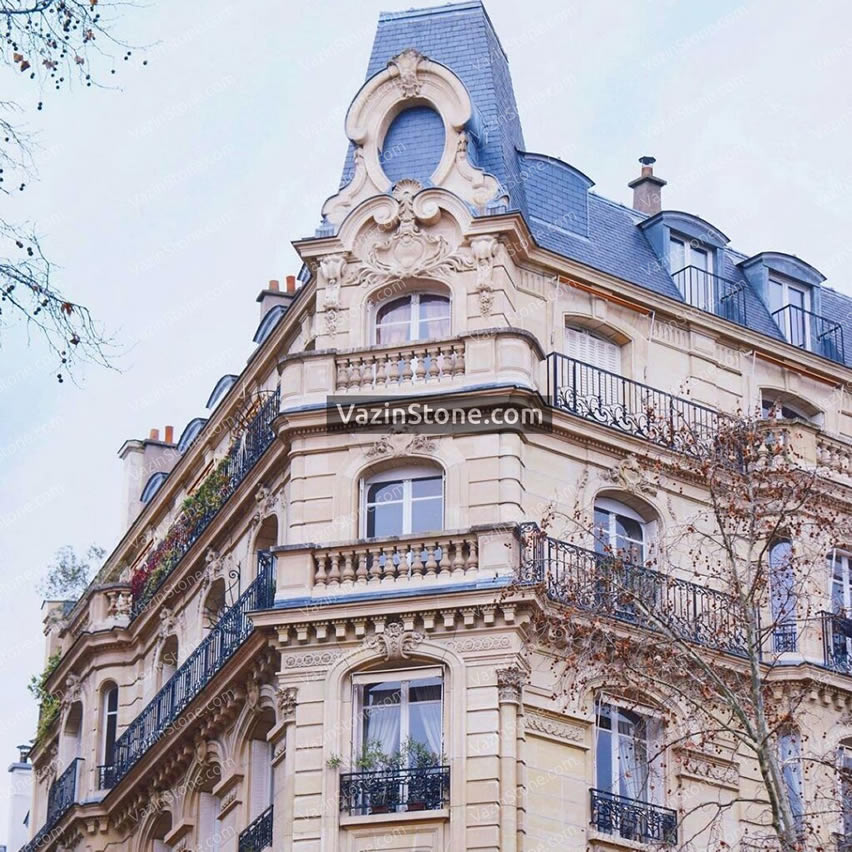
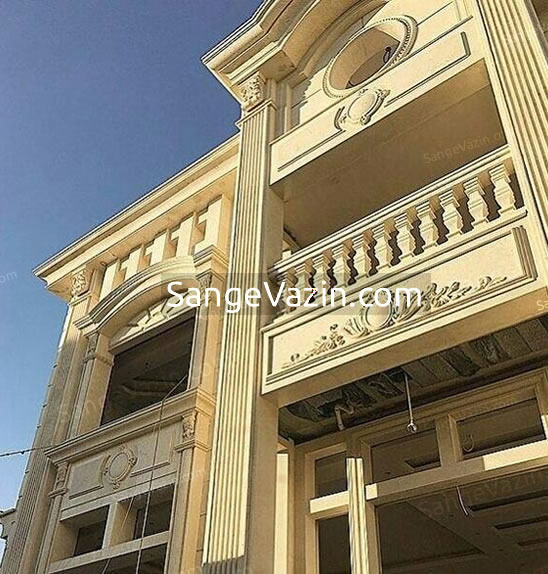
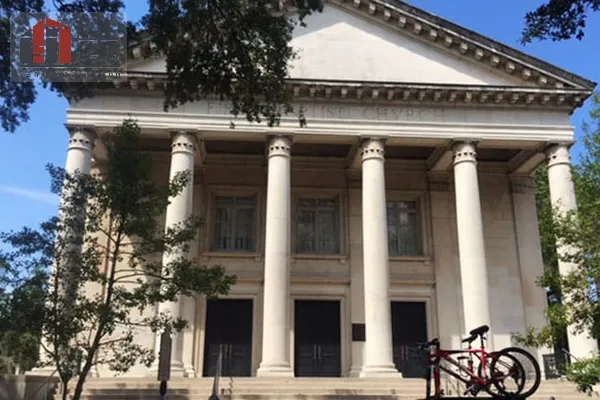
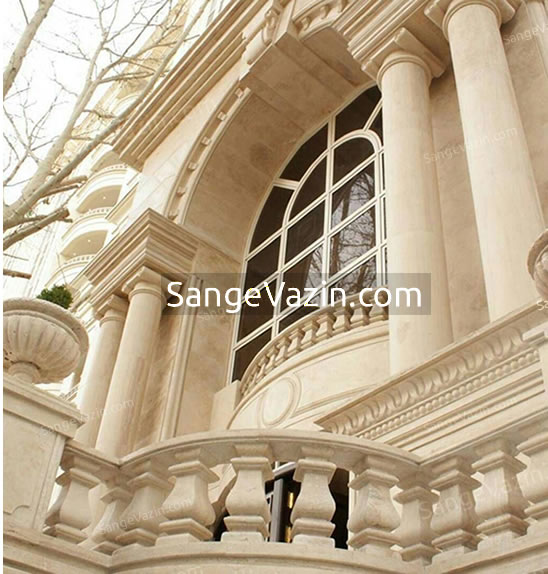
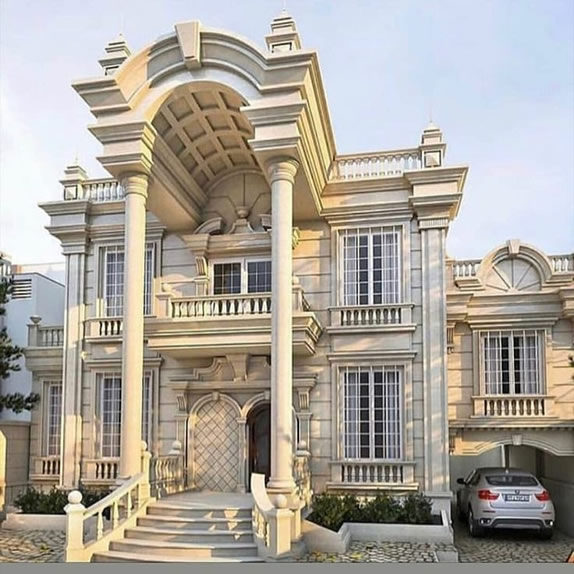
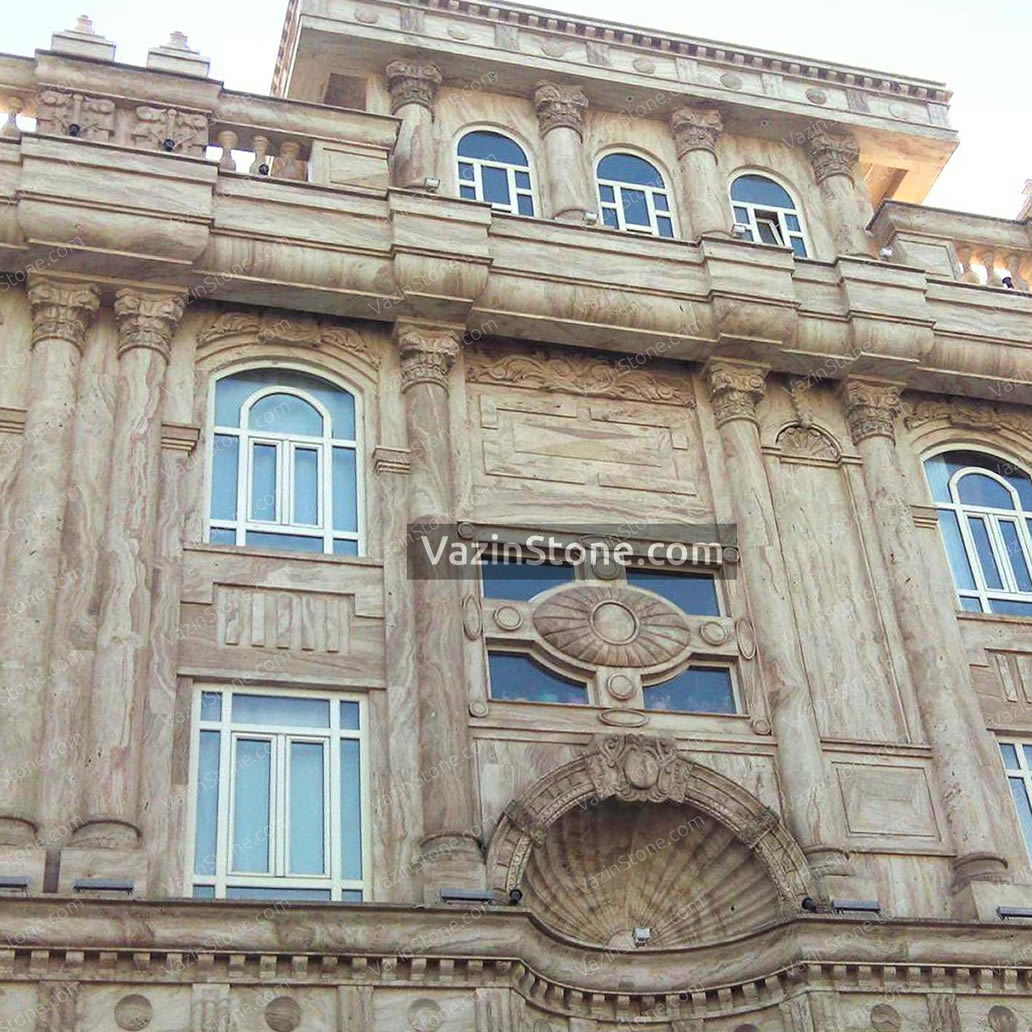
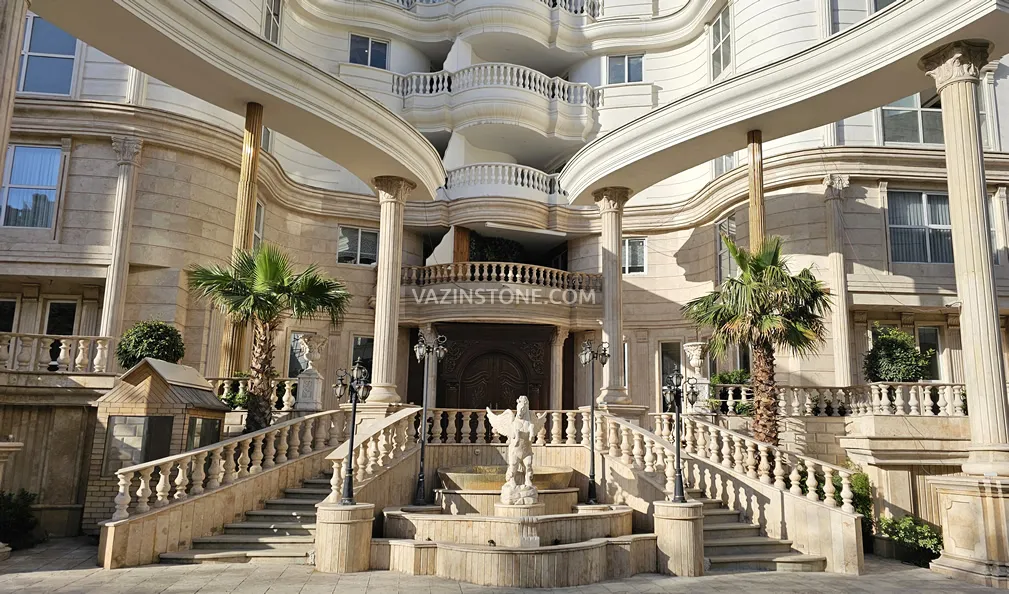
Iranian Roman Facade Gallery
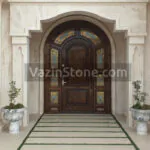
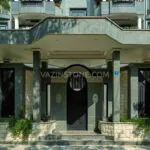
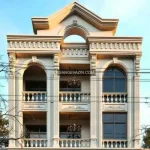
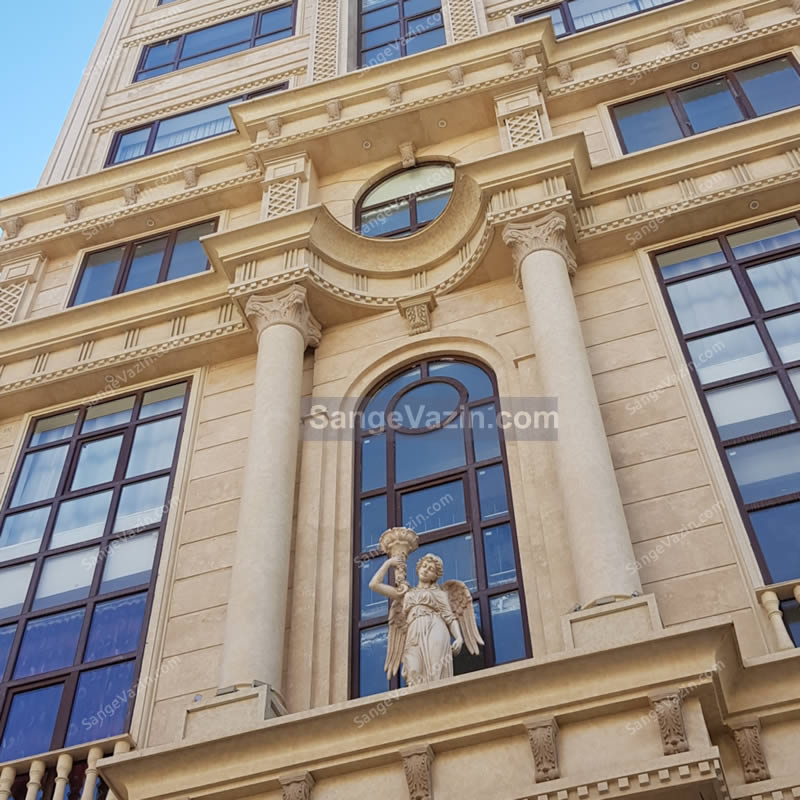
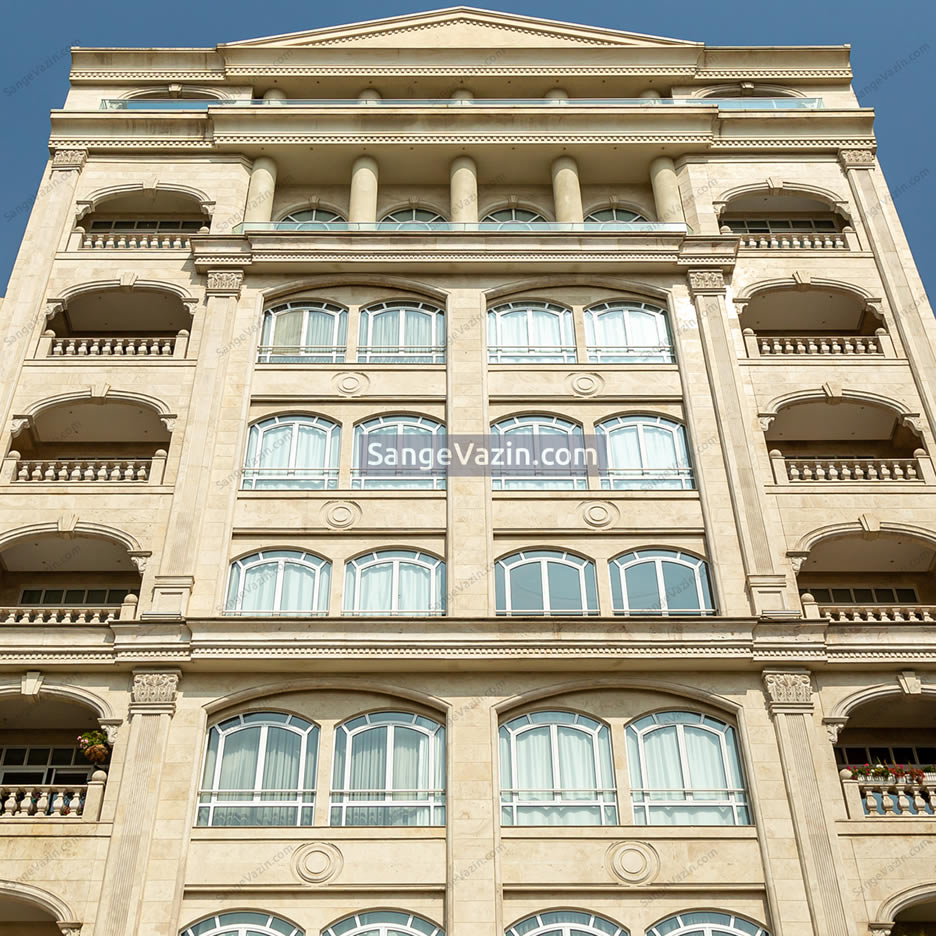
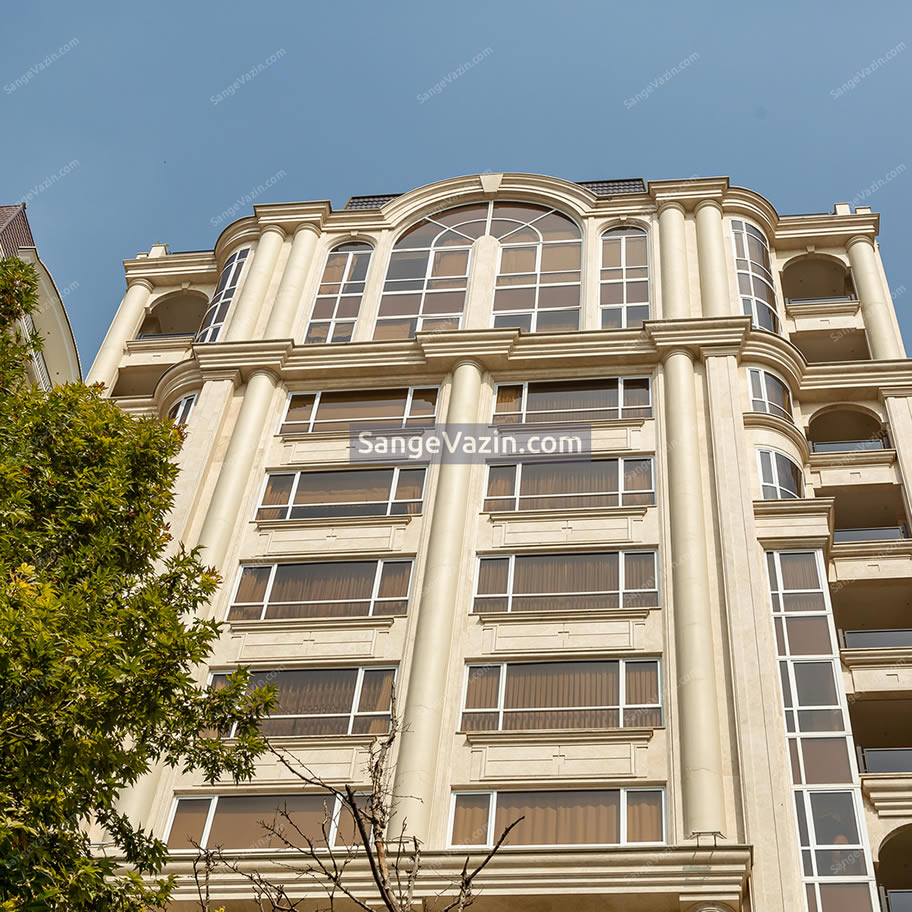
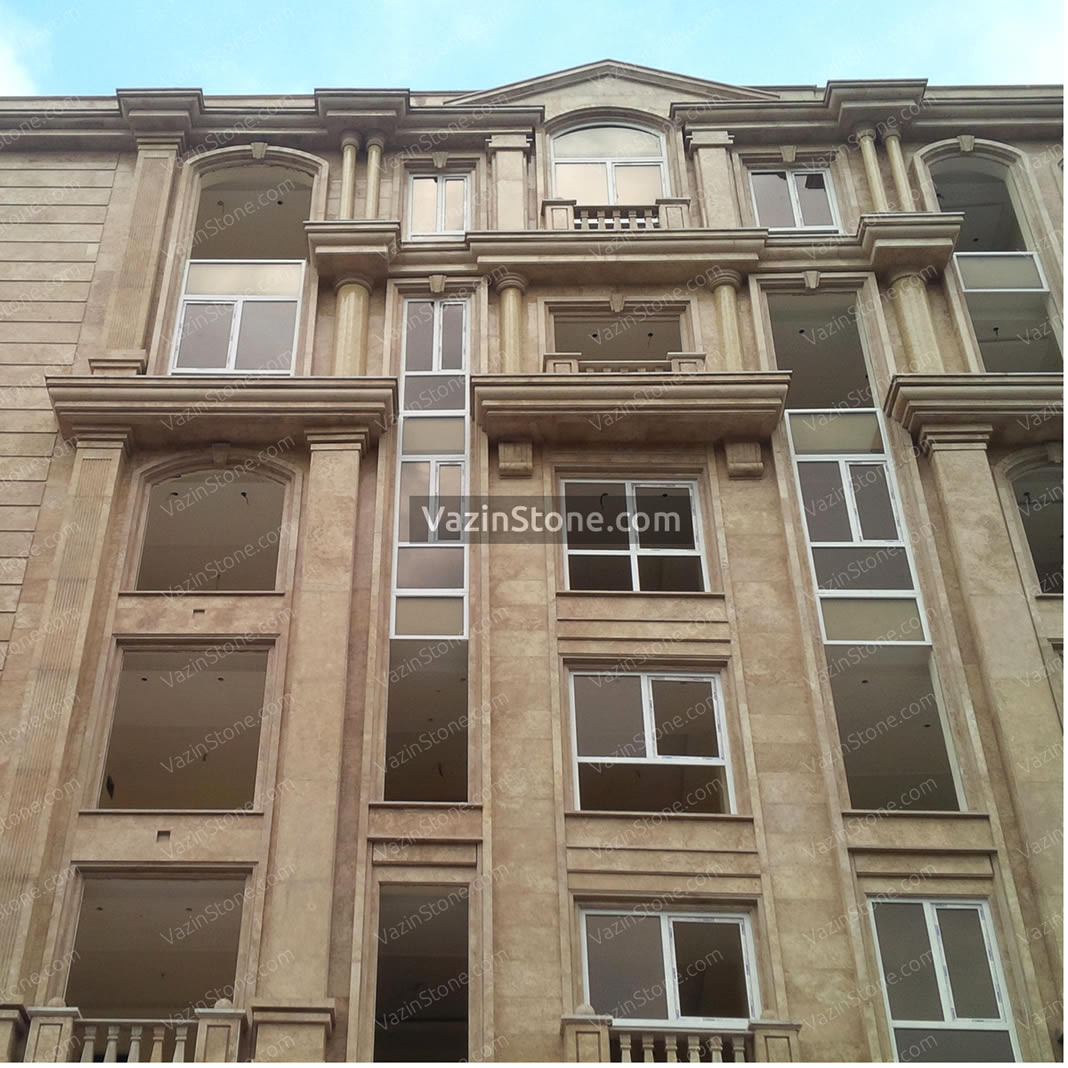
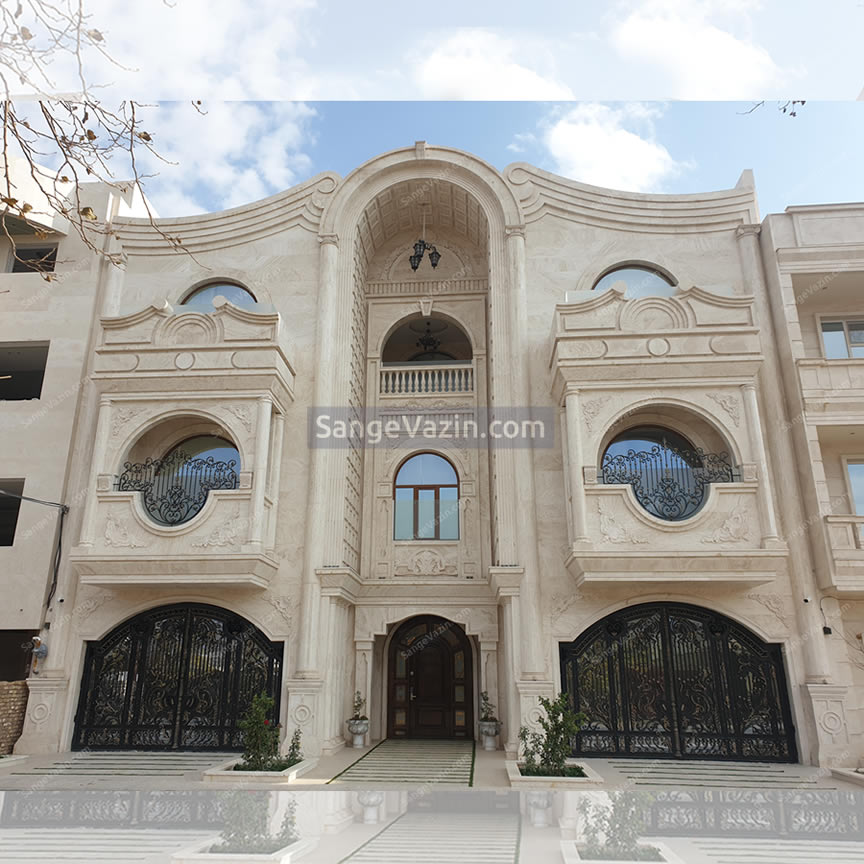
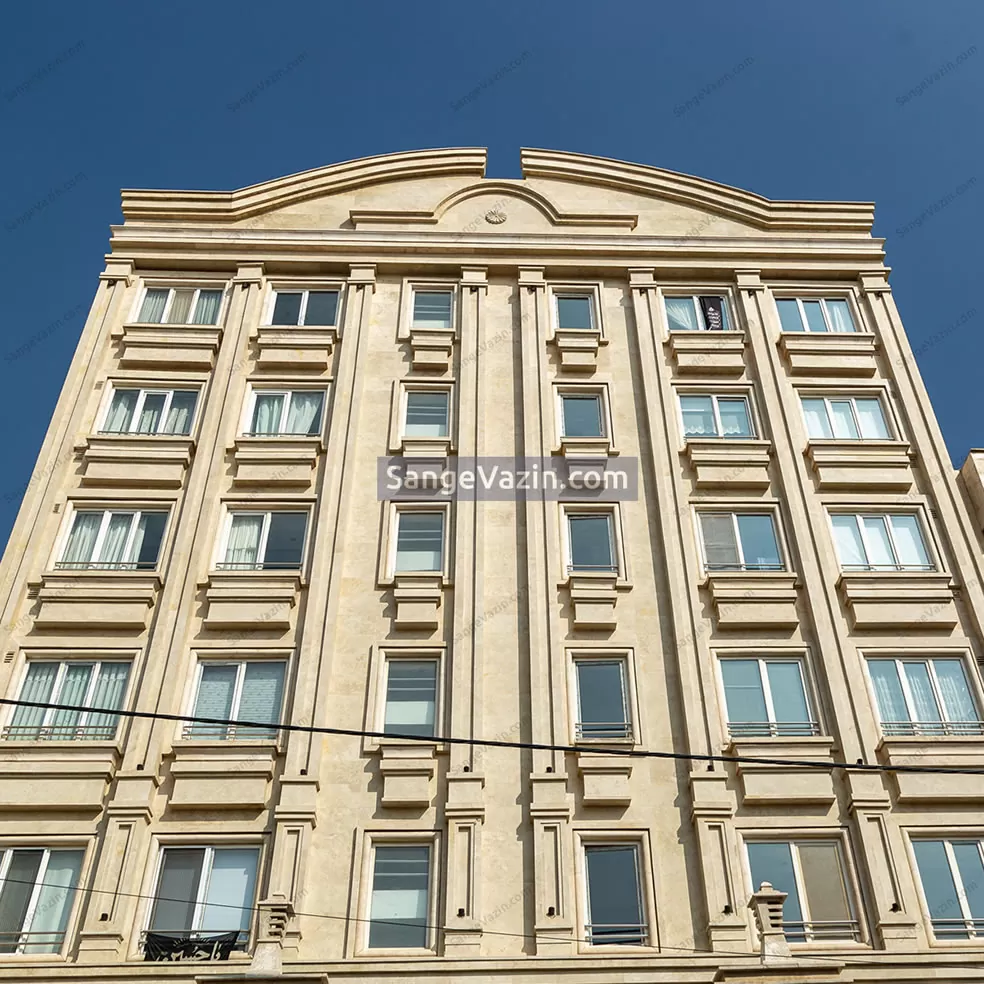
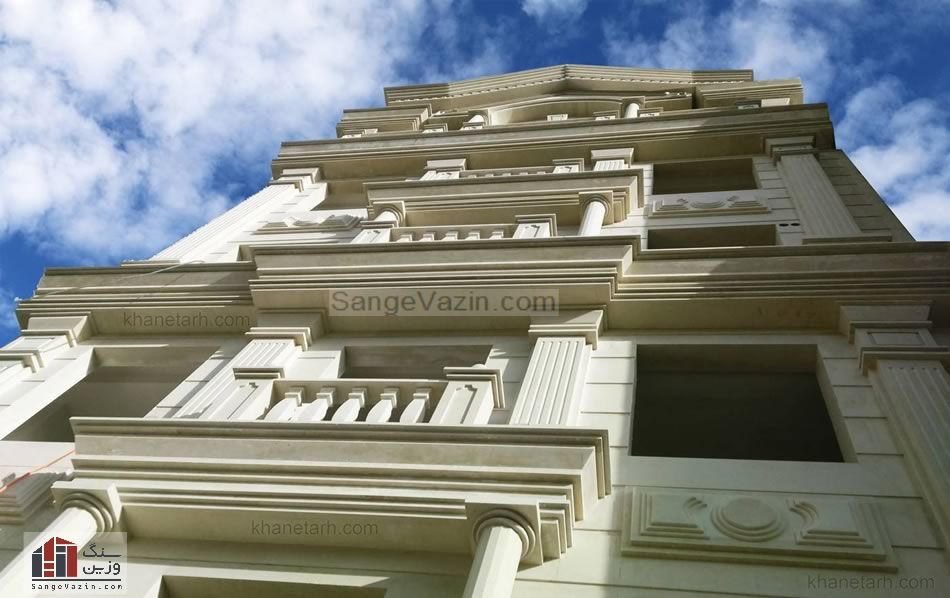
The facades shown below, photographed in Tehran, Iran, are considered to be inspired by the Classical facade style (Roman facades) and are generally classified as simple Roman facades or modern Roman facades.
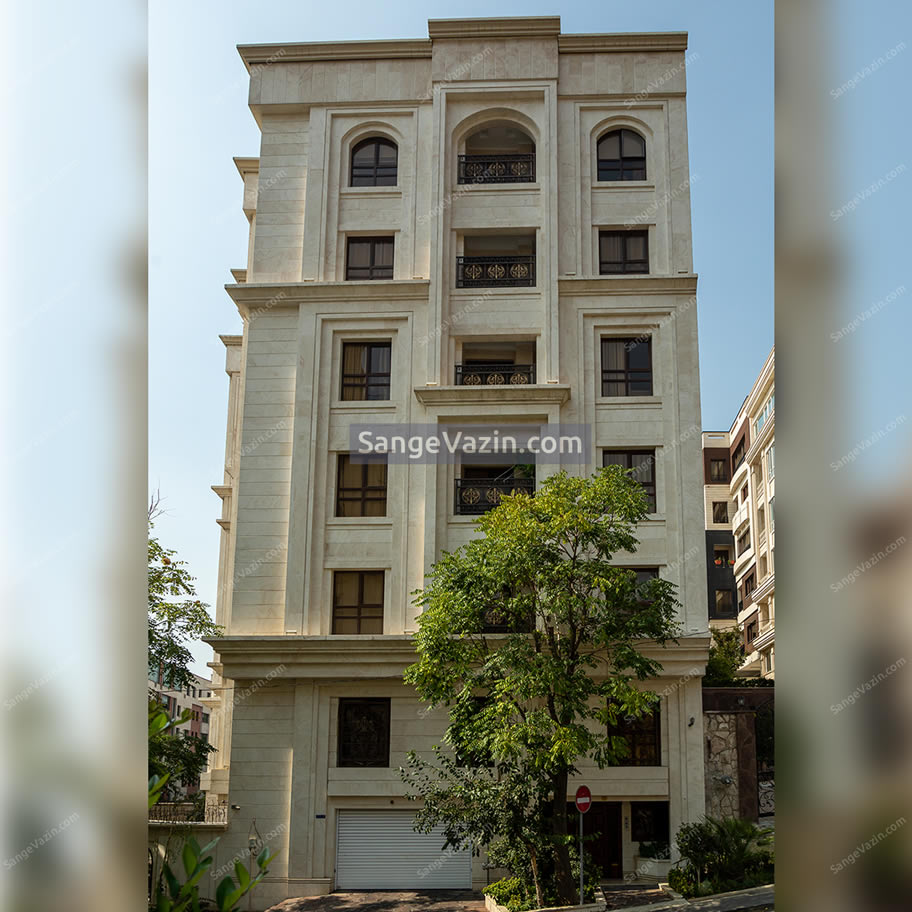
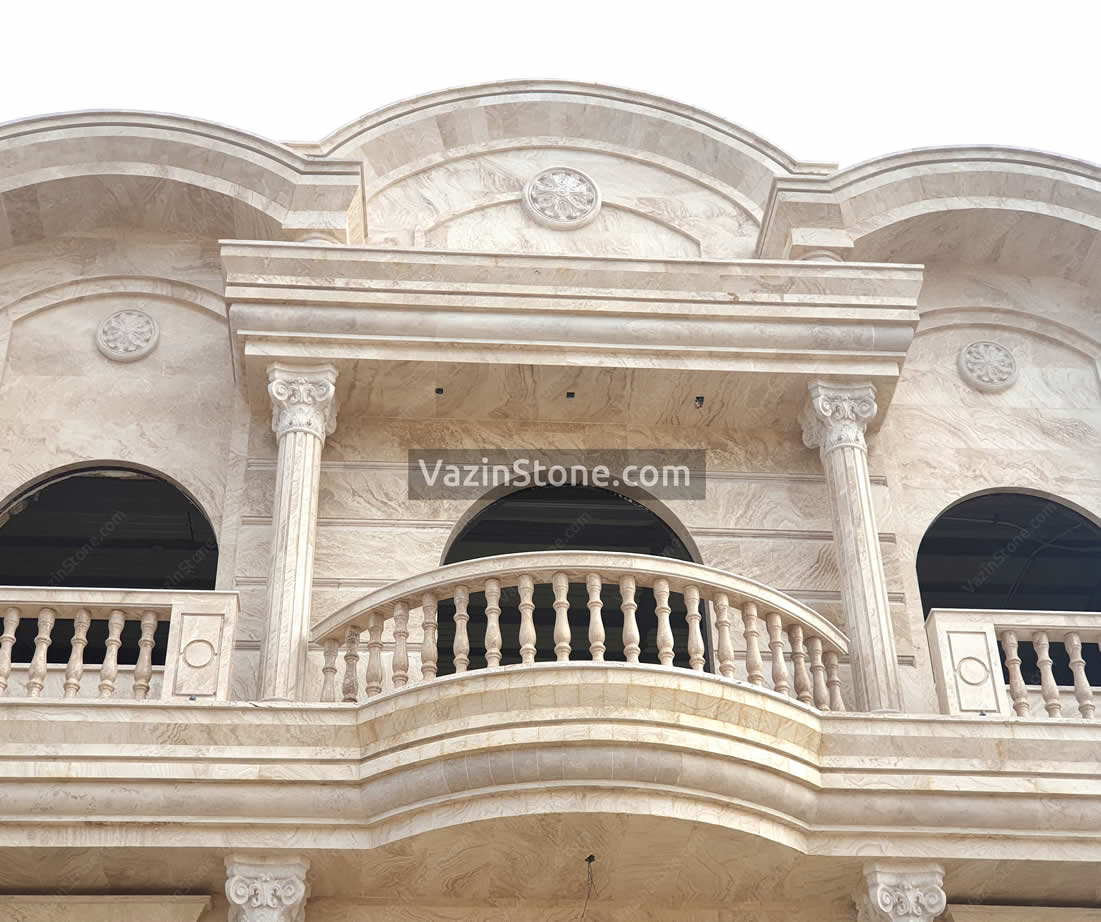
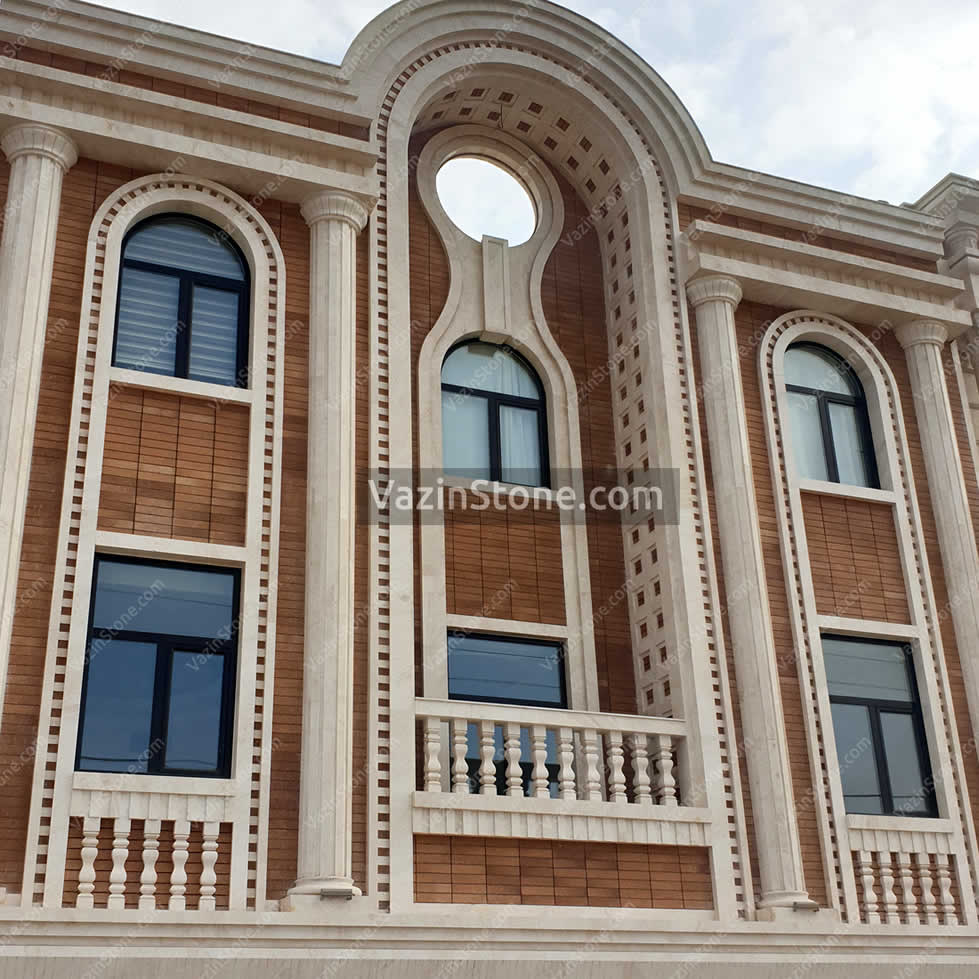
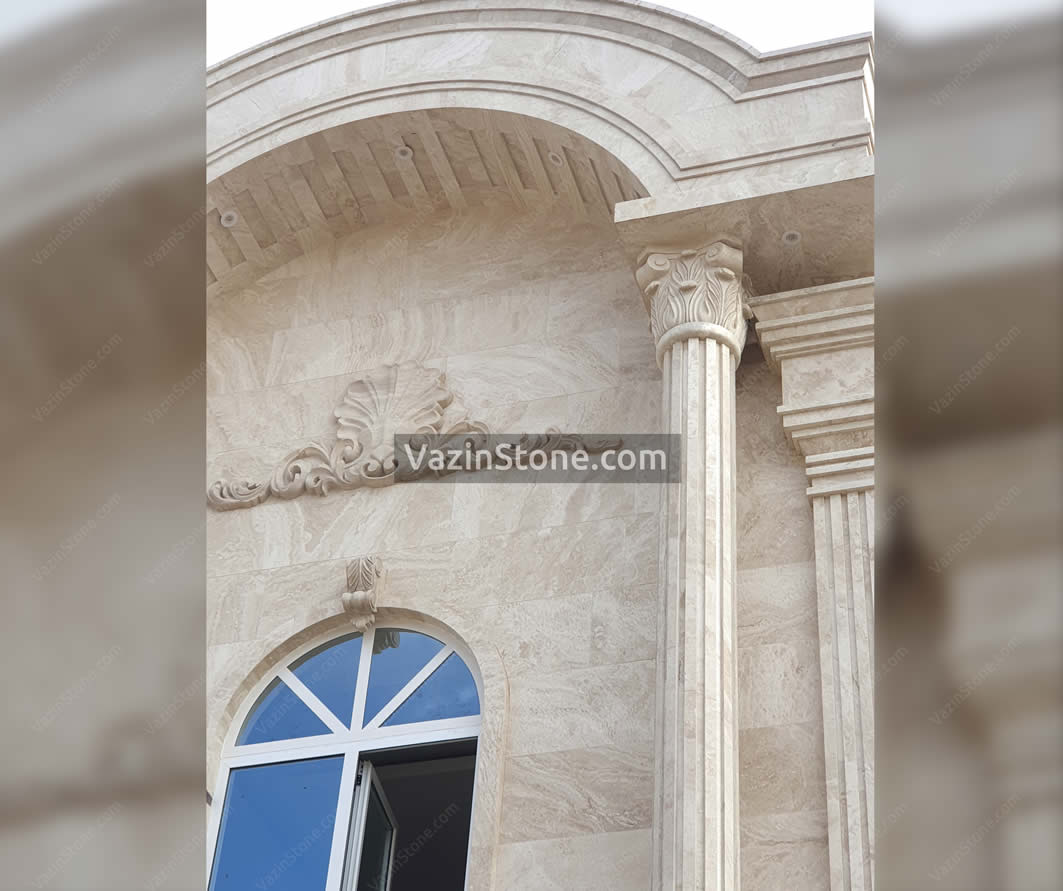
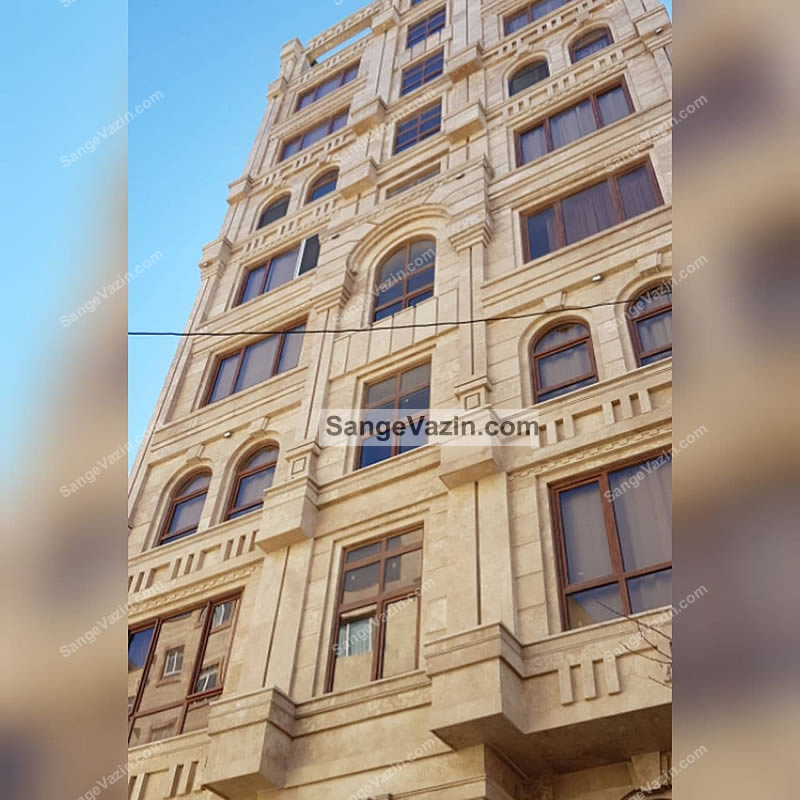
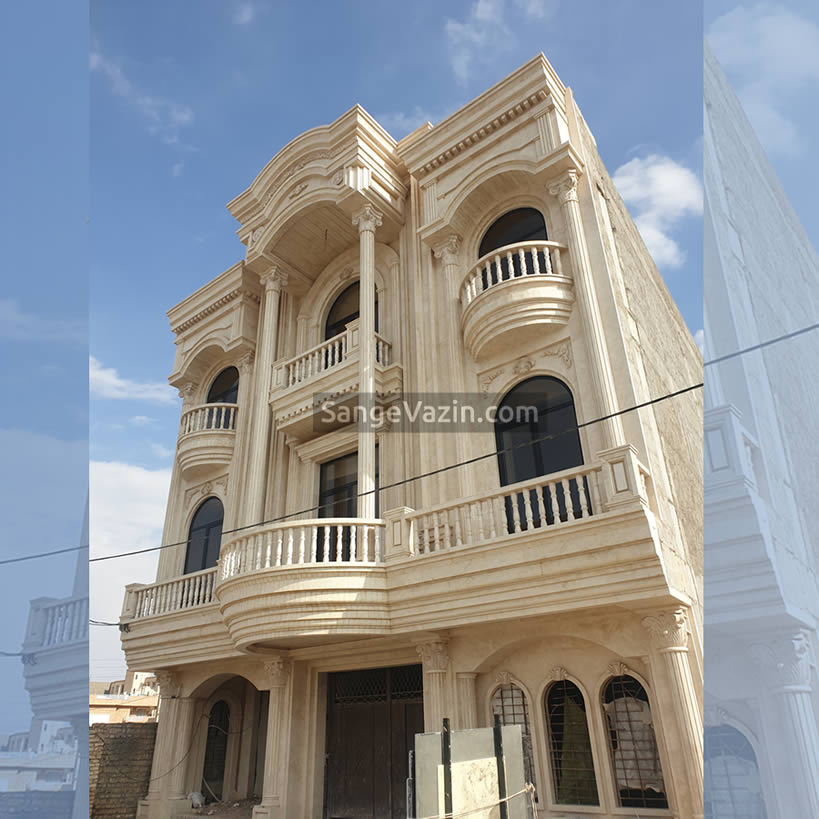
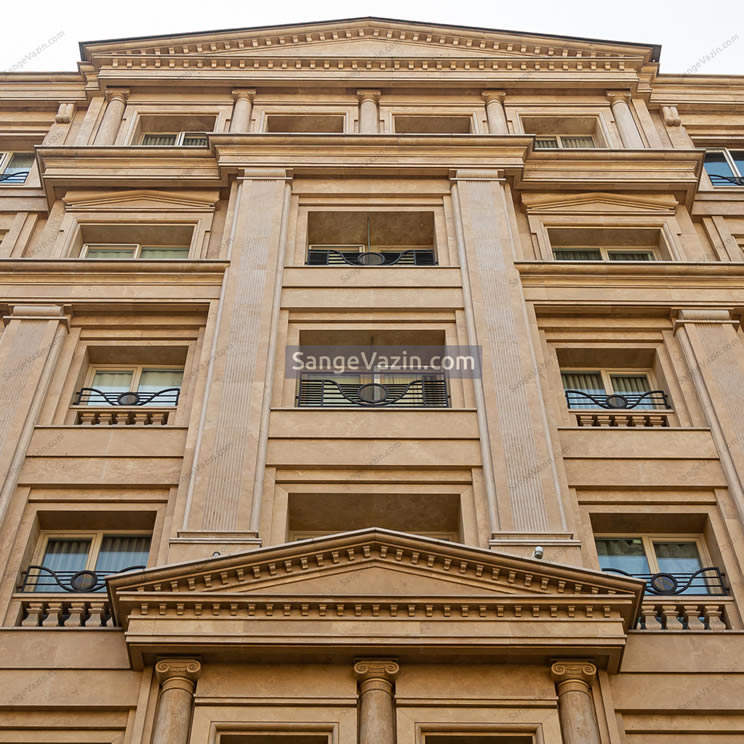
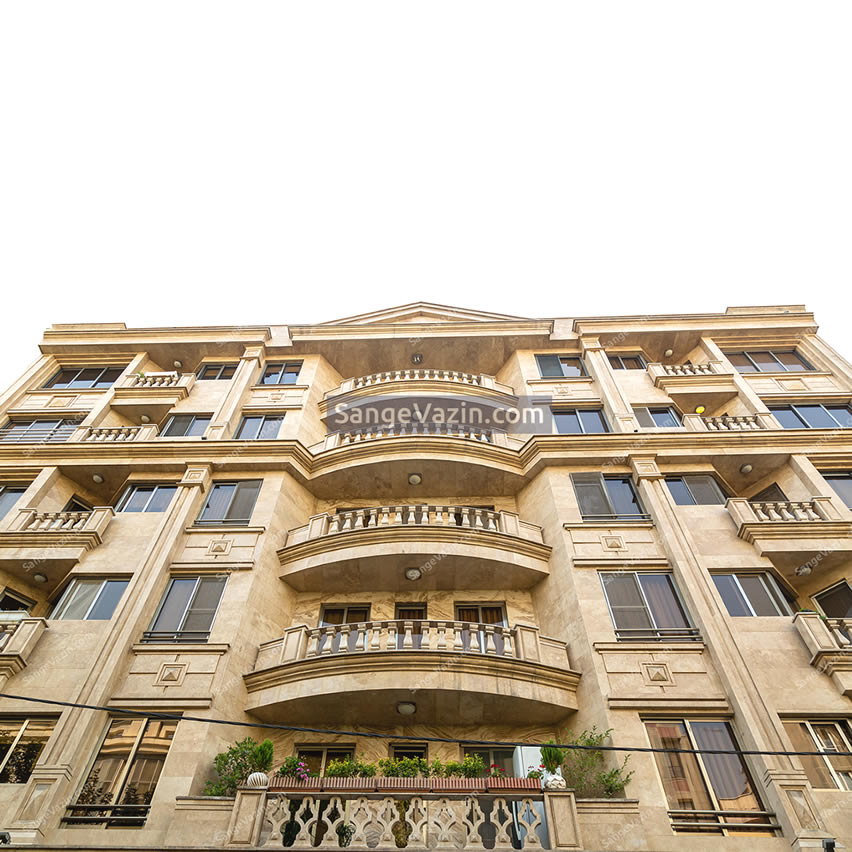
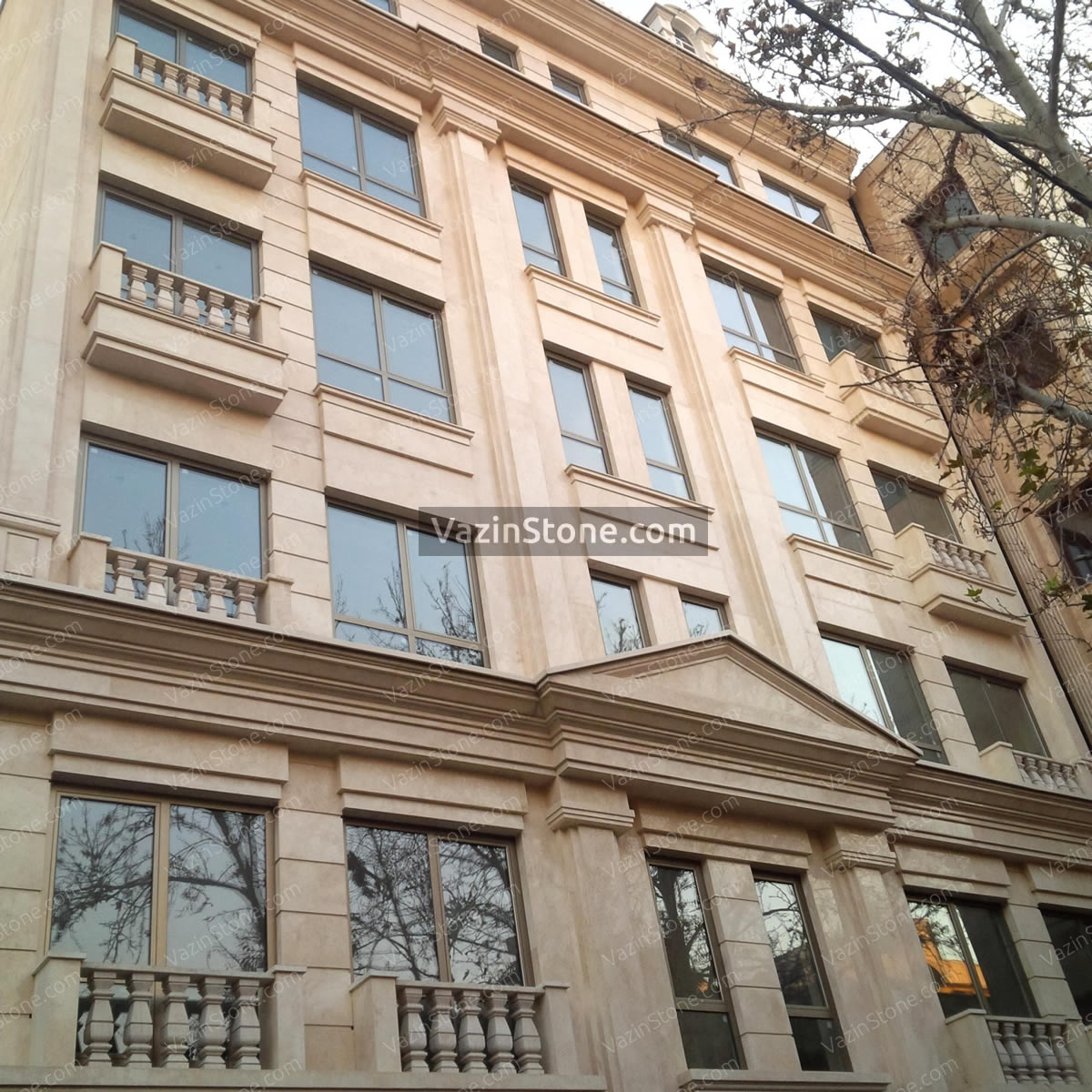
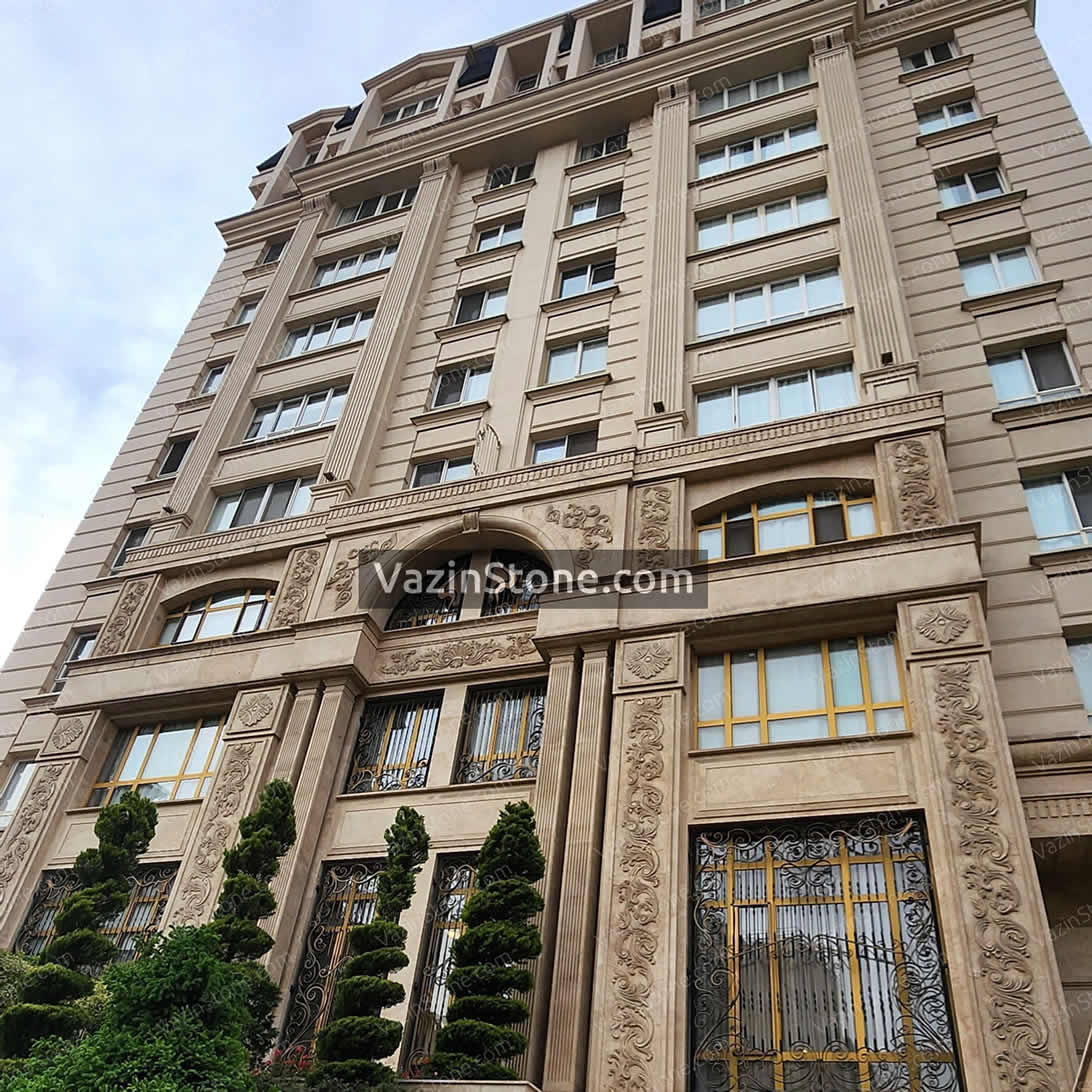
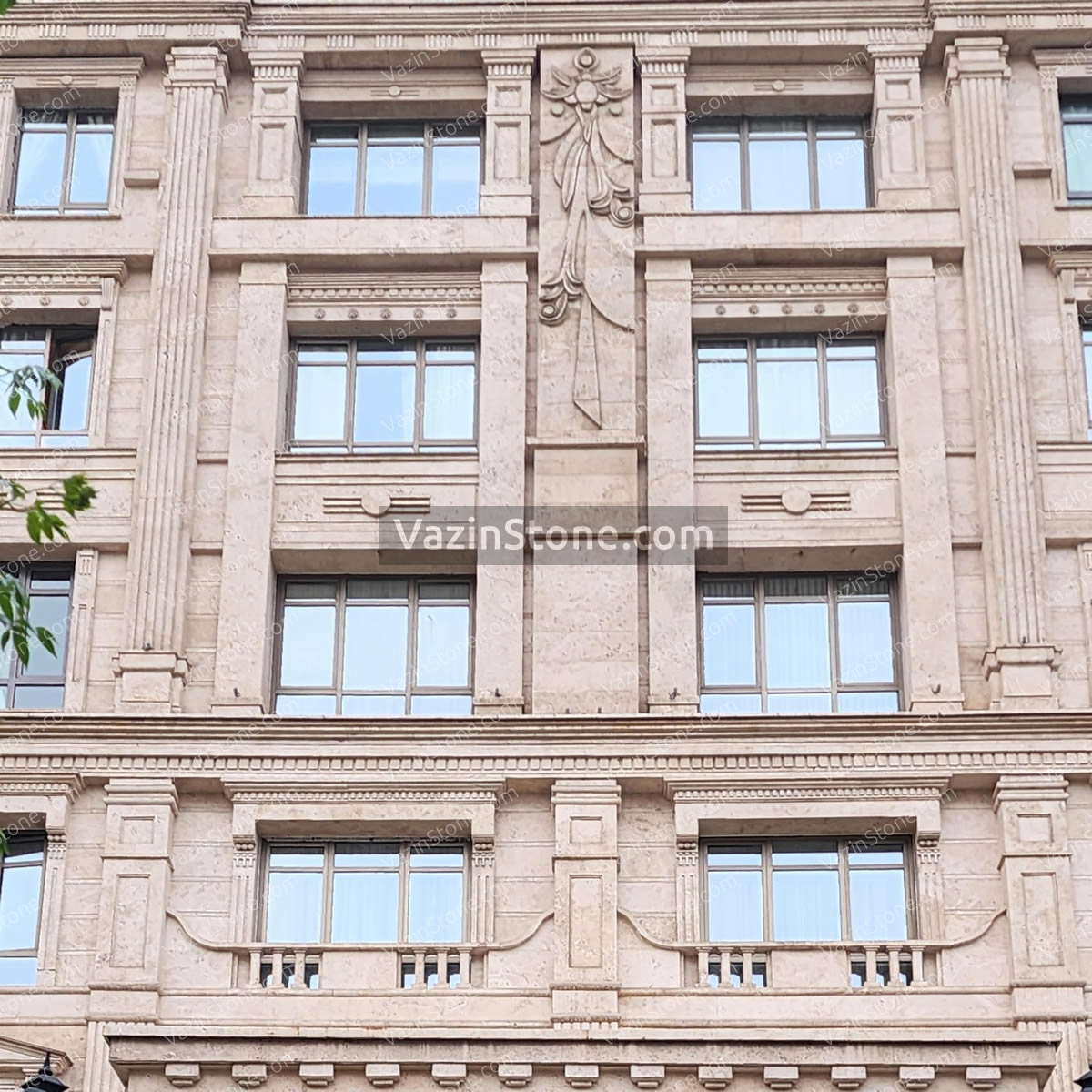

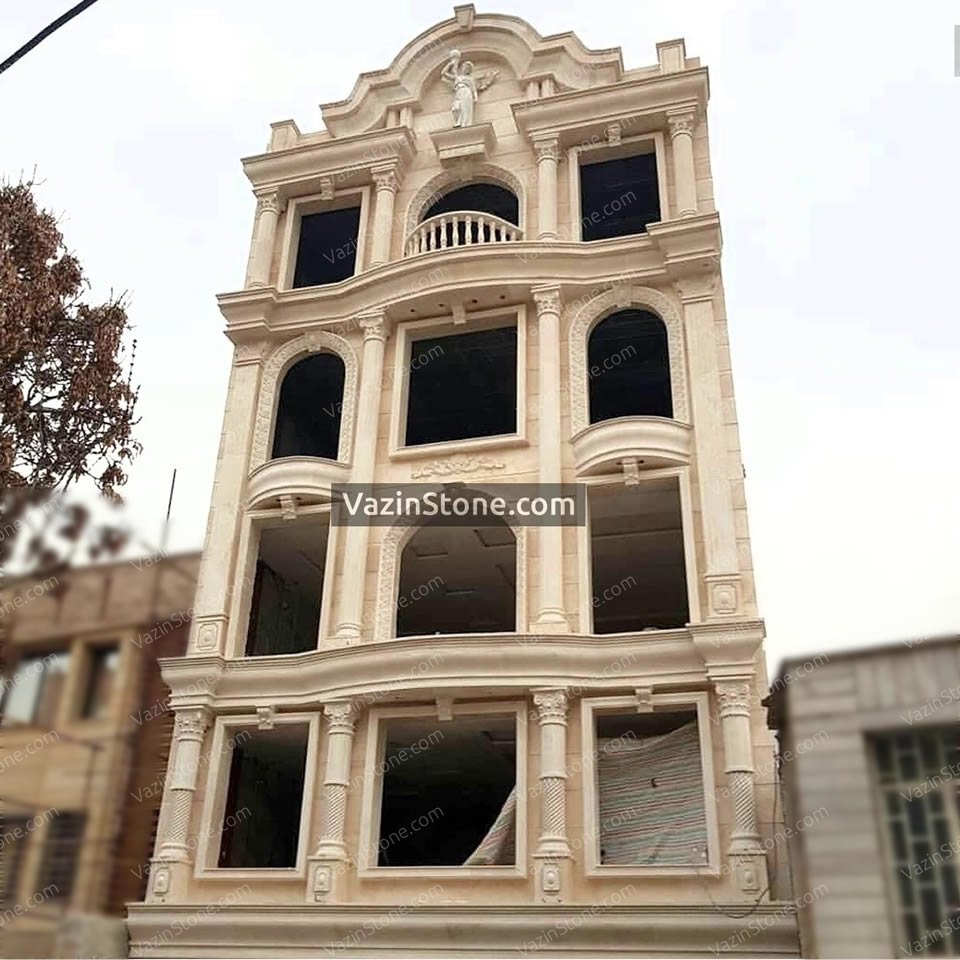
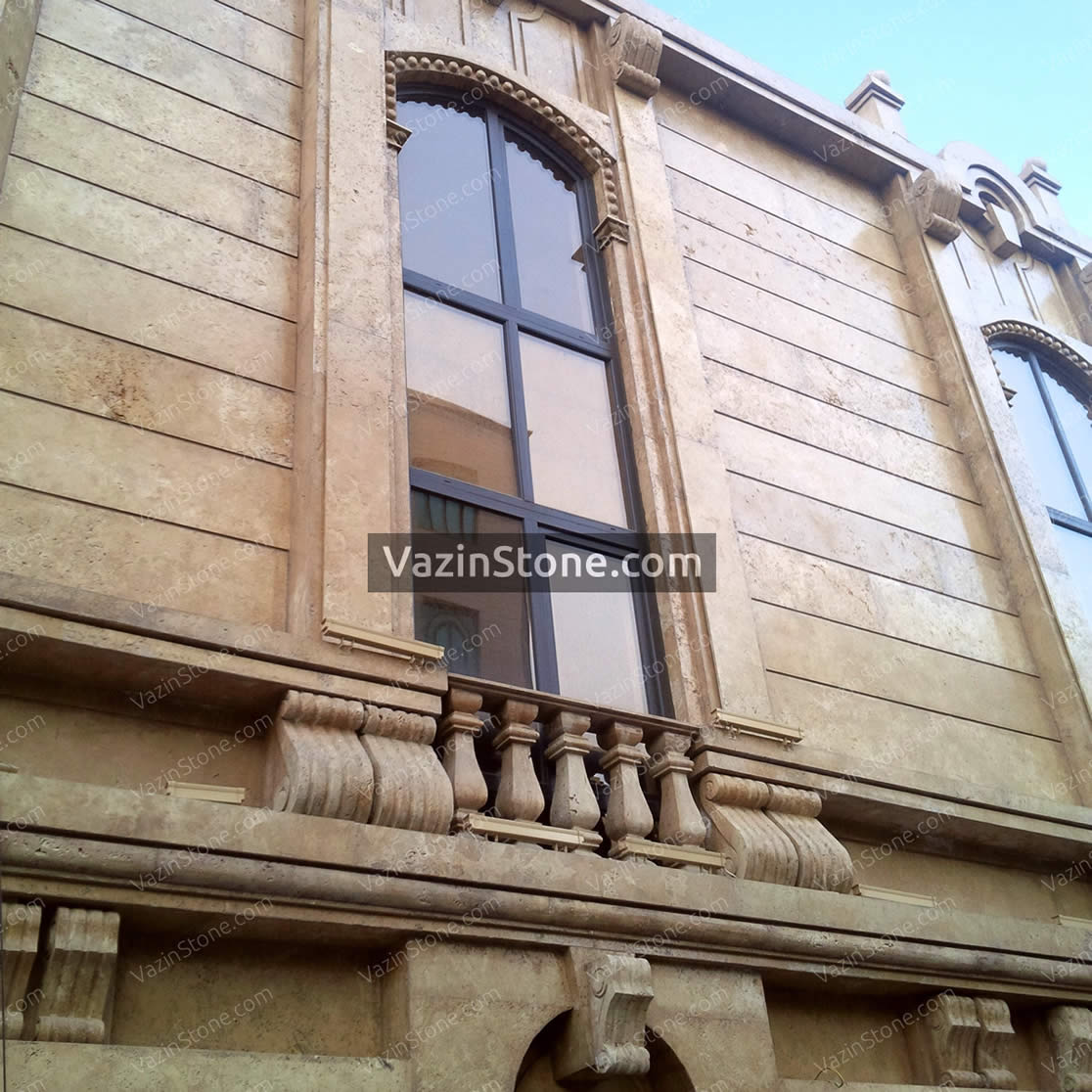
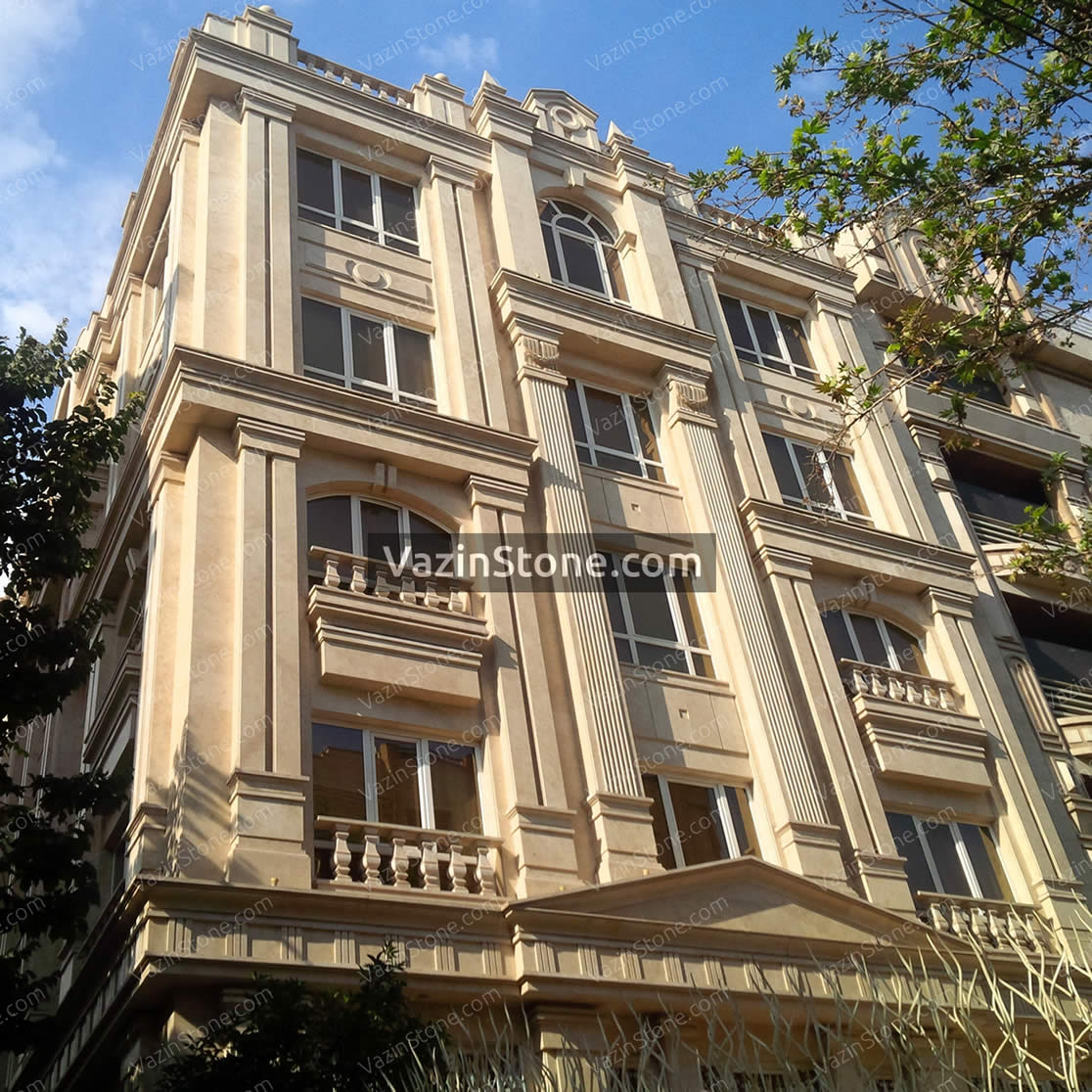
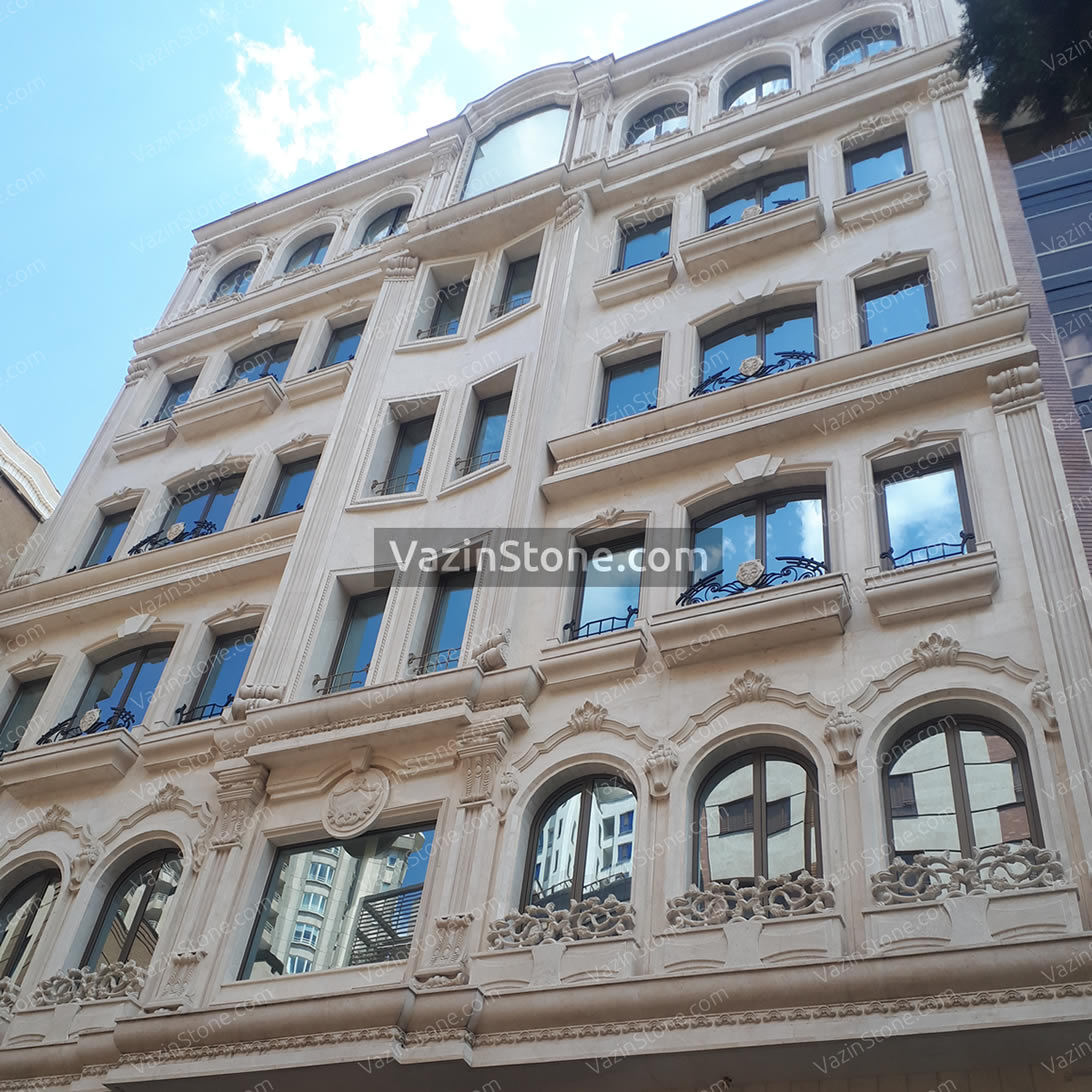
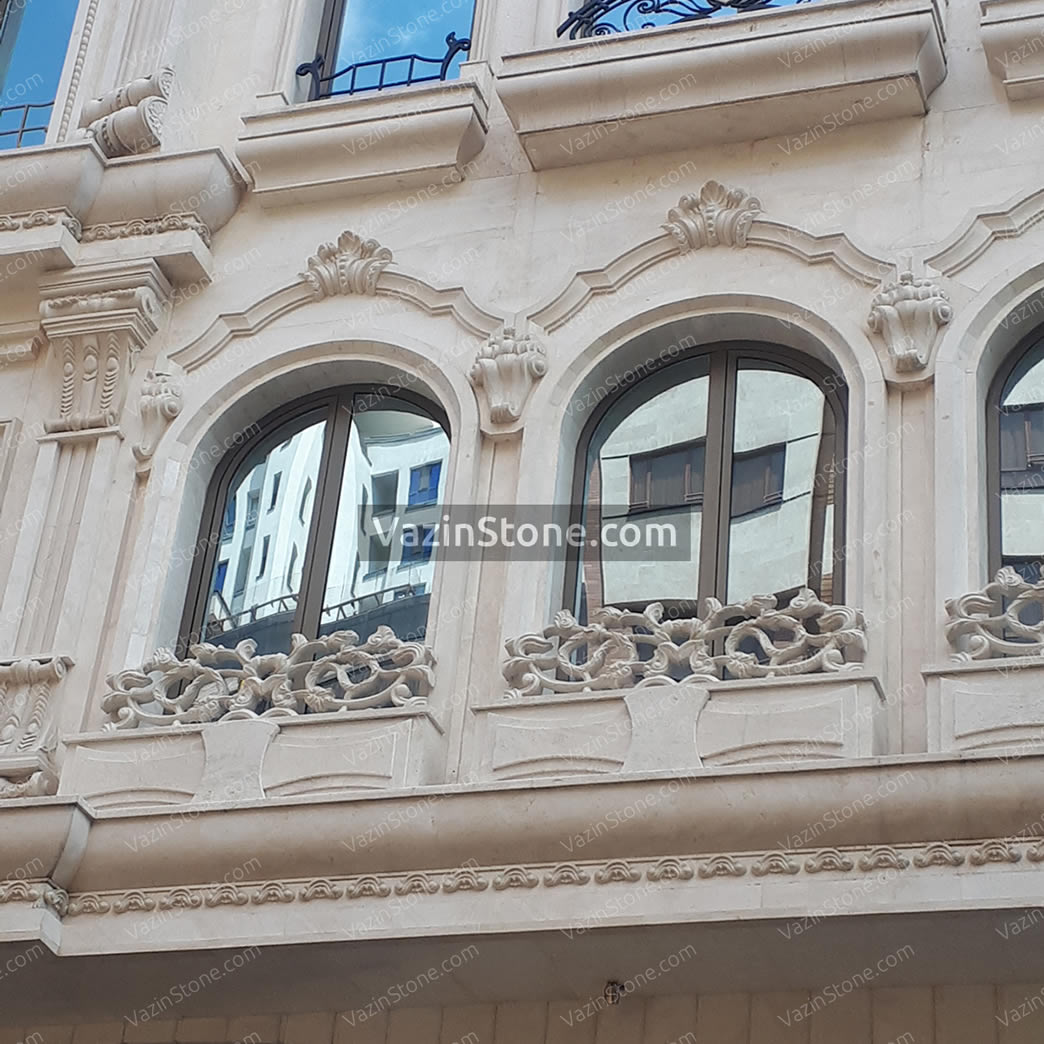
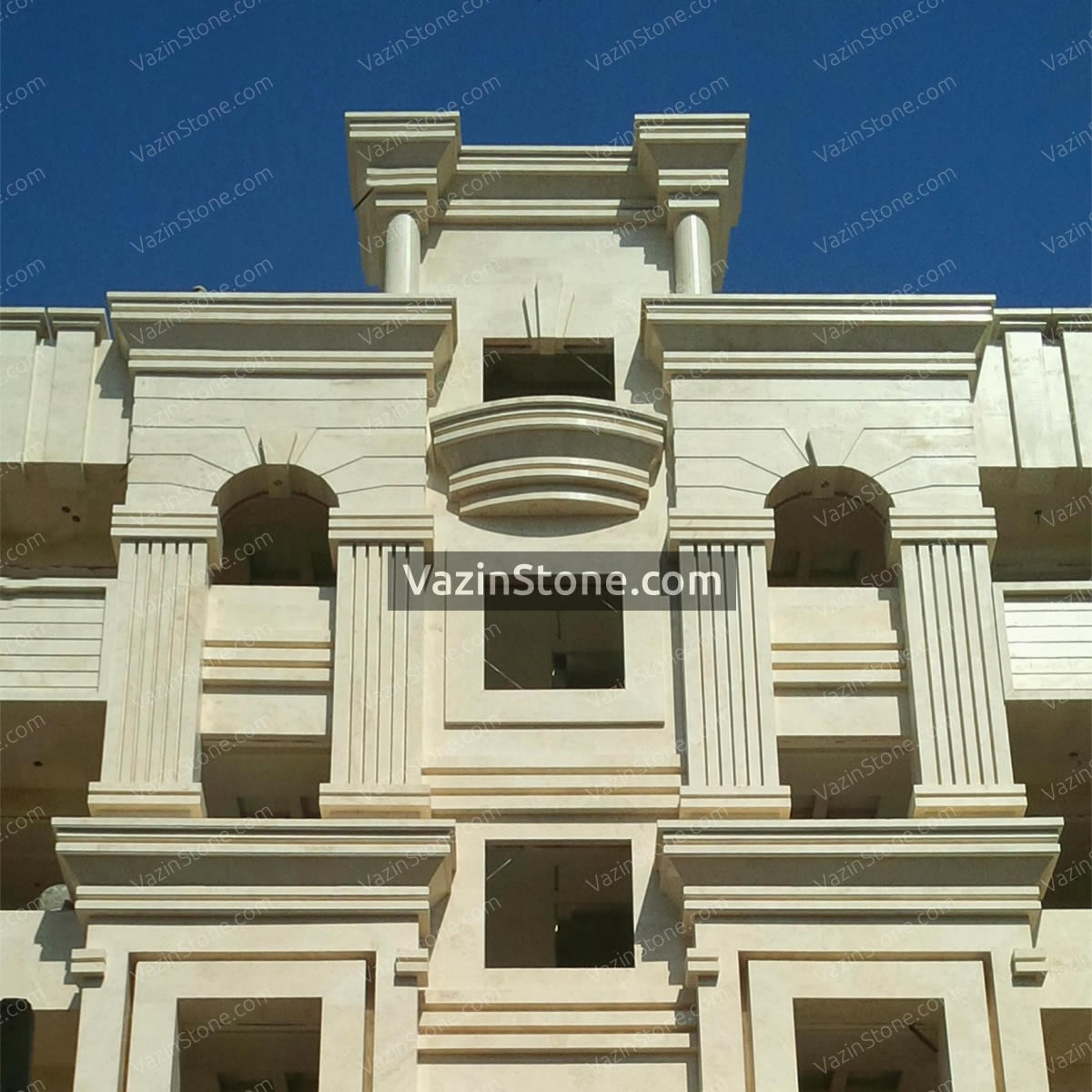
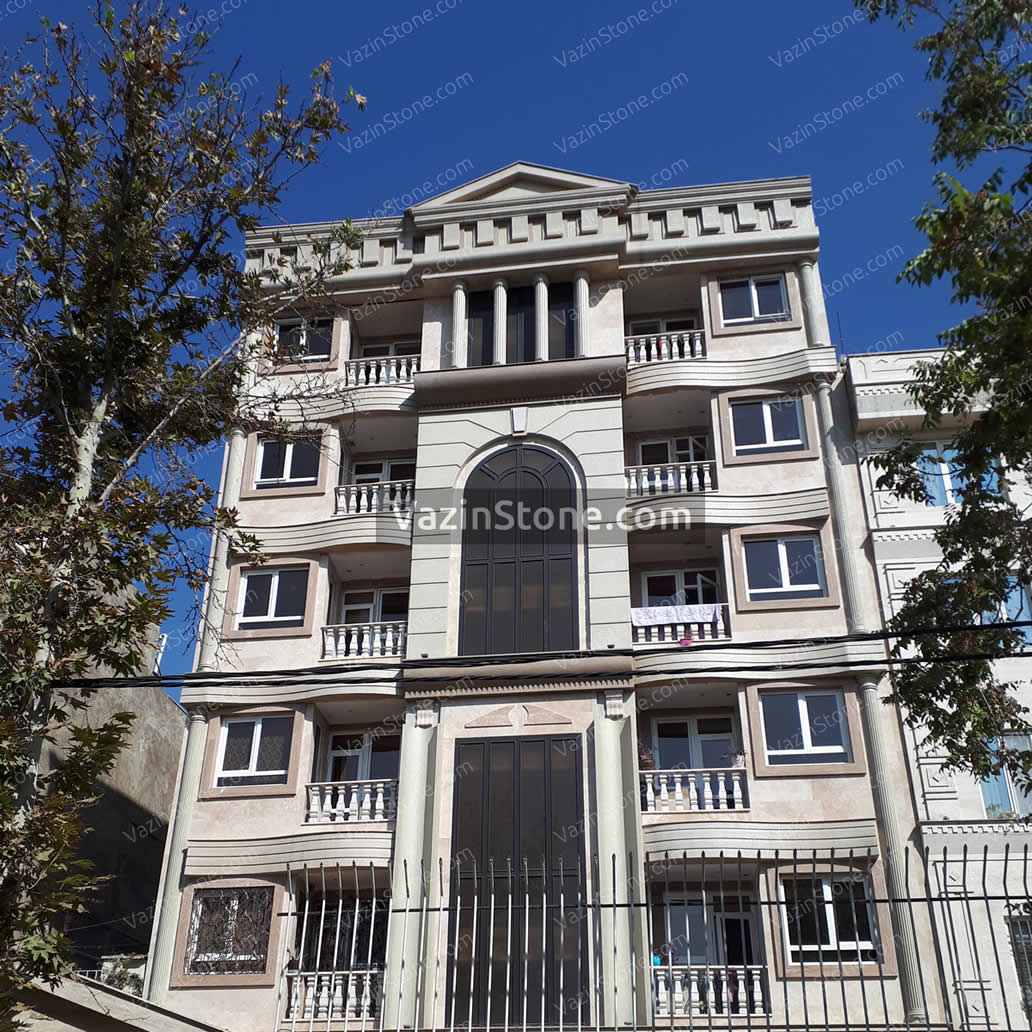
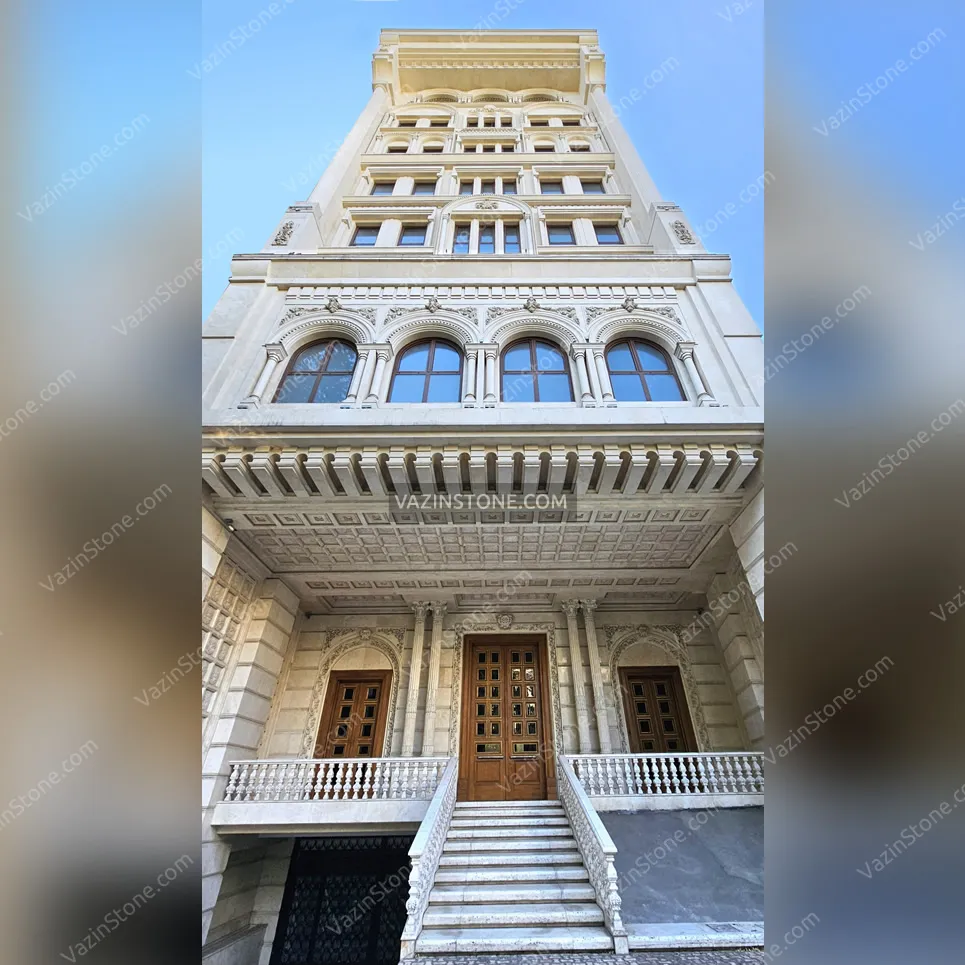
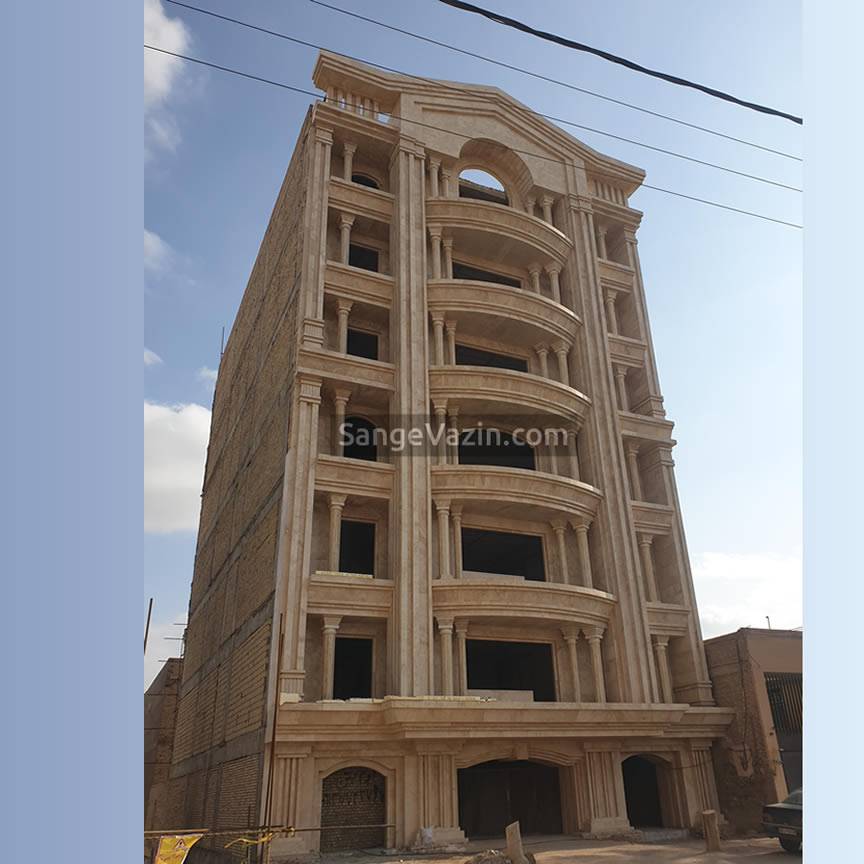
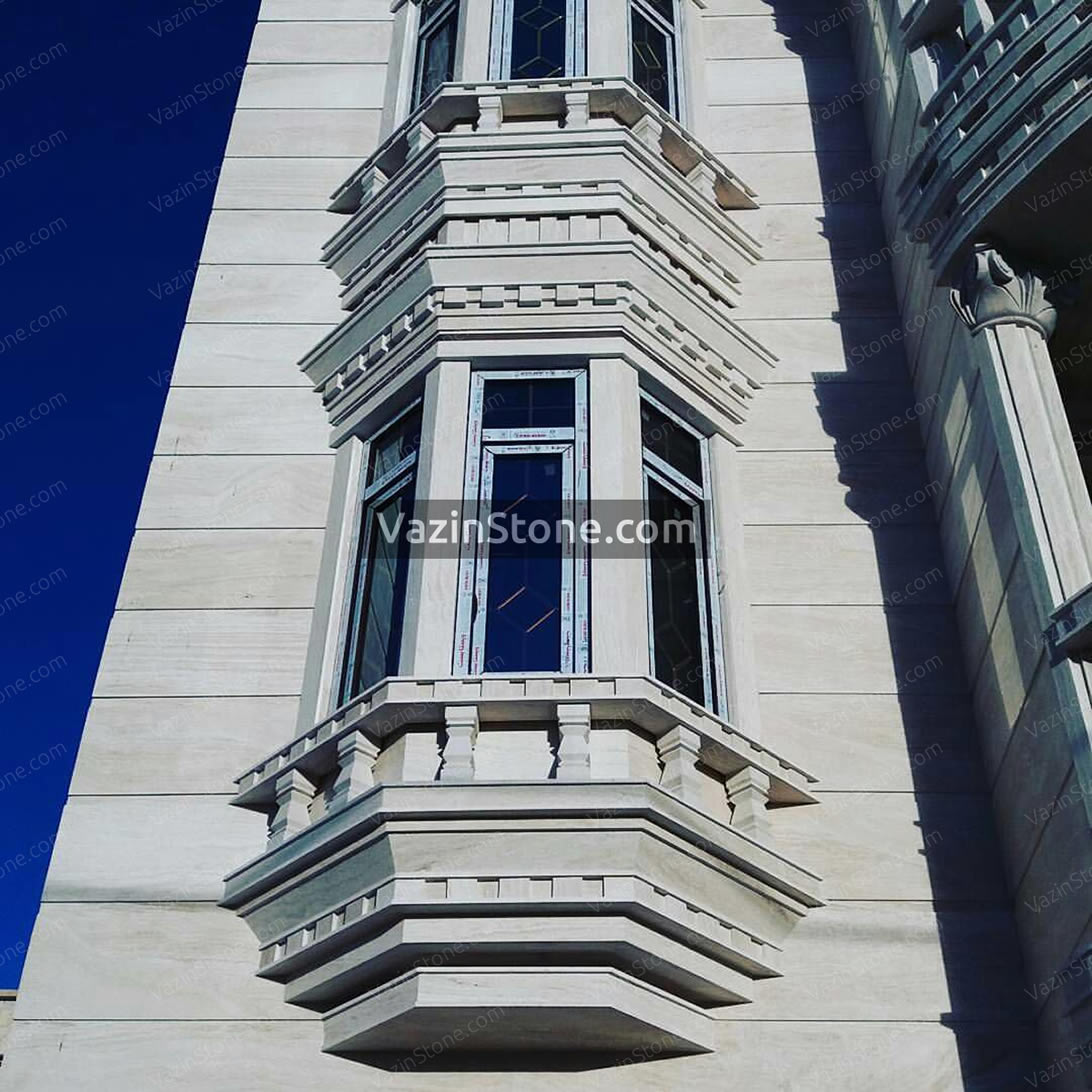
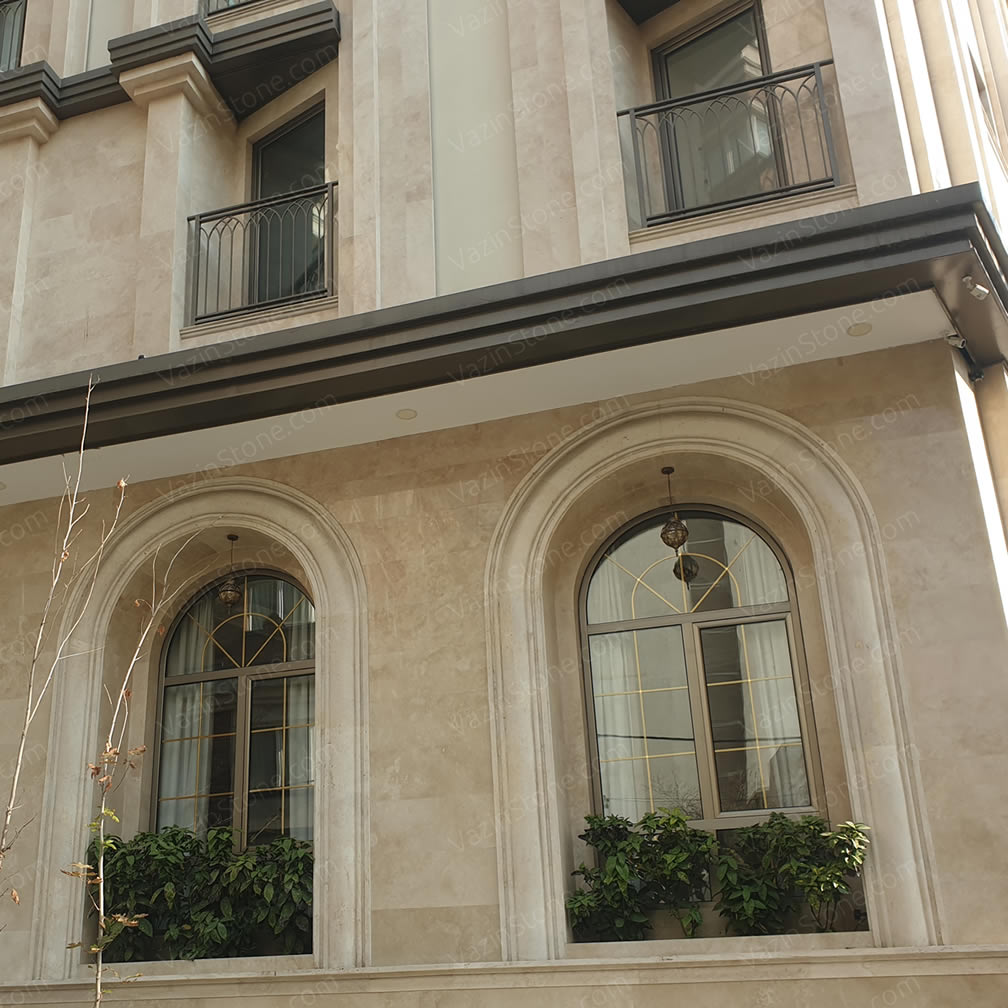
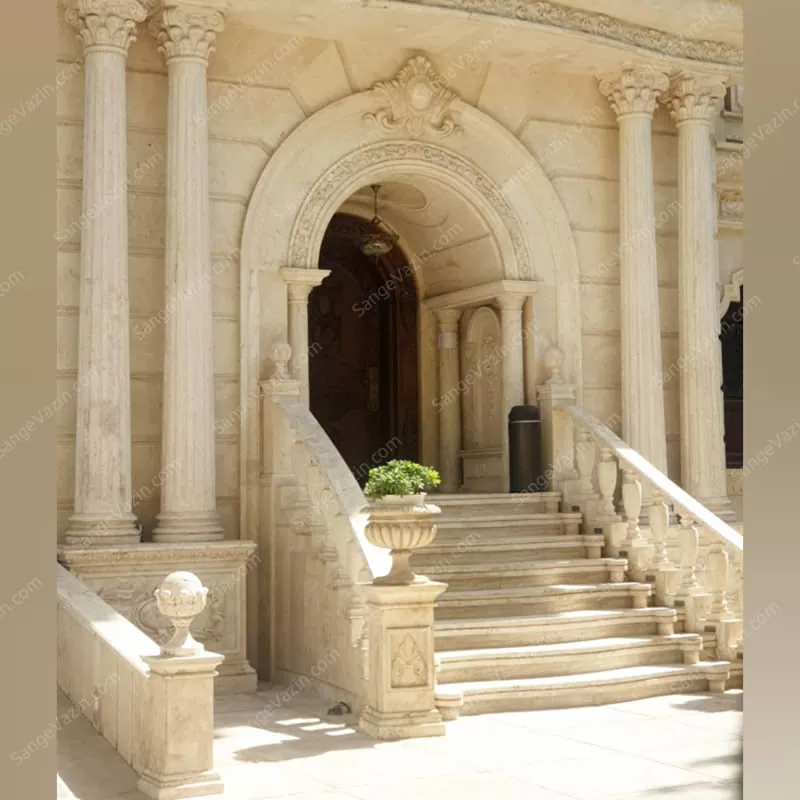
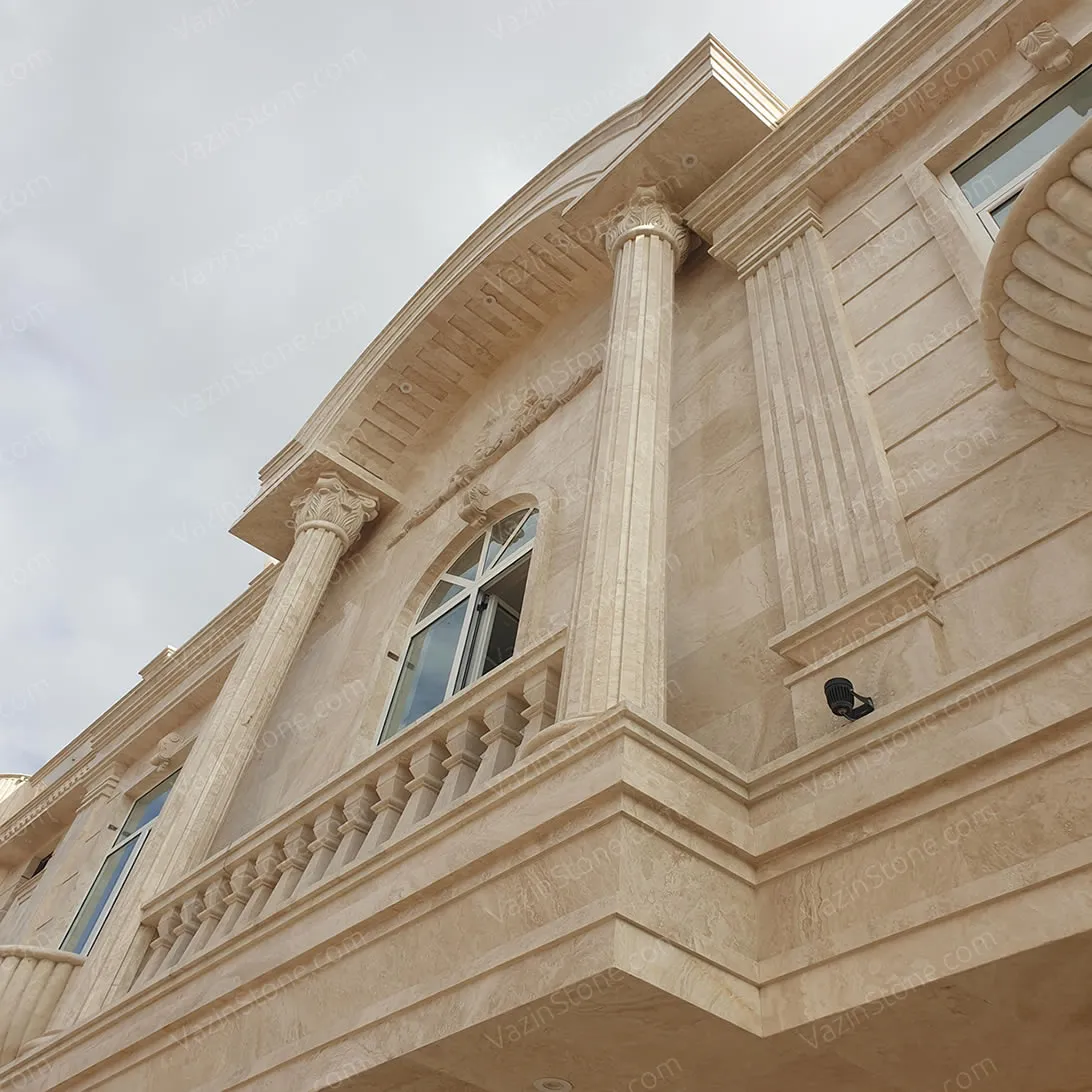
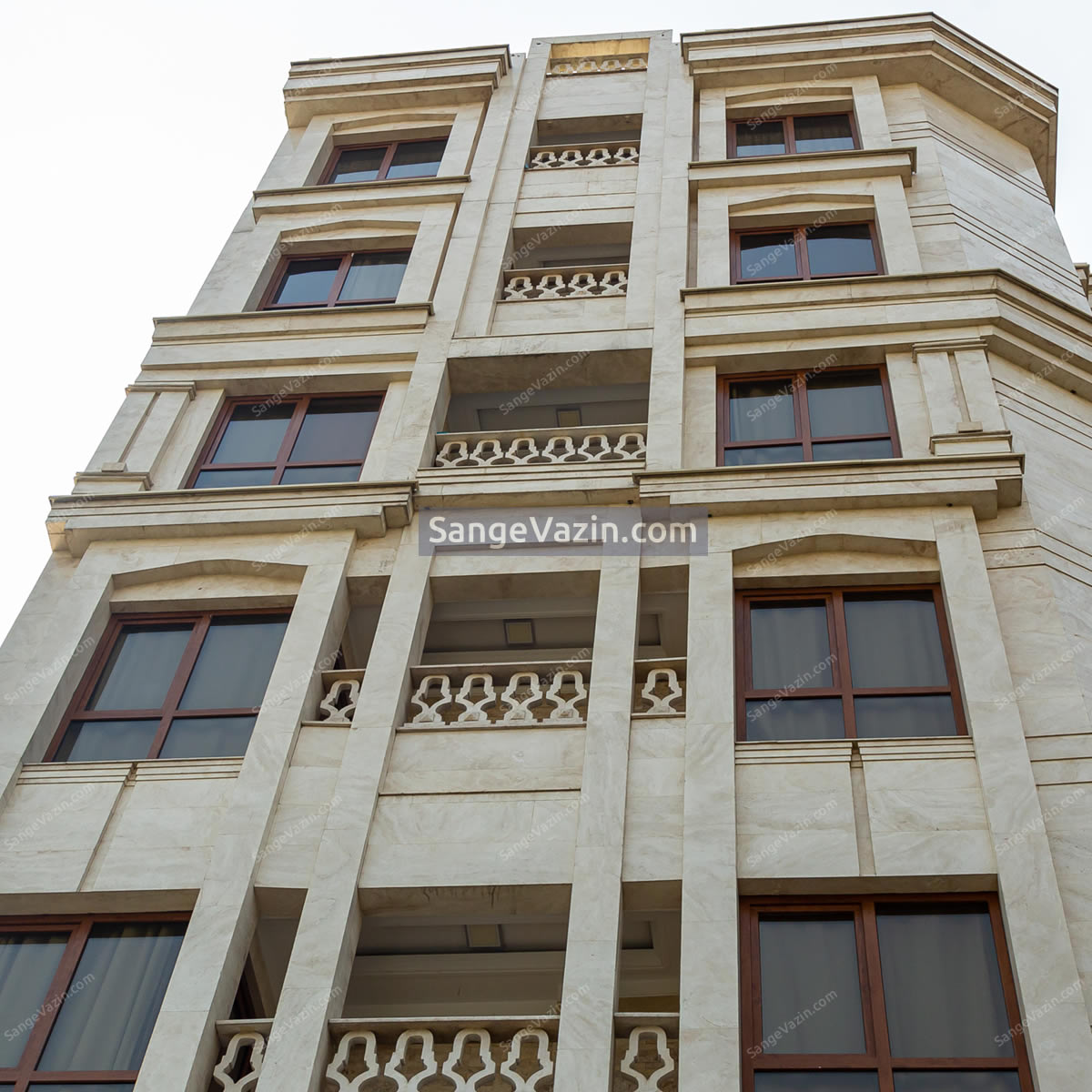
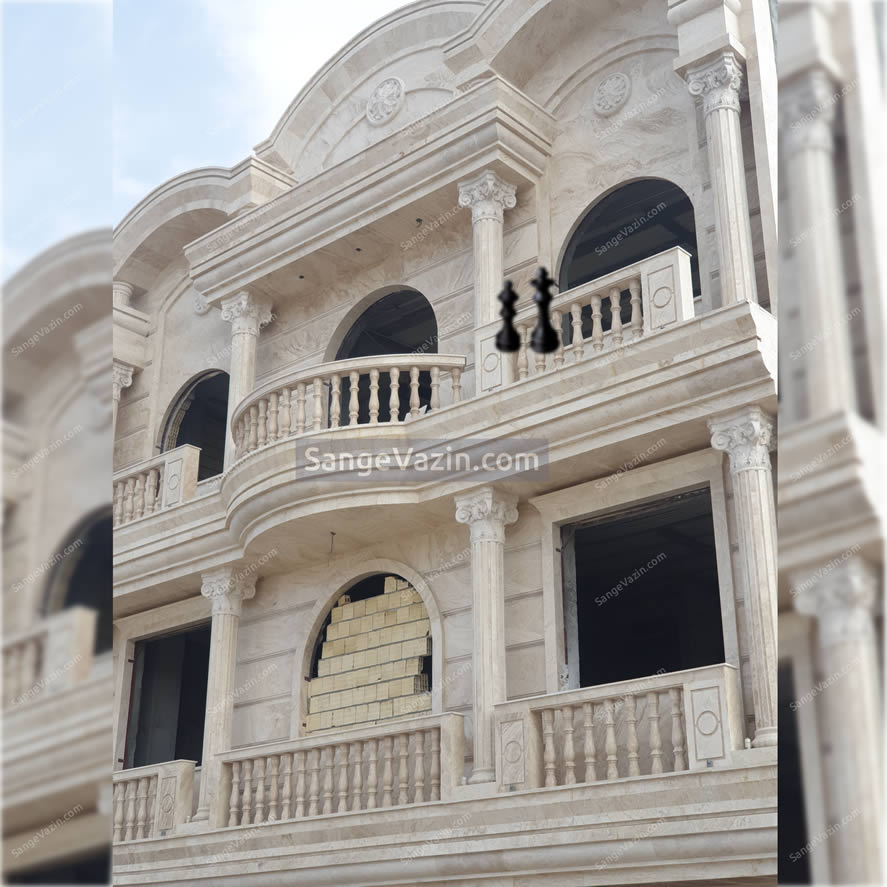
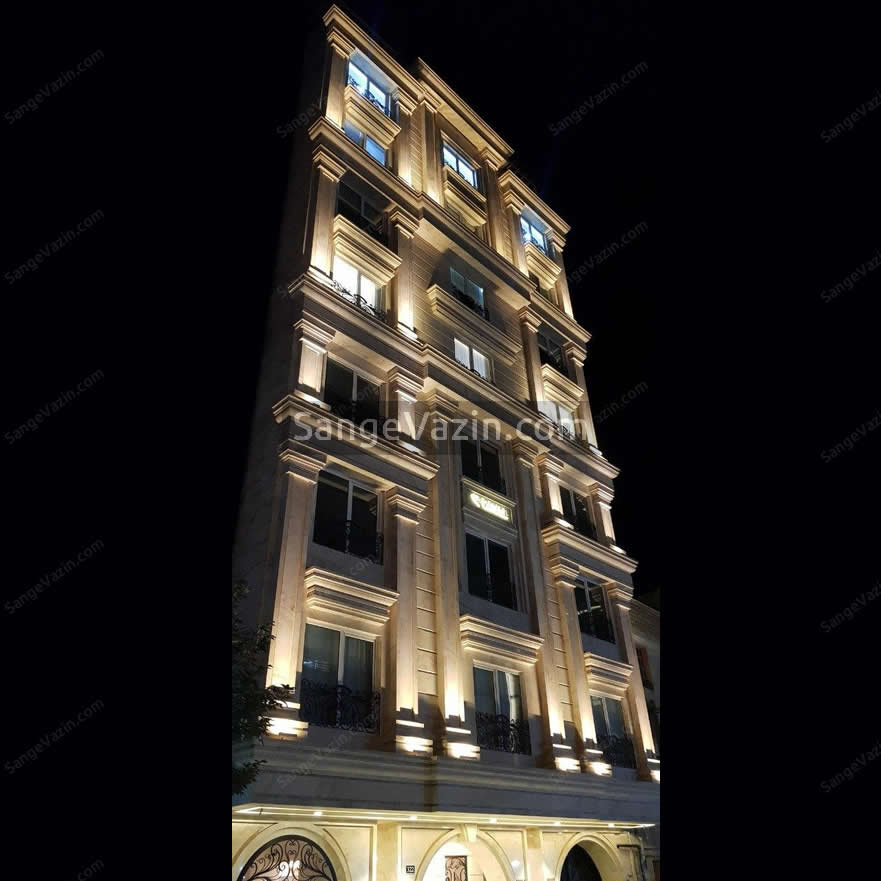
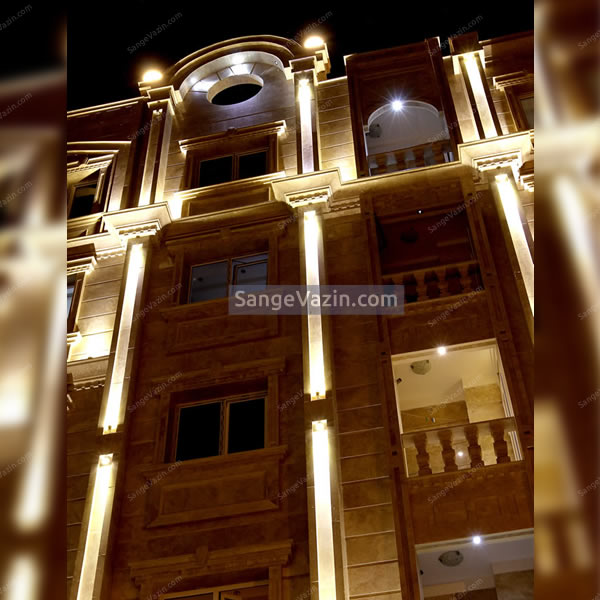
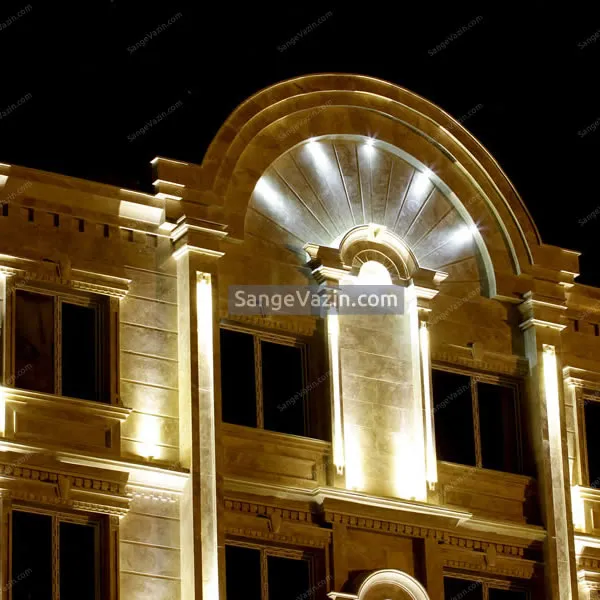
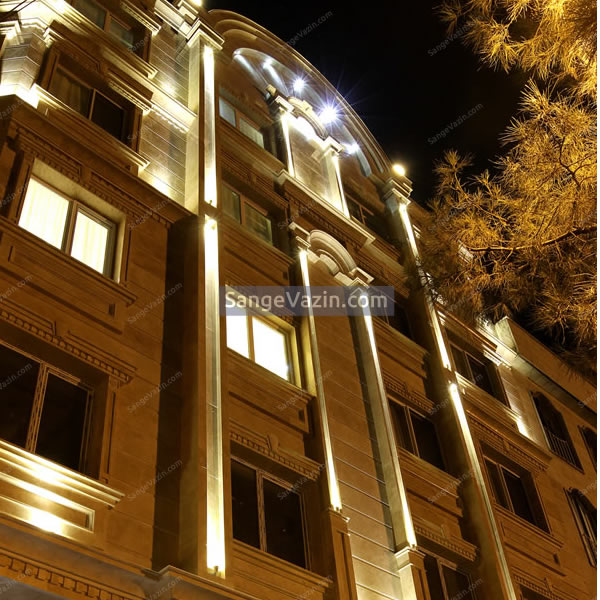
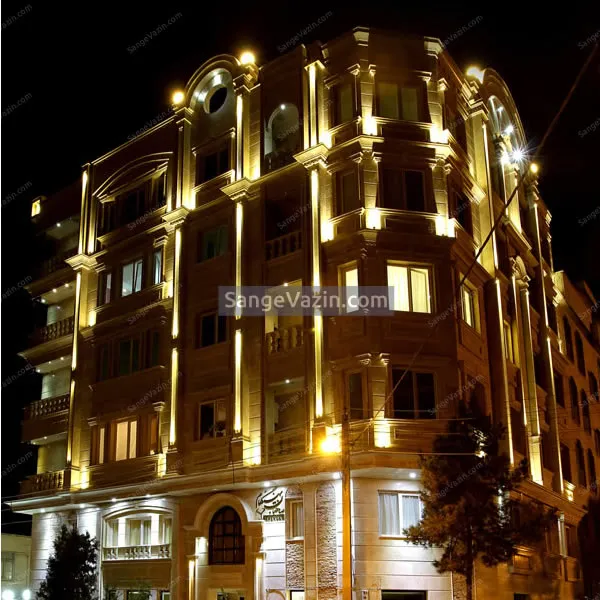
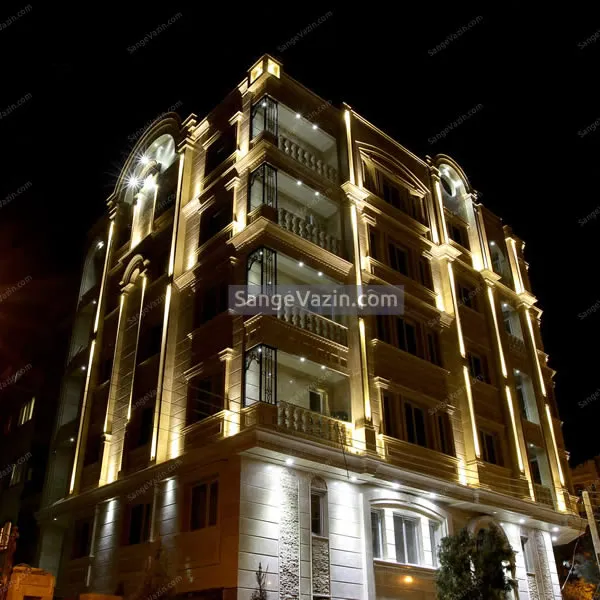
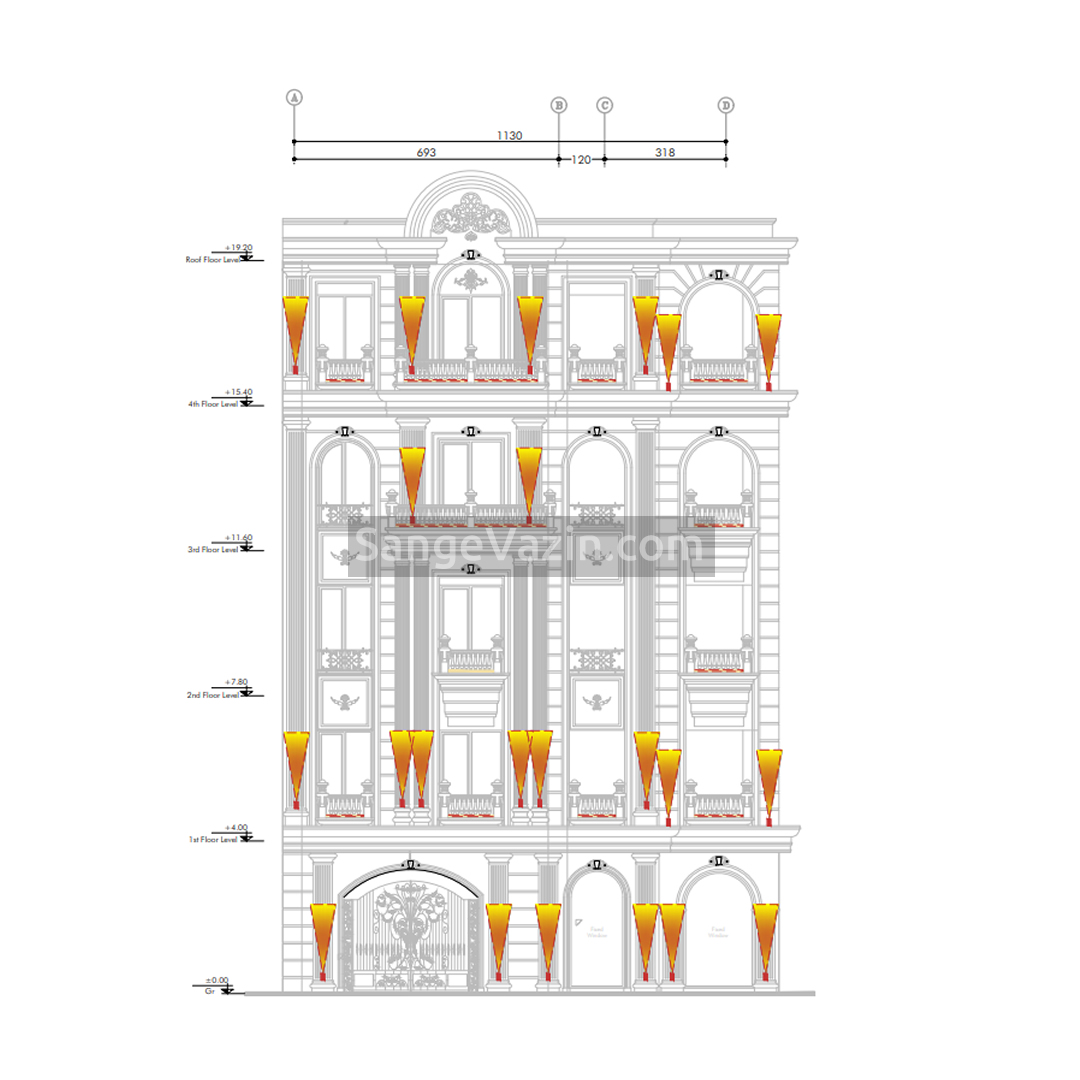
Roman Facade at Night
In the gallery below, you can also view nighttime images of Roman and Classical-style building facades featuring architectural lighting, which creates a striking visual effect.
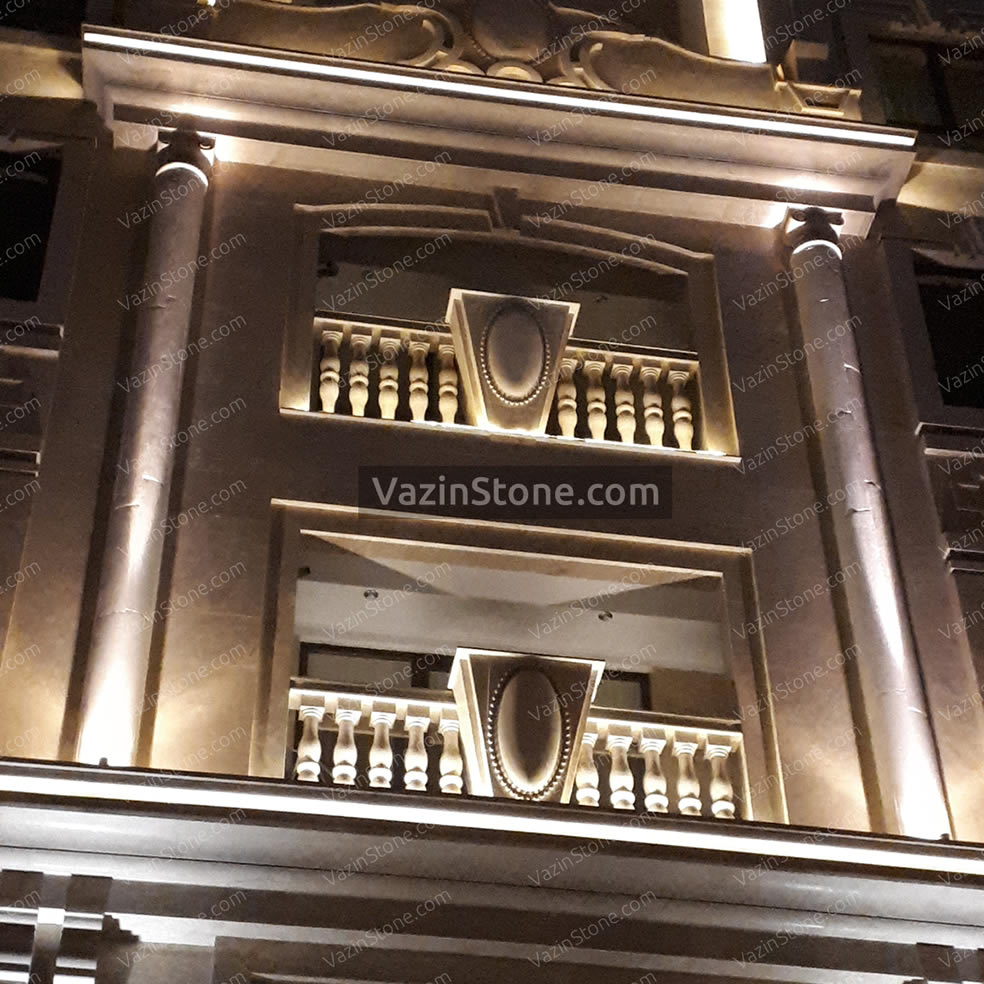
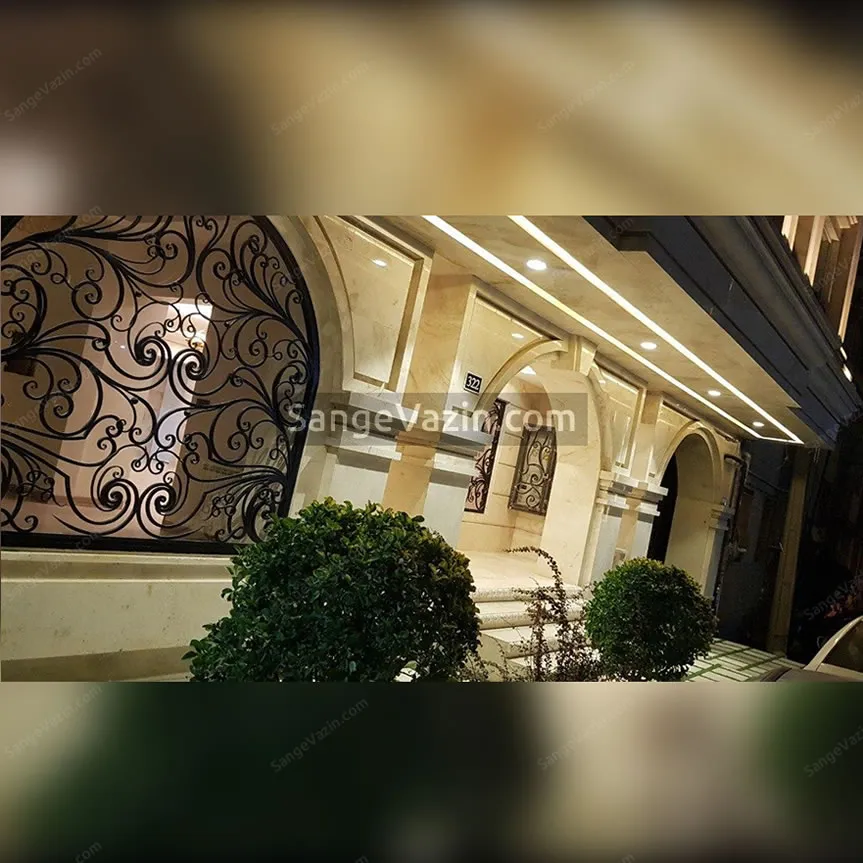
Roman Facade Design Features
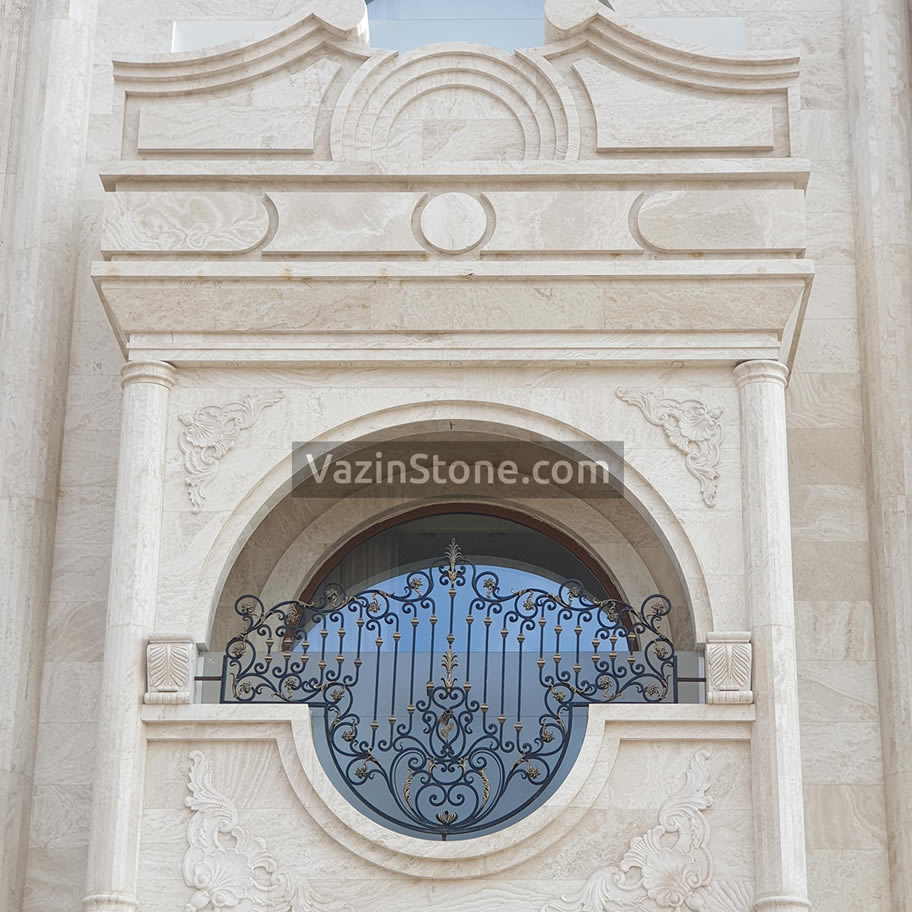
The design of Roman or Classical building facades incorporates specific stone masonry and decorative elements that distinguish this architectural style from other styles.
In this style, the primary material is light-colored natural stone, such as white or cream travertine, which gives the building a timeless, elegant, and majestic appearance.
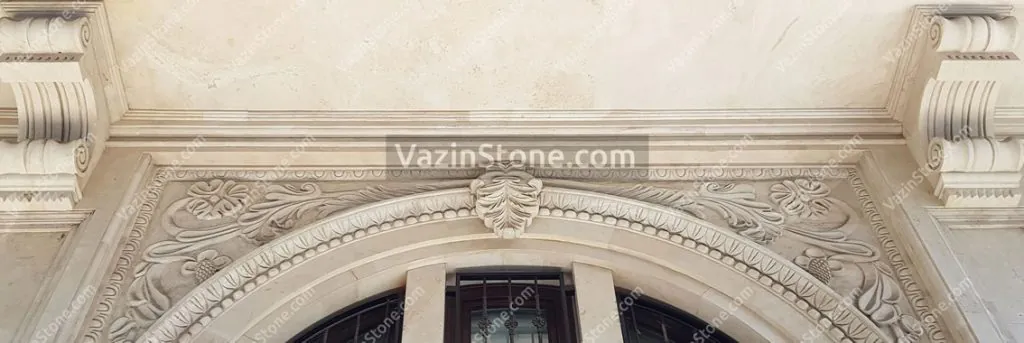
In addition to material selection, what gives a building facade its Roman and Classical identity is the use of distinctive architectural elements, such as:
- Arches and vaults
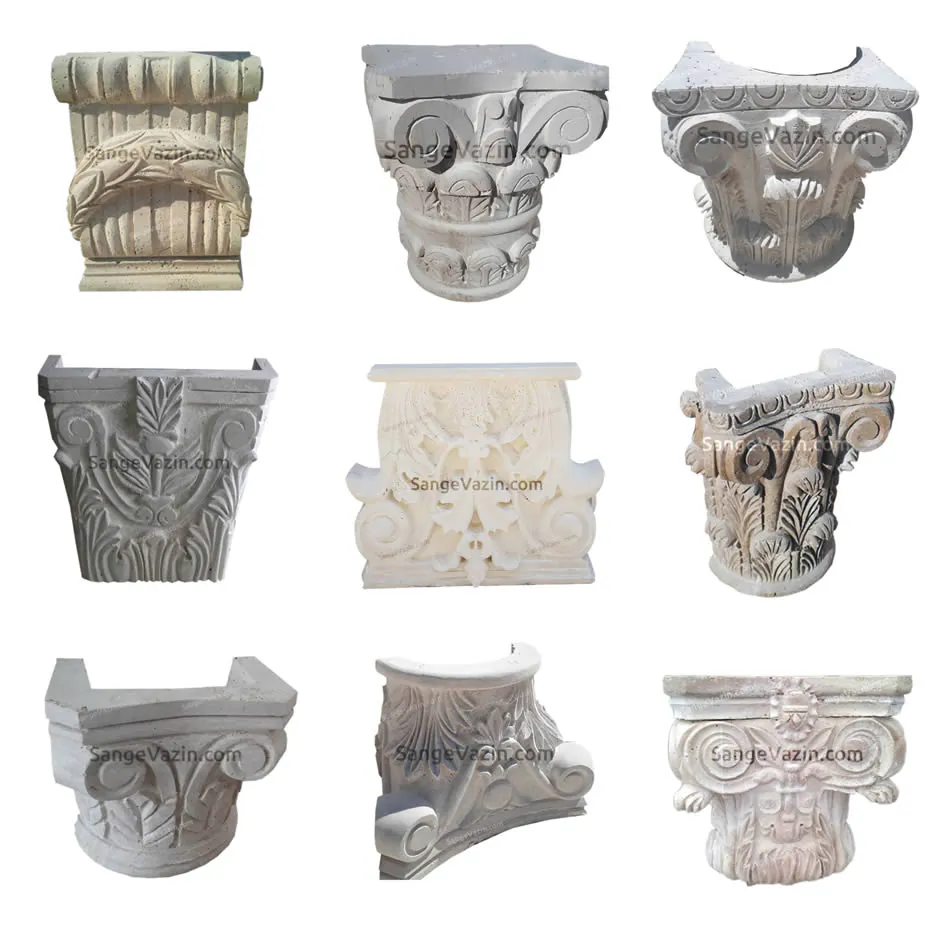
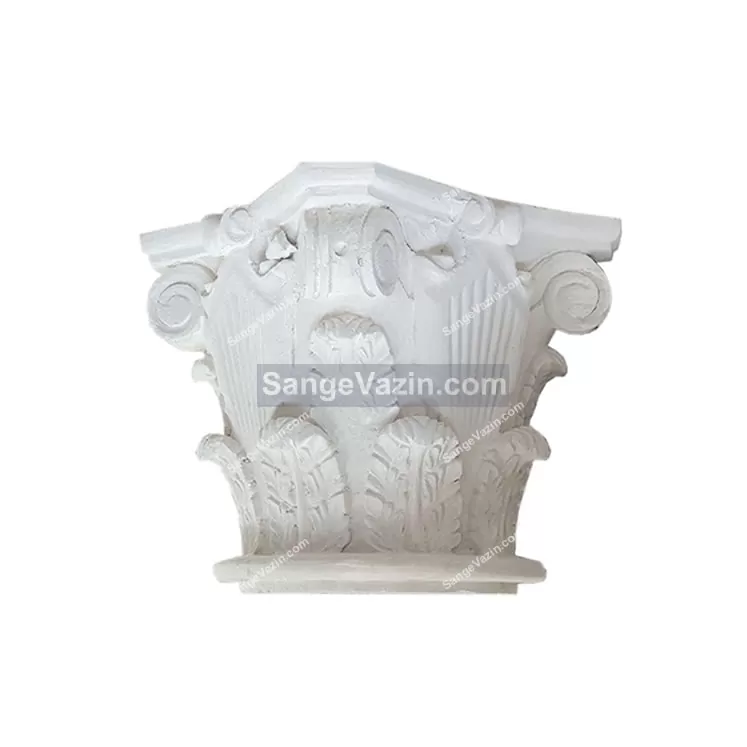
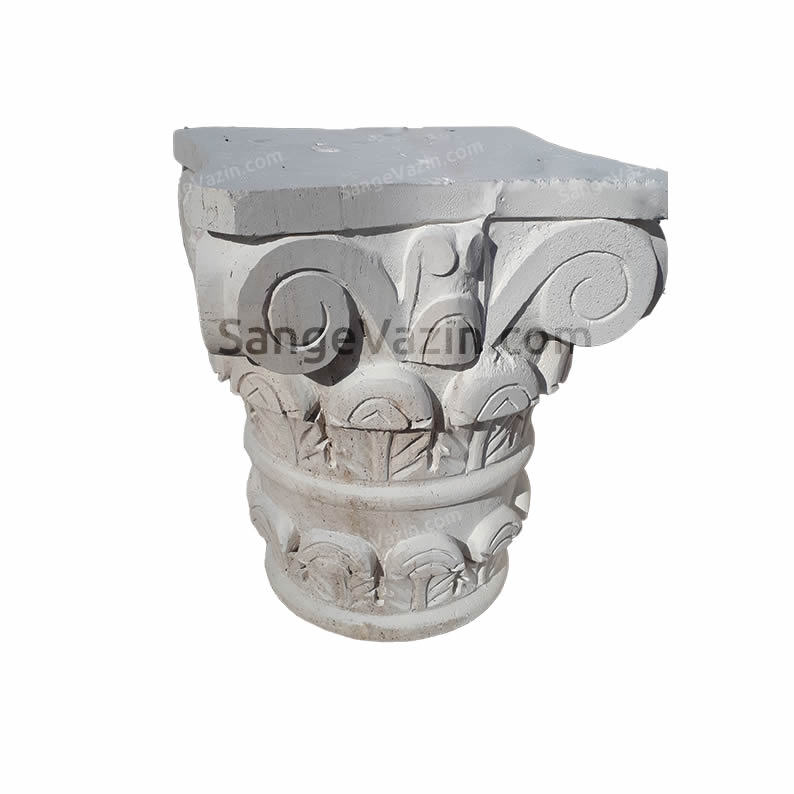
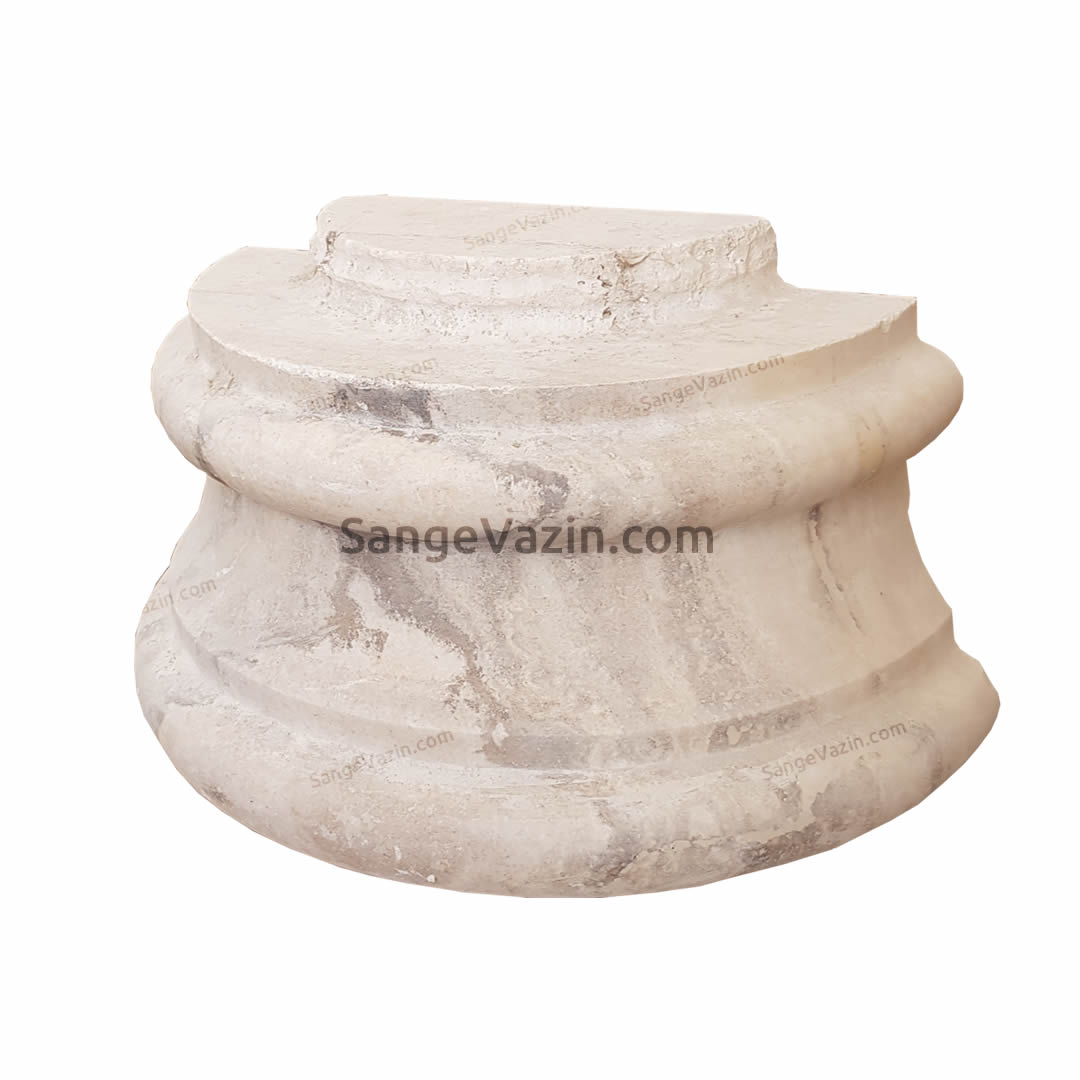
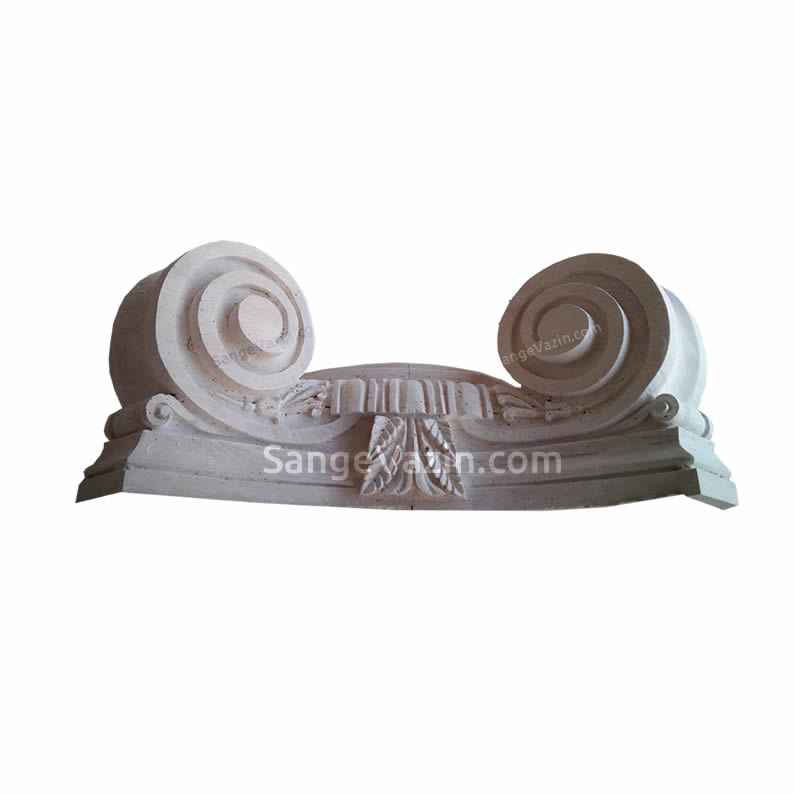
- Columns and capitals
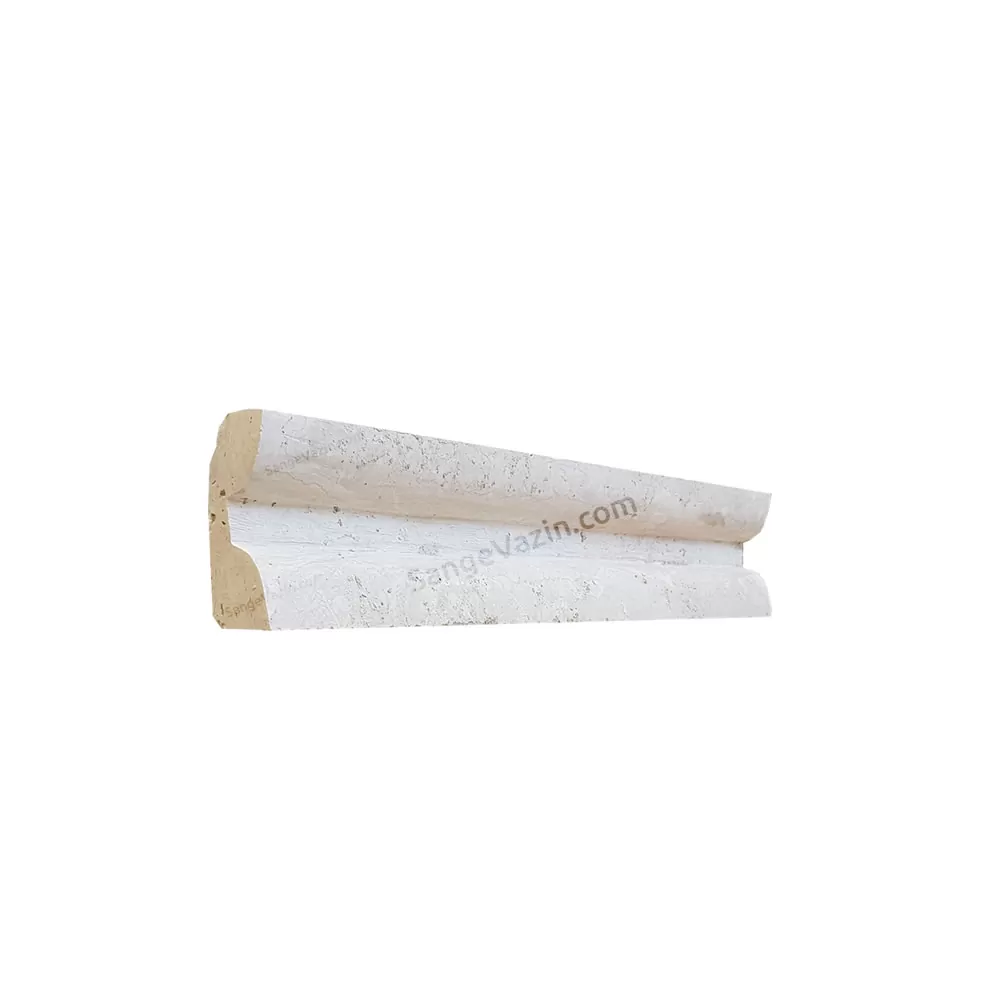
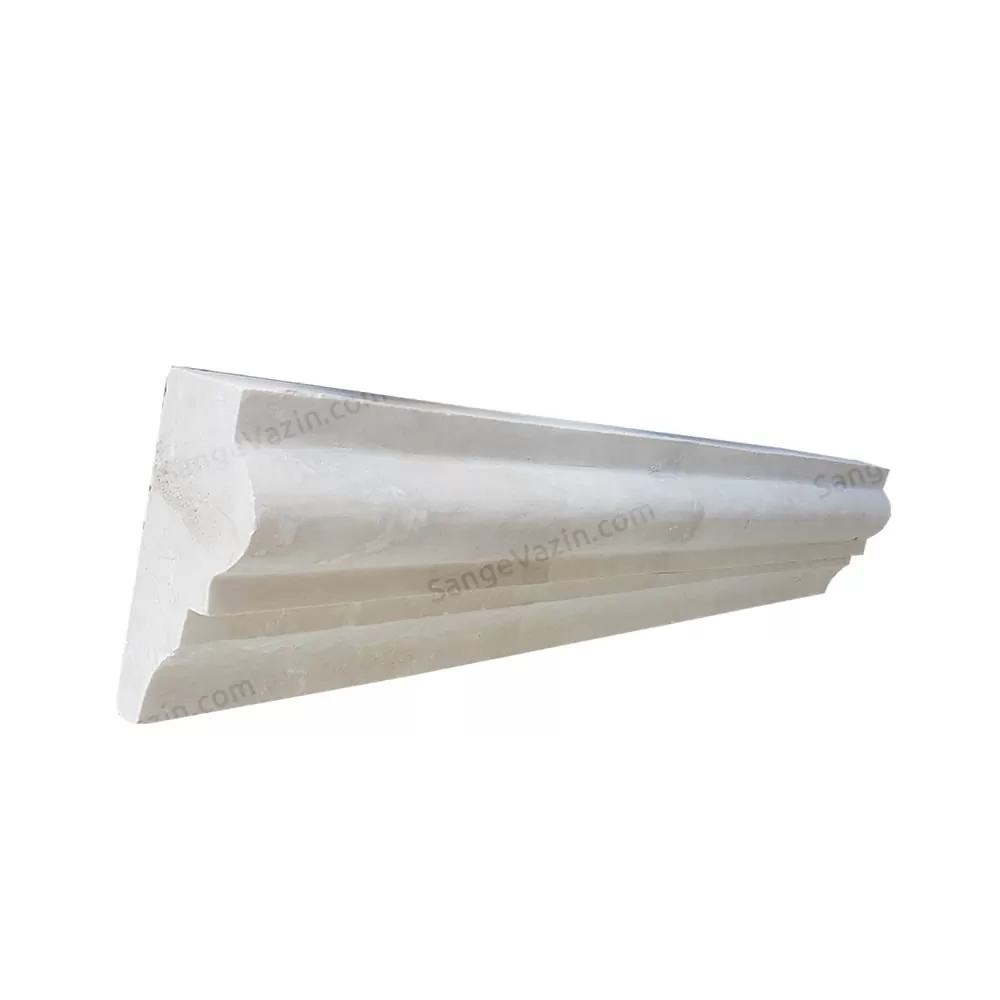
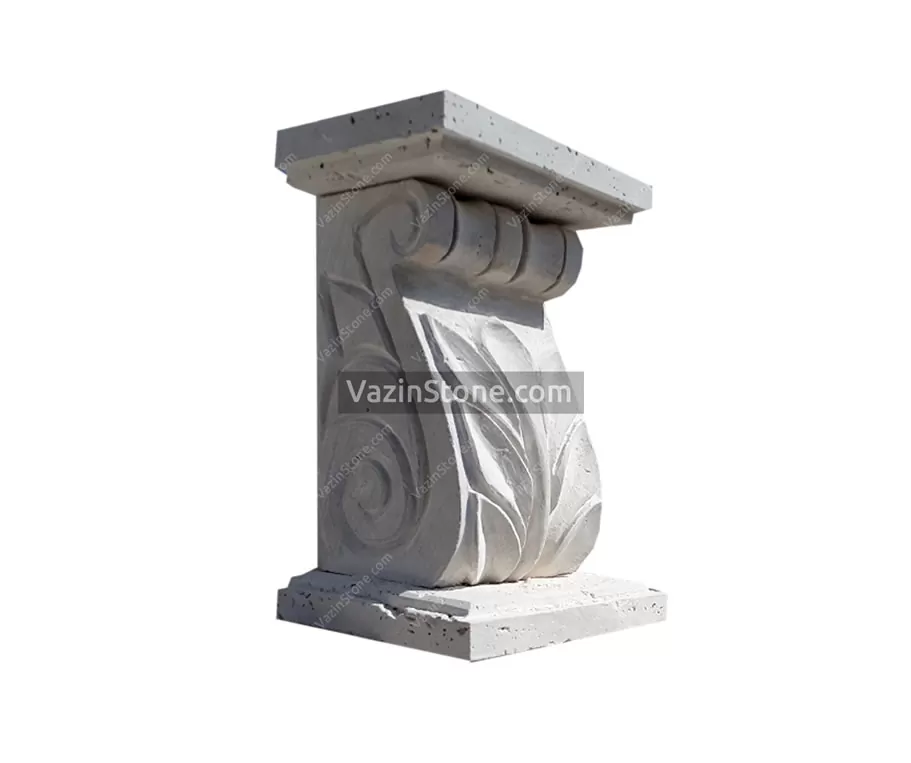
- Pedestals, corbels, moldings
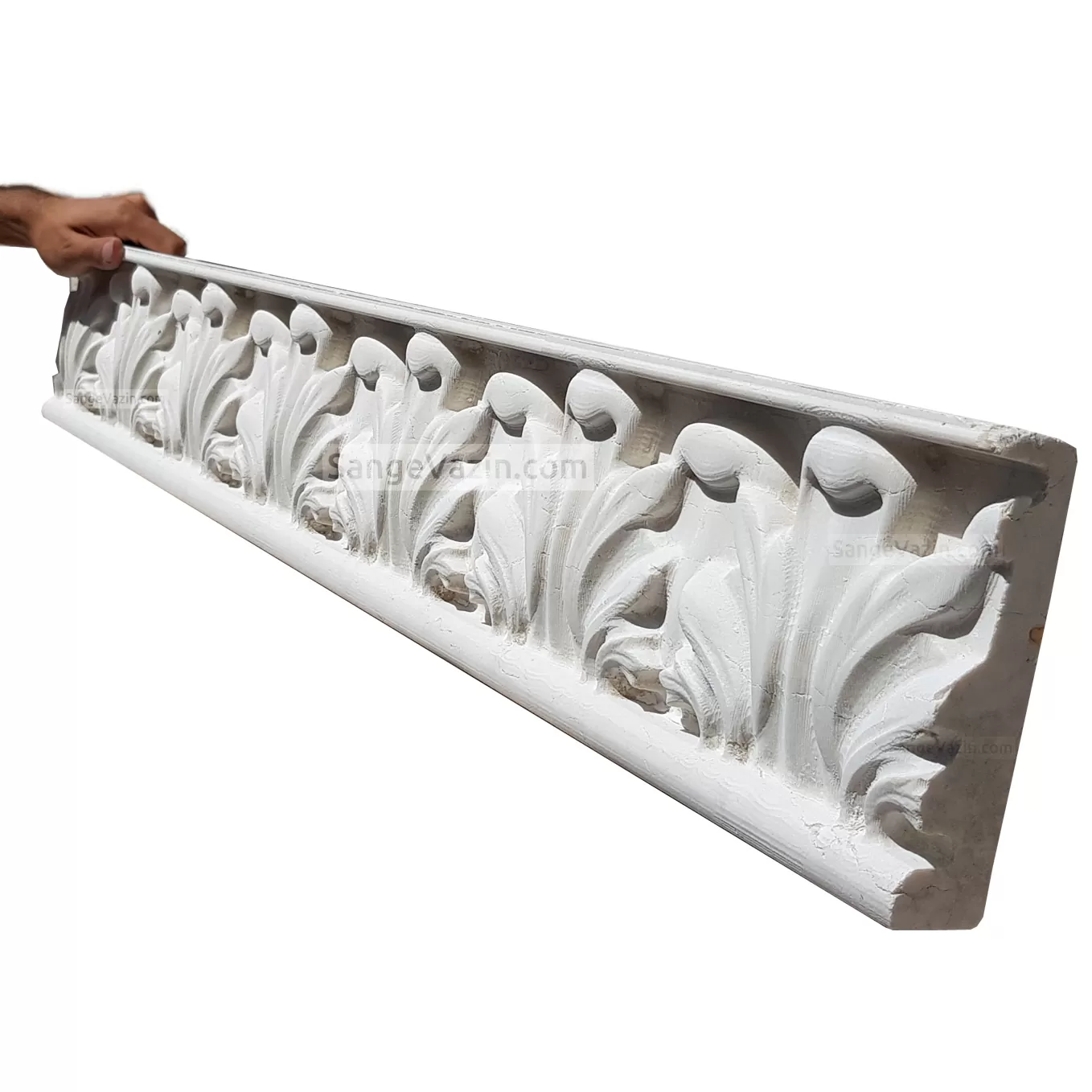
- Floral ornaments, cornices, and horizontal bands
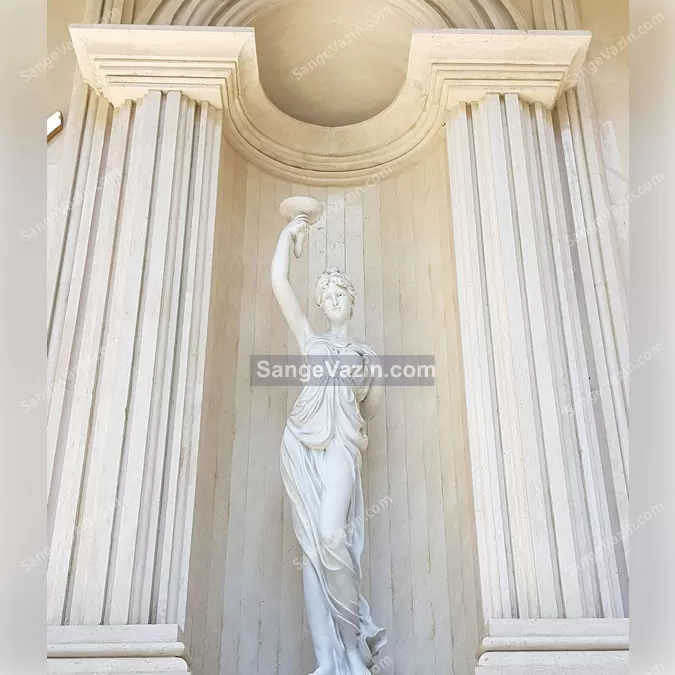
- Statues, Plaques, Pediments, and decorative window and door surrounds
In Roman-style architecture, facade lighting at night is also very common, as it enhances the visibility and appeal of volumes, decorative elements, and facade details in nighttime illumination.
Components of Roman Facade
The main elements used in the construction of a Roman-style facade include:
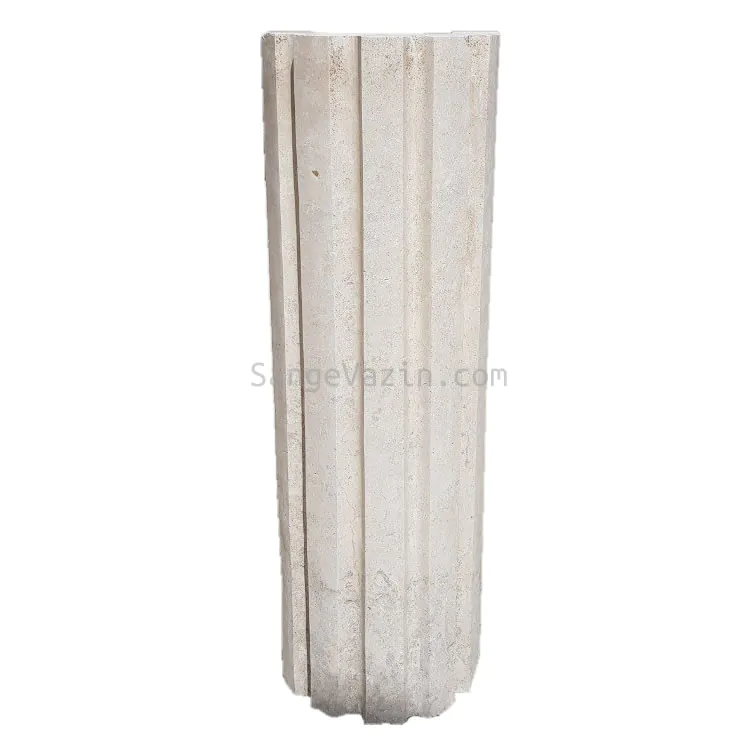
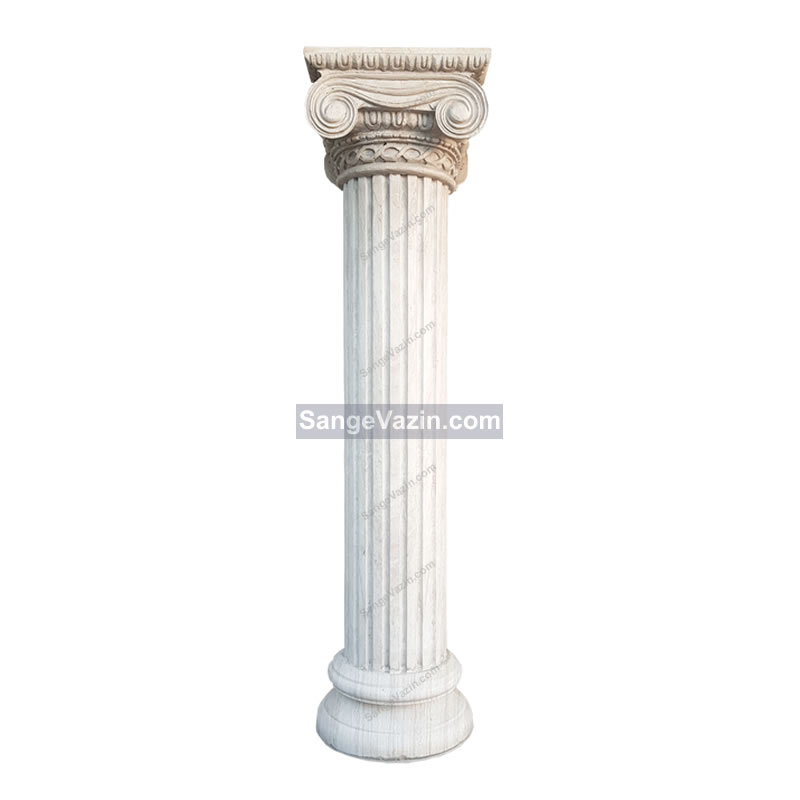
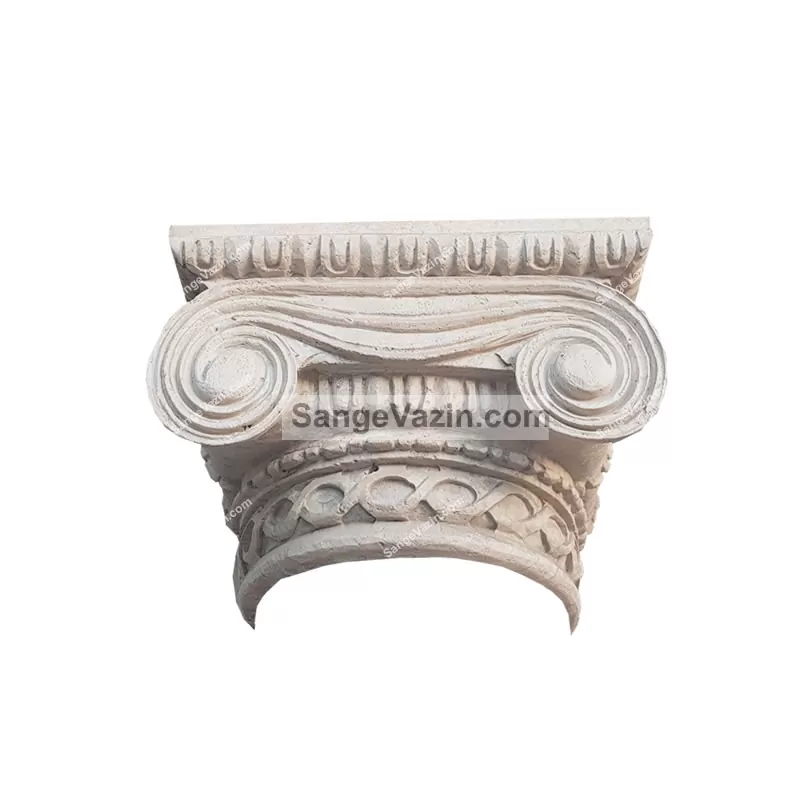
- Tall monolithic stone column with a solid capital and pedestal
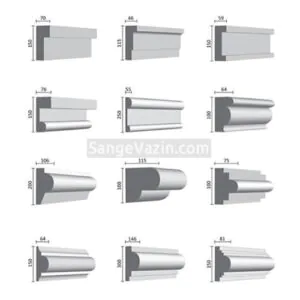
- Linear stone cornices at story boundaries (plain or patterned)
- Pediments, inscriptions, rosettes, stone panels, and decorative elements above entrances
- Use of sculptures at entrances, on columns, and throughout interior and exterior spaces
- Stone frames and stone masonry for window and door surrounds, with curved or straight forms
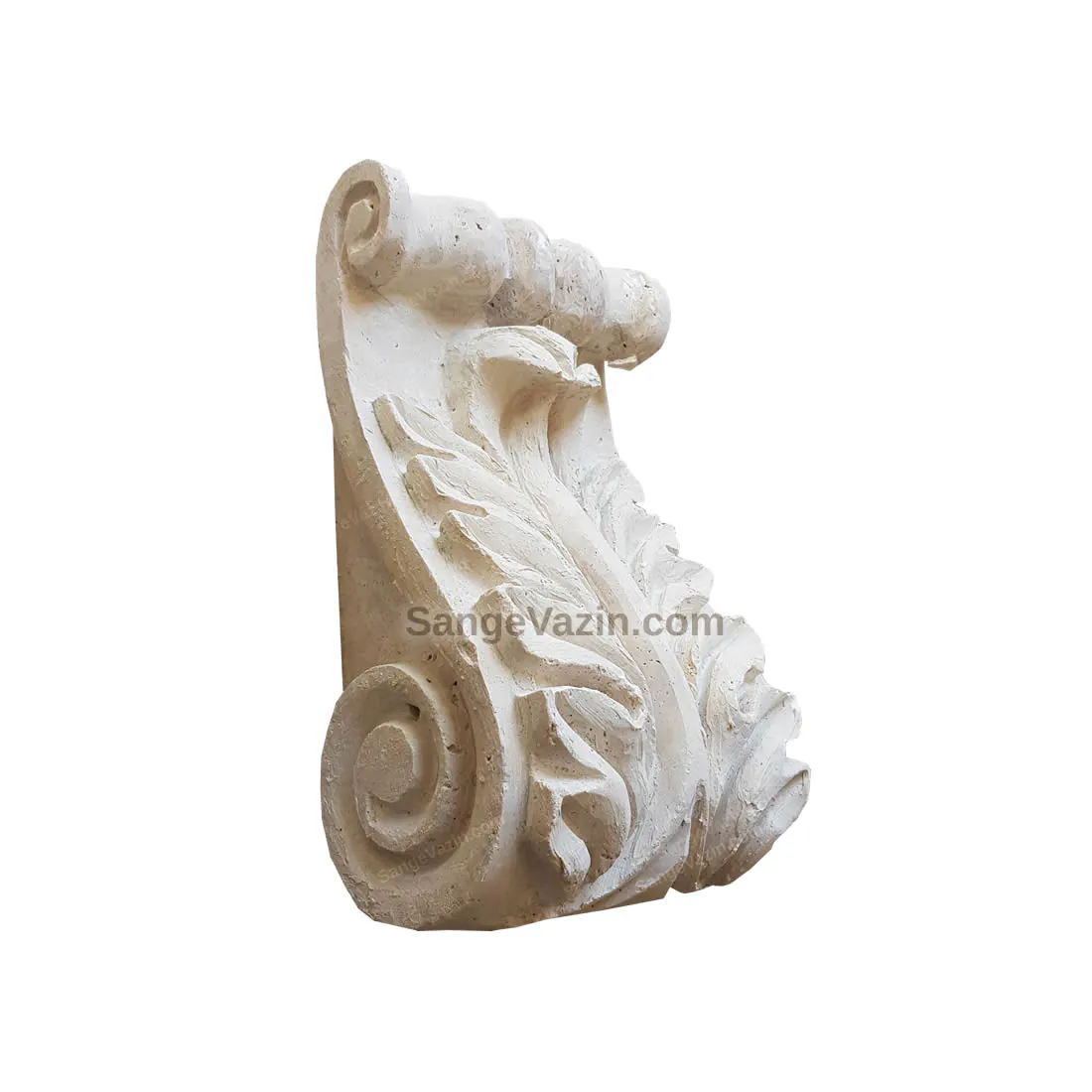
- Prefabricated elements such as corbels, ram’s head blocks, dentils, and bull head blocks
The related products are listed below.
Methods of Making Stone Masonry of Roman Facade
Roman-style facade stone masonry is produced in two main methods:
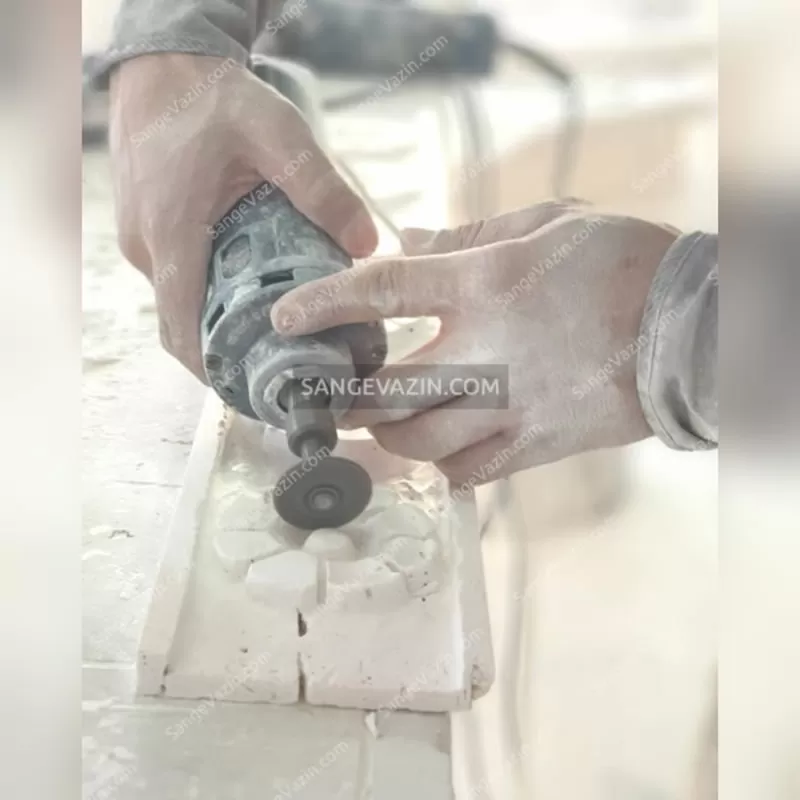
1/ Manual method:
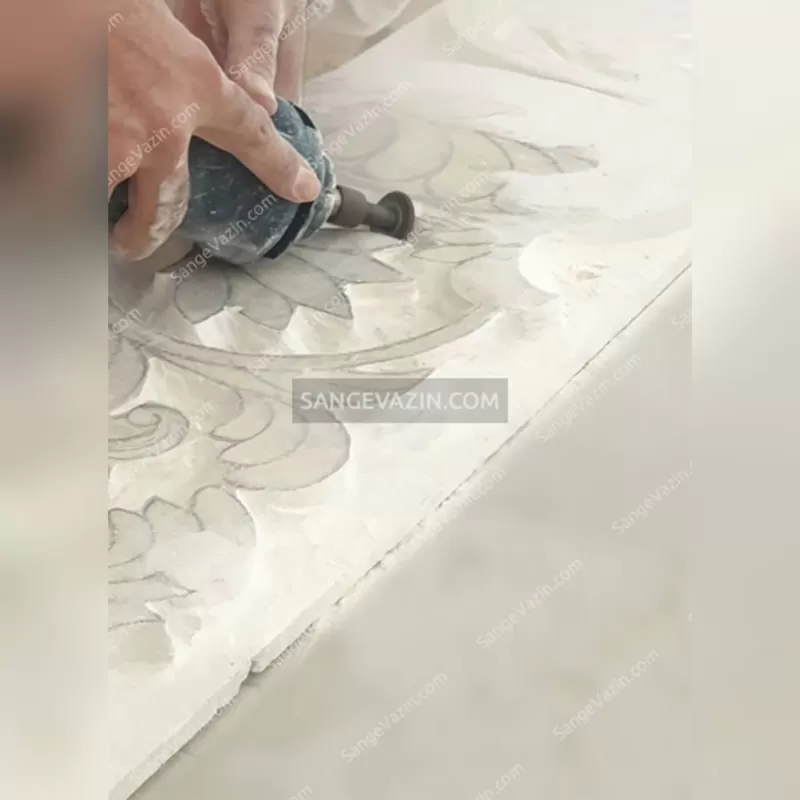
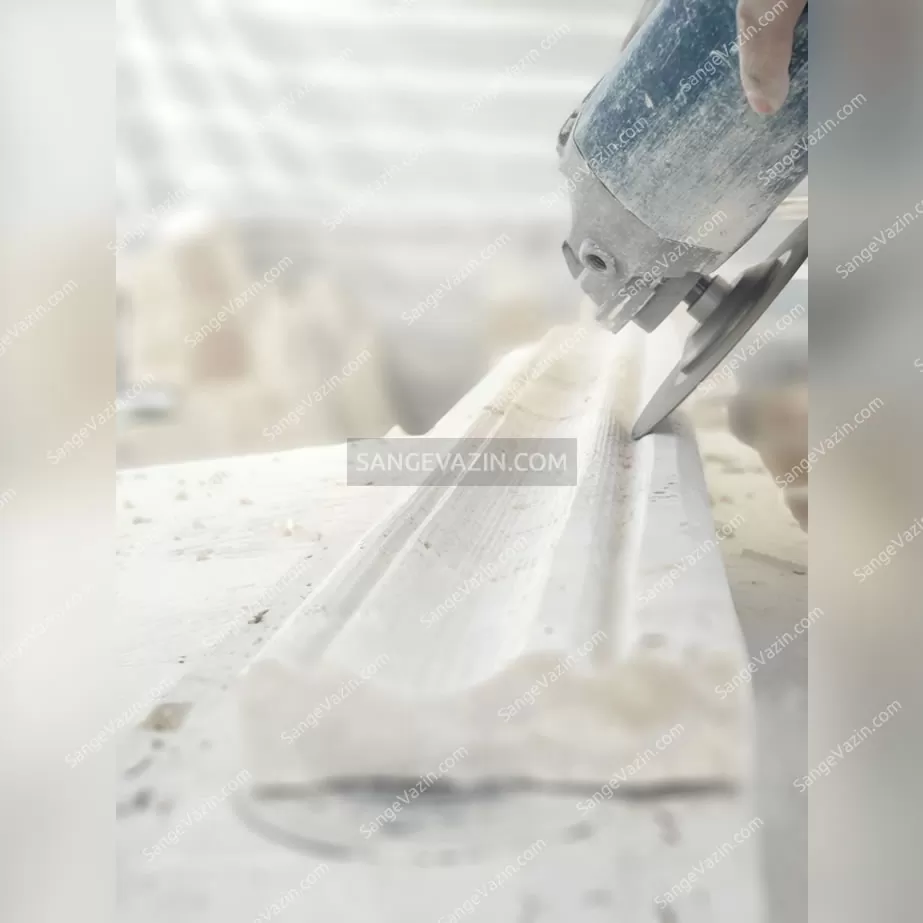
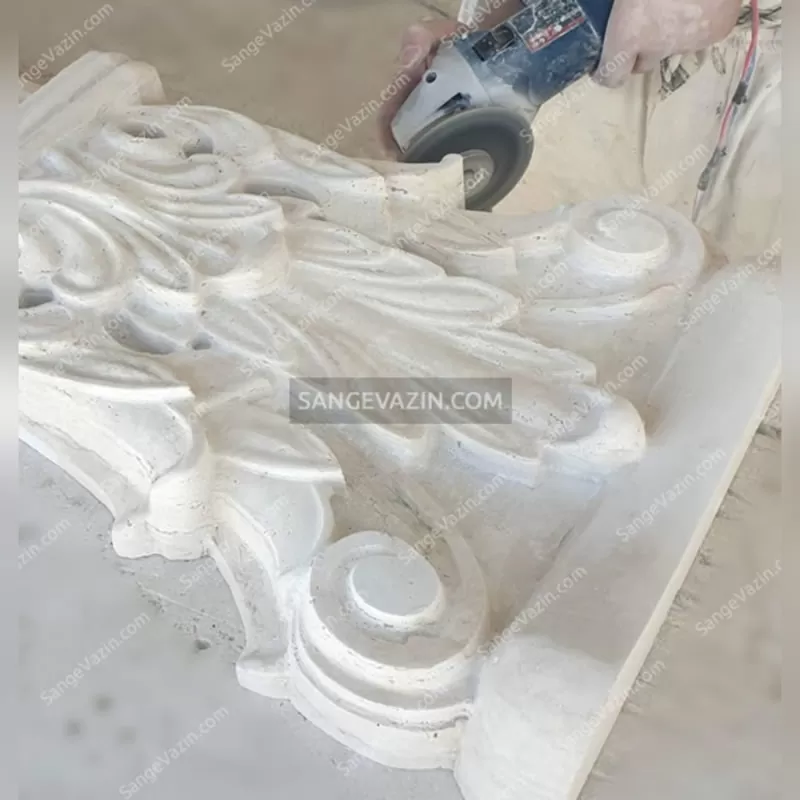
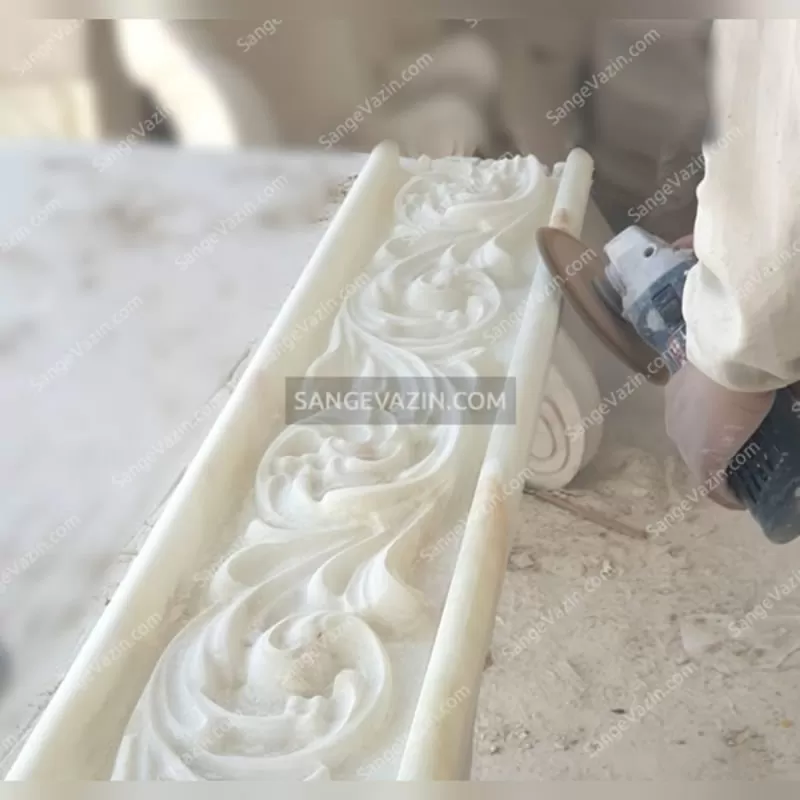
Involves using a grinder or mini grinder to manually shape the stone
Mostly used in traditional workshops or for custom orders
2/ Machine method:
Use of CNC (Computer Numerical Control) machines for high precision, symmetry, and fast production
Suitable for large-scale projects and mass production
In the gallery below, you can see examples of the manual production process of Roman facade tools.
Artificial Stone Masonry in Roman Facade
What is artificial Facade stone masonry?
Artificial stone masonry for facade refers to a set of decorative components that are not made from natural stone, but from composite and industrial materials. These materials include:
- Cement and polymer
- Resin and fiberglass
- Corian-like surface
- PVC
These architectural elements include components such as capitals, pedestals, cornices, window frames, and other volumetric elements that are widely used, especially in Roman facades.
Benefits of Artificial Stone in Roman Facades
- Affordable price:
Cost reduction compared to natural stone masonry
- Possibility of prefabrication and faster installation:
Most of these components are manufactured as prefabricated units and installed on-site, and they have a lower weight compared to stone materials.
- High moldability:
Using glass fiber reinforced concrete (GFRC), more complex shapes can be created without the need for stone carving.
Artificial Roman Facade Drawbacks
Despite its advantages, the use of artificial elements in Roman facades has certain limitations:
- Weaker final appearance than natural stone:
Artificial stone masonry often does not resemble natural stone in appearance and does not fully replicate its beauty.
- Reduced durability due to poor material composition:
The final strength of these elements largely depends on their formulation and material quality. If low-quality materials are used, there is a risk of cracking and crumbling over time.
Travertine in Roman Facade
As mentioned above, travertine stone is commonly used in the design of Roman-style building facades. The primary reason lies in the unique characteristics of travertine. This natural stone features a porous texture, making it lighter in weight than many other types of stone while also meeting the required standards for outdoor applications. However, some designers and construction experts use white cement instead of stone to reduce the cost of building Roman or classical facades. The main reason for this is the high price of premium light-colored travertine stone.
Cement in Facade Design
The use of cement in Roman-style building facade design is more commonly seen in villa construction. In addition to stone and cement, glass fiber reinforced concrete (GFRC) is also used in Roman or classical facades because it can be easily molded into the desired shapes. As a result, the cost of carving and shaping GFRC is lower than that of natural stone.
However, in reality, the material that gives a Roman-style building facade its grandeur, elegance, and authenticity is natural stone.
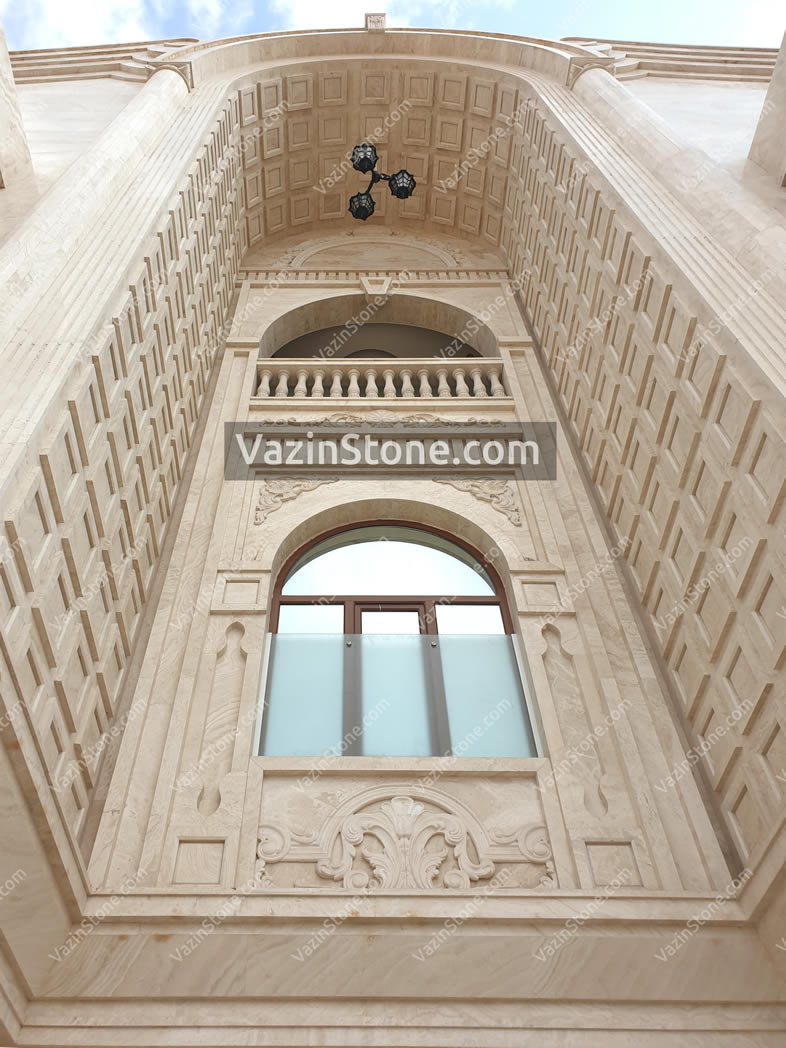
Stone vs. Cement: Which Is Better for a Roman Facade?
If we want to answer this question in one word, the answer is 100% with stone. Because in this style, which is supposed to show off the grandeur and glory of the building, the cost should not be the decision criterion. In addition, the durability, effect, and final result will not be comparable.
Advantages of Roman Facade Design
- It conveys a sense of grandeur, luxury, and affluence to users and external observers.
- With extensive lighting used in this type of facade, the building appears like a shining jewel.
- Given the long-established nature of this style, there is no concern about it becoming outdated in the future.
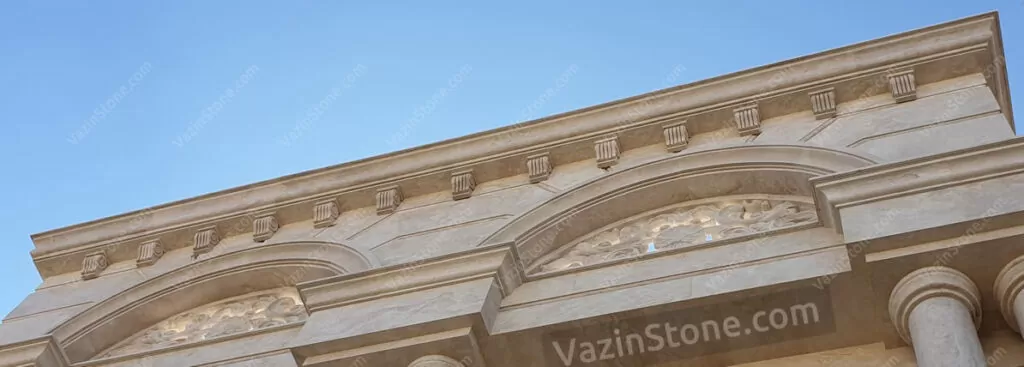
Disadvantages Of Roman Facade
- Structural overloading: Due to the extensive use of bulky elements, thick materials, and metal substructures, this type of building facade increases the dead load of the structure and is not suitable for lightweight or cost-efficient buildings.
- Cost and implementation complexity: Executing a Roman facade, particularly in its stone form, is among the most expensive and complex facade styles. It requires skilled labor, specialized tools, and a longer execution time.
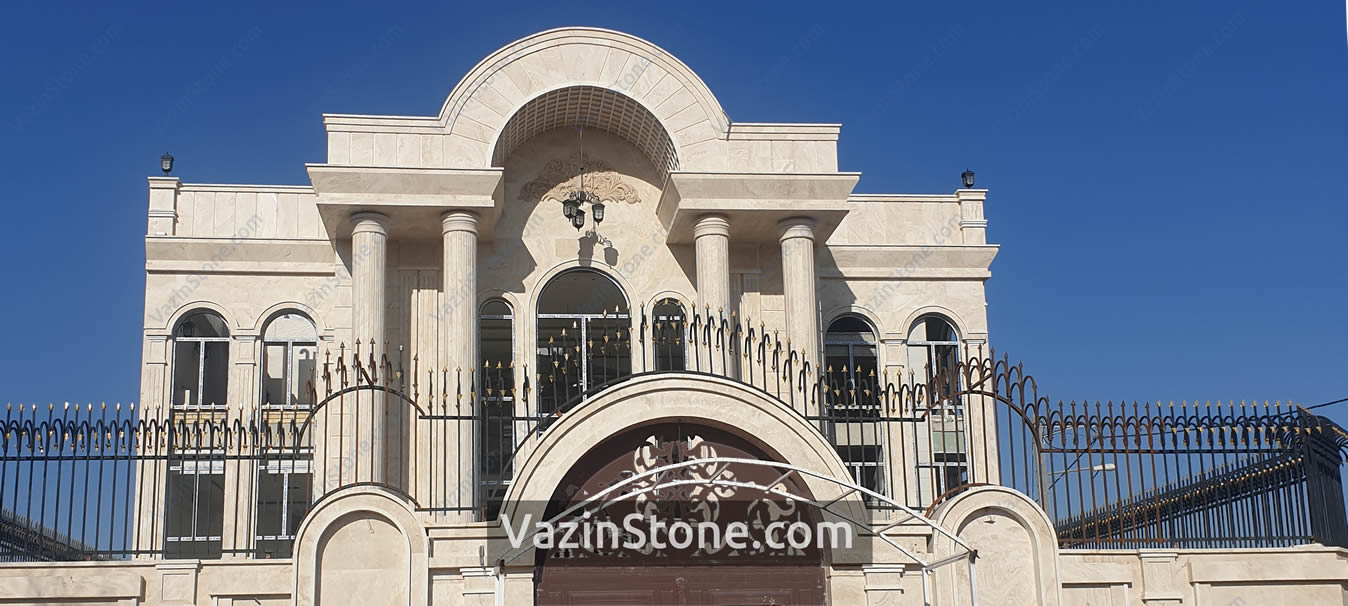
Order & Price Inquiry for Roman Facade
Given the specialized nature and extensive detailing of Roman facades, the ordering and pricing inquiry process is more complex compared to other facade styles. This style consists of dozens of stone components and decorative elements with varying specifications, each of which affects the final pricing.
The final price calculation varies depending on many factors:
- Stone types (travertine, crystal marble, artificial)
- Area (square footage)
- Detailing and work volume
- Facade height
- Lighting and metal framing
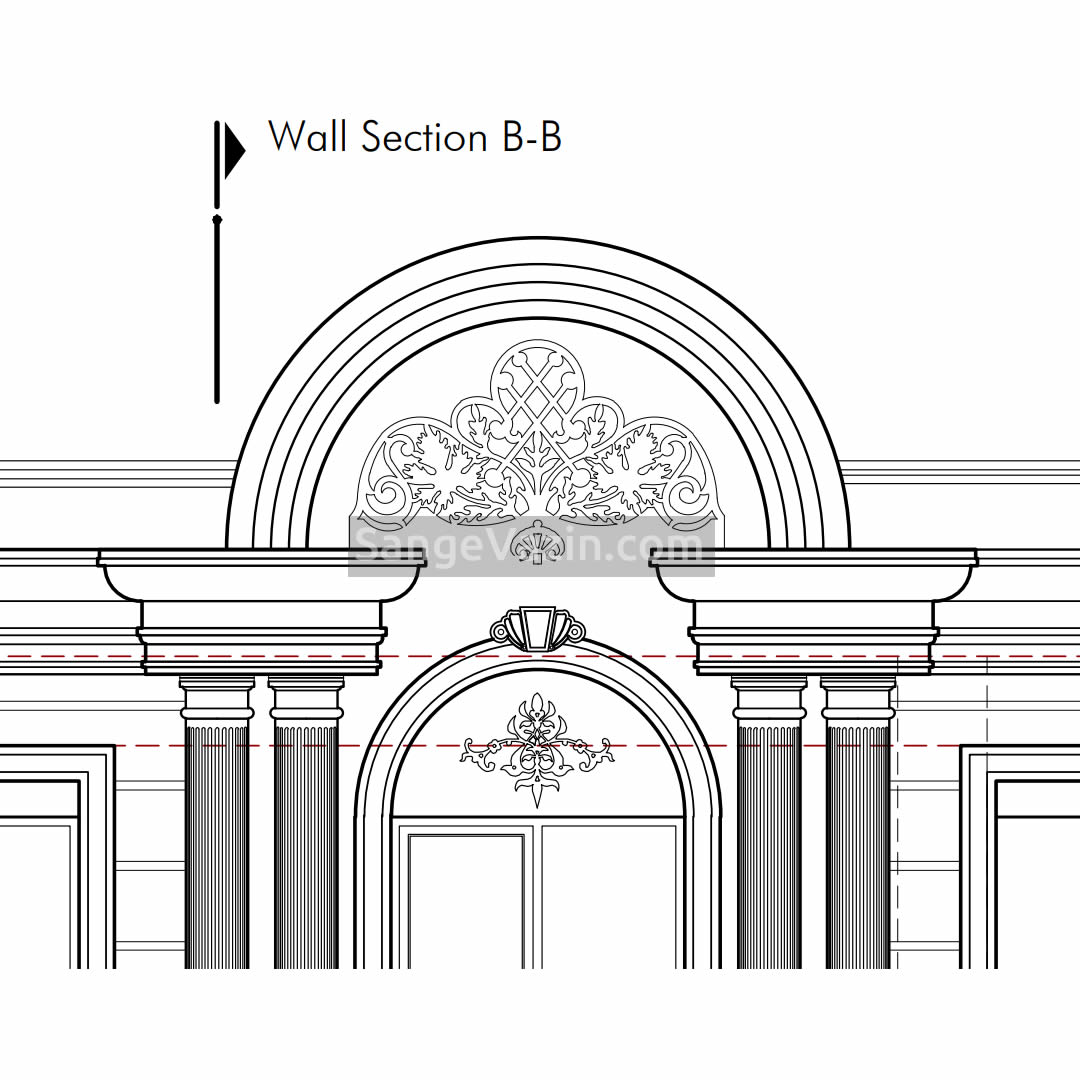
For an accurate cost estimate, it is recommended that the project architect prepare a complete drawing including moldings, dimensions, and the specified materials. For better guidance and to view a completed sample, you can see parts of a prepared document in the gallery below. Only in this way can an accurate quotation for price and delivery time be provided.

White Roman Facade, The Most Expensive & Beautiful
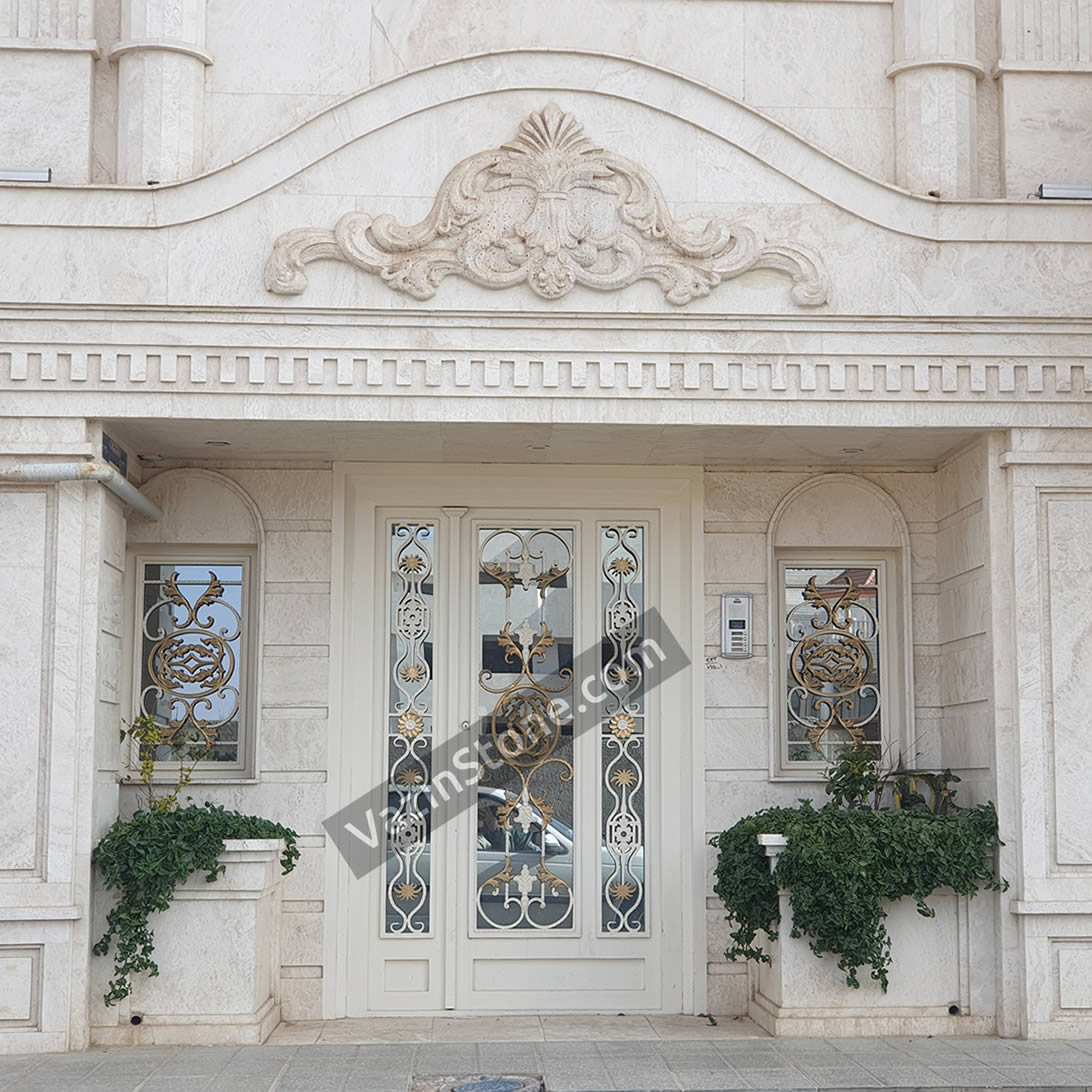
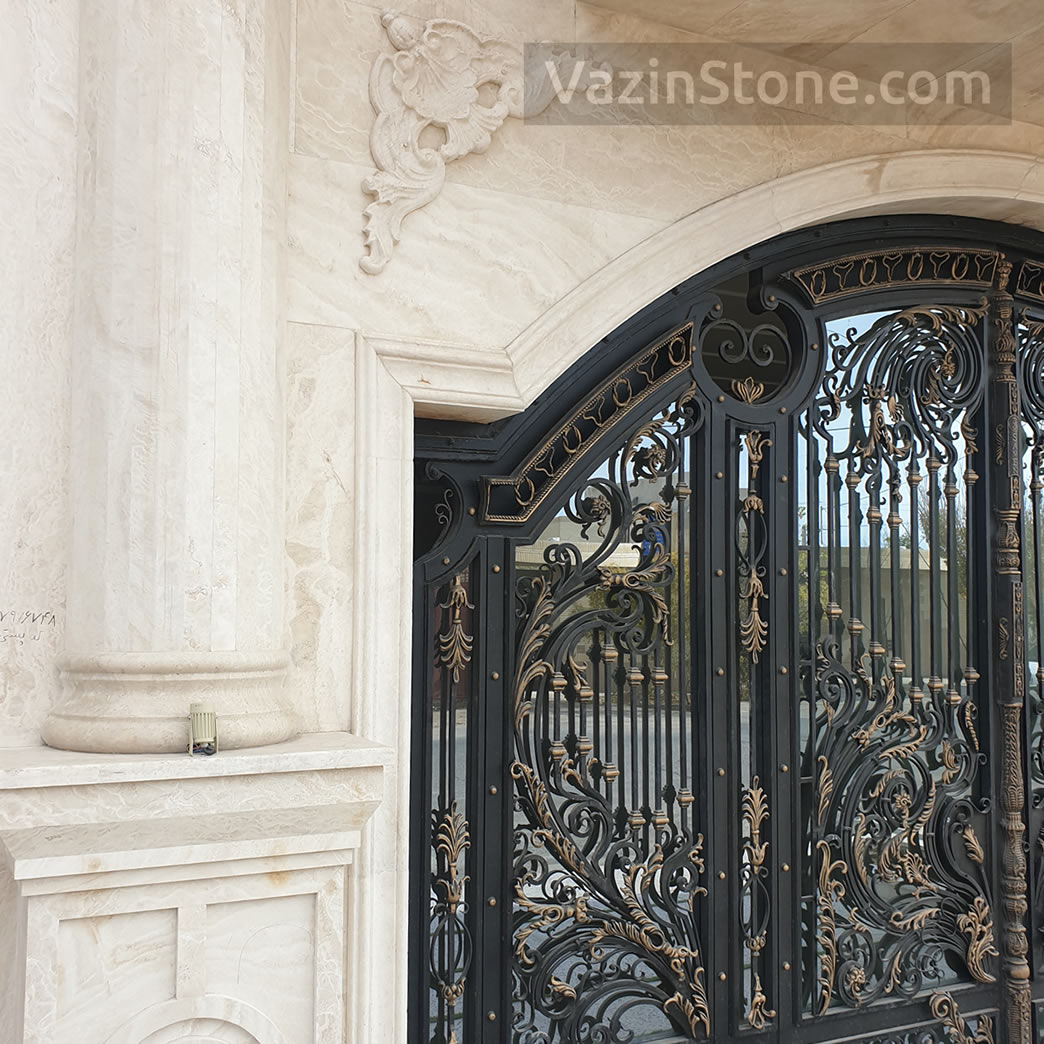
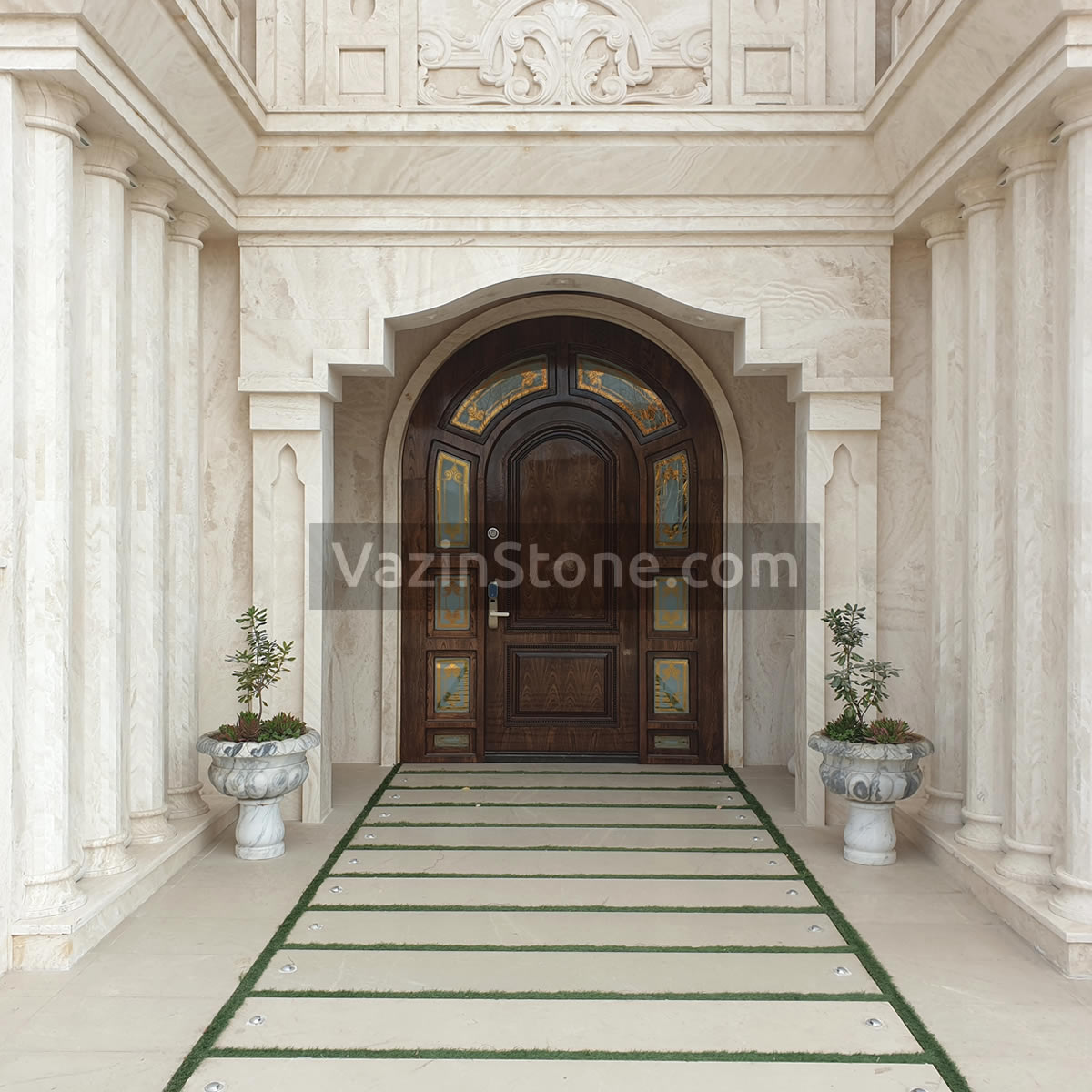
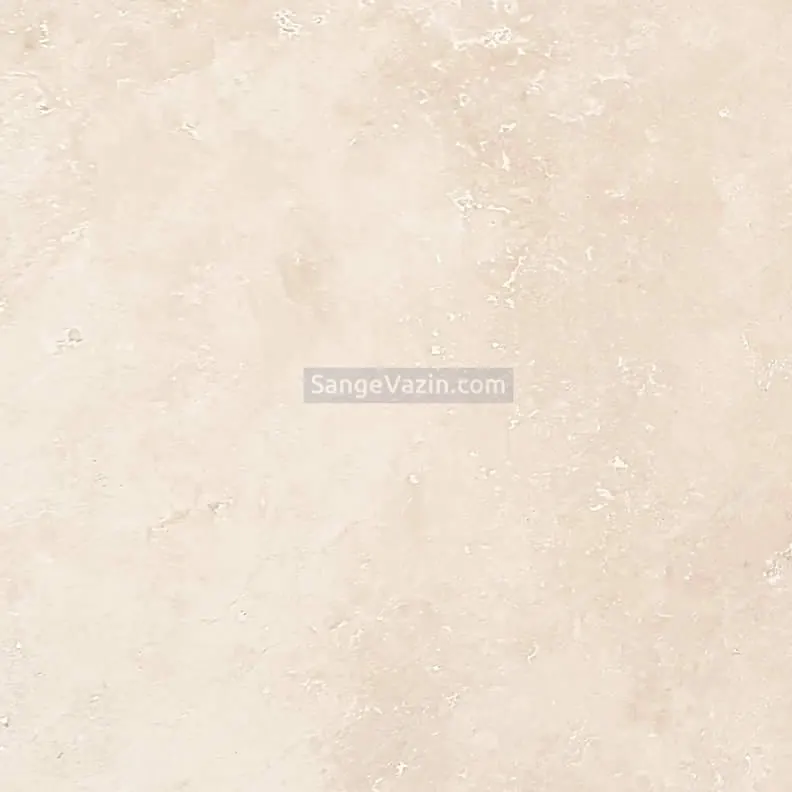
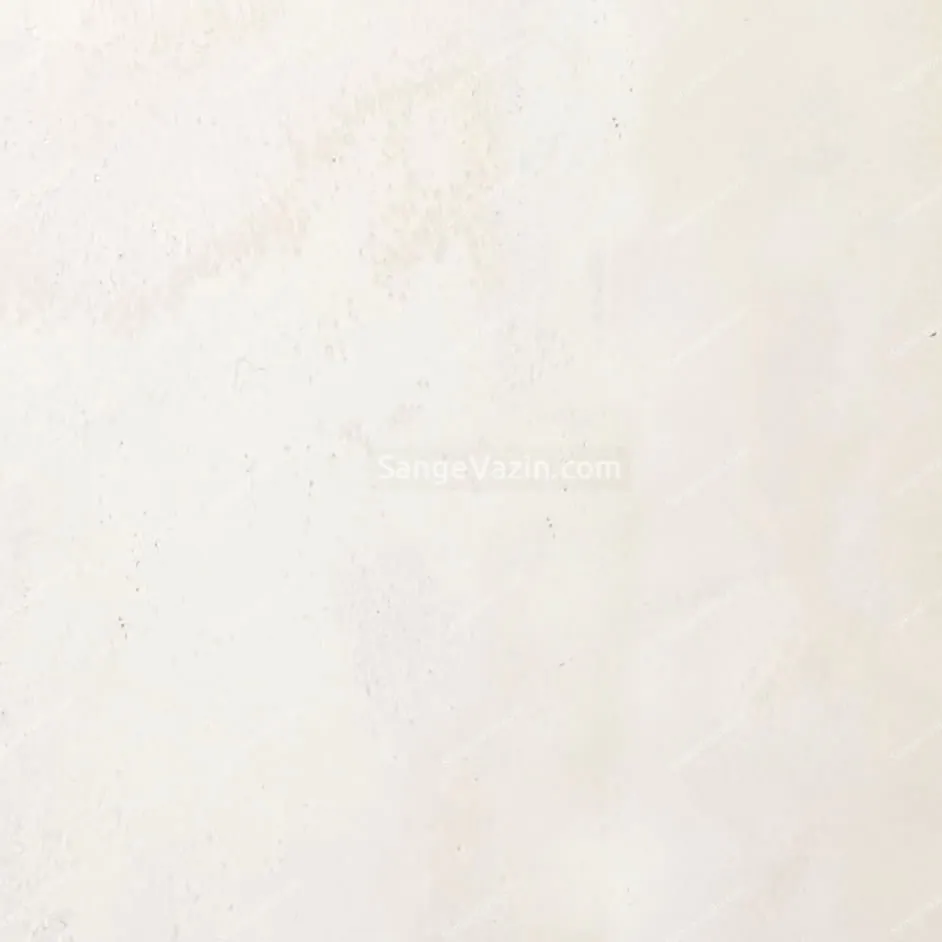
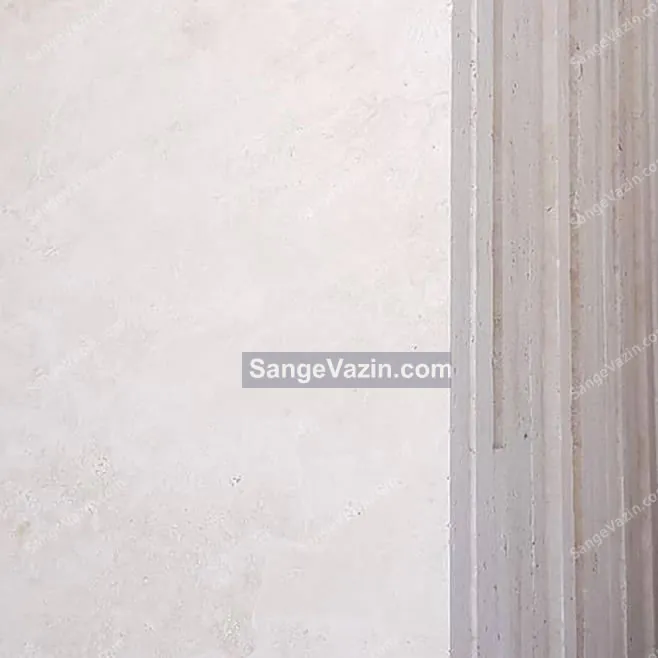
The white Roman facade must be executed using travertine or white crystal marble stones. In the travertine category, these stones can include the finest types such as Abbas Abad, Atashkooh, or Darreh Bokhari. Among crystal marble stones, Aligoudarz and Azna stones can also be good candidates for a white Roman facade. The gallery below shows examples of Roman facades constructed with the lightest and whitest travertine stones.
View prices of white Roman facade stones:
-
 Hajiabad TravertinePrice range: $10 through $49
 -
 Atashkooh TravertinePrice range: $63 through $108
 -
 Darreh Bokhari TravertinePrice range: $23 through $63
Roman Facade: History & Overview
Roman building facade design is inspired by classical architecture and the architectural style of buildings in Ancient Rome and Ancient Greece. The history of the classical facade dates back to the 5th century BC, during the period of stability in Greek civilization and art. In the 5th century BC, Greek civilization and culture flourished and had a profound influence on Roman civilization. As a result, Greek classical architecture developed during the 4th and 5th centuries AD. In addition, due to the territorial conquests of that period, the civilizations of Rome and Greece gained dominance over much of the world, and many countries in different parts of the world were influenced by the culture and architecture of Ancient Greece and Ancient Rome.
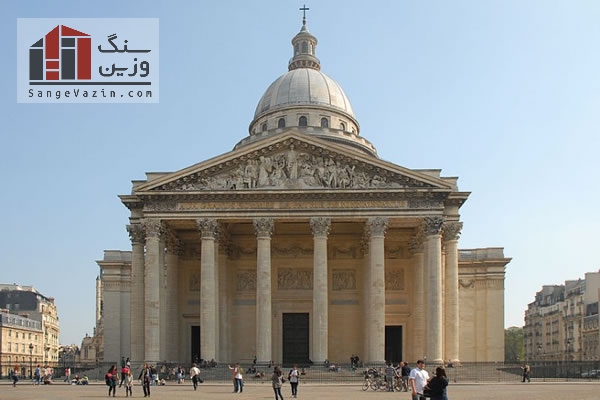
Roman facade Usage in Europe
After that, from the 9th to the 12th centuries, Roman power spread throughout the world, so Roman, or classical, architecture became popular in European countries and gained many admirers. As a result, many churches and palaces with high walls and arches, featuring the Roman style, emerged in European countries. During the Renaissance period in France, Italy, and England, in the 15th and 16th centuries, many architects modeled their designs after Roman and Greek buildings. Using those styles in Roman facade design attracted the attention of many people.
Finally, in the 19th century, classical architecture developed and became popular in Europe. During this period, buildings were created that showed splendor, greatness, and originality by following the traditional architecture of ancient Rome and Greece. Even during this period, the classical style of Roman and Greek architecture found its way to America.
But the construction of buildings with classical Roman and Greek architectural styles was costly; this style was seen in most significant facilities such as churches, courts, universities, castles, and the like. The ancient Roman and Greek architectural styles of the building show the luxury of the building.
Frequently Asked Questions about Roman Facade
What is a Roman facade, and why is it so popular?
Roman (Classical) facade is an architectural style inspired by the classical architecture of Ancient Rome and Greece. The main reason for its popularity is its grand, luxurious, and majestic appearance, which gives buildings a sense of power and striking beauty. The use of intricate stone decorative elements in this facade distinguishes it from other architectural styles.
What are the pros and cons of Roman facades?
The pros of Roman-style facades include their exceptional beauty and striking visual appeal. The cons include being unauthorized as an urban facade, high construction costs, lack of native architectural authenticity, and the additional structural load imposed on the building.
How much does white Roman facade stone cost?
The price depends on several factors, including the type of stone (such as Abbas Abad Travertine, Haji Abad Travertine, or Atashkooh Travertine), the stone color (uniform white stones are more expensive), thickness, dimensions, and the level of stone detailing and profiling required.
How is the cost of a Roman facade estimated?
To obtain an accurate quotation for a Roman facade, all required architectural elements and stone masonry must be specified, including precise dimensions, quantities, and the type of stone. You may review the Roman facade molding products available on the Vazin Stone website, and then contact the specialists at Vazin Stone to receive expert guidance and professional consultation.
What stone is used for a Roman facade?
The best stones for Roman facades are high-quality travertine stones such as Atashkooh Travertine, Abbas Abad Travertine, and Darreh Bokhari Travertine. Other stones are also widely used, such as Hajiabad Travertine and Abegarm Travertine. However, their color and texture are generally darker and more uneven, typically ranging toward beige and brown tones.
What are the most important visual characteristics in Roman facade design?
The key features of Roman façade design include the use of light-colored natural stones (such as cream and white travertine), the incorporation of tall and massive columns, decorative capitals and bases, arches and curved vaults, cornices, stone inscriptions, and three-dimensional framing around doors and windows. In addition, professional lighting at night to highlight these architectural volumes is an essential requirement of this style.
Can artificial elements (cement or resin) be used for Roman facade design?
Yes, it is possible to use prefabricated artificial elements such as polymer cement, resin, and fiberglass in Roman facade design. These materials are typically used to reduce construction costs. However, it should be noted that they do not offer the same durability, visual quality, or authenticity as natural stone.
What is the best material for constructing a Roman building facade?
Although today artificial materials (such as cement-based, resin-based, and PVC options) are available in the market to reduce costs, in order to achieve true grandeur, authenticity, and lasting durability—which are the core objectives of the Roman style—the use of natural stone (especially travertine stone) is 100% recommended. Natural stone gives a royal appearance to the building that no industrial material can compete with.