Marble stone
Purchasing and pricing of marble stone in a wide variety of designs and colors, from white to colorful and black, suitable for flooring, walls, and stairs, for use in interior building spaces, available in standard, tile, slab, and custom dimensions. Marble stones are also used to create natural stone products such as fountains, washstands, flower pots, stone decorative accessories, and more. If you want to learn more about marble stone, you can read about it at the bottom of this page and even download a Marble PDF Catalog. 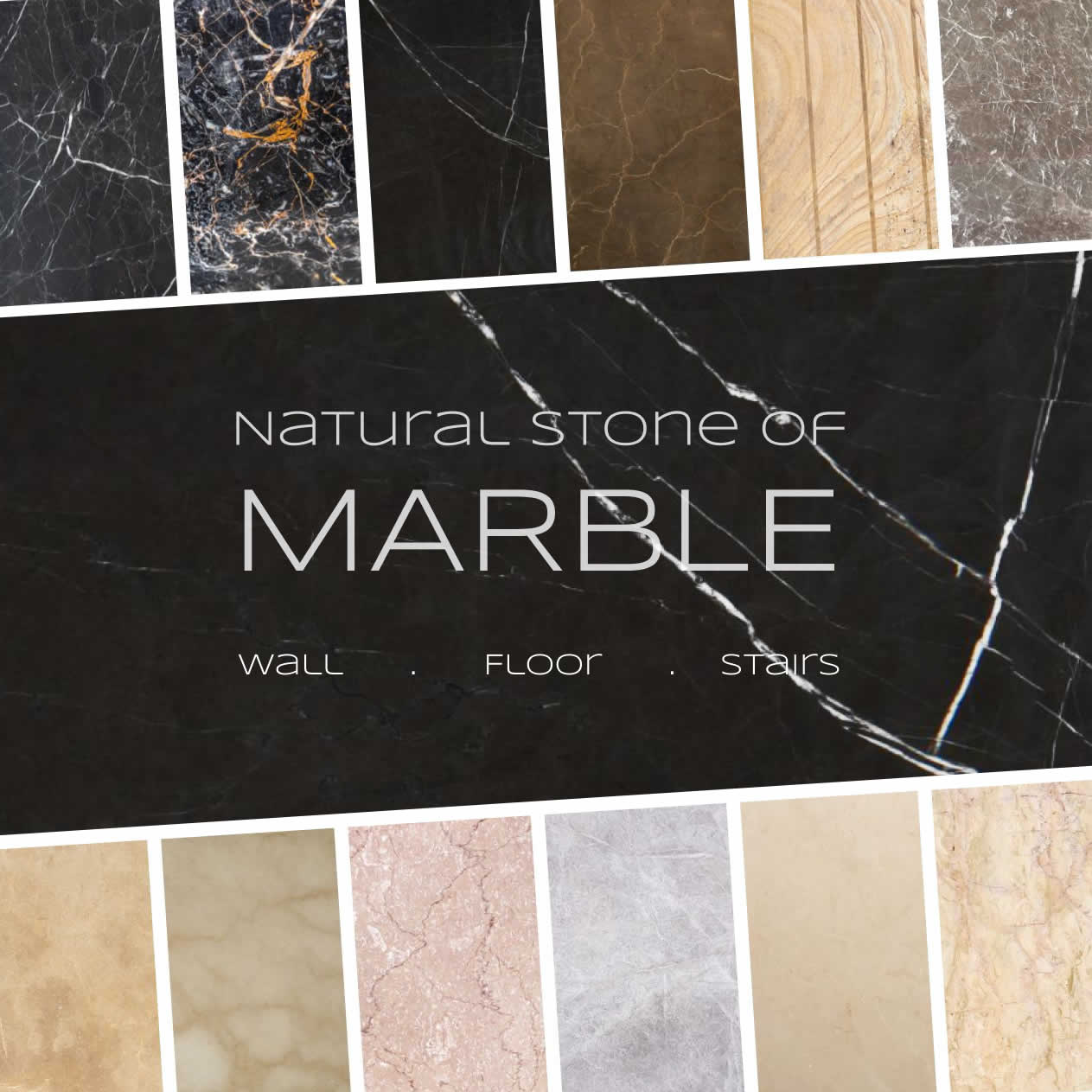
Showing all 2 results



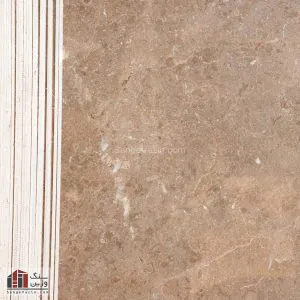
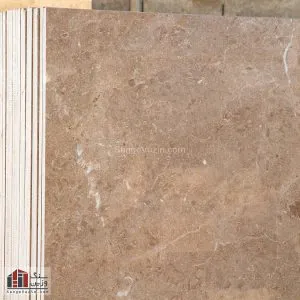
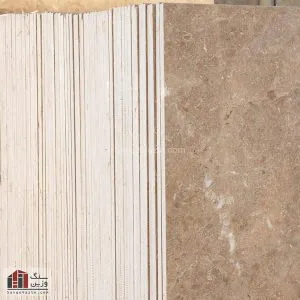
What you will read about marble stone types and their price is as follows:
Marble is one of the most beautiful decorative stones, with unique visual and physical characteristics that make it widely used in the production of stone products and for covering floors, walls, and stairs in buildings. This stone belongs to the category of metamorphic limestone and has a dense structure with almost no visible pores or voids. The beauty and wide variety of colors and patterns are among the most important characteristics of marble, which we will discuss further below.
Dear Buyers, it’s important to be aware that marble is typically not ideal for use on building facades. This is because, due to its constituent elements, when exposed to outdoor environments and varying weather conditions, this stone gradually loses its beautiful appearance over time, and its structure may become damaged.
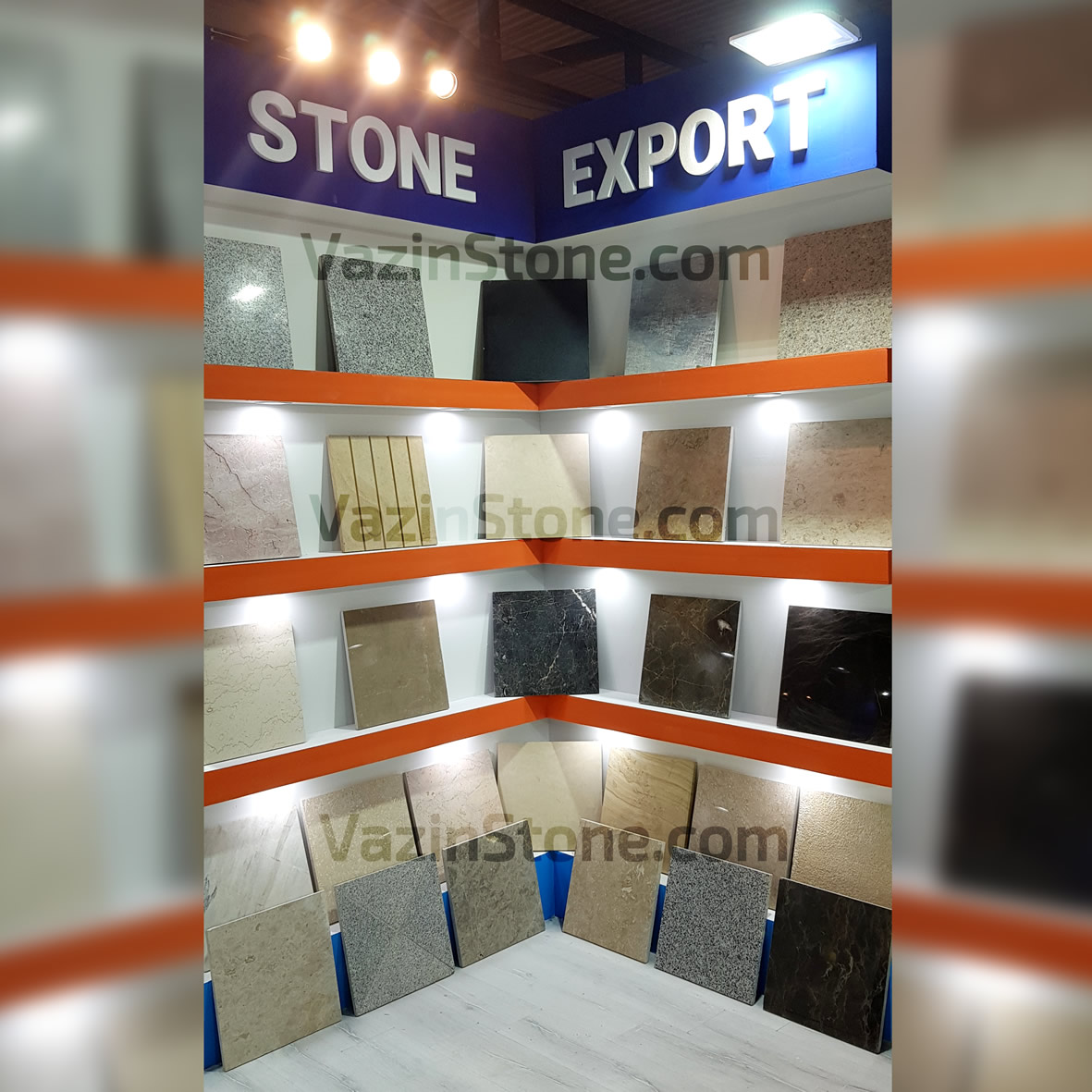
Visual Characteristics of Marble Stone
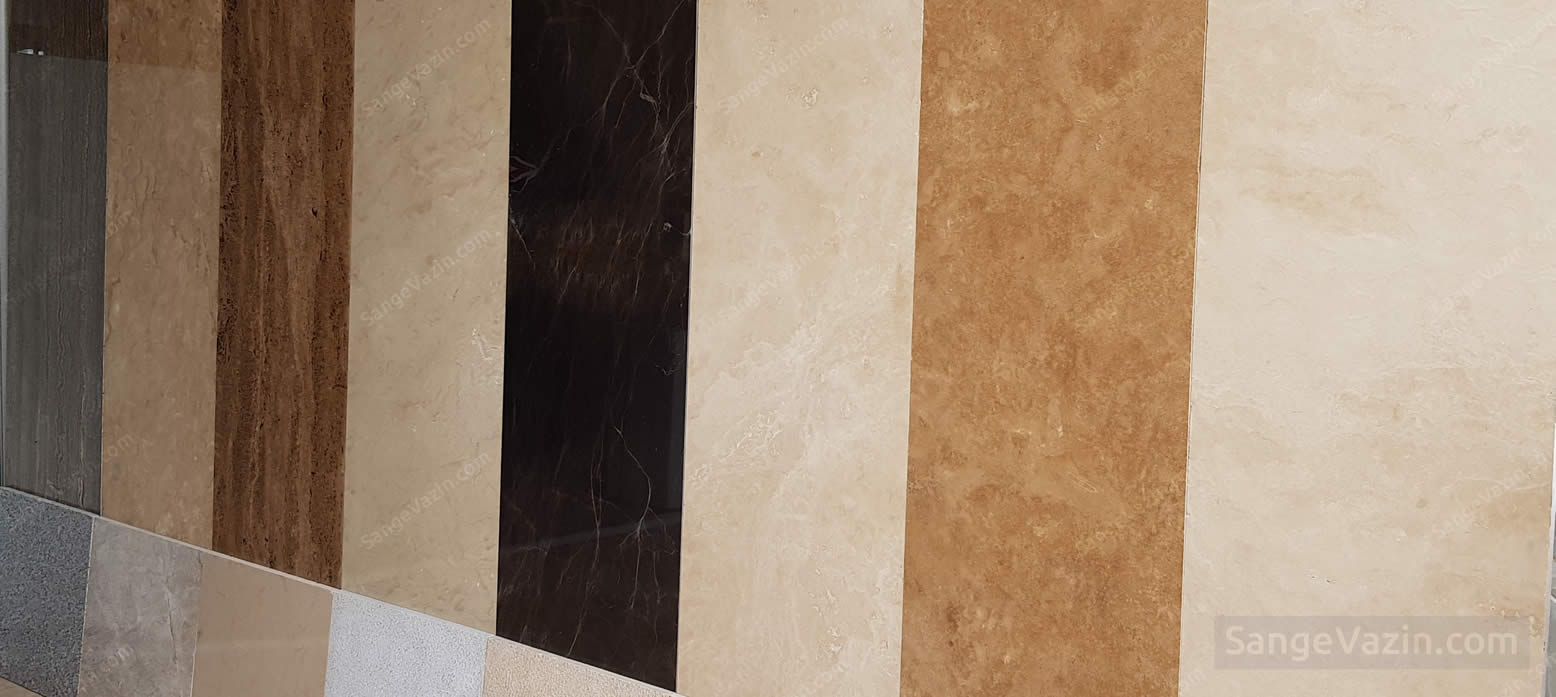
Iran has numerous quarries that offer a wide range of marble stones at reasonable prices. Marble stones come in various colors spanning from light to dark shades such as cream, white, pink, green, brick red, black, gray, nescafe, and brown. These stones exhibit unique patterns, including streaks, wavy, waveless, and cotton flower motifs.
In some cases, marble is one of the stones that most closely resembles travertine. For non-specialists, the easiest way to distinguish between them is by examining the back or side of the stone (the area behind the polished surface) and checking for the absence of pores or voids (holes) in the stone’s structure.
Sales Honesty Strategy
In line with its sales honesty strategy, Vazin Stone presents the advantages and disadvantages of using natural marble stone without any bias and with complete fairness. Naturally, every building material has its own strengths and weaknesses, and depending on your specific requirements and circumstances, each may be a more suitable option for you.
Disadvantages of Marble
- Marbles with a glossy, polished surface may experience surface corrosion and deterioration when continuously exposed to moisture.
- In some types, particularly dark-colored marble, polished surfaces may not be resistant to scratches when used as flooring.
- The surface layers can freeze and become brittle in most types.
- Not Resistant to Acidic Conditions (Acid Rain and Cleaning Agents)
Advantages of Marble
- Beauty and variety of colors and designs
- A suitable choice for interior spaces, offering a soft finish for floors and walls.
- A relatively more uniform and consistent surface compared to travertine.
- Affordable price
Marble Applications
Marble is used in various areas of a building’s interior, each of which is explained and categorized below:
Which Parts of a Building Are Suitable for Marble Use?
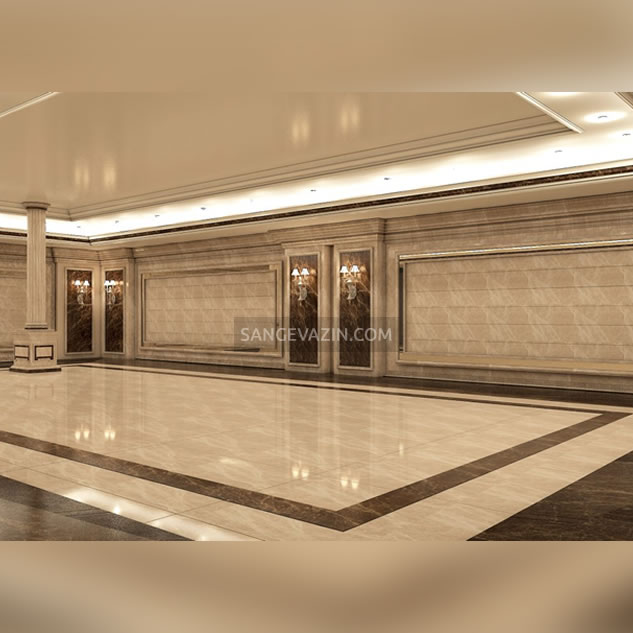
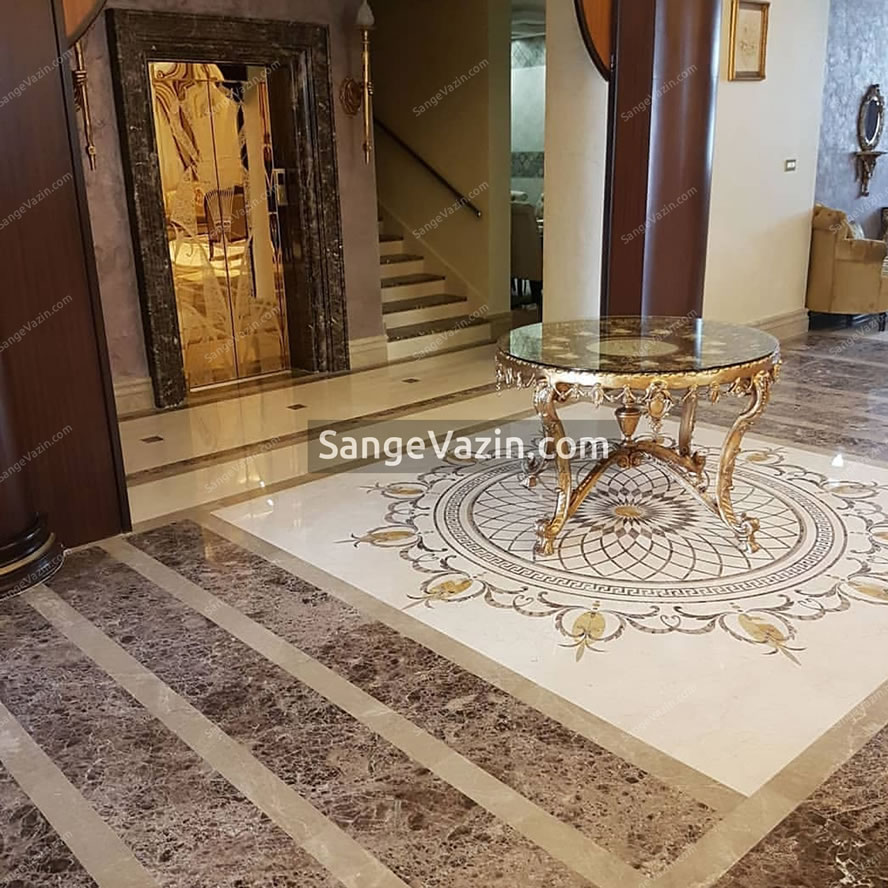
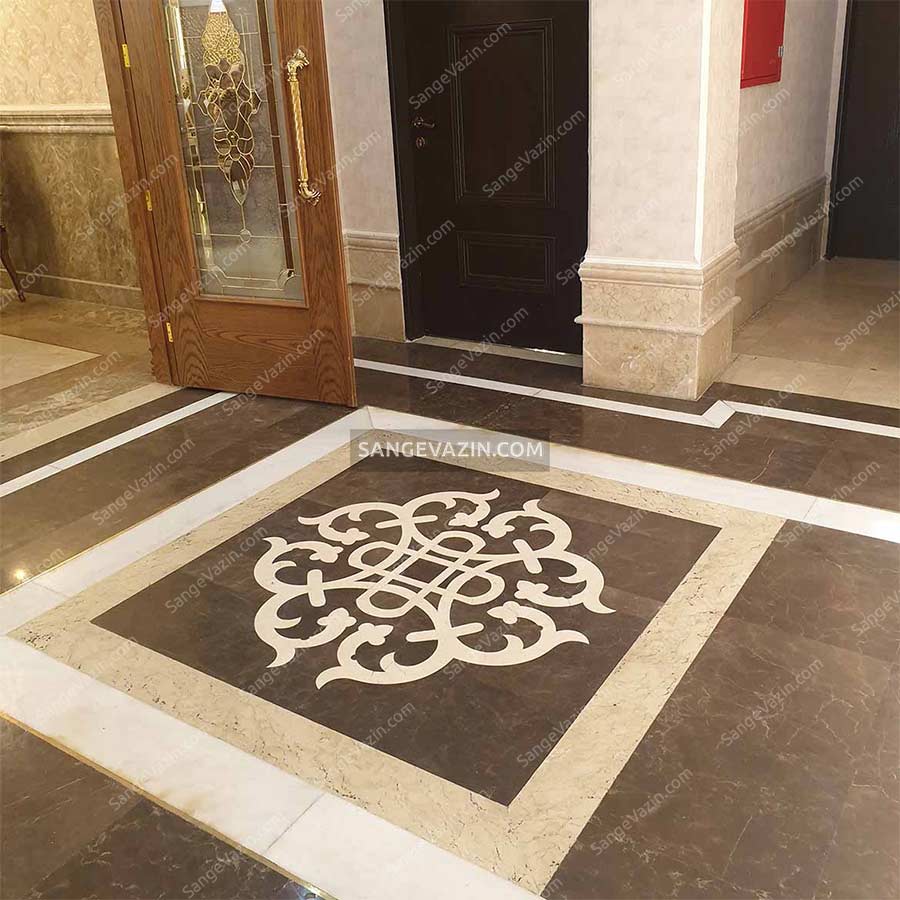
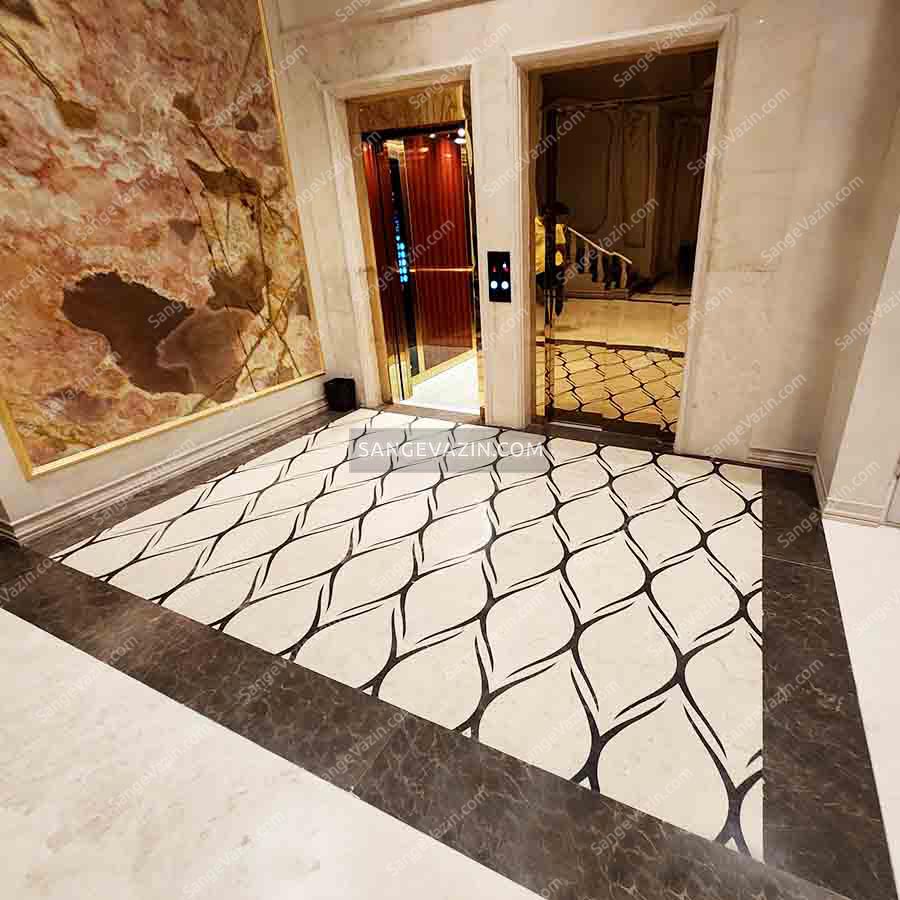
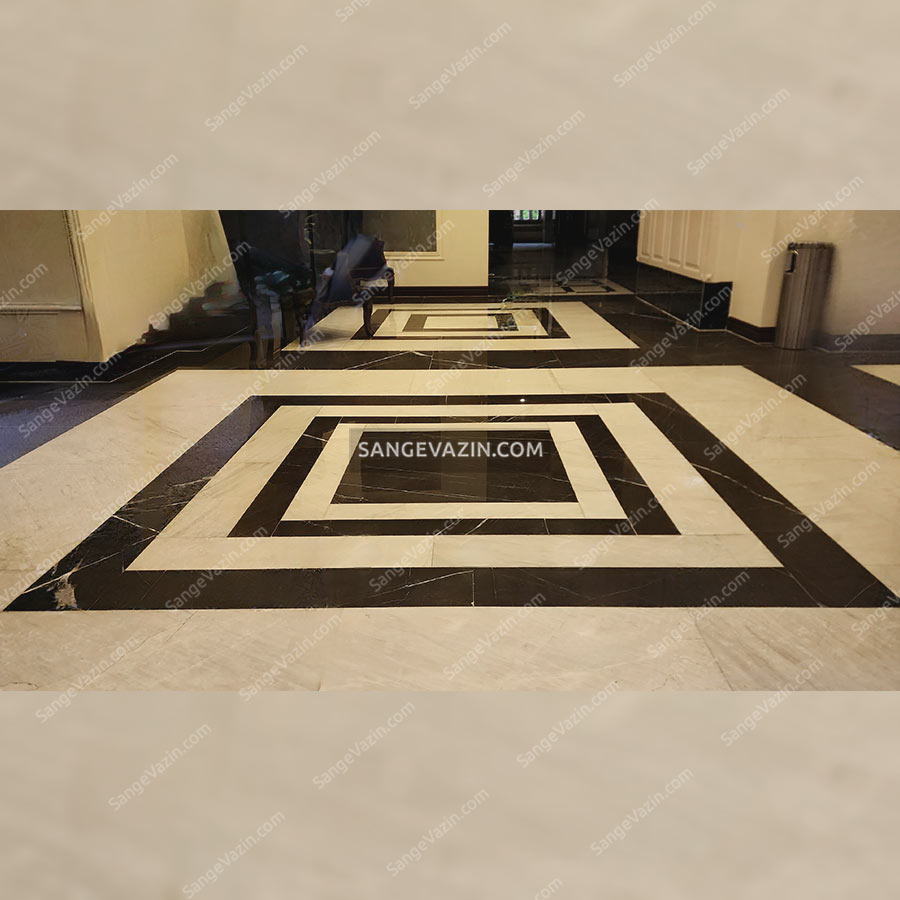
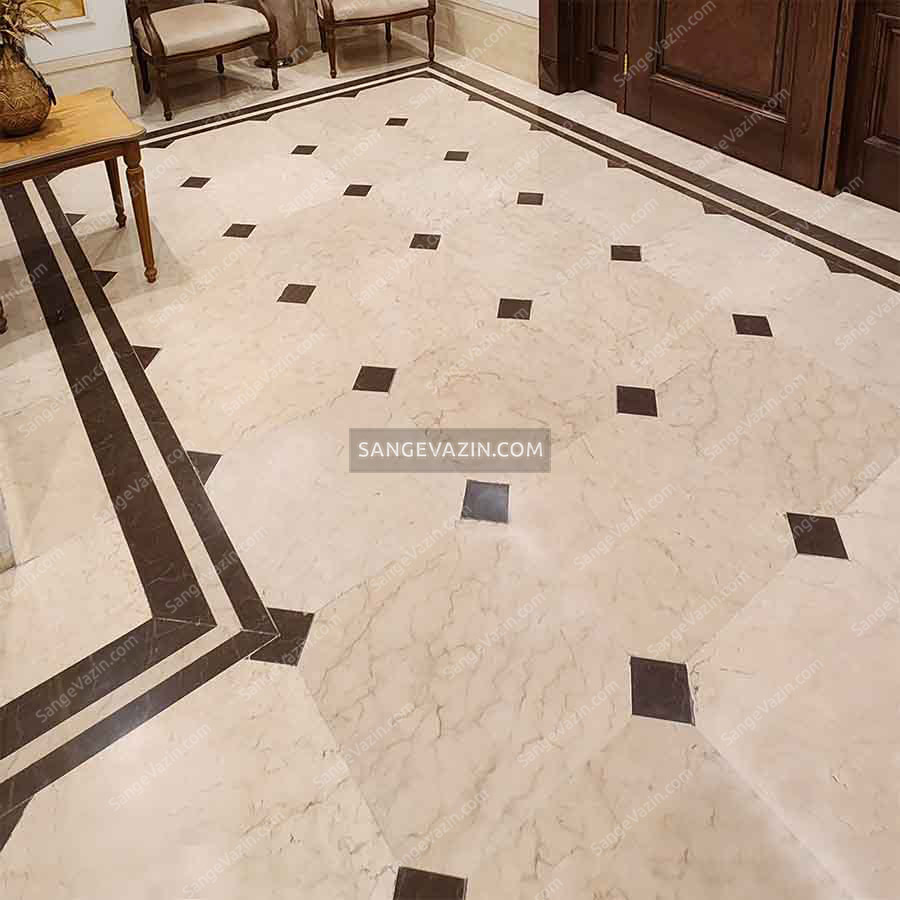
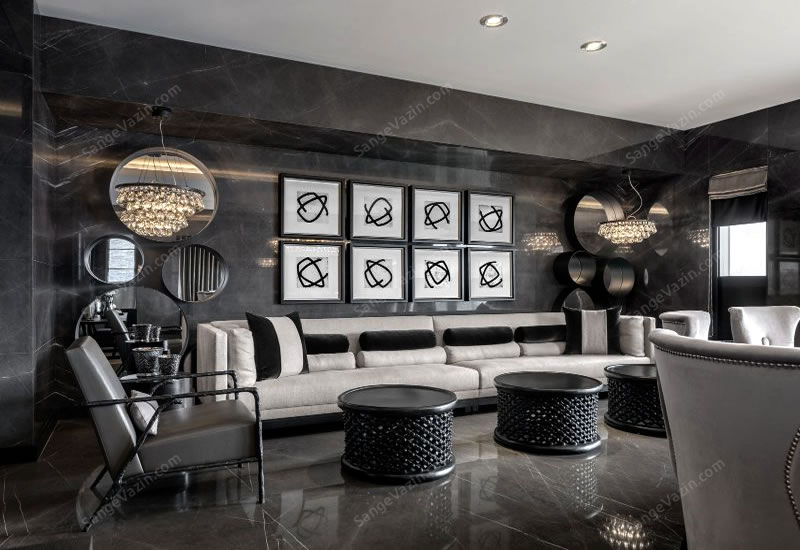
In general, marble is widely used as a building material for covering and finishing buildings. Due to its beauty, variety of patterns and colors, and excellent polishability, it is a suitable choice for interior applications such as walls, floors, and stairs. For example, Crema Marfil Stone is currently one of the most widely used cream marble stones due to its beautiful color and availability in a wide range of desired sizes. In the gallery below, you can view photos of marble stone applications.
1/ Marble Wall Stones Gallery
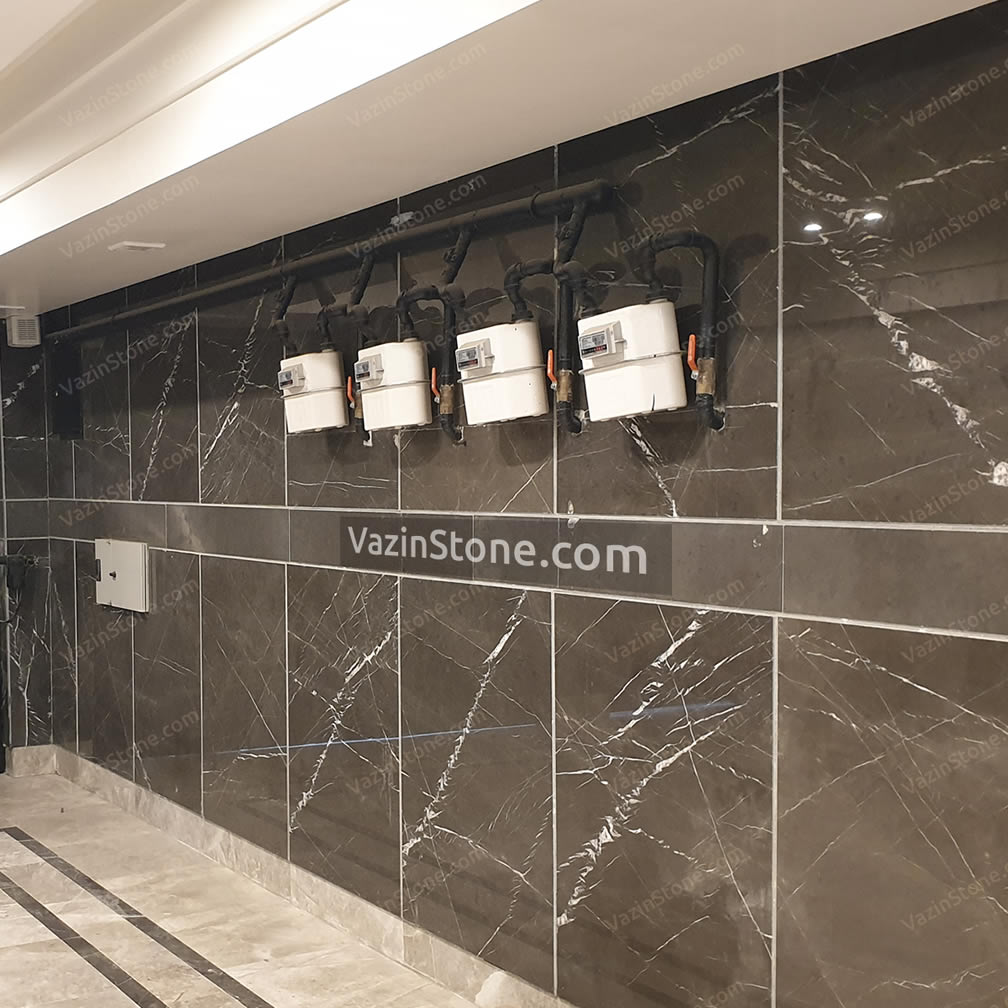

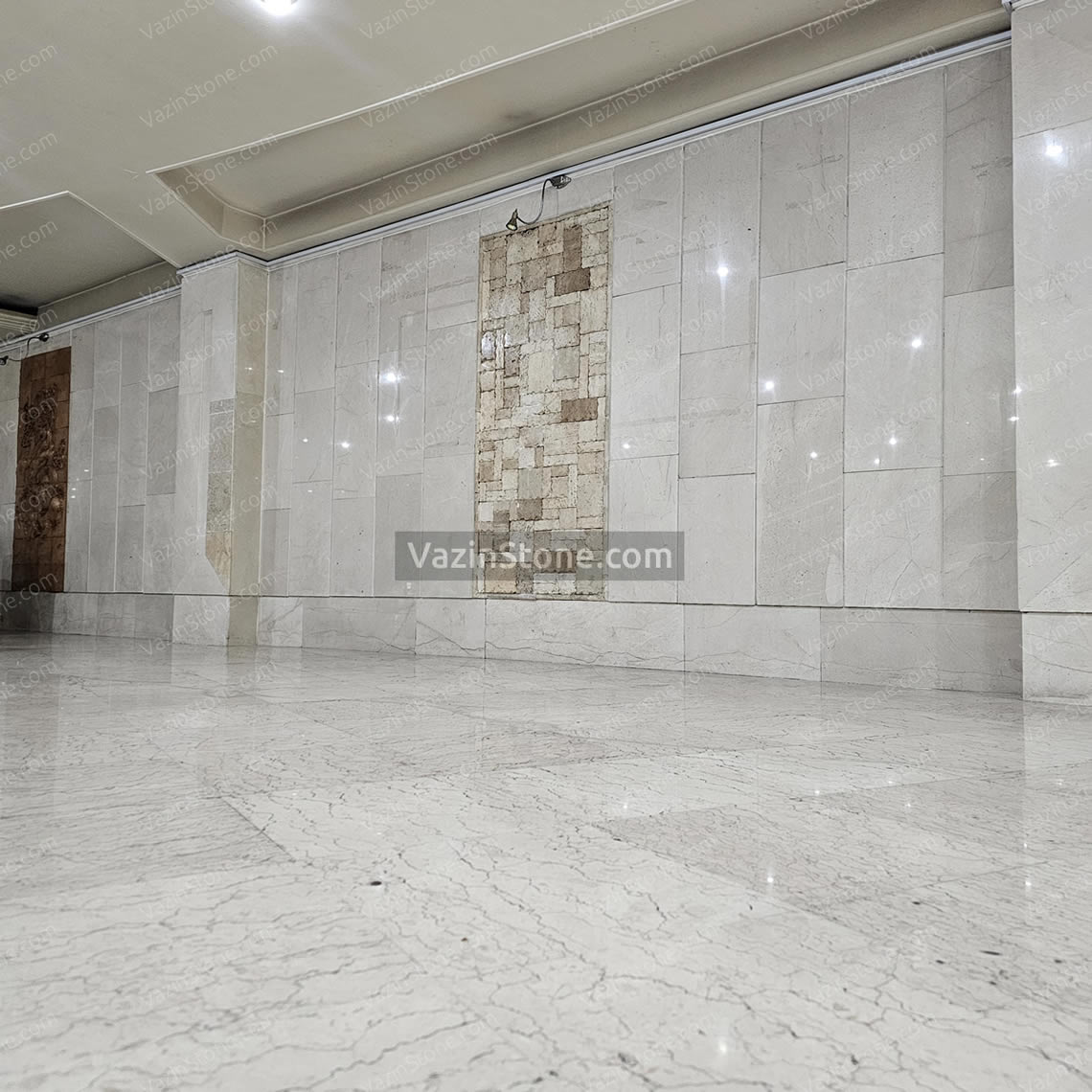
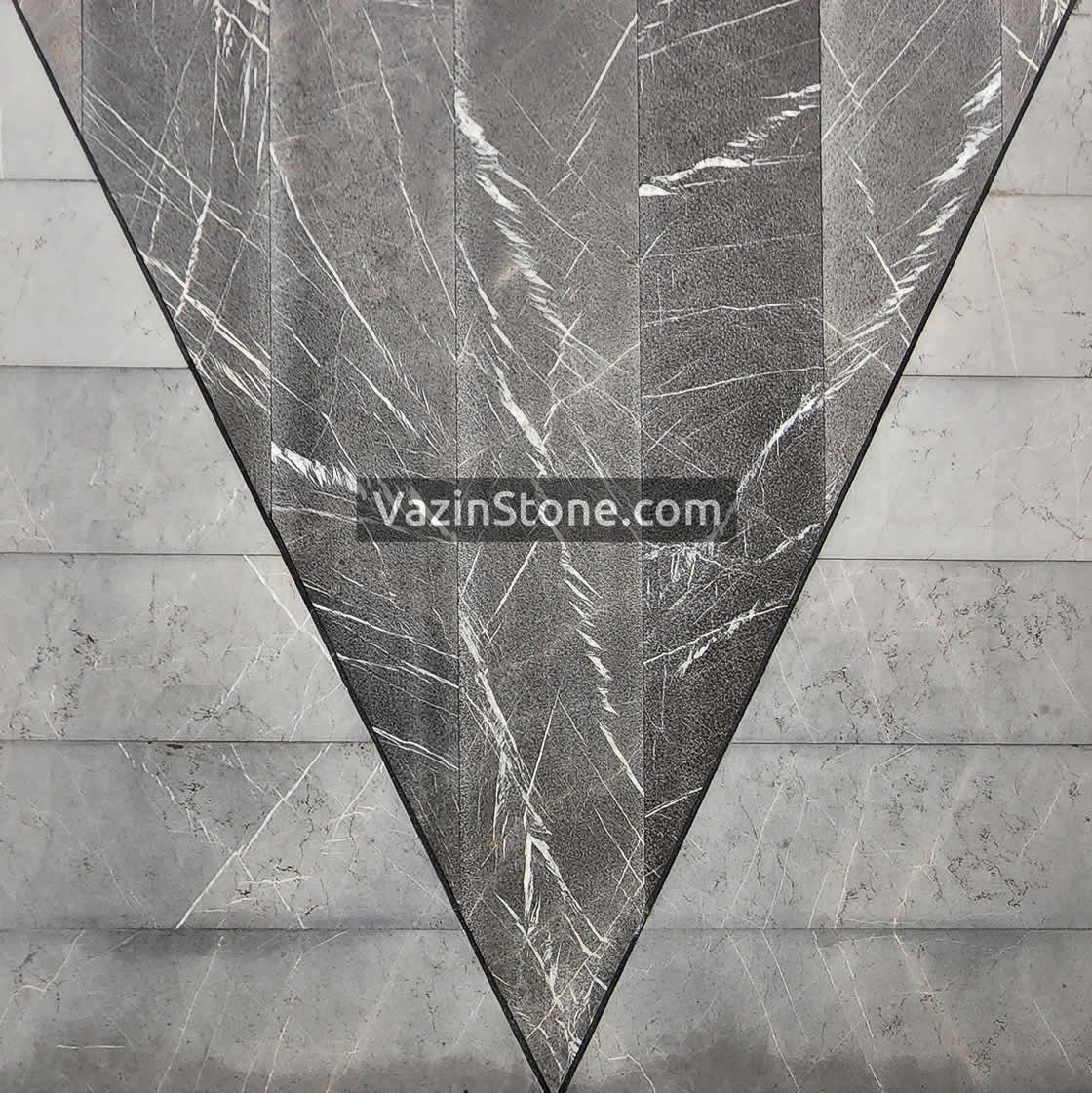
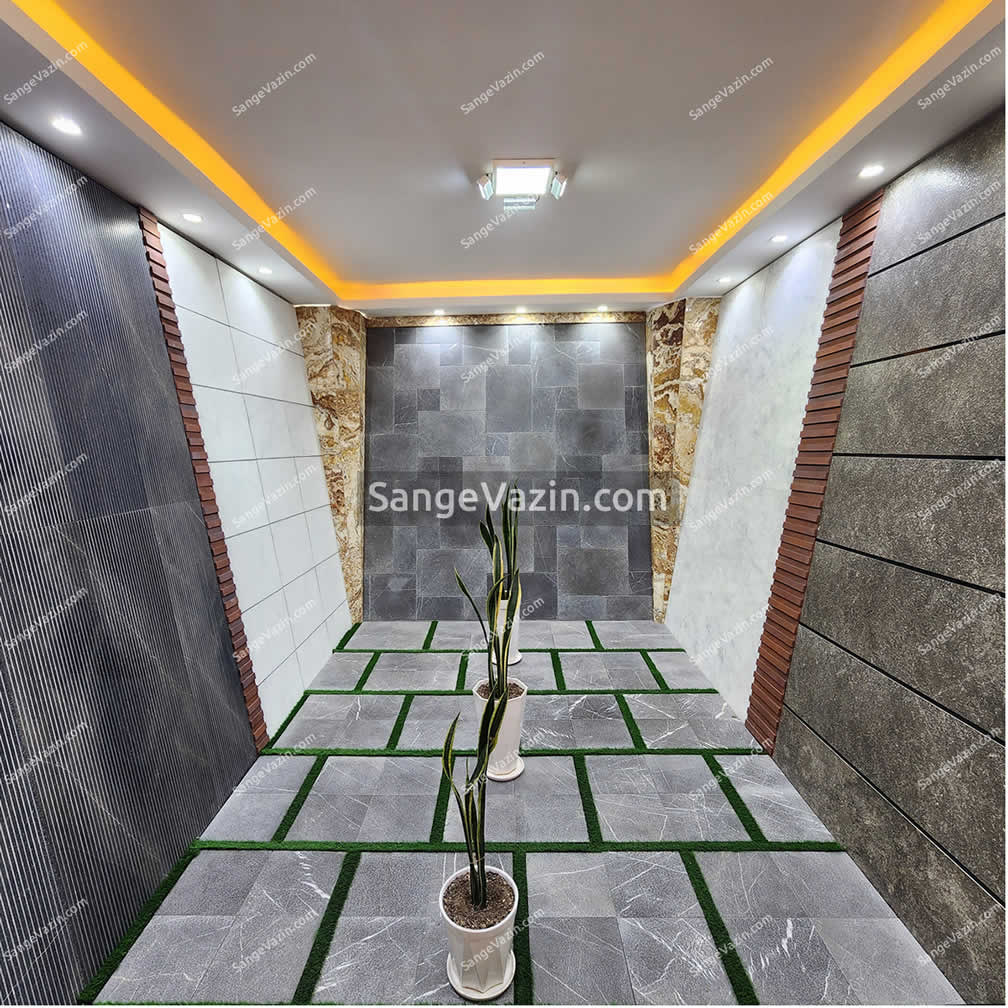
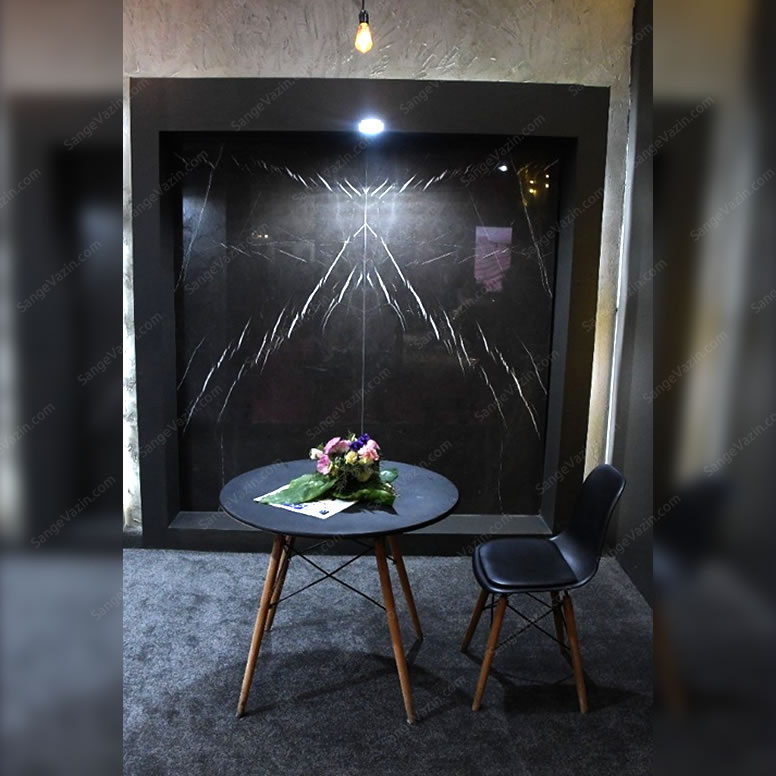
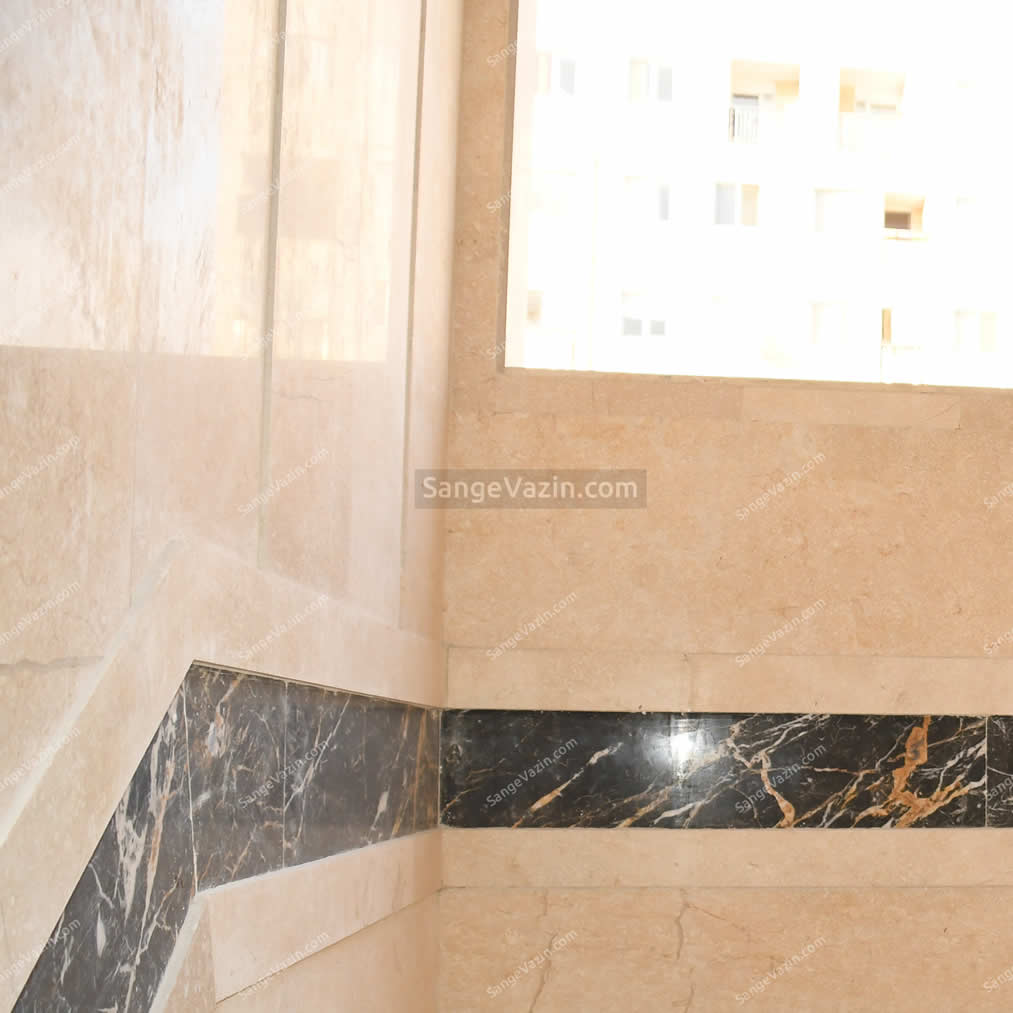
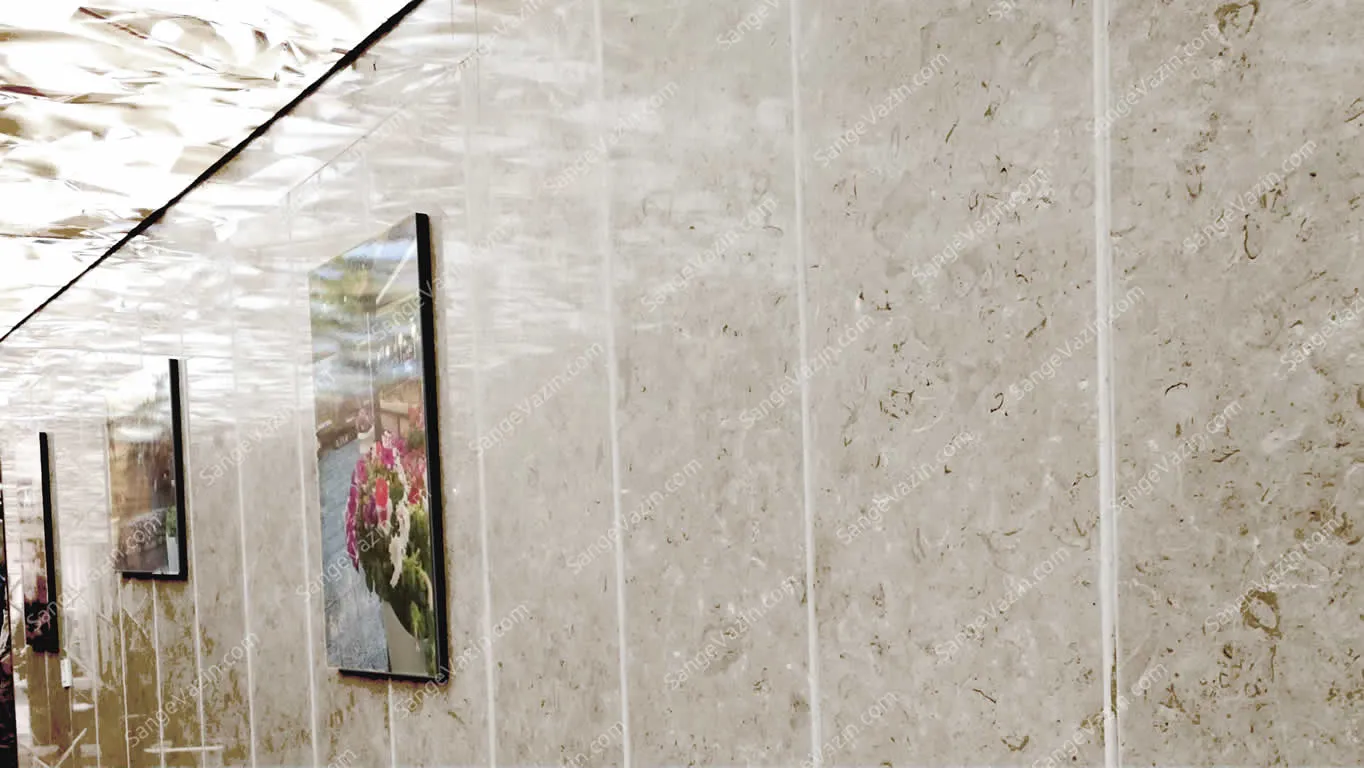
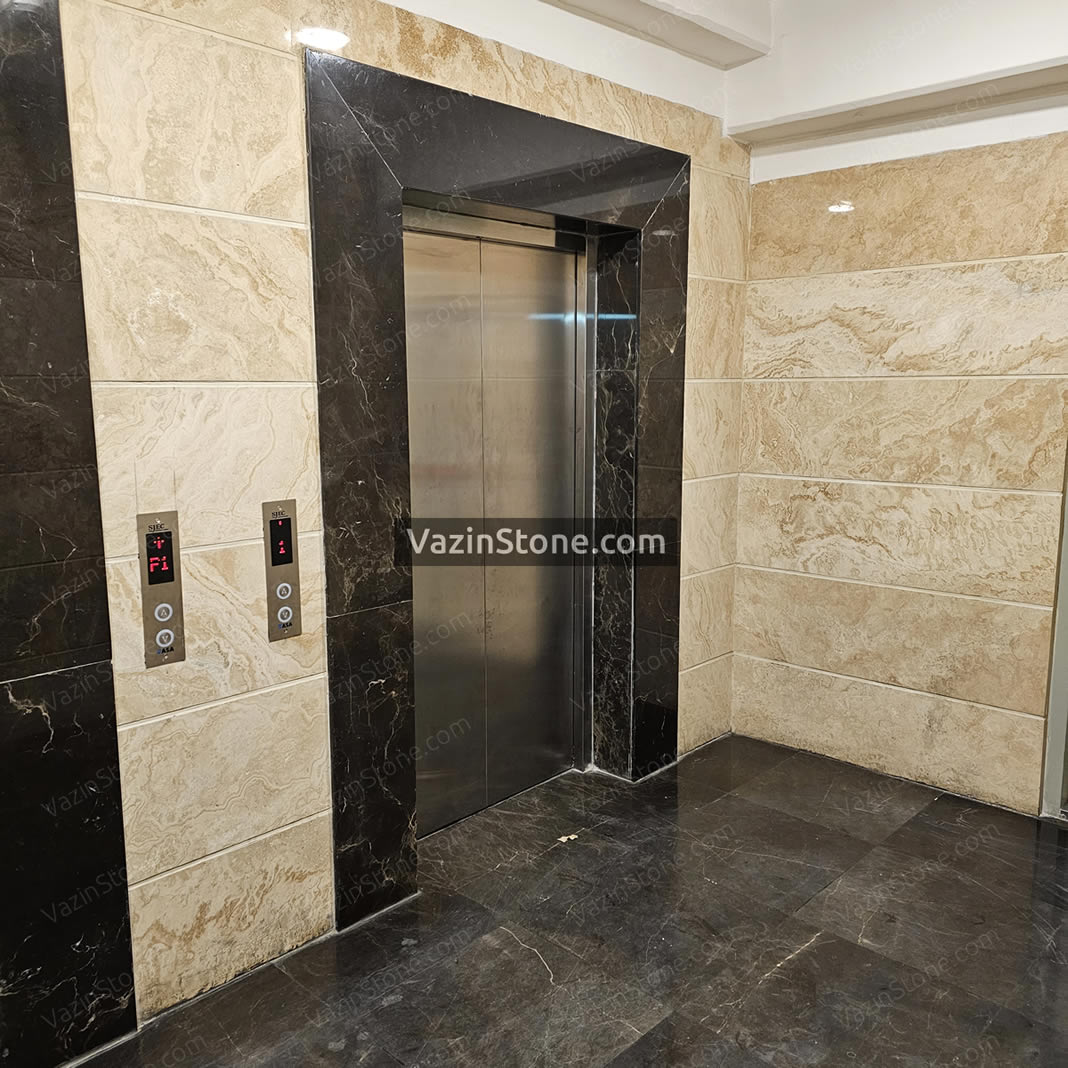
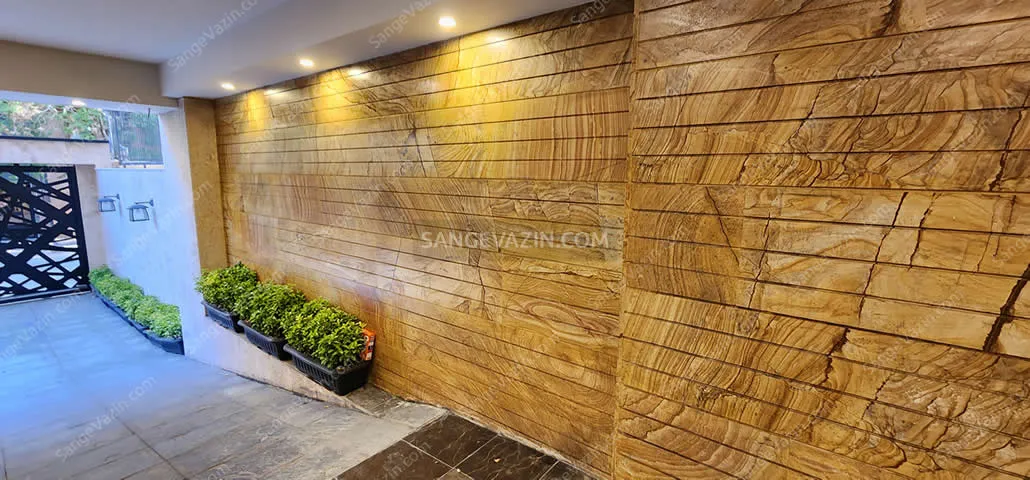
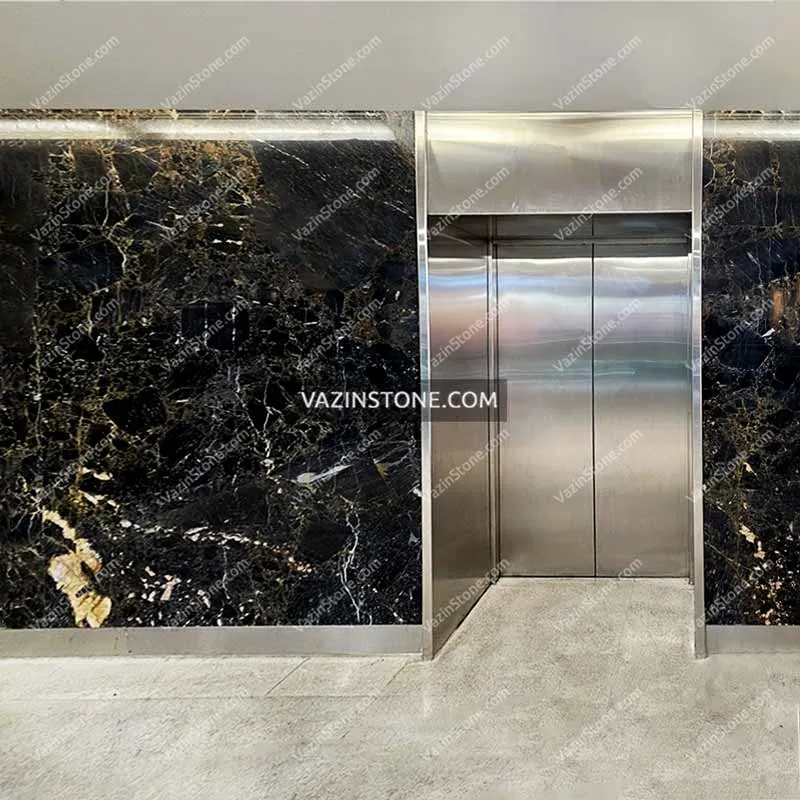
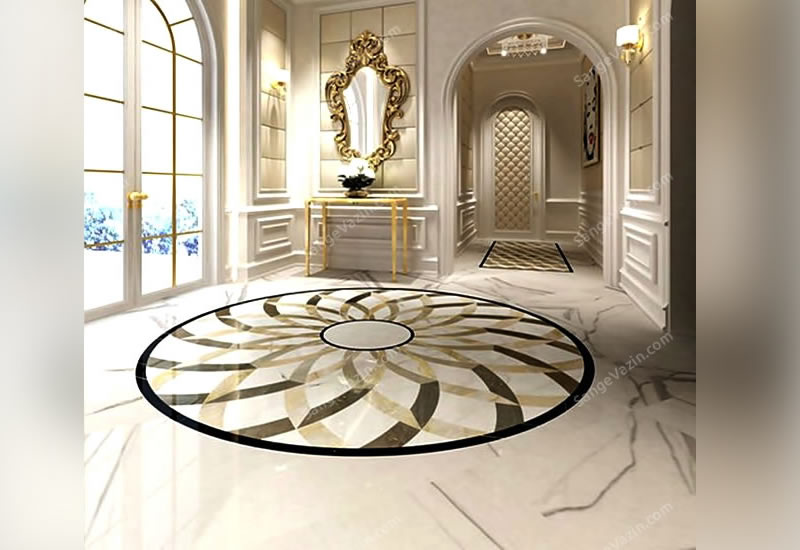
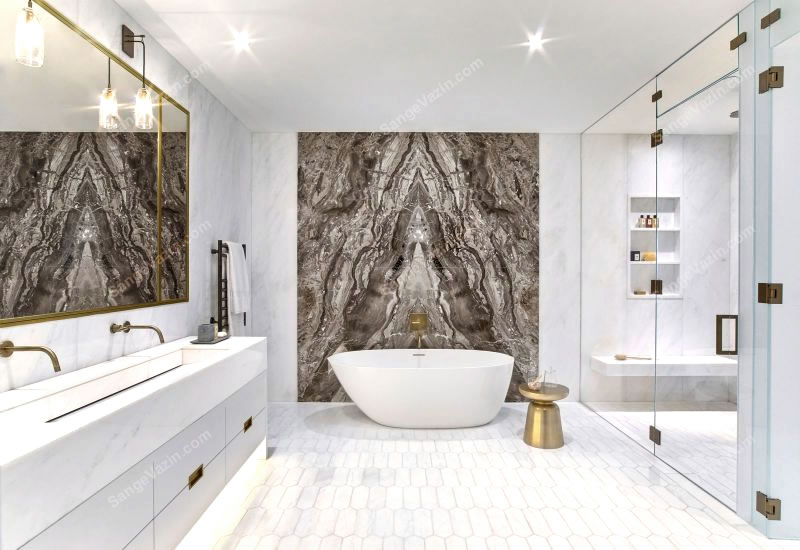
Special marble stones, renowned for their unique patterns, veins, and waves, are processed into large-format slabs (slab stone collection). These slabs are precisely and symmetrically cut to create book-matched (two-piece symmetrical) and four-matched (four-piece symmetrical) designs, ultimately forming a stunning natural tableau on floors or walls.
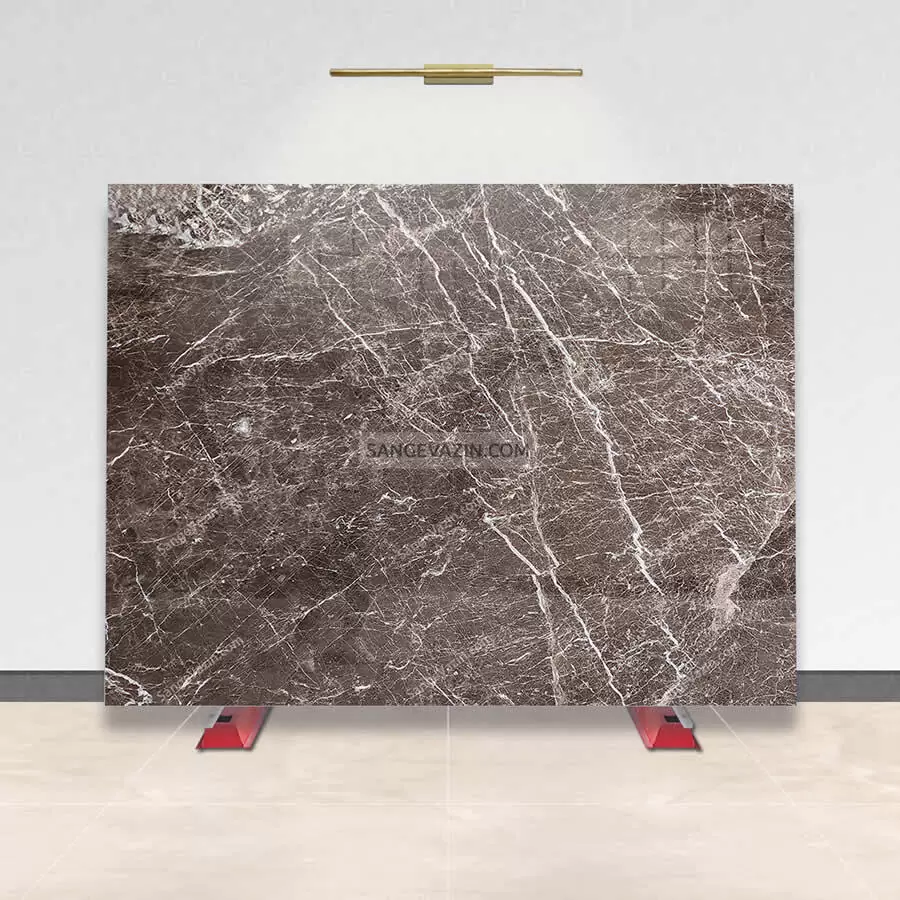
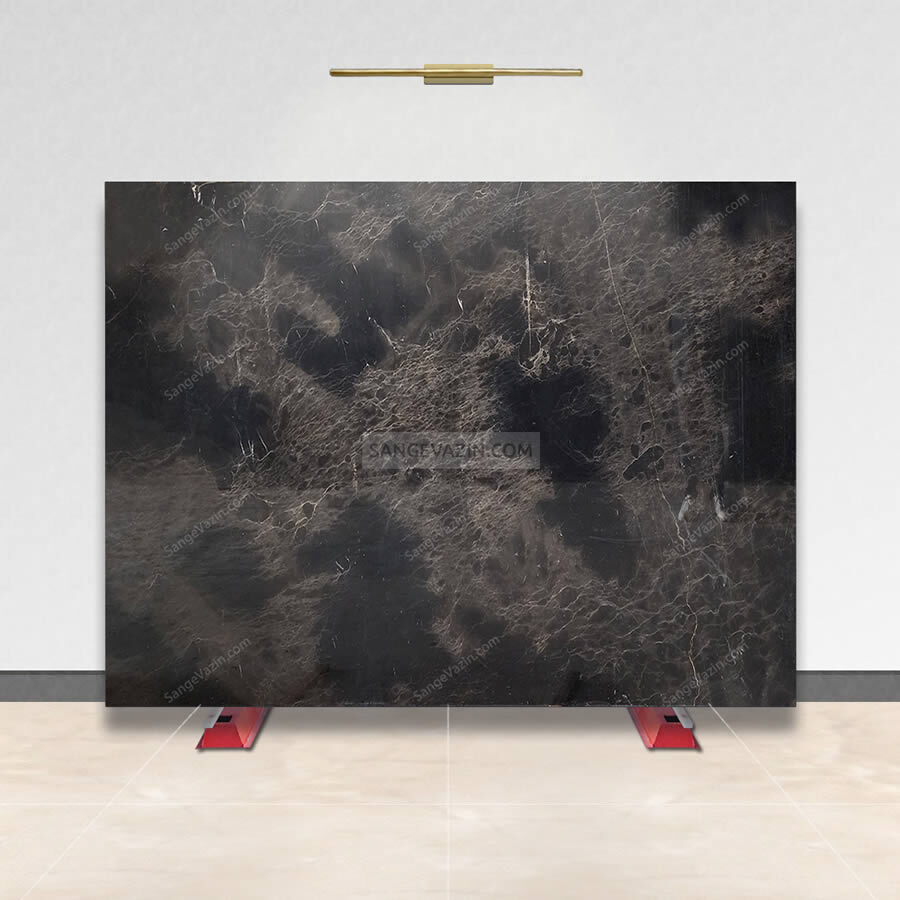
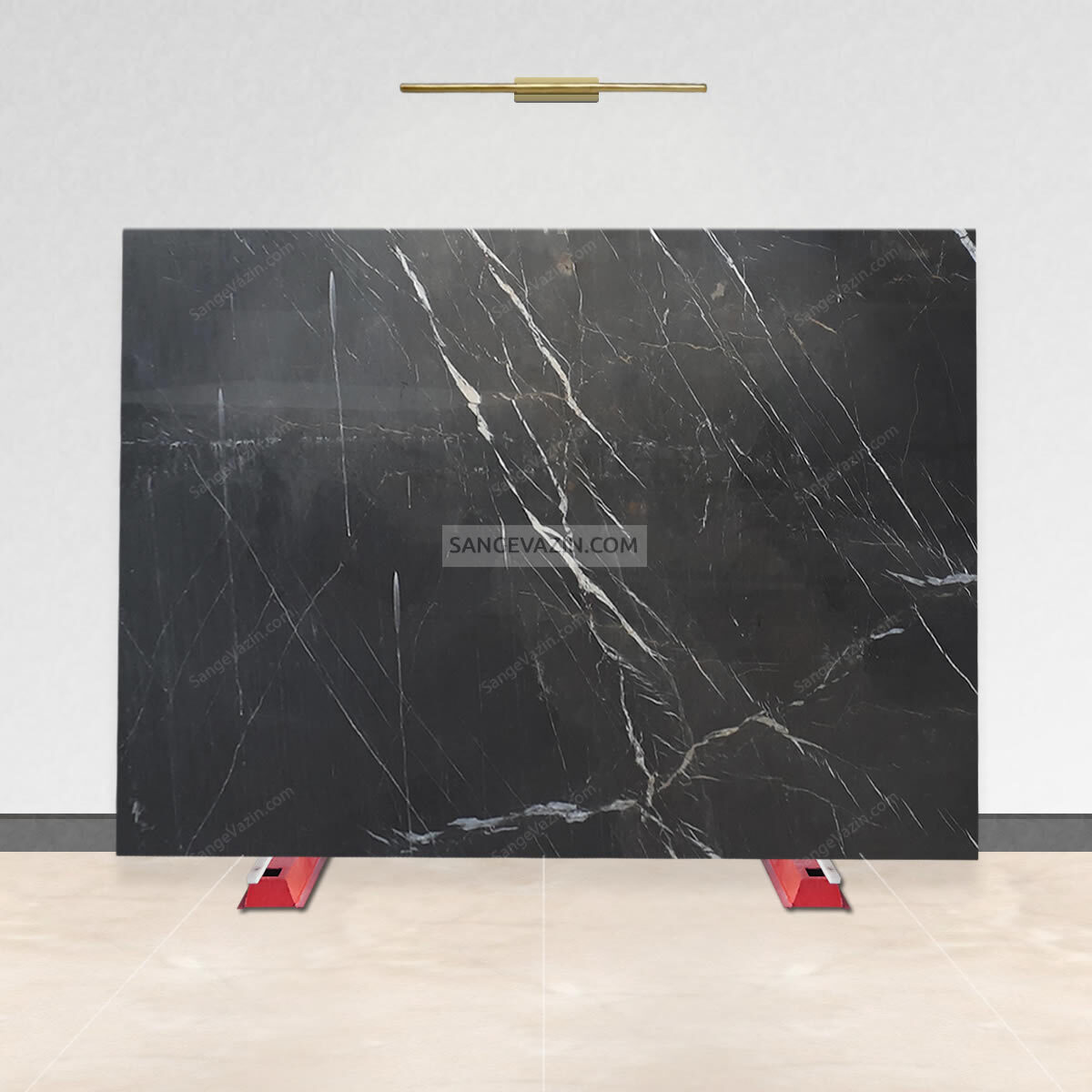
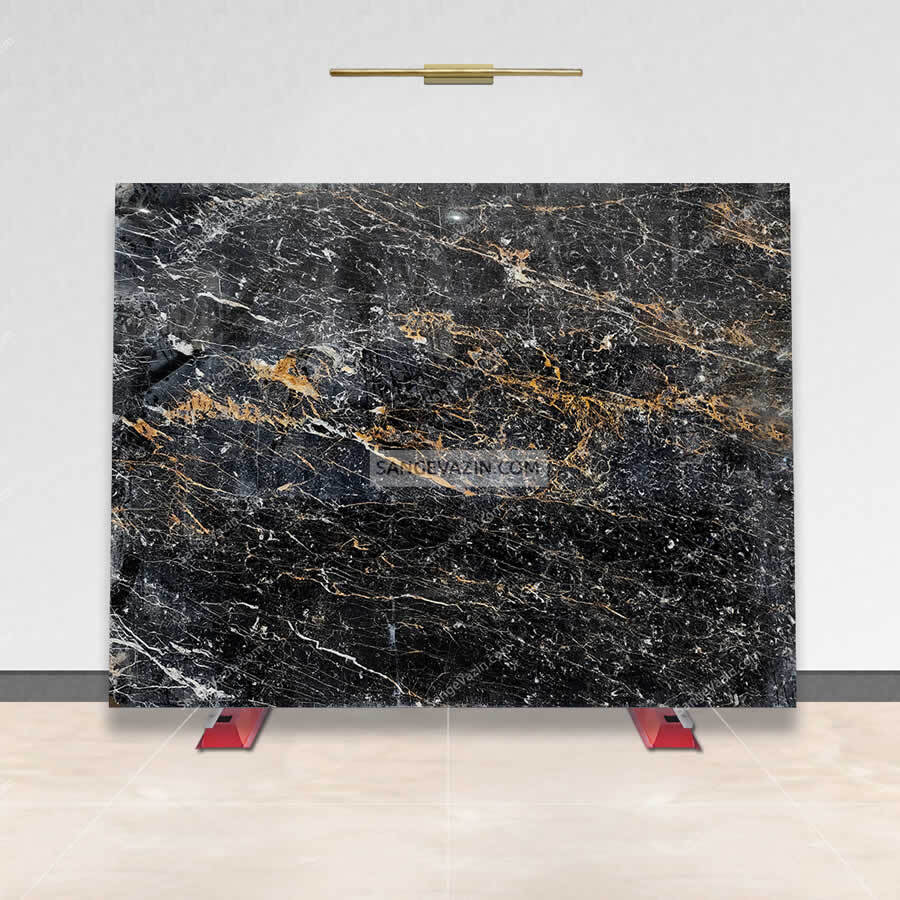
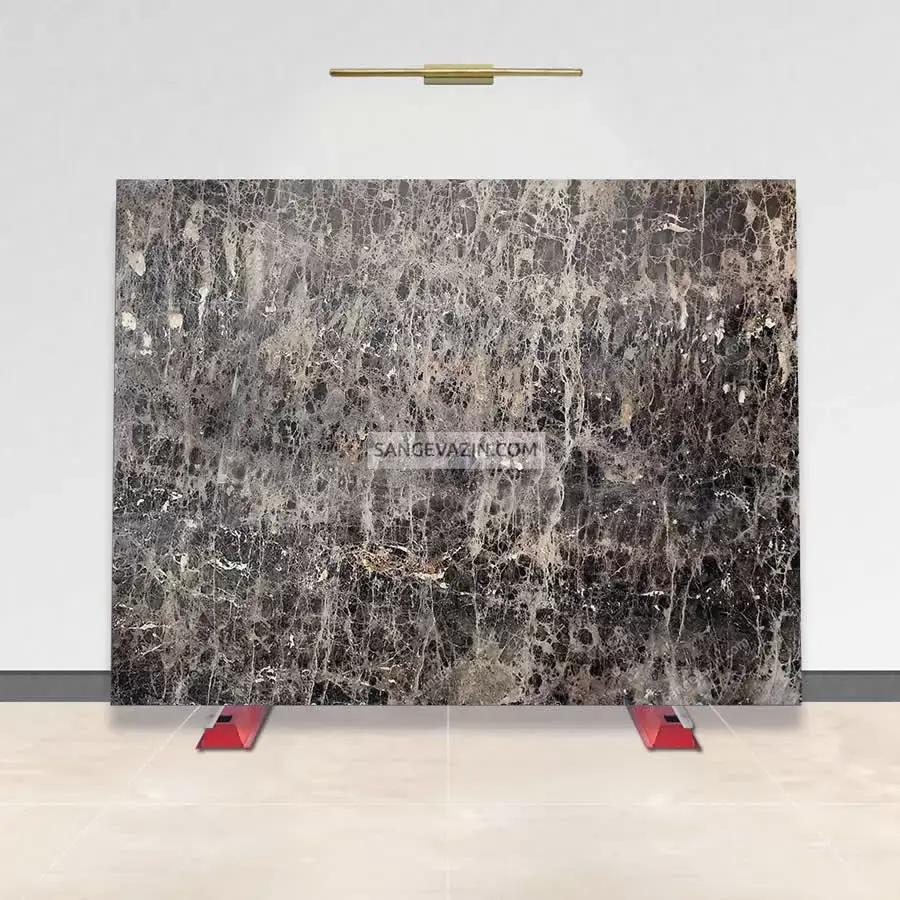
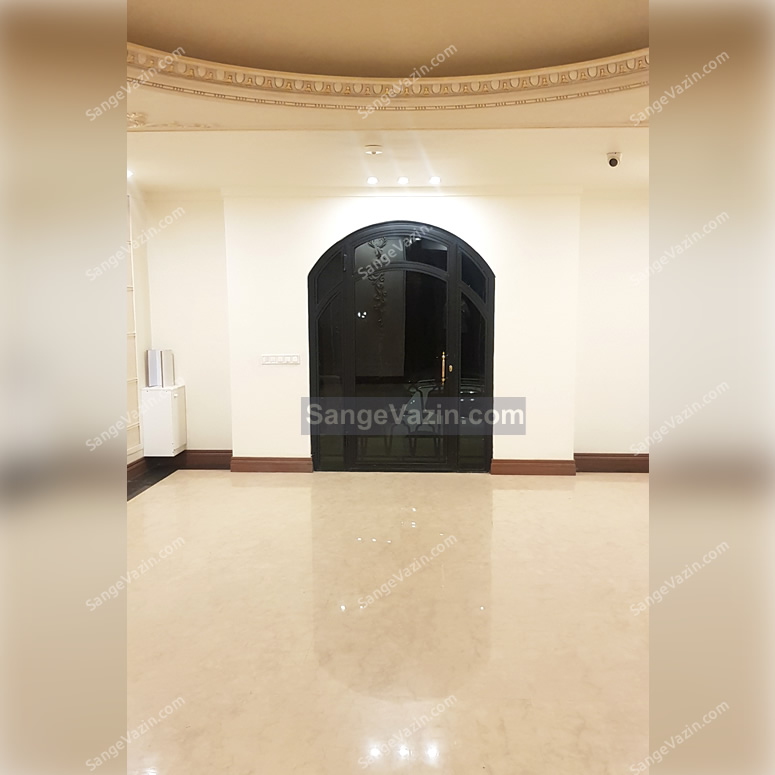
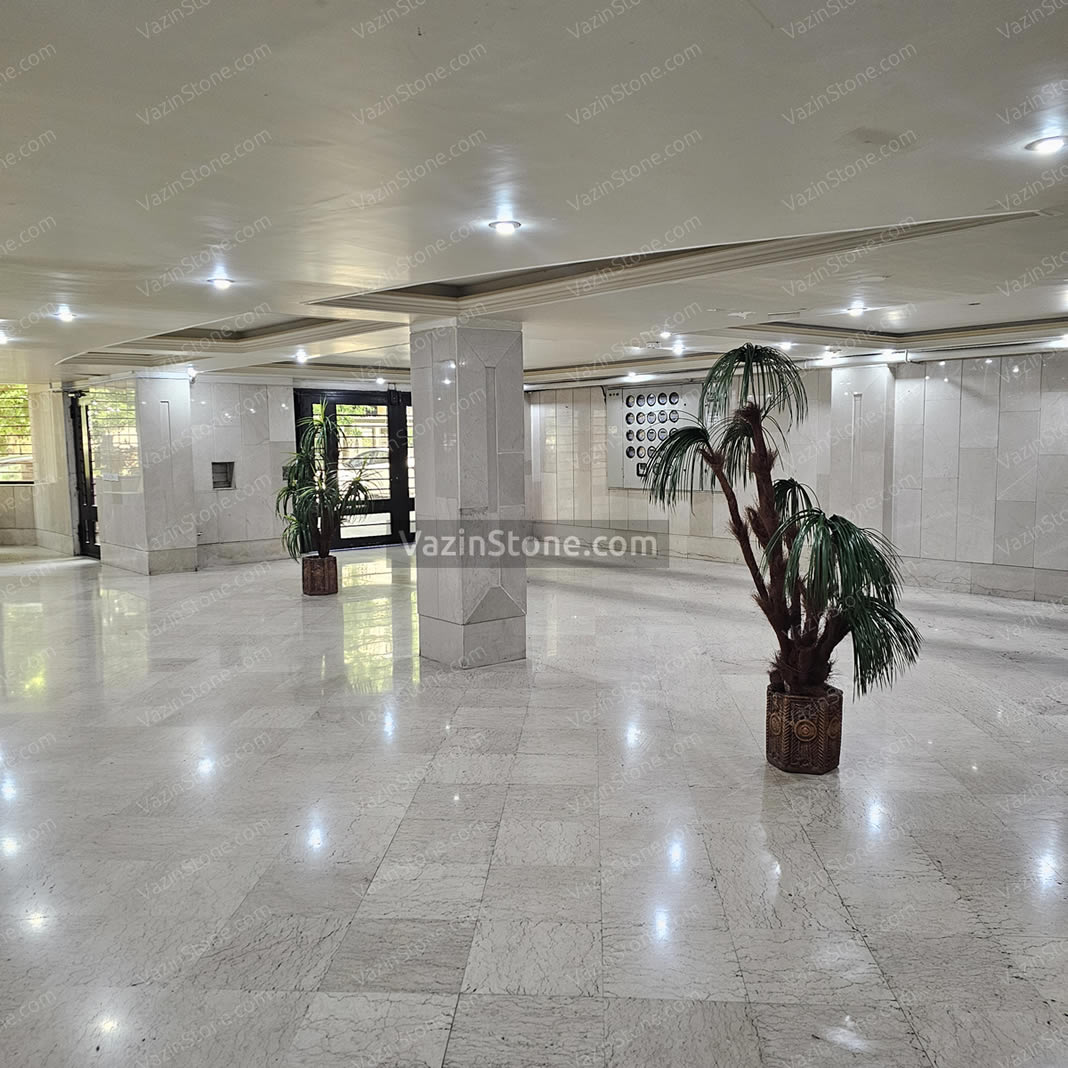
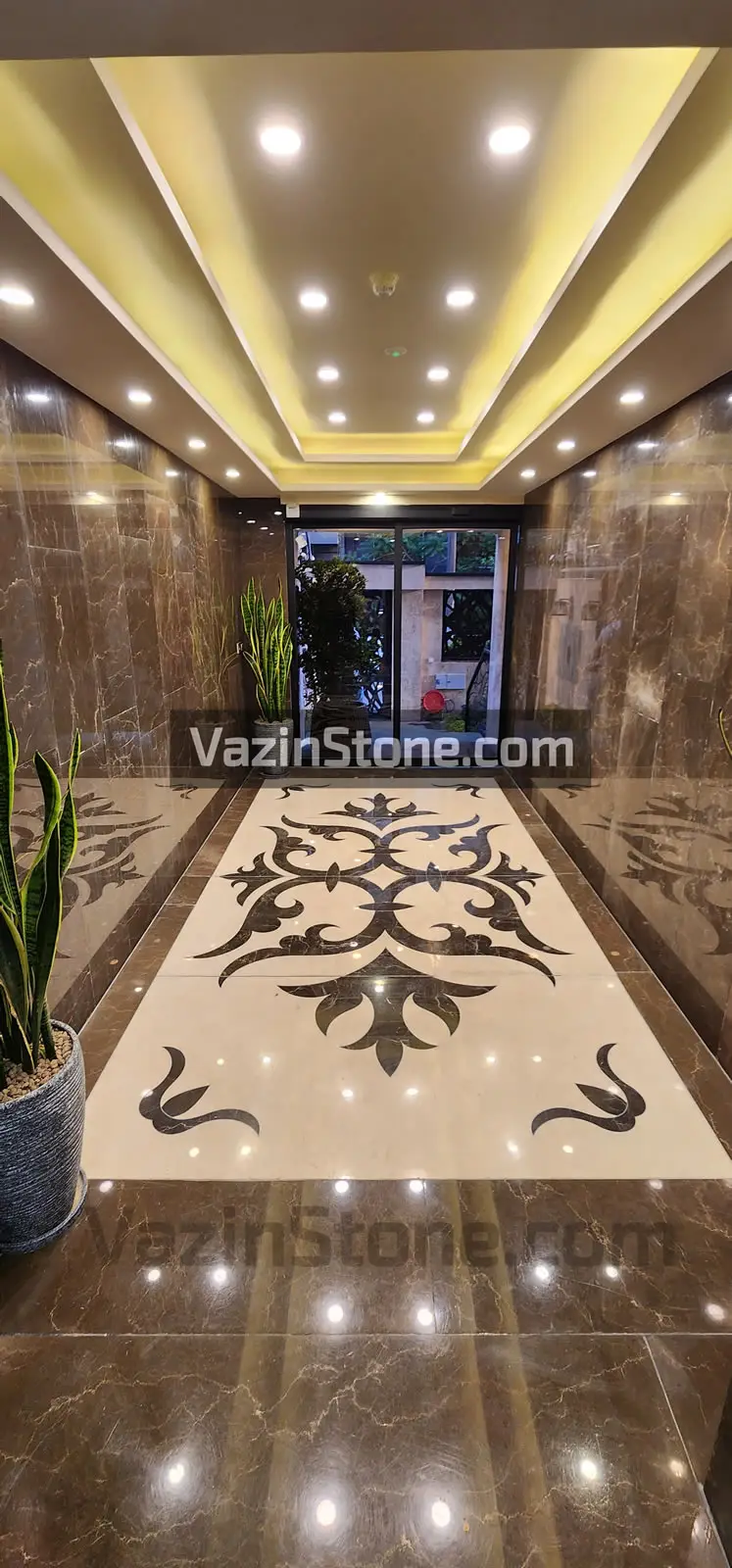
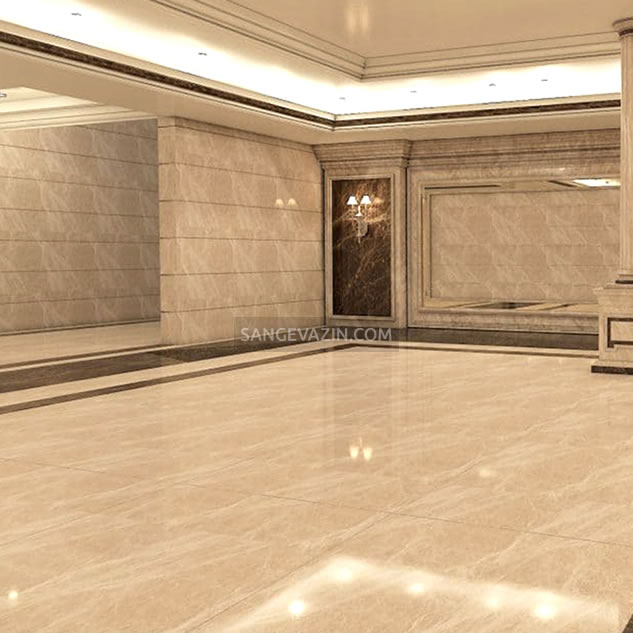
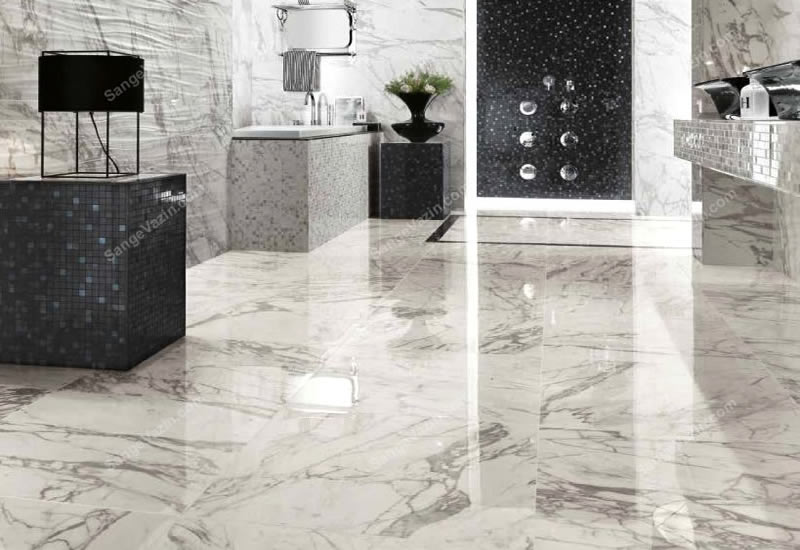
2/ Marble Floor Stones Gallery
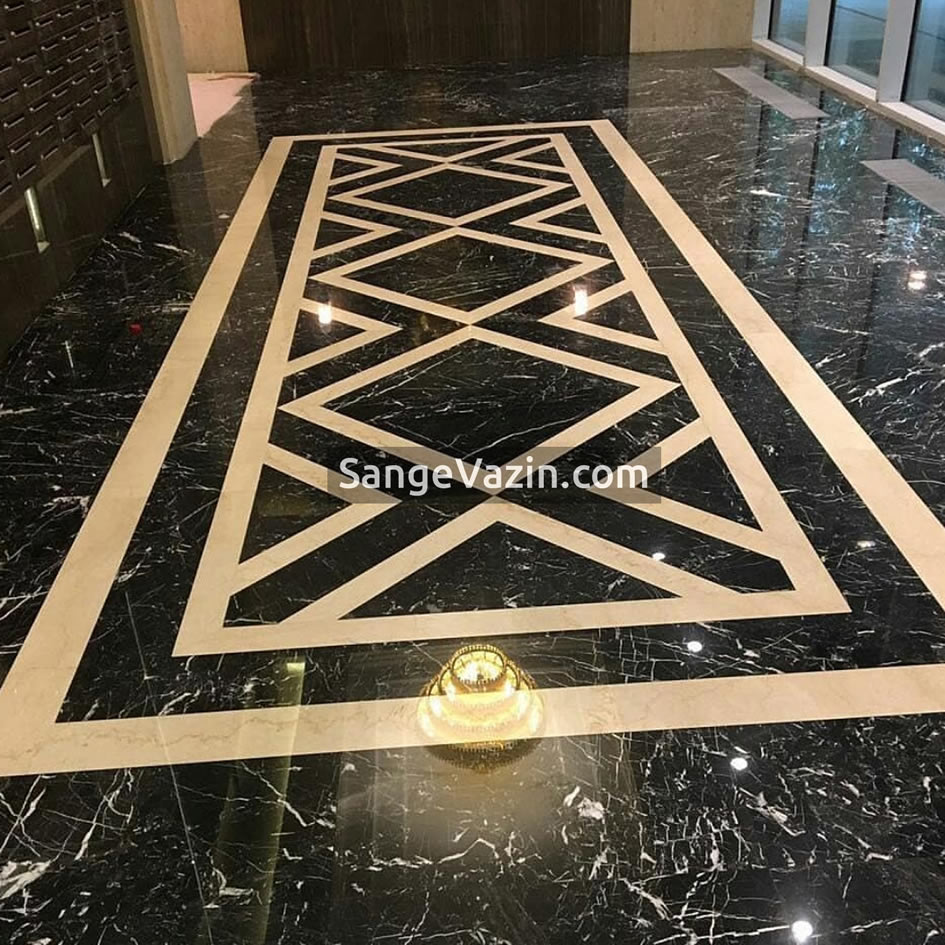
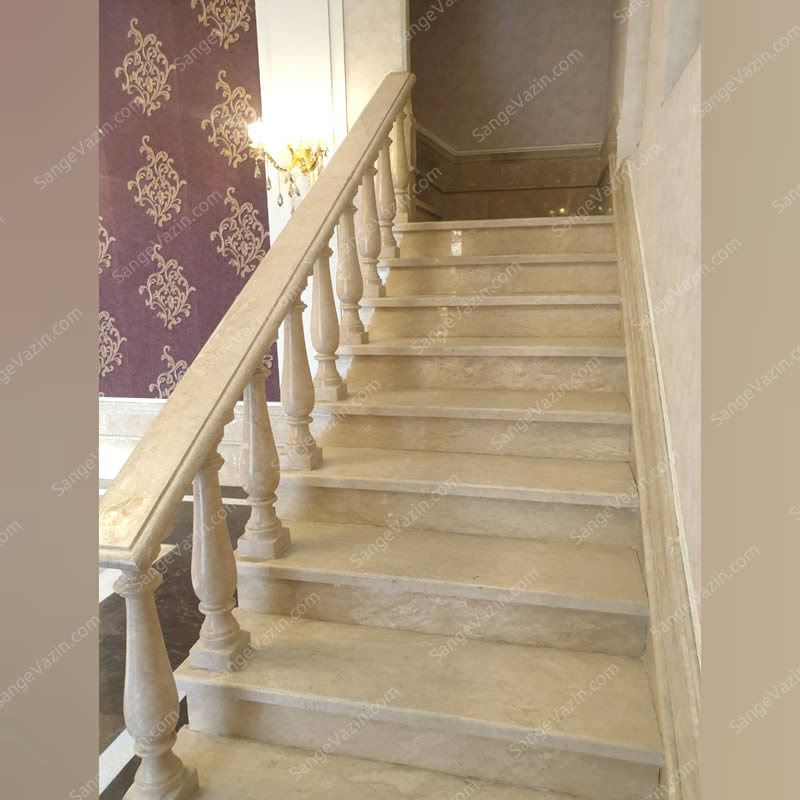
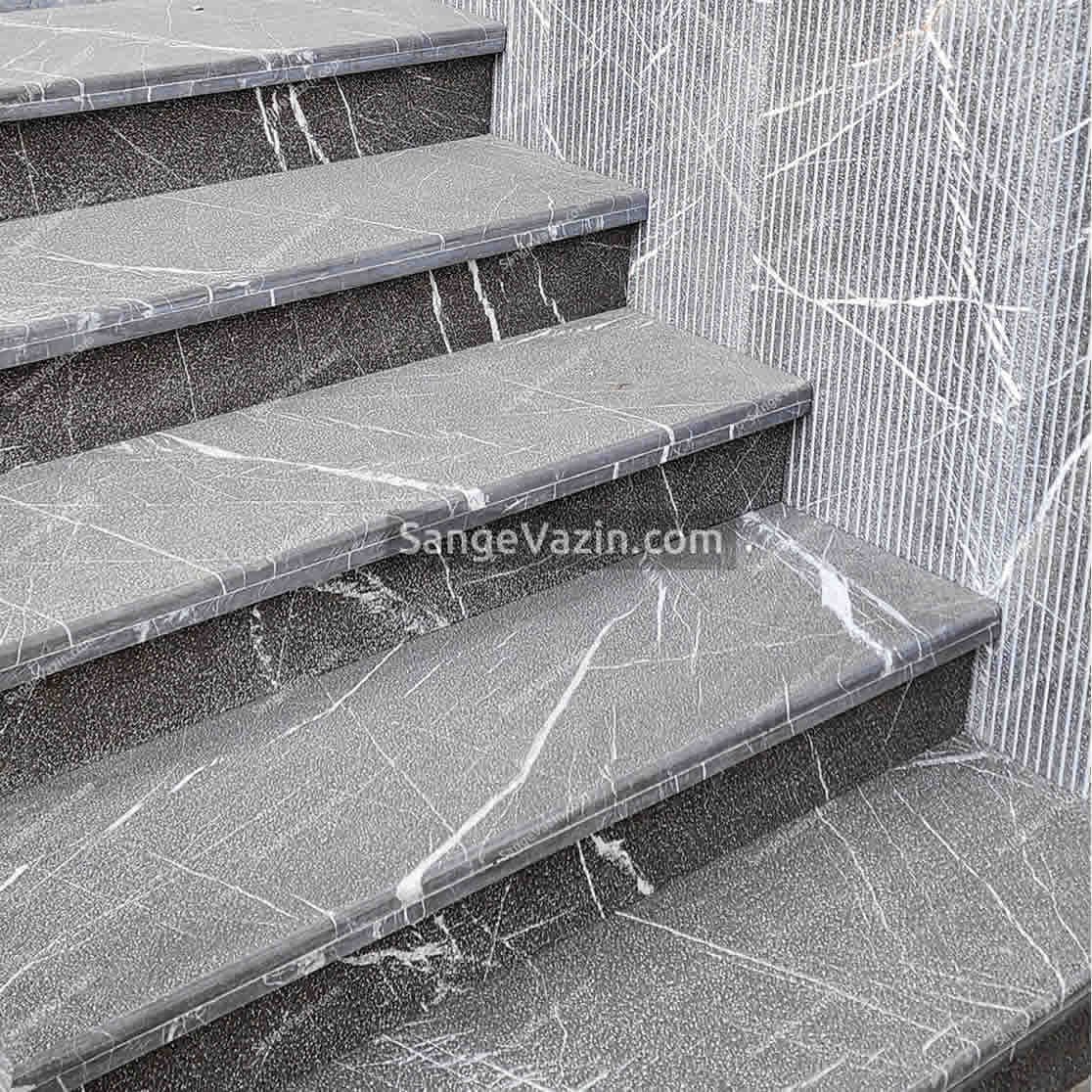
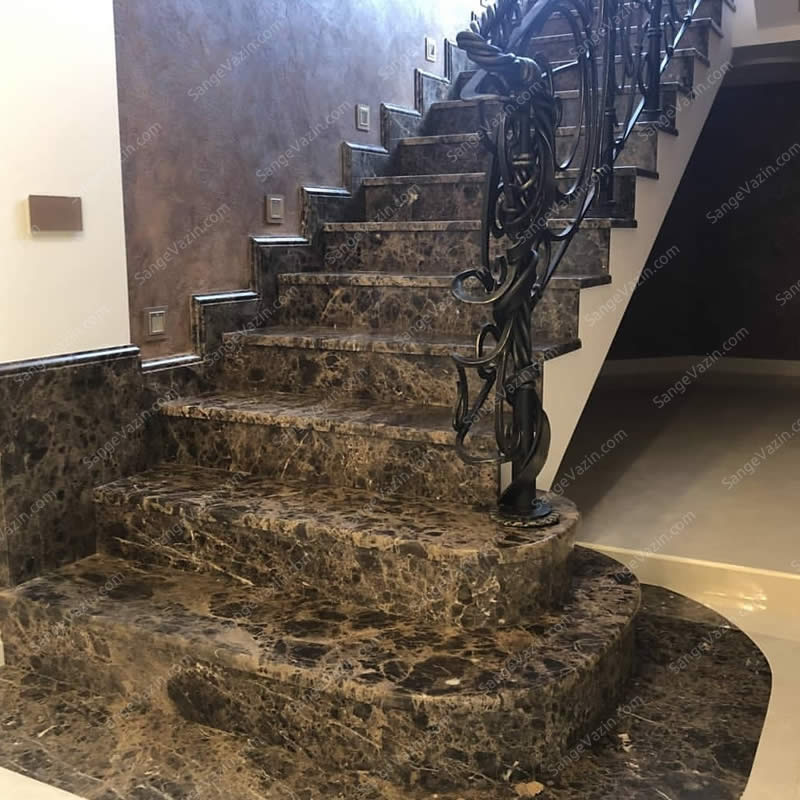
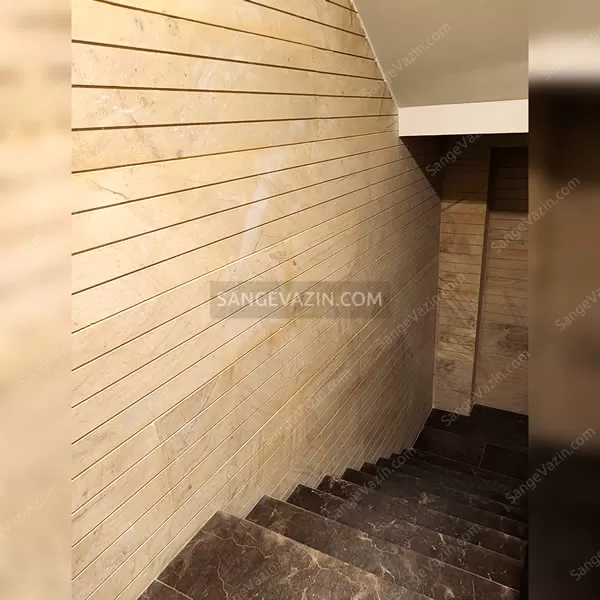
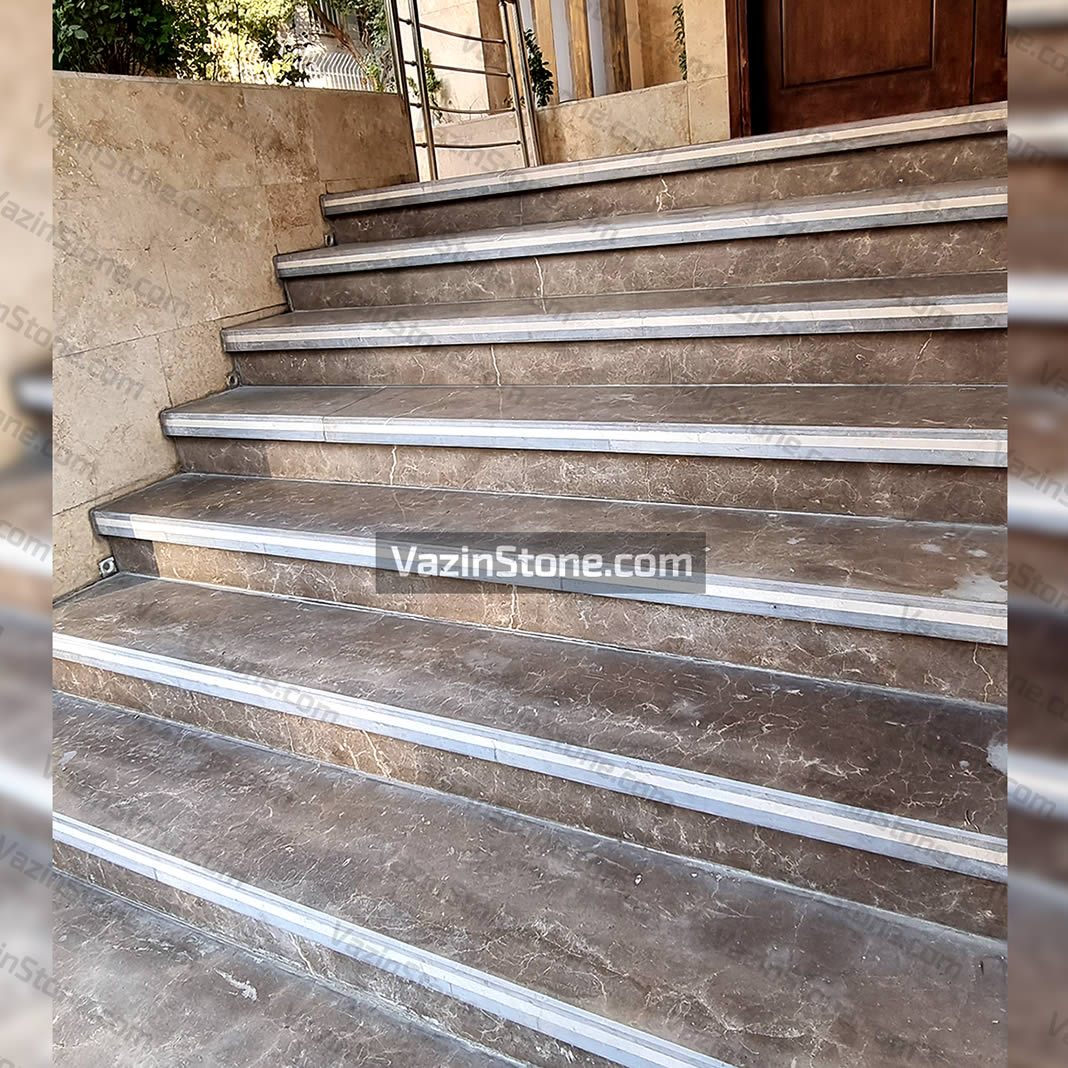
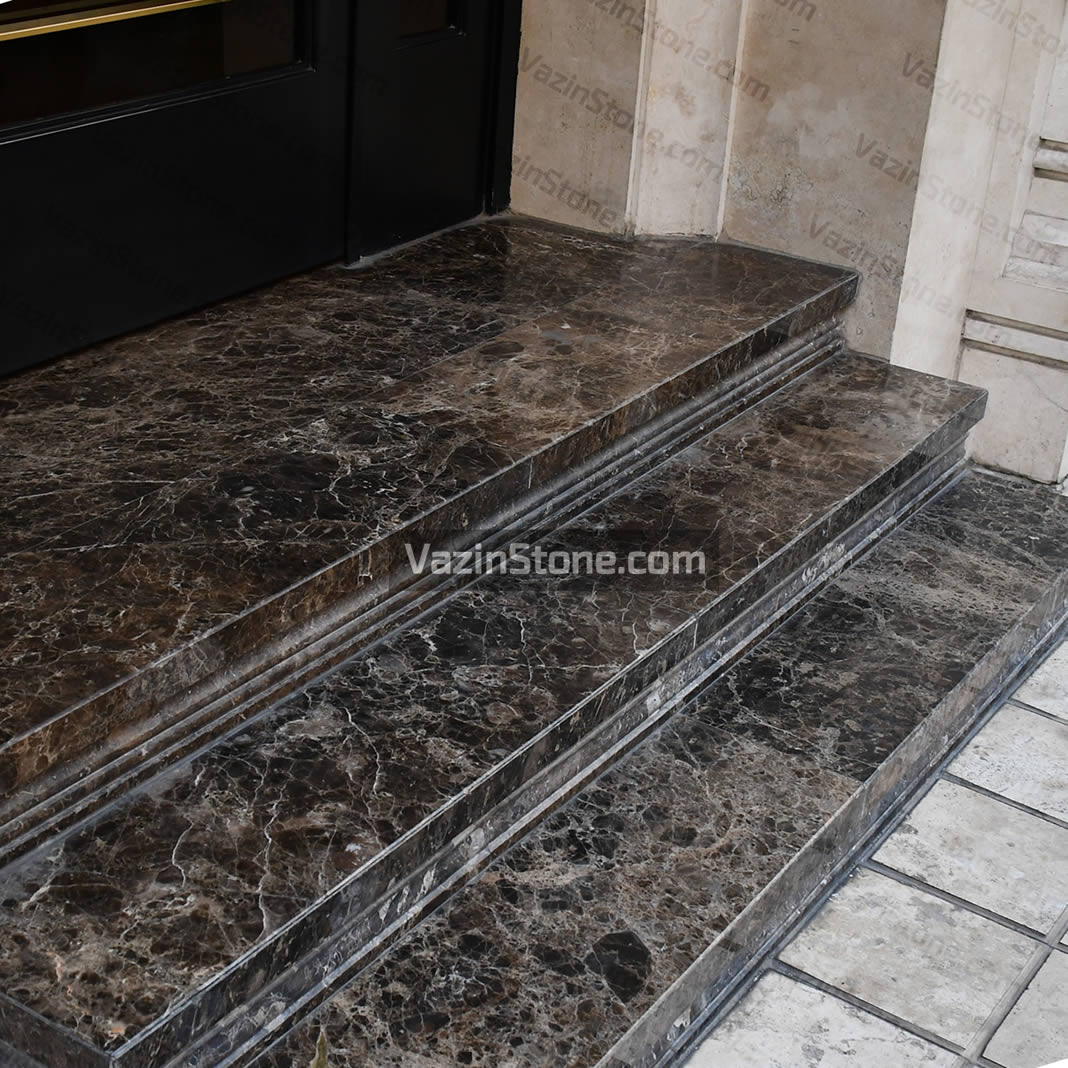
Suitable Marble Stones for Stairs
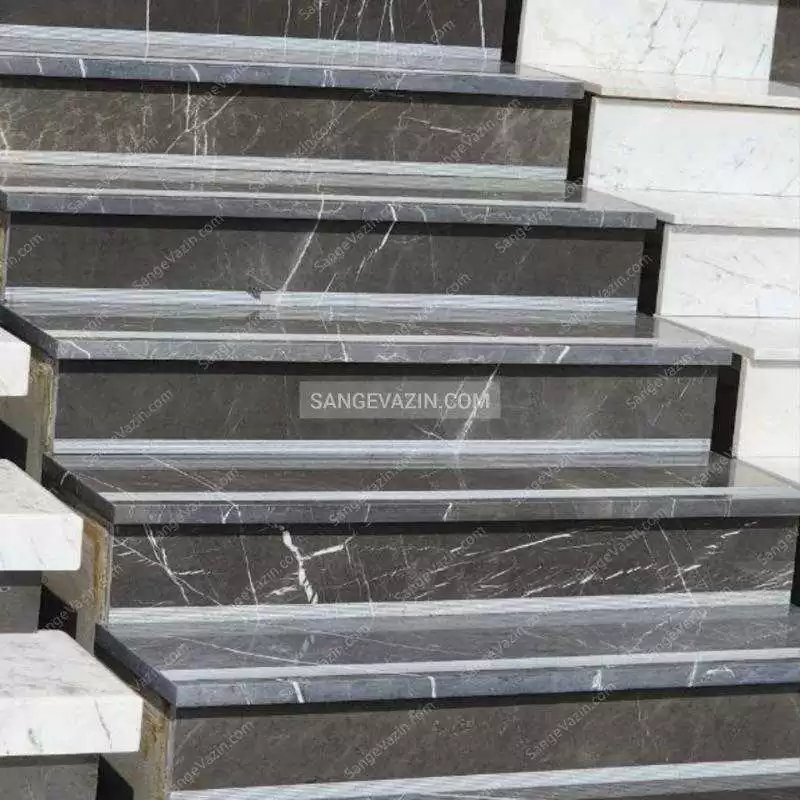
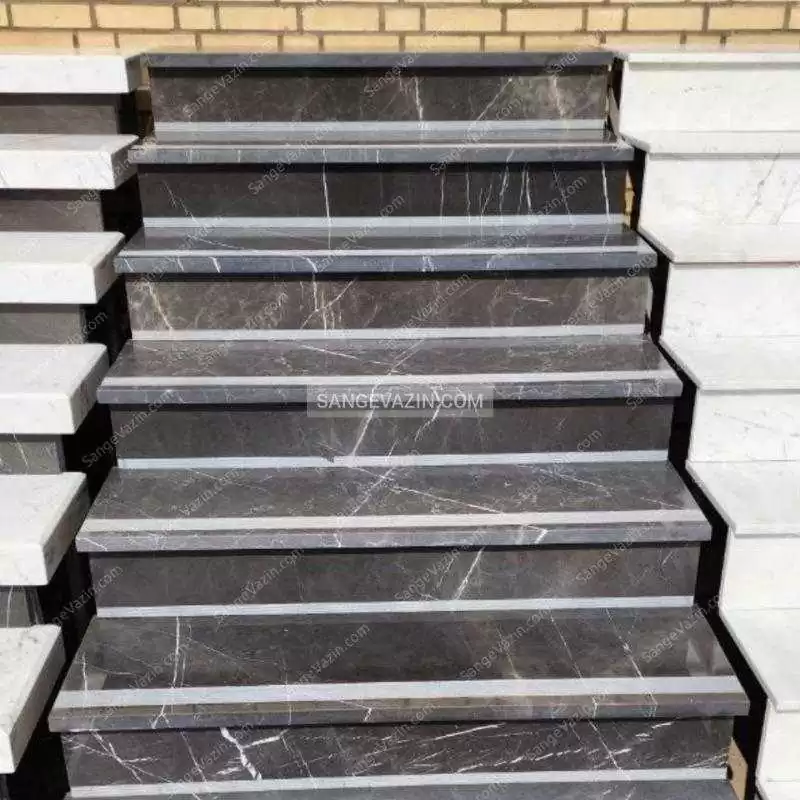
The following marble stones are among the best-selling and most popular options for use as stair stones:
- Crema marfil
- Harsin marble
- Abadeh marble
- Salsali marble
- Adavi marble
- Josheqan marble
- Shahyadi marble
- Khoy marble
- Mashhad marble
These stones are an ideal choice for residential and commercial staircases due to their beauty, high durability, and affordable price.
3/ Marble Stair Stones Gallery

Is Marble Suitable for Outdoor Applications?
Marble is not a practical option for outdoor use due to its thickness (less than 3 cm) and polished surface. This is due to the physical properties of marble, such as:
- Sensitivity to acid rain and weathering factors
- Discoloration when exposed to sunlight
- Low resistance to freeze–thaw cycles (in cold regions)
- Slipperiness when wet
For example, this stone can be seen in the facade of Tehran’s Azadi Tower, where, due to its unpolished surface and greater thickness, it has withstood outdoor conditions while retaining its appearance and color. Nevertheless, some marble varieties, due to their specific characteristics (such as Shahyadi Marble, used in Tehran’s Azadi Tower), may, under specific conditions and with careful technical considerations, be suitable for outdoor applications (such as historic facades).
Marble is commonly utilized for the interior of buildings as book-matched and four-matched slabs, wall cladding stones, stairs stones, floor stones, stone marquetries, and elevator door frames.
Quality of Marble Stones
Marble is frequently ranked as one of the highest-selling types of stone. Most limestones, as well as many types of marble, typically have poor resistance to weather conditions. Different types of marble have their unique features, including water absorption rate, abrasion resistance, flexibility, and porosity. Selecting the appropriate marble thickness is crucial for its application in constructing various components. If you choose incorrectly, you may observe cracks or fractures in the marble. For example, for high-traffic floors or stairs, thicknesses of 3 and 4 cm are essential to prevent breakage or cracking caused by pressure and impact, whereas for walls and low-traffic floors, a thickness of 1.8 to 2 cm (with or without epoxy mesh backing to enhance strength) is sufficient.
Marble in Stone Artifacts
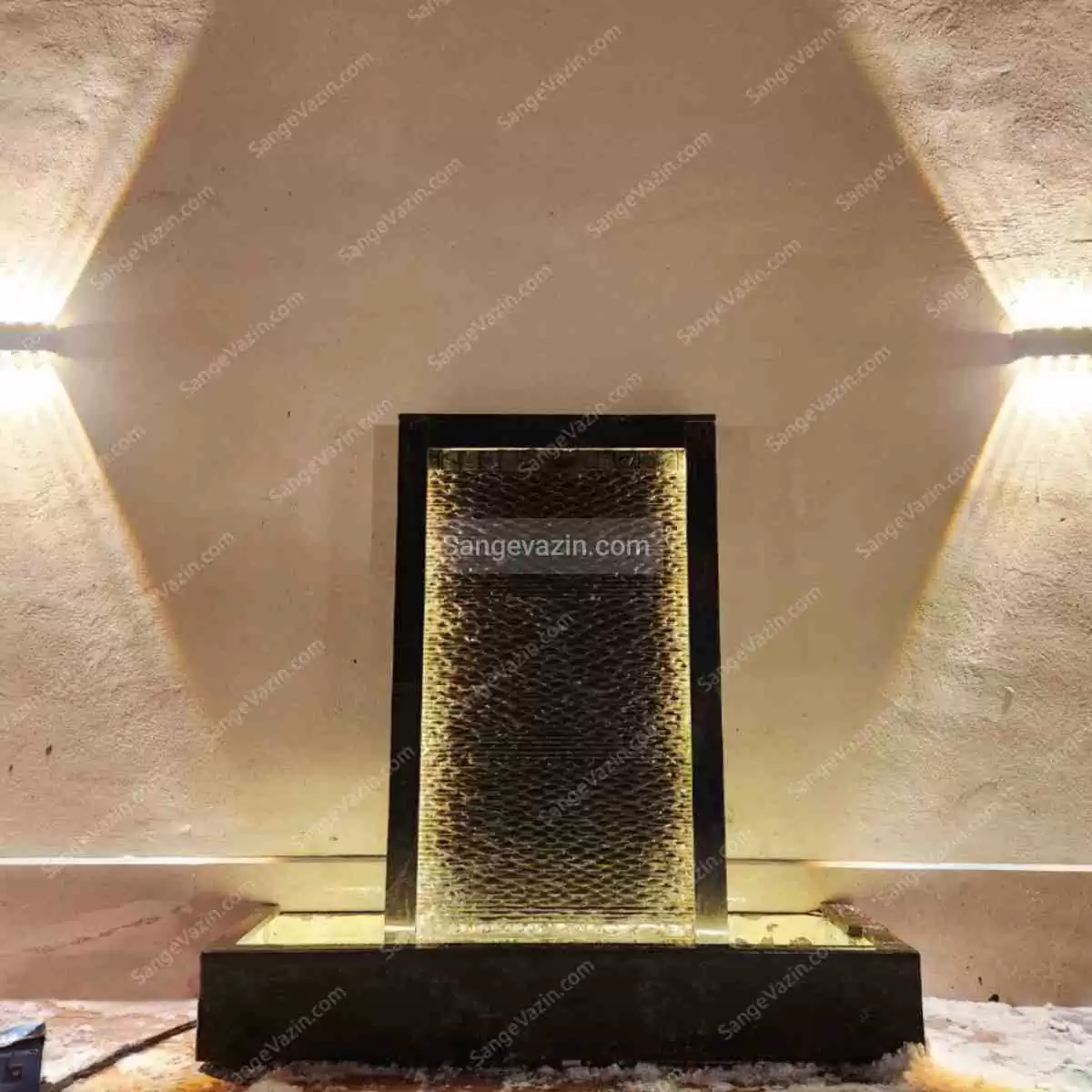
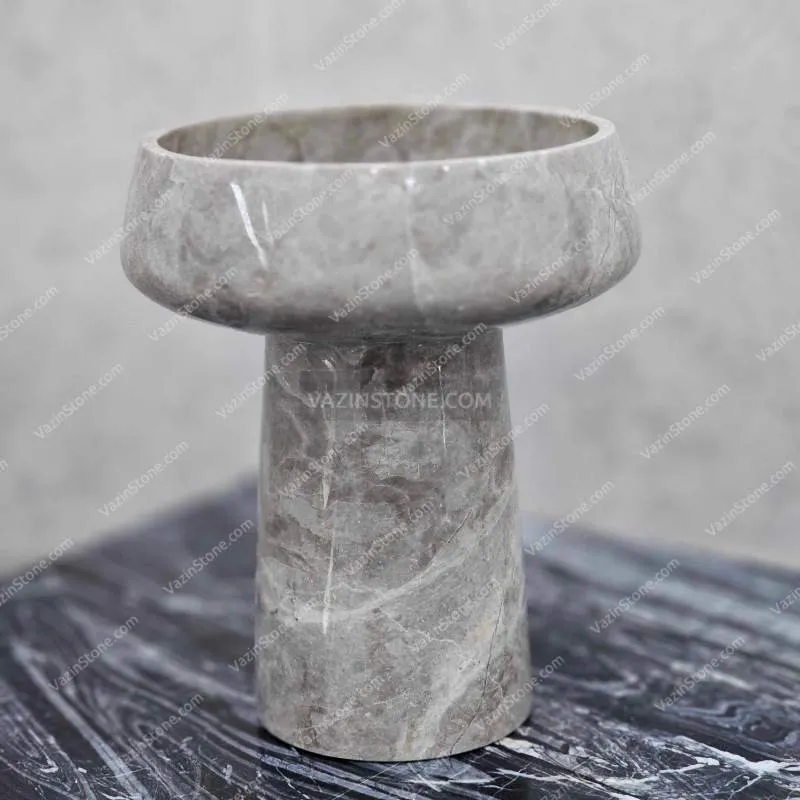
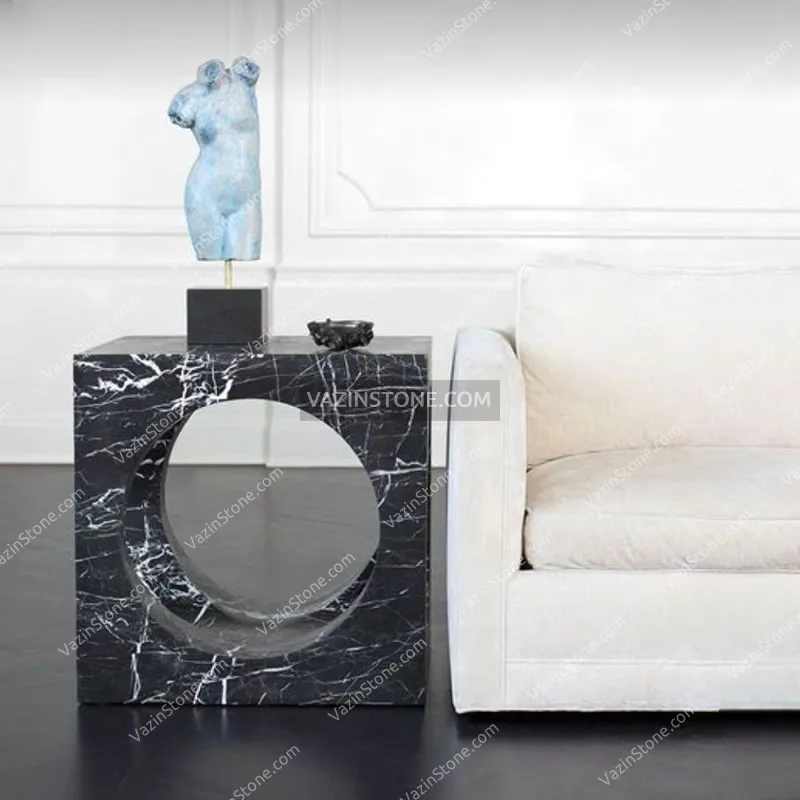
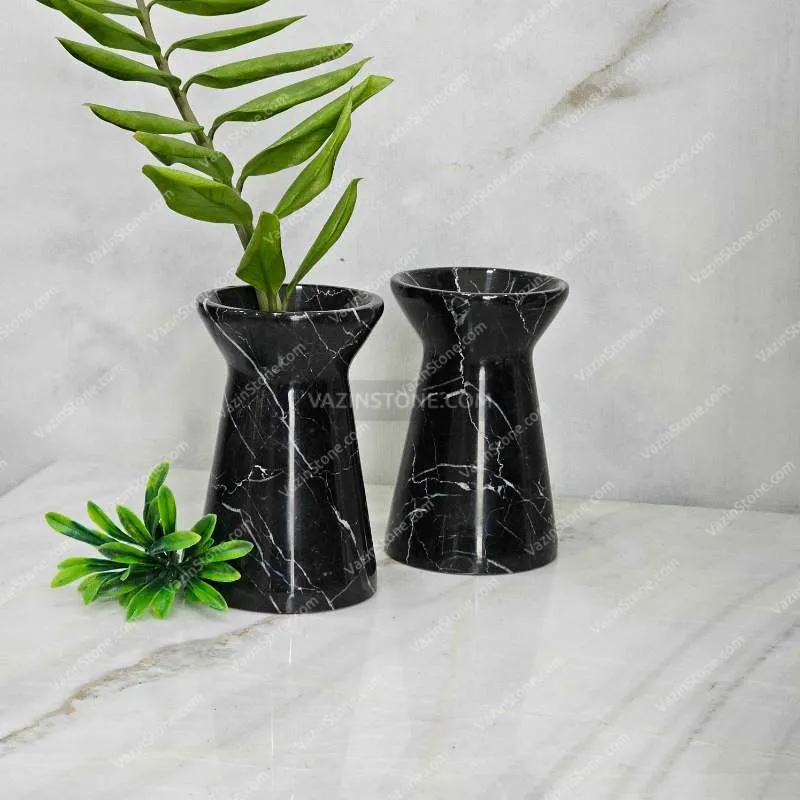
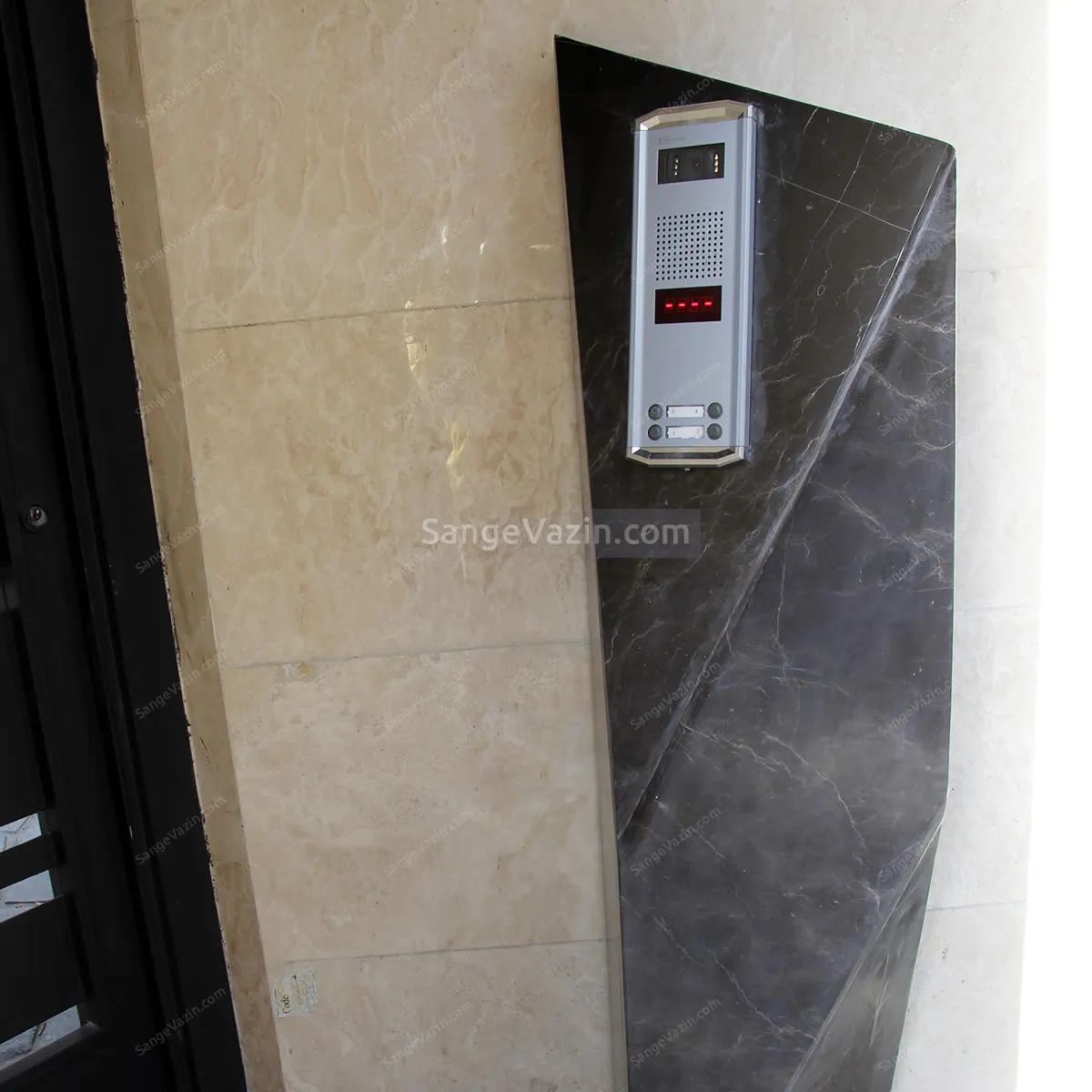
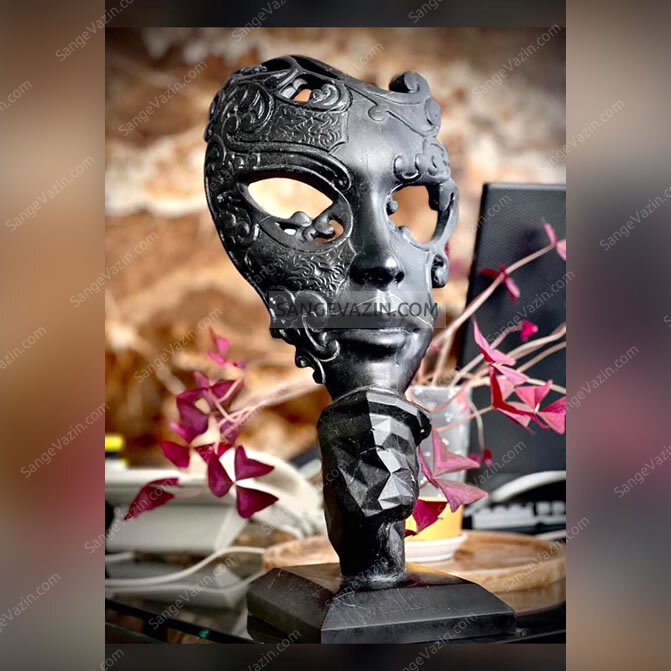
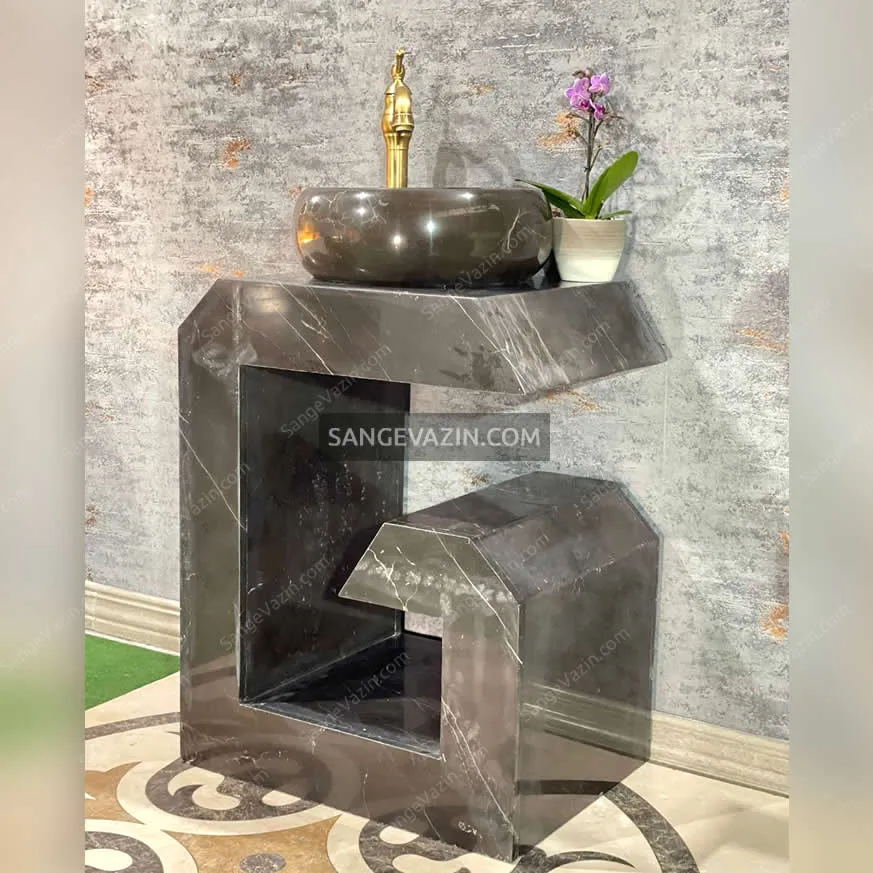
In the field of stone products, the beauty and versatility of marble reach their peak. This stone enables the creation of a wide range of artistic and functional items, including uniquely designed coffee tables and dining tables, delicate sculptures, stone flower pots, luxurious fireplaces, stone barbecues, video door phone stands, artistic stone carving walls, elevator flooring, kitchen countertops, and even beautiful stone fountains.
In the gallery below, you can view some of these stone products.

Types of Marble Stone
Marble, depending on the quarries and varieties extracted throughout Iran, as well as the diversity in its structure, patterns, and colors, can be categorized into the following types:
- Abadeh Marble
- Spider Marble
- Arsanjan Marble
- Josheqan Marble
- Jiroft Marble
- Dehbid Marble (Ara – Crema marfil – Zare)
- Simakan Marble
- Najafabad Marble
- Mahkam Marble
- Harsin Marble
- Khoy Marble
- Diplomat Marble
- Diamond Marble
- Chehrak Marble
- Anarak Marble
- Bajestan Marble
- Emperador Marble
- Khobsangan Marble
- Persian Silk Marble
- Gohareh Marble
- Maali Yazd Marble
- Nazarabad Marble
- Birjand Light Marble
- Gol Cheshmeh Mahallat Marble
- Gol Rose Marble
- Pol Pisheh Kordestan Marble
- Rose Bafgh Marble
There are a variety of marble stones in Iran, and the ones mentioned were just a few examples.
You can view Vazin Stone’s catalog of marble and other products by clicking the link below.
 Download Marble Catalog
How to Order Marble Stone
Paying attention to details and following the correct steps when ordering from Vazin Stone can ensure a satisfying experience. At Vazin Stone, we will stand by you every step of the way with expert guidance and assistance, from selecting the perfect stone to completing your order. The process for ordering stones is as follows:
Dimension calculation: Consult your stonemason to determine the precise or estimated size of the project.
Selection of stone: Select your preferred stone with the assistance of Vazin Stone consultants, considering color, quality, and price.
Order Placement and Proforma Invoice: After selecting the stone, a proforma invoice will be issued based on your request.
Completing the order and payment: Once the pre-invoice has been confirmed, the payment method and loading schedule will be decided. Full invoice payment is necessary to finalize and proceed with the final shipment.
Price of Marble Stone
It is impossible to determine the precise cost of marble stone because there are so many variables that influence it. In general, the pricing of stones is based on their aesthetic appeal, with more beautiful stones typically commanding higher prices. This beauty can be attributed to the absence of impurities in the stone’s texture or unique patterns within the stone
At the top of this page, as well as through the links below, you can sort marble stones by price, from highest to lowest and lowest to highest. The price range (Vazin Stone) for marble starts at $5 per square meter and varies up to approximately $84, depending on factors such as the type and size of the stone. (Last updated: May 2026)
Important Tips for Buying Marble Stone
It is advisable to consider the following points before purchasing marble stone:
- Ensuring standard usage for the chosen stone type.
- Pay attention to the quality of the cutting and ensure that the stone edges are free from chips.
- Ensure the pieces are uniform and visually consistent during loading and unloading.
- Confirm the final cost of the stone at the delivery location.
What is marble stone?
Marble is a metamorphosed form of limestone known for its nearly non-porous texture and distinctive, elegant appearance. Thanks to its wide range of colors and natural patterns, it is extensively used in construction as well as in the production of various stone products.
What are the types of colors and patterns of marble stone?
Marble stone is found in a wide range of colors, including cream, white, pink, green, brick red, black, gray, nescafé, and brown. Its patterns are also diverse and include distinct lines and veins, wave and non-wave patterns, and a cotton flower pattern.
How much does marble cost?
The price range (Vazin stone) of marble stone per square meter starts from $5 and varies depending on factors such as the type of stone and its size, reaching up to about $84. (Last updated: May 2026)
What are the main advantages of marble?
Its main advantages include its aesthetic appeal and wide variety of colors and patterns, its suitability for interior applications (floors and walls), a relatively more uniform surface compared to travertine, and its affordable price.
What are the disadvantages of marble?
Some of its disadvantages include sensitivity to moisture and the potential for surface corrosion on polished finishes, inadequate scratch resistance in some types (particularly dark and polished varieties), the possibility of frost damage and delamination of outer layers, and poor resistance to acidic conditions (such as acid rain and cleaning agents).
For which parts of a building is marble suitable?
Due to its beauty, variety, and high polishability, marble is an excellent choice for interior building spaces such as walls, floors, and stairs. It is also used in applications such as book-matched and four-matched slabs, stone marquetry, and elevator door frame stones.
Is marble suitable for outdoor spaces?
Generally, marble with a polished surface and low thickness is not recommended for outdoor use. This is due to its sensitivity to acid rain, discoloration when exposed to sunlight, low resistance to freeze–thaw cycles, and its slippery surface when wet. However, under specific conditions and with careful technical considerations (such as using unpolished finishes and higher thickness), some types of marble may be suitable for exterior applications.