Stone efflorescence
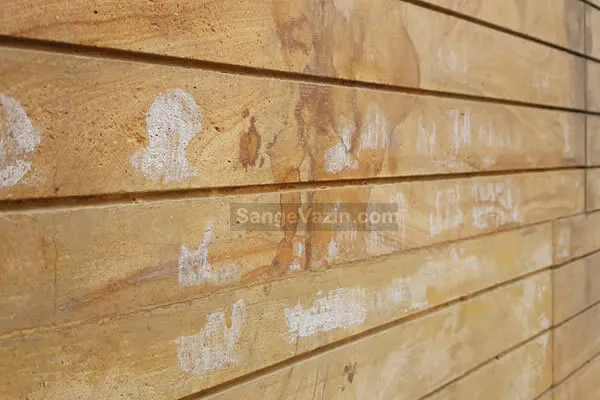
The accumulation of salts and mineral deposits resulting from the evaporation of water from the mortar behind the stone and the composition of the stone itself causes efflorescence and white deposits to appear on its surface. Stone efflorescence is a completely natural phenomenon because natural stone contains compounds such as sodium sulfate and calcium sulfate. On the other hand, the type of mortar used behind the stone is also highly important.
What you will read in this article:
Causes of Stone Efflorescence
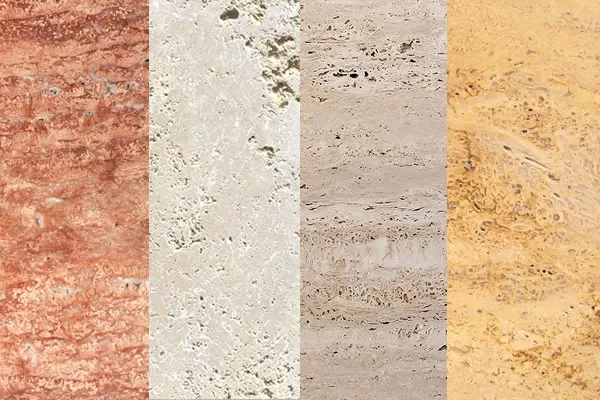
Efflorescence tends to occur more frequently in areas with high humidity. This is because salt and minerals are transported more easily to the surface of stones due to moisture. Conversely, when the density of stones is lower, the saline solution will reach the stone’s surface more readily and evaporate more quickly. To prevent this from happening, highly porous travertine stones are often treated with resin and epoxy to make them resistant to penetration.
So generally, the reasons for efflorescence can be summarized in the following cases:
- The presence of minerals and salts in the mortar and stone composition.
- The humidity of the area.
- A low density of stone
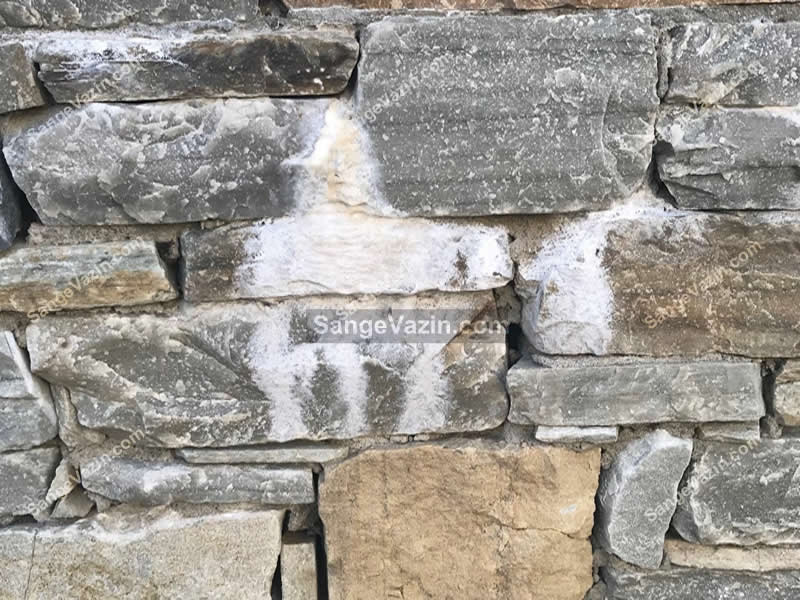
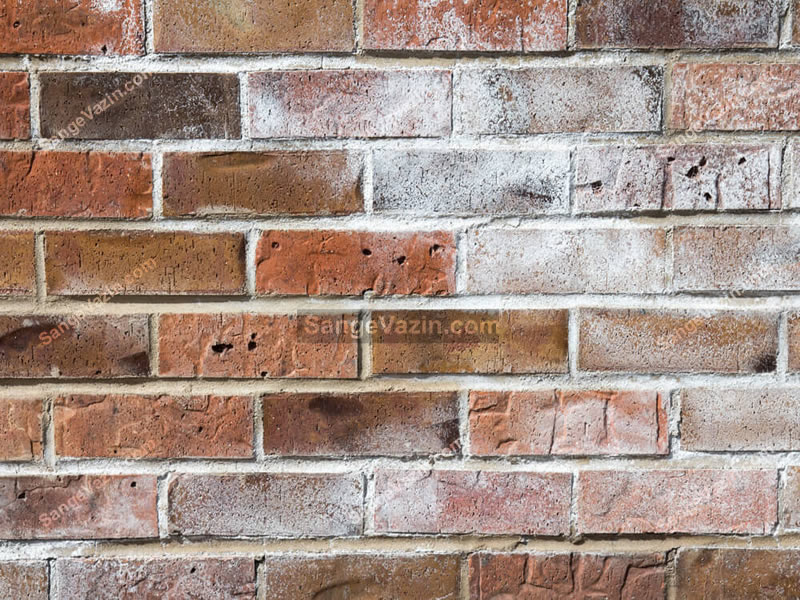
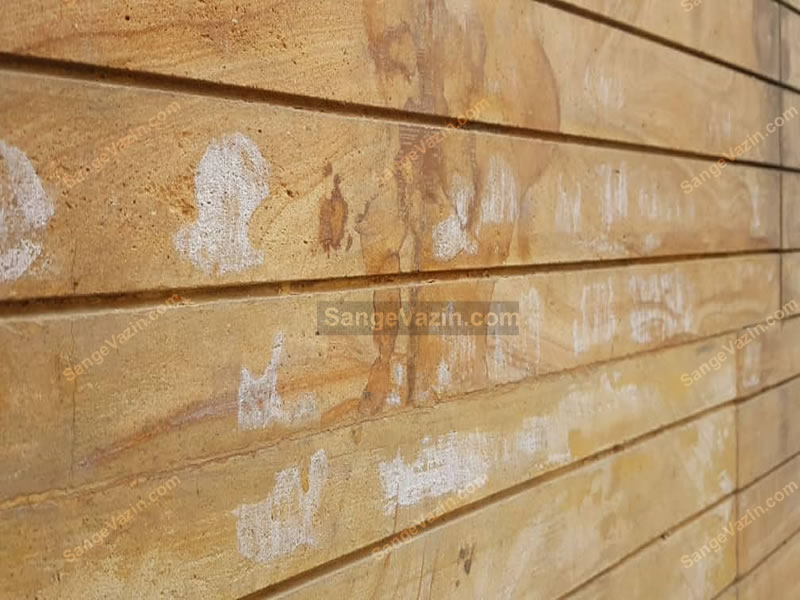
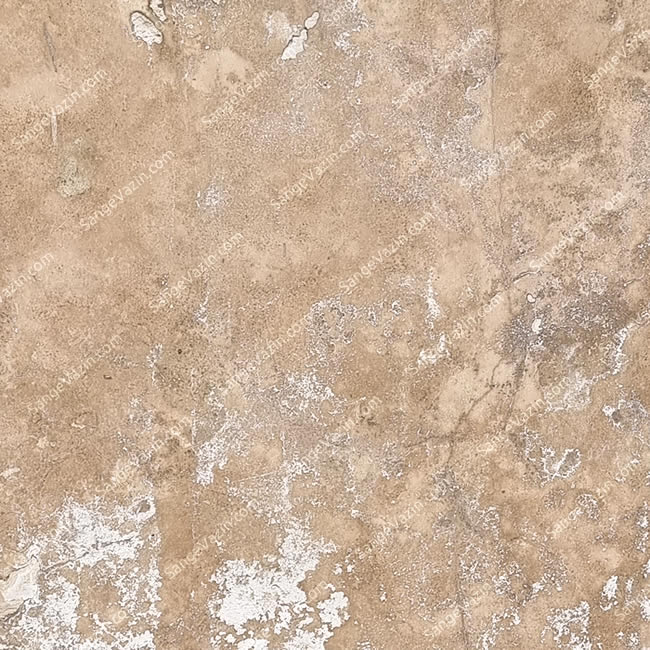
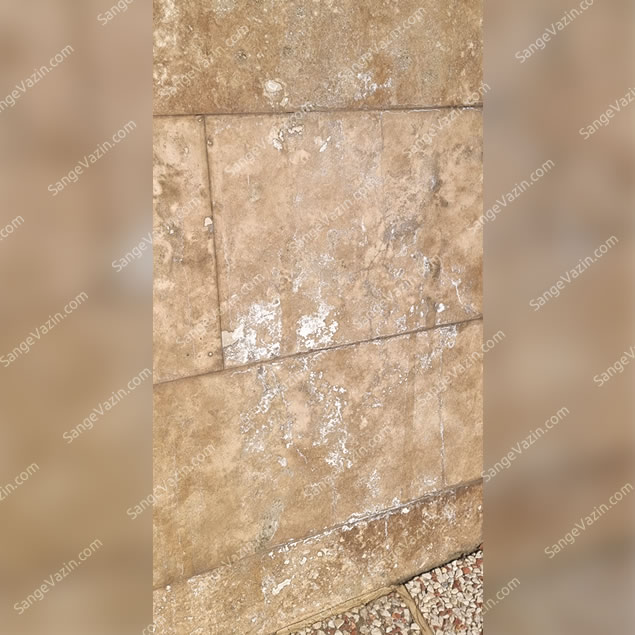
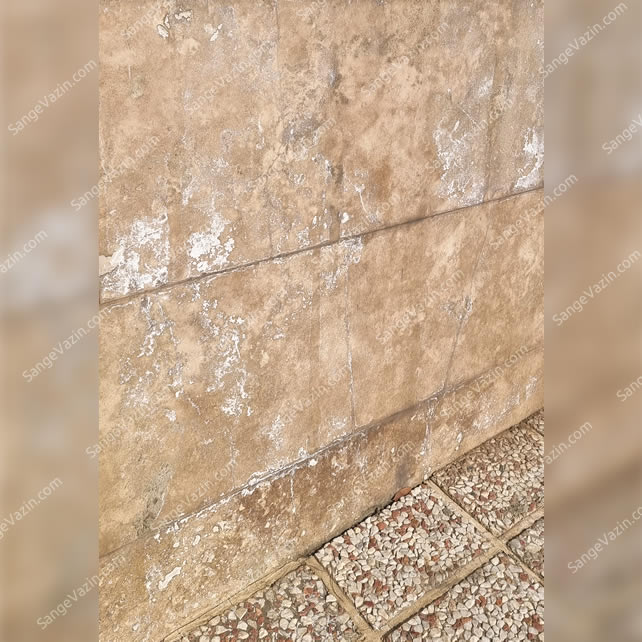
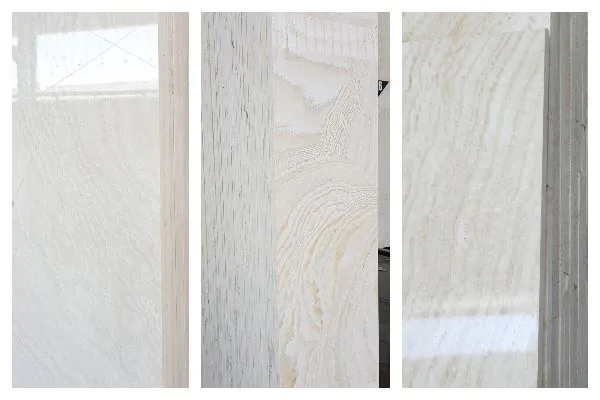
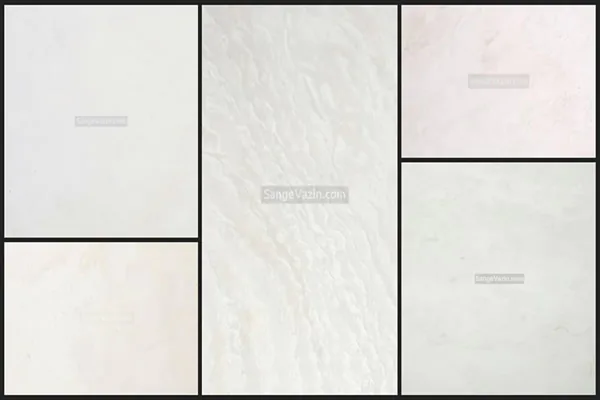
In the gallery below, you can see some examples of efflorescence on the surface of travertine stones that have low quality.
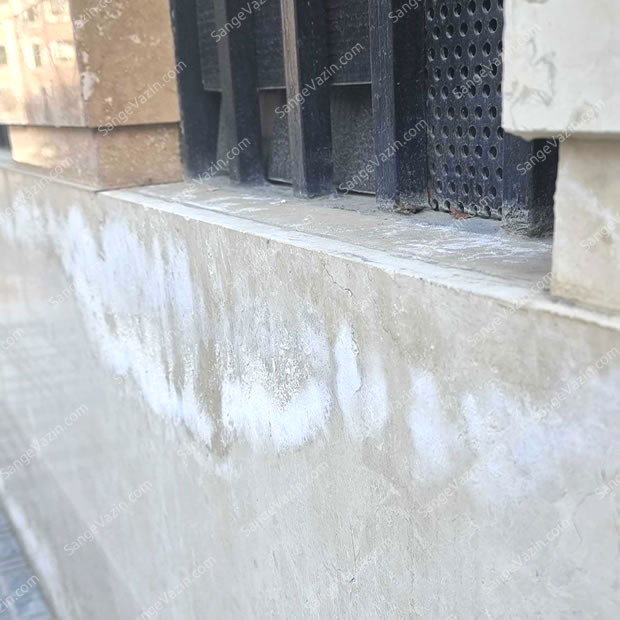
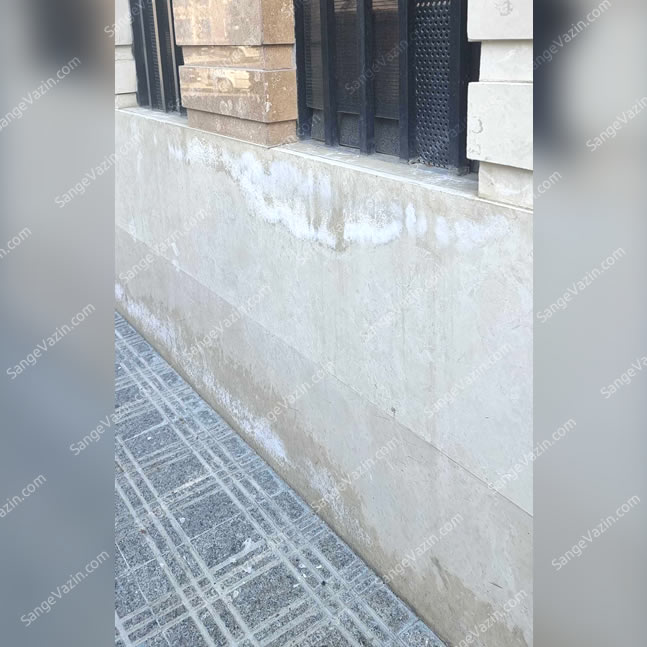
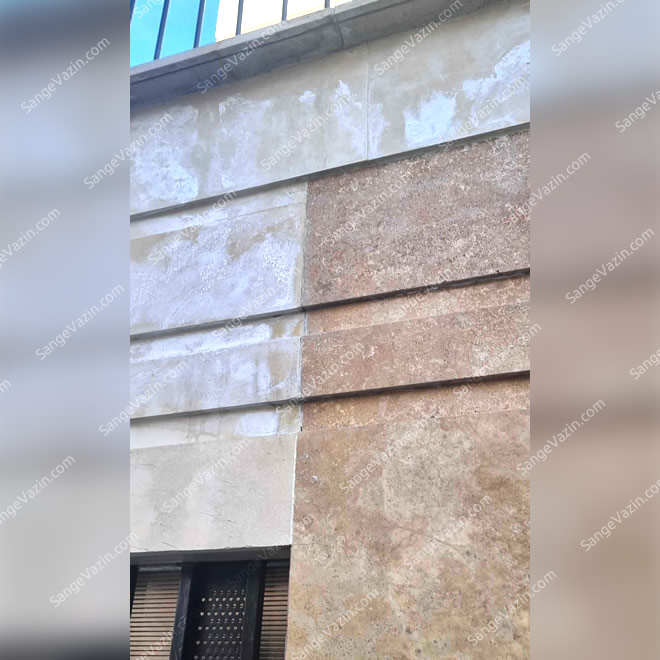
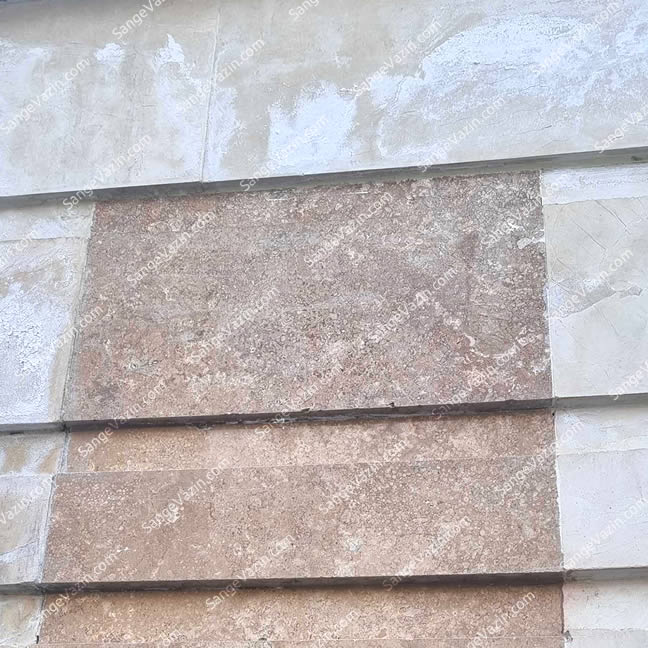
Prevention & Removal of Stone Efflorescence
We briefly mention several ways of preventing and removing efflorescence:
- Utilizing washed sand with lower levels of salt and sulfate compounds.
- Using a mechanical method, such as installing stone on the facade with screws, plates, and pins.
- Applying resin and epoxy to stone can make it glossy and impermeable, but not completely impenetrable.
- Using a rough cloth or sandpaper to abrade the stone’s surface is not recommended, as it may cause scratches.
- Cleaning with water and a brush is only a temporary solution, as the issue may reappear once the surface dries.
- Nano products with hydrophobic properties can greatly minimize water absorption and function as stone anti-efflorescence agents.
- To remove efflorescence, dilute hydrochloric acid with water and apply it to the stone. Use hydrophobic materials for a lasting solution.
What is stone efflorescence?
The deposition of salts and mineral compounds resulting from the evaporation of water from the mortar behind the stone, along with compounds present in the stone itself, causes efflorescence and white deposits to appear on its surface.
What causes stone efflorescence?
Moisture
The presence of mineral salts and salt-bearing compounds
Low stone densityWhat are the methods for preventing efflorescence on building stone?
1/ Use washed sand or sand with low levels of salt and sulfate compounds
2/Using a mechanical and dry installation method, in which the stone is secured to the façade using screws, plates, and pins.
3/ Applying resin and epoxy to the stone surface, which not only makes it impermeable but also enhances its gloss and aesthetic appeal.What are the methods for removing efflorescence from stone?
1/ Rubbing the stone surface with a rough cloth or sandpaper (not recommended, as it may cause scratches).
2/ Washing the stone with water and a brush, although this is only a temporary solution.
3/ Using water-repellent nano products.
4/ Using muriatic acid, which is the most effective solution for removing efflorescence from stone.
Publish on:
June 10, 2023
Updated on:
August 11, 2026