Travertine Stone
Travertine stone has become a popular choice for building facades and wall cladding due to its various characteristics and textures. Travertine is also widely used in the production of stone products such as tables, fountains, accessories, stone dishes, sculptures, and more. In the product list below, you can find the latest price list, and in the description at the bottom of the page you can learn more about this stone.
Showing the single result
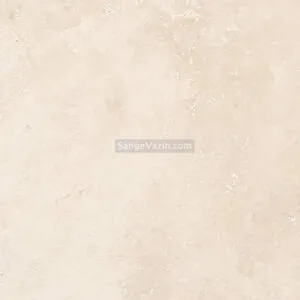
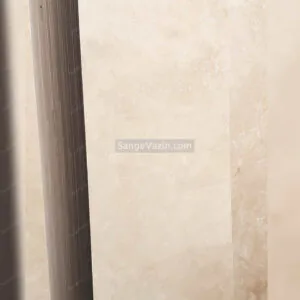
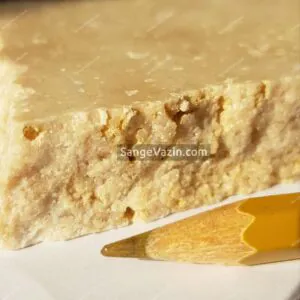
As for the types and prices of travertine, read the topics below:
Table of contents:
- Texture & Structure Of Travertine
- Travertine Compositions
- Travertine Appearance and Color
- Travertine Stone History
- Most Popular Types of Travertine Stone
- High-Quality Travertine Stone
- Average Quality Travertine Stones
- Factors Affecting Travertine Stone Processing
- Types of travertine Stone Processing
- Usage Of Different Travertine Stones
- Advantages Of Travertine
- Disadvantages Of Travertine
- Price Of Travertine
- Factors Affecting Travertine Pricing
- How To Order Travertine
- Important Points In Buying Travertine
- Travertine Depot in Tehran, Karaj, Isfahan
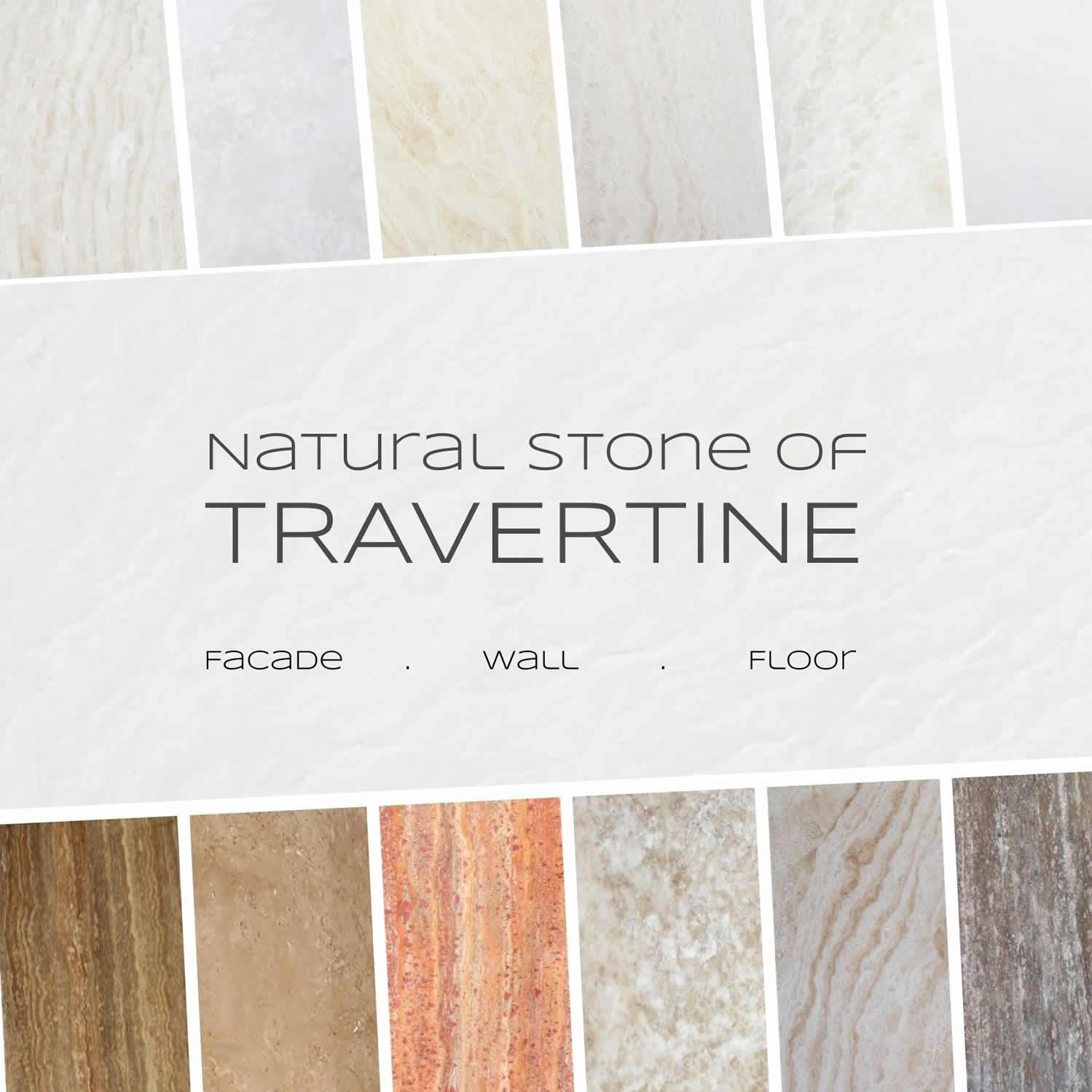
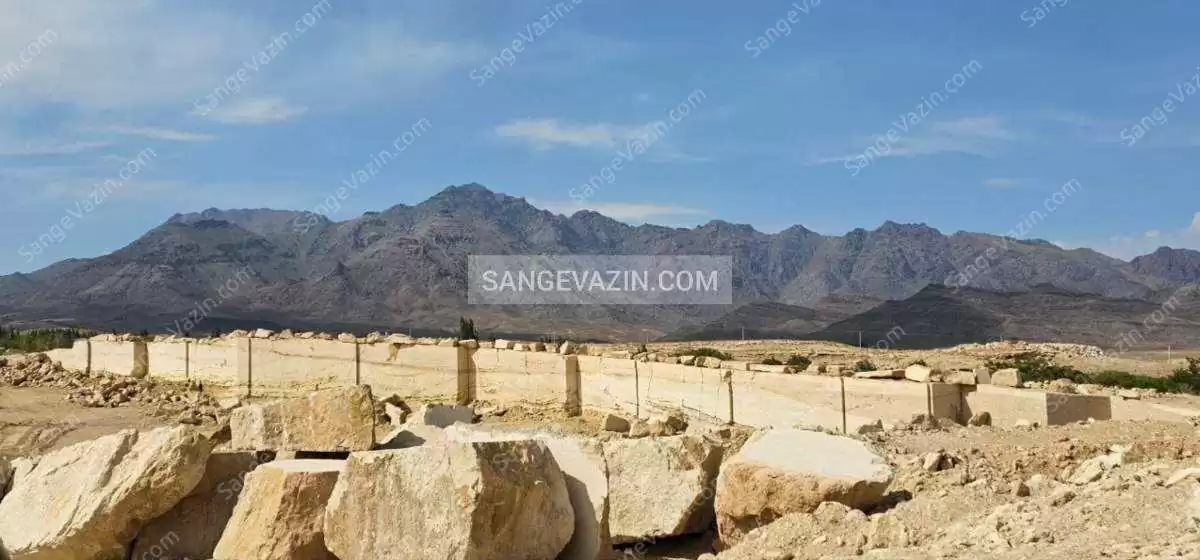
What is travertine stone? Travertine is one of the sedimentary rocks composed of sediments from hot springs. This stone has a very beautiful appearance, and its various patterns reflect the beautiful nature of the stone. It is used as a material in the building (facade – wall – floor) and in stone artifacts (sculpture – stone masonry craft – fountain – handrail).
Another name for travertine is Lapis Tiburtinus, and its name is derived from the ancient city of Tibur, now known as Tivoli. Its origin dates back to earlier than the Roman Empire.
Texture & Structure Of Travertine
Travertine is a semi-crystalline, durable stone characterized by a porous, sedimentary texture, predominantly formed in the depths of hot springs. With its semi-crystalline structure and natural porosity, travertine is used for wall cladding and facades and, when properly processed, for flooring. Most travertine is opaque; only select samples appear semi-translucent, and truly transparent types are extremely rare. The stone reacts with dilute hydrochloric acid but remains insoluble in standard inorganic and organic solvents.
Travertine Compositions
Travertine is a stunning and highly versatile stone, naturally formed in riverbeds and caves, and is regarded as a key material in the construction industry. Its primary component is calcium carbonate (CaCO₃), while trace elements like iron contribute to its natural color variations and distinctive veining.
Travertine Appearance & Color
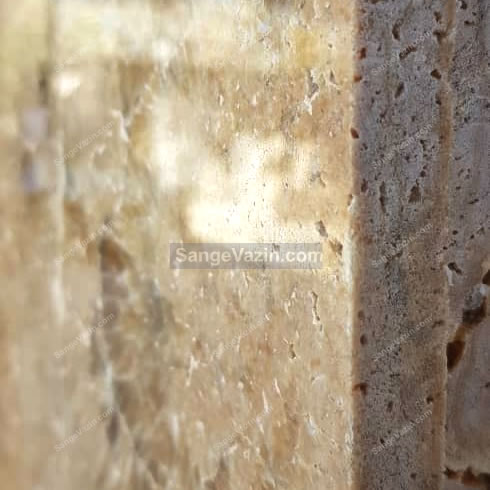
Travertine stone, with a density of about 2500 kg/m3 with either striped texture or without texture, is found in nature in white, chocolate, light and dark cream, yellow, red, and lemon colors. Travertine consists of many holes and pores and acts as a relative insulator against sounds and heat.
Travertine Stone History
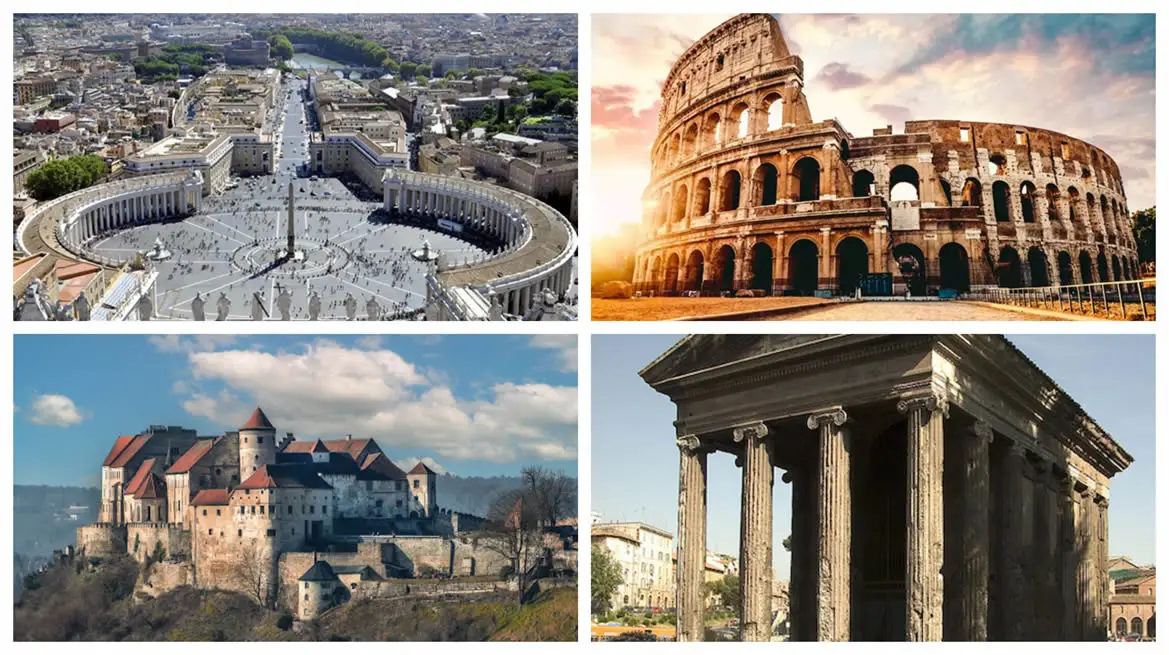
There are several historical monuments and popular buildings that have been built with this amazing stone over the years. One such example that will blow your mind is the world-famous Colosseum in Rome, which still stands today after centuries. There are many other famous examples of buildings and structures made of travertine, notable examples of which are Burghausen Castle, Saint Peter’s Square in Vatican City, and the Getty Center in Los Angeles.
Most Popular Types of Travertine Stone
High-Quality Travertine Stone
1/ Abbas Abad Travertine
The most popular travertine stone in terms of quality, with high supply capacity and positive features, is available in both vein-cut and cross-cut styles and in a wide range of beautiful grades, sourced from the Pour Hosseini, Haj Abdoli, Ghasemi Far, and Tavakoli quarries.
2/ Hajiabad Travertine
Hajiabad travertine stone is popular for its affordable price and high quality, featuring cream and light brown colors.
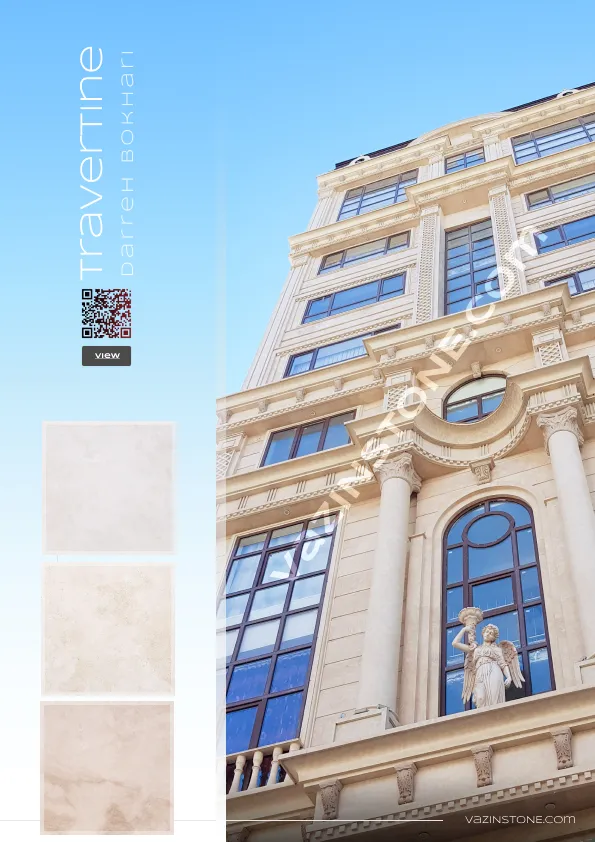
3/ Darre Bokhari Travertine
Darreh Bokhari travertine, due to its relatively light color and high quality, is widely used in Roman and classical facades and is sourced from the Tavakoli, Sarcheshmeh, Azarnoush, and Nikfar quarries.
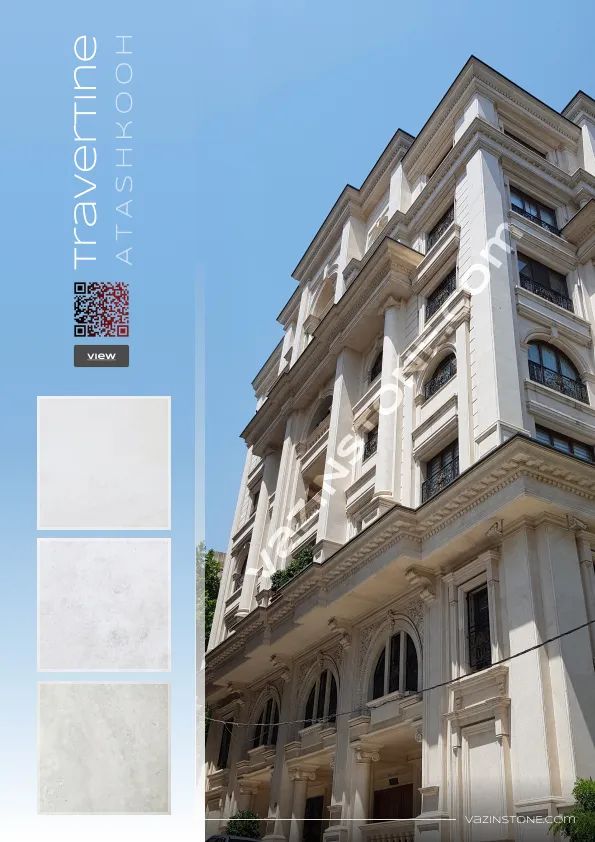
4/ Atashkooh Travertine
Atashkooh stone is among the finest and rarest types of travertine stone, distinguished by its very light color and beautiful pattern, and sourced from the Bonyad and Sartakht quarries.
Average Quality Travertine Stones
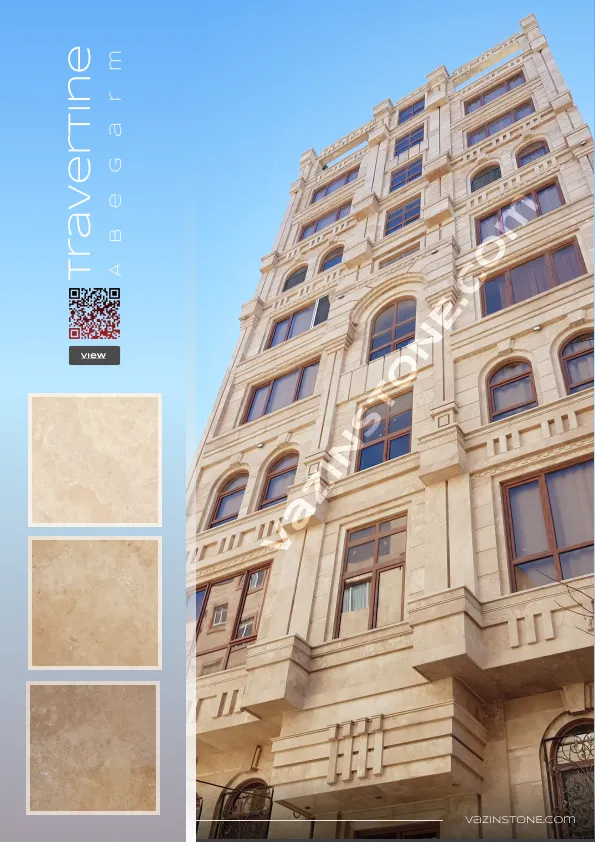
1/ Abegarm travertine
Abegarm travertine stone is available in the market in colors ranging from Nescafé to chocolate brown and is considered a mid-grade stone. This is mainly due to the natural color of the stone.
2/ Azarshahr Travertine
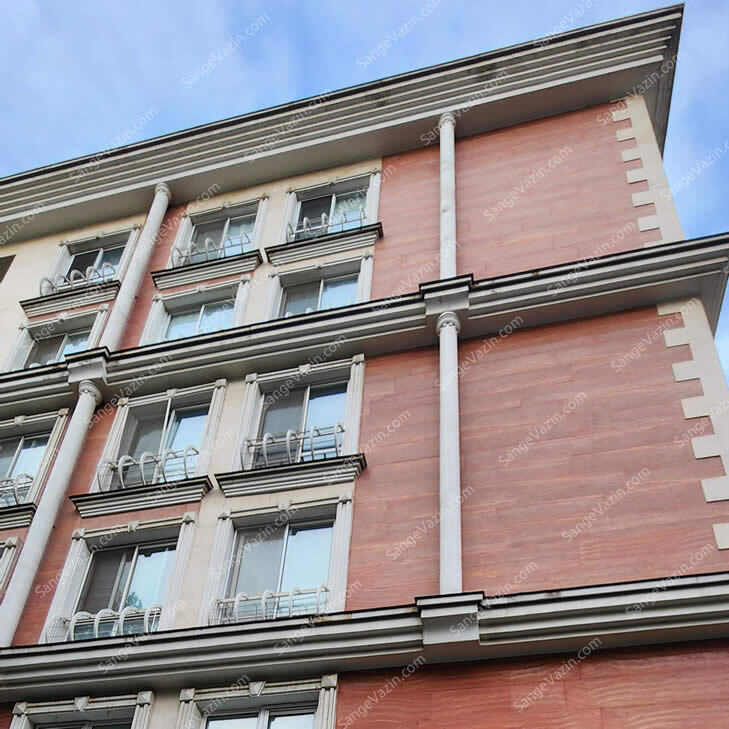
Azarshahr travertine can be considered the most diverse type of travertine in terms of color, as red, lemon, and silver varieties with vein patterns are extracted from the Azarshahr quarries.
3/ Kashan Travertine
Kashan has many travertine quarries, but the most famous one is Abyaneh travertine, which is cream and chocolate in color.
4/ Takab – Rameshe – Toroq – Tabas
In the final phase, travertine stones sourced from the quarries in Ramesheh, Toroq, and Tabas are well-known. In lower-quality varieties, these stones may exhibit efflorescence.
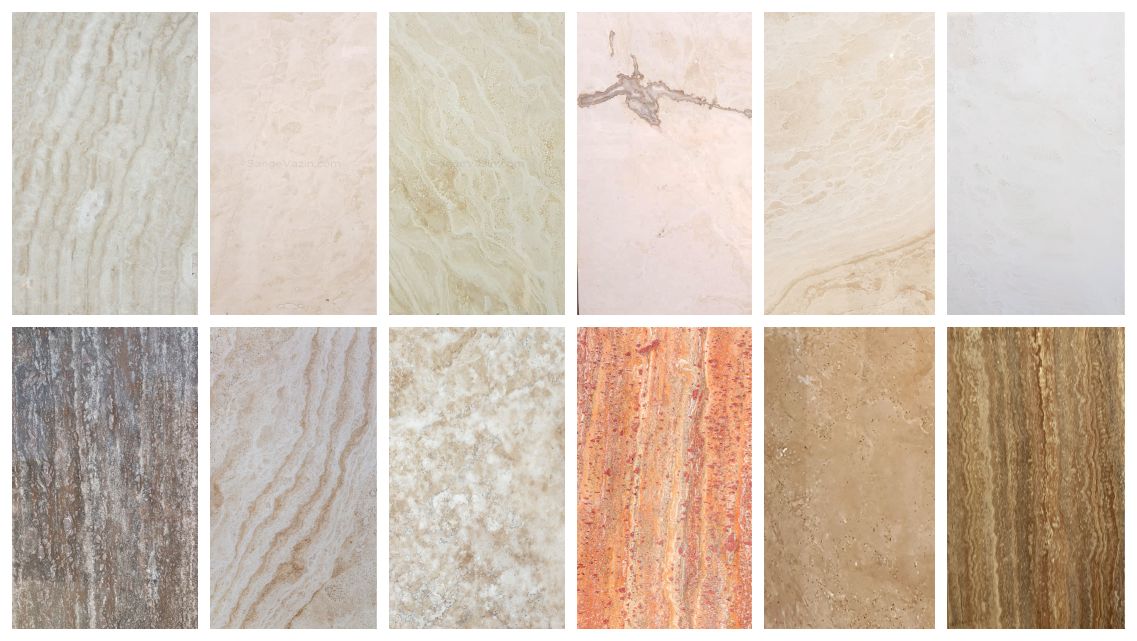
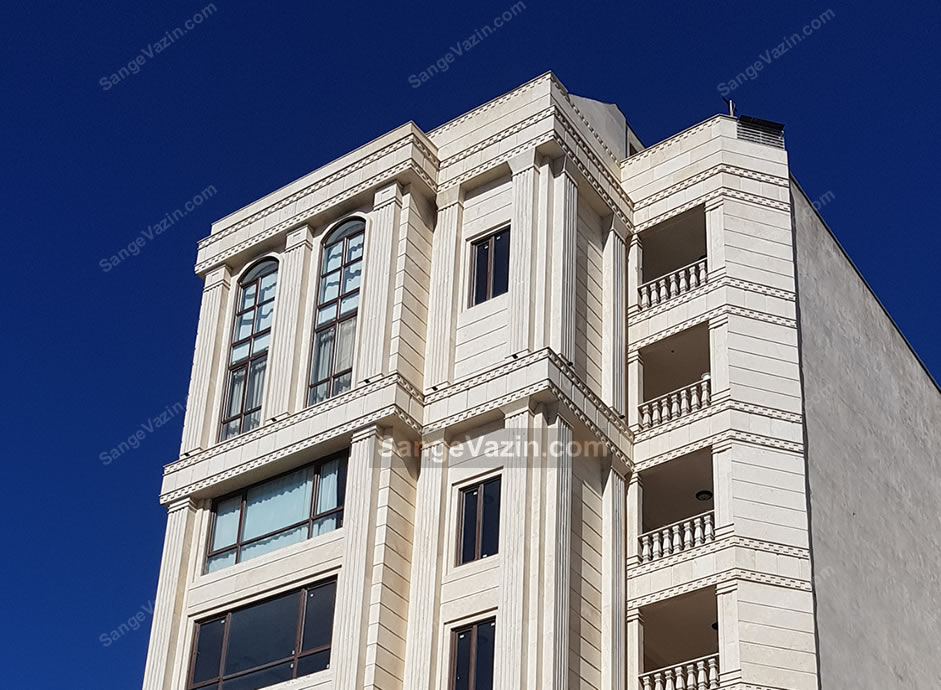
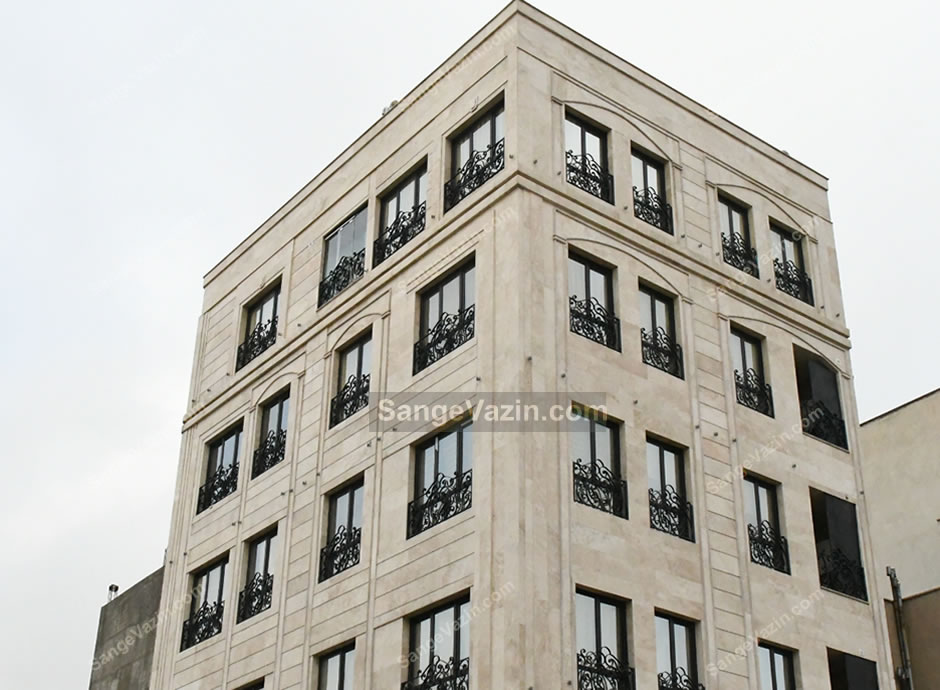
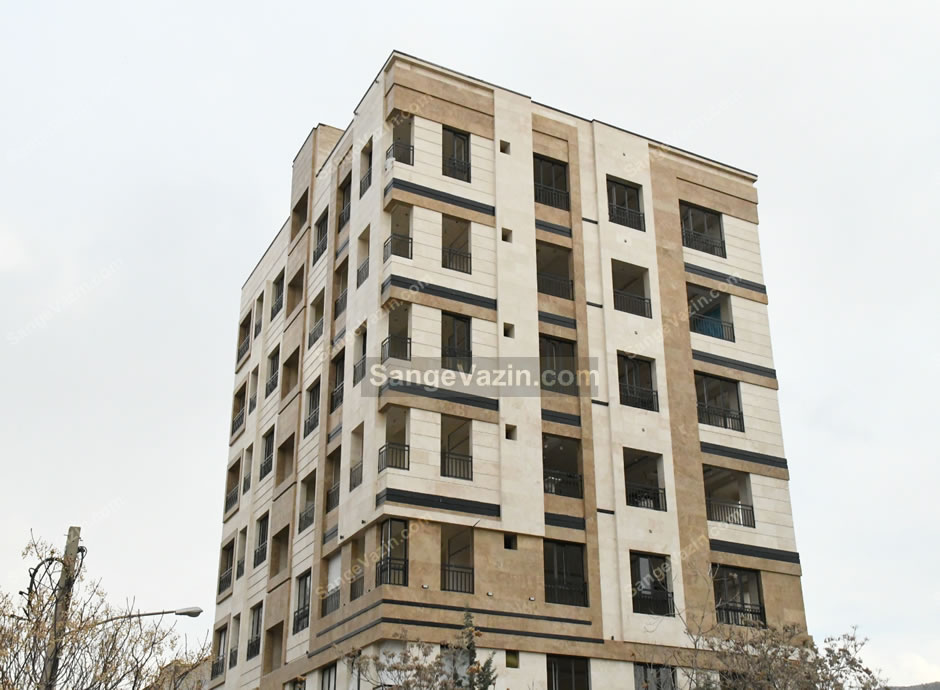
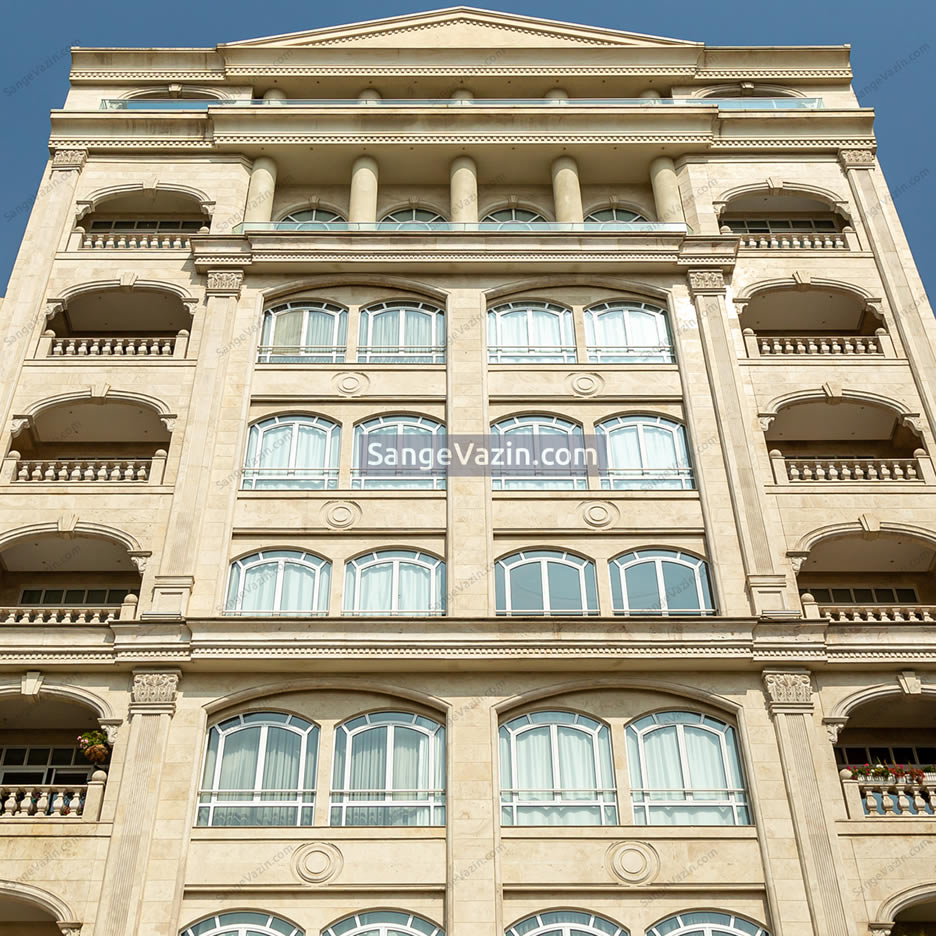
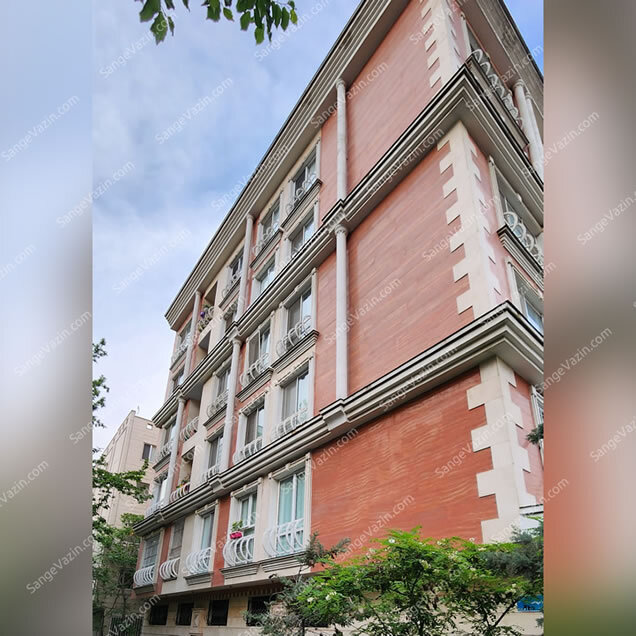
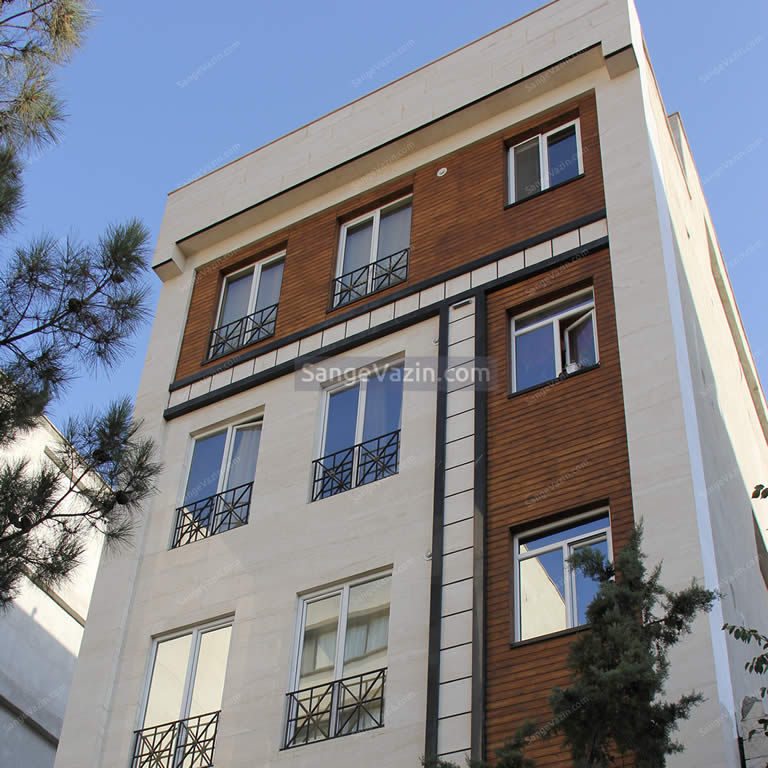
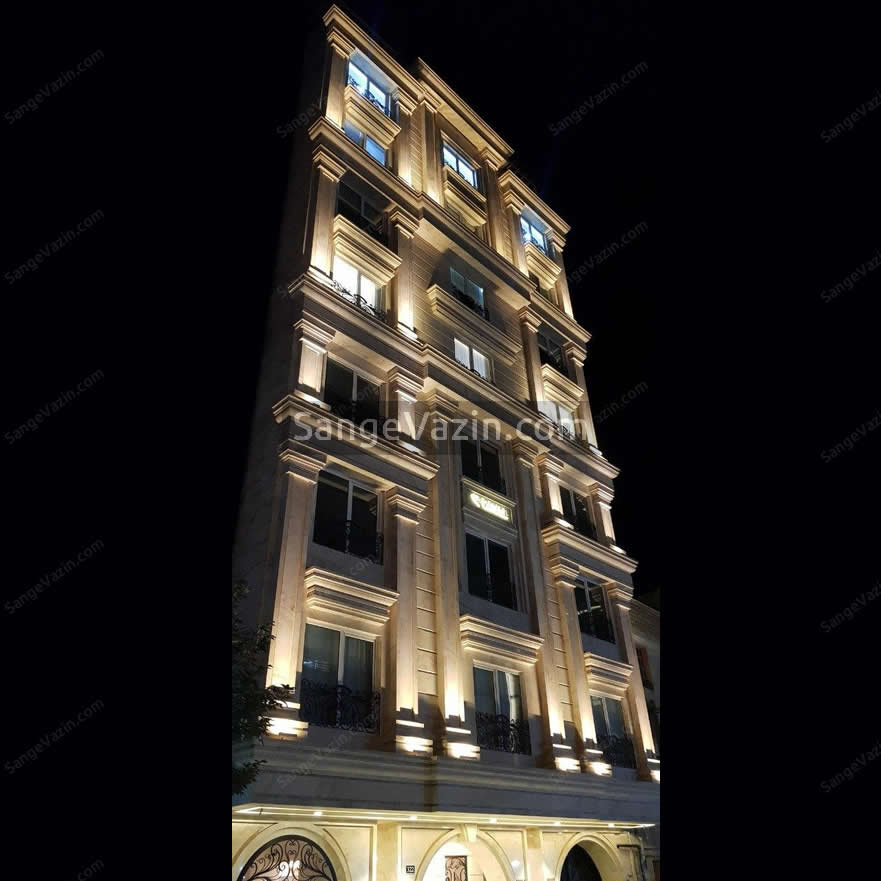
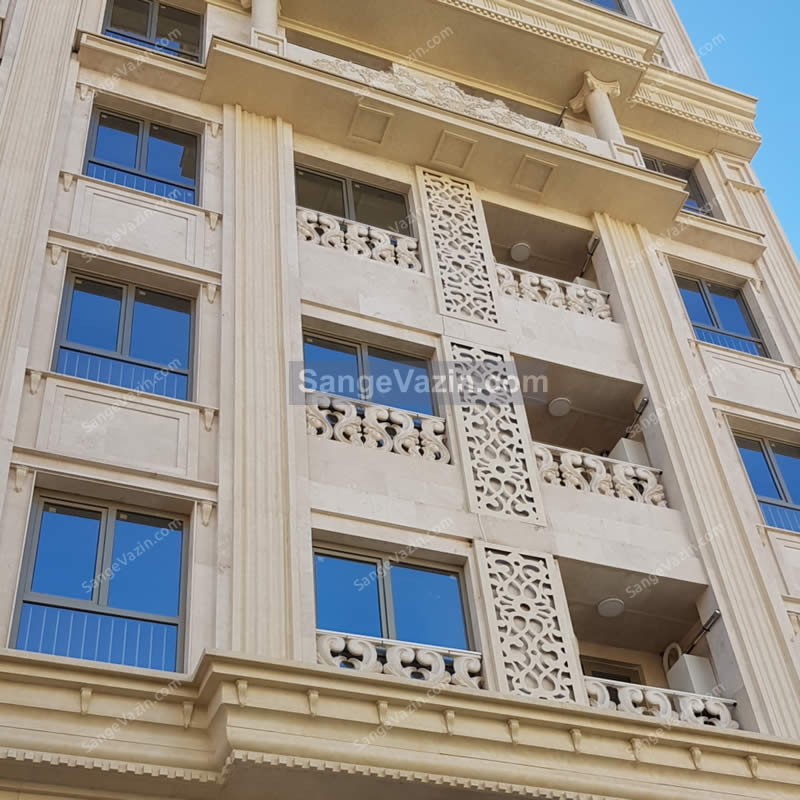
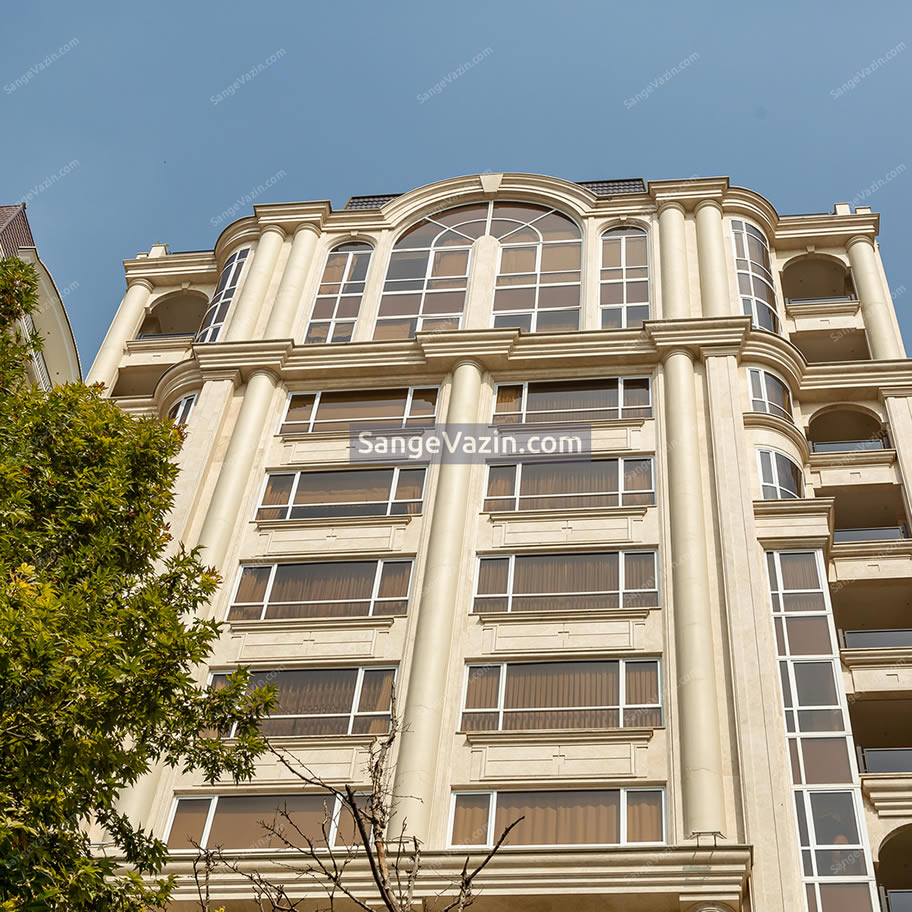
In the gallery below, you can view images of travertine stone along with details of its color and texture, as well as photos of building facades finished with this stone.
Factors Affecting Travertine Stone Processing
In addition to paying attention to the inherent quality of the stone, the mine it originates from, and the physical characteristics it has, the way travertine stone is processed also affects the final quality of this product to a large extent regarding its lifespan and beauty. A number of the things that should be taken into consideration in the processing of this stone are listed below:
- Stone’s structure: Some travertine stones are known as porous, brittle, and fragile, with low resistance to water absorption and breakage. This characteristic can be identified to some extent by the stone’s lime content as well as by examining the stone from its side.
- The quality of resin and stone surface epoxy in terms of materials and execution quality is important.
- Whether or not the stone is kiln-dried (how to dry the stone resin: if the stone is processed in a kiln, after a while, you will see the stone darkening, and vice versa; if it is dried with natural sunlight, this will not happen, and even its color will become lighter.)
- Being symmetrical (the edges of the stone must form a 90-degree angle, which requires precise machine cutting; otherwise, the execution of the work will not be clean or professional).
- The height of the stone (higher and one-piece stones create a beautiful appearance in the facade)
- Having unchipped edges (edges are often chipped during transportation; this can be prevented if loading and unloading are done carefully and properly).
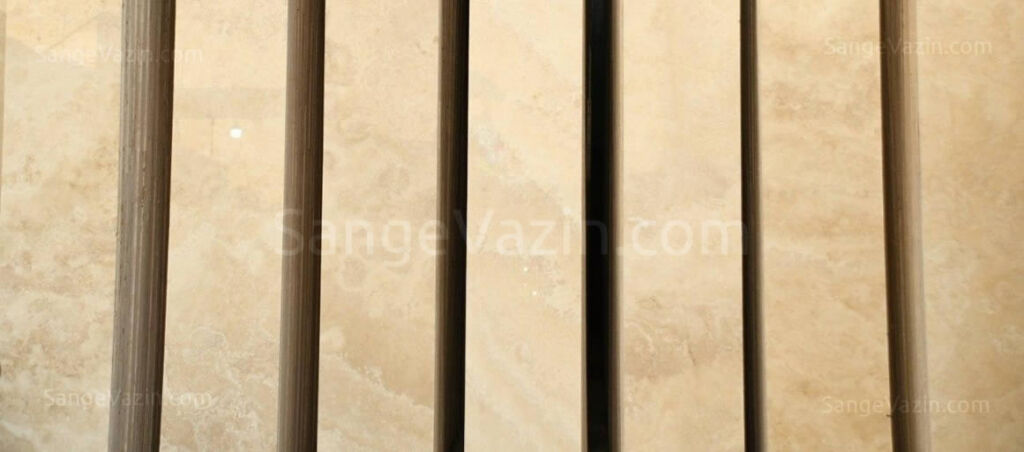
Types Of Travertine Stone Processing
Stones are processed in different ways for different applications. In the following, we mention some of the processes that are also performed on travertine stone:
- Polished finish: In this type of processing, the surface of the stone becomes very shiny and uniform. The sanding process is done in three stages: pre-polishing, stone putty (in four stages), and final sanding, which will result in bright and uniform stonework.
- Leathered finish: In the leathered finish of travertine, the stone surface is processed using special diamond-tipped brushes, creating desirable natural textures and subtle surface variations. In this type of processing, the stone surface is not glossy.
- Ashlar processing: This processing is effective in stacked stones and some wall cladding stones. This is inspired by natural stones and rocks.
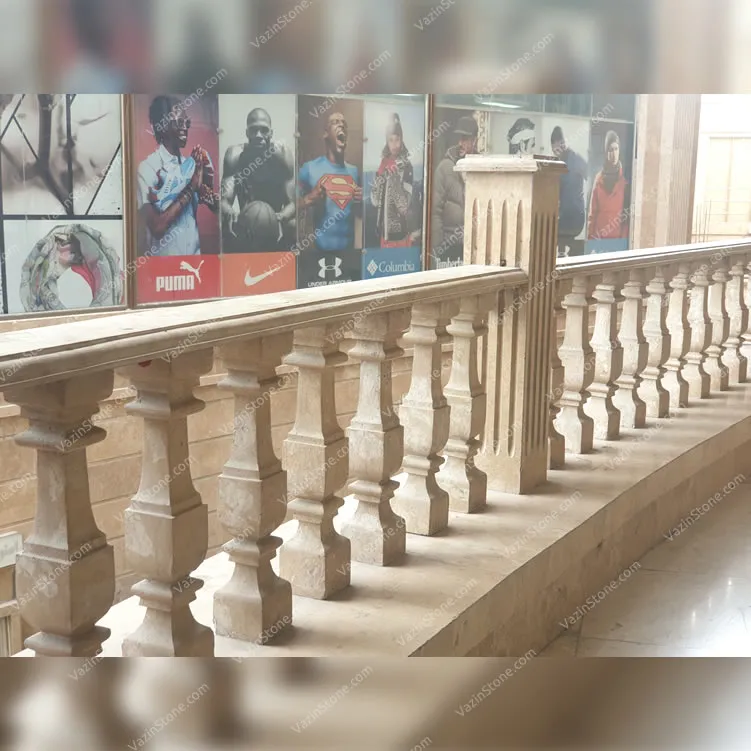
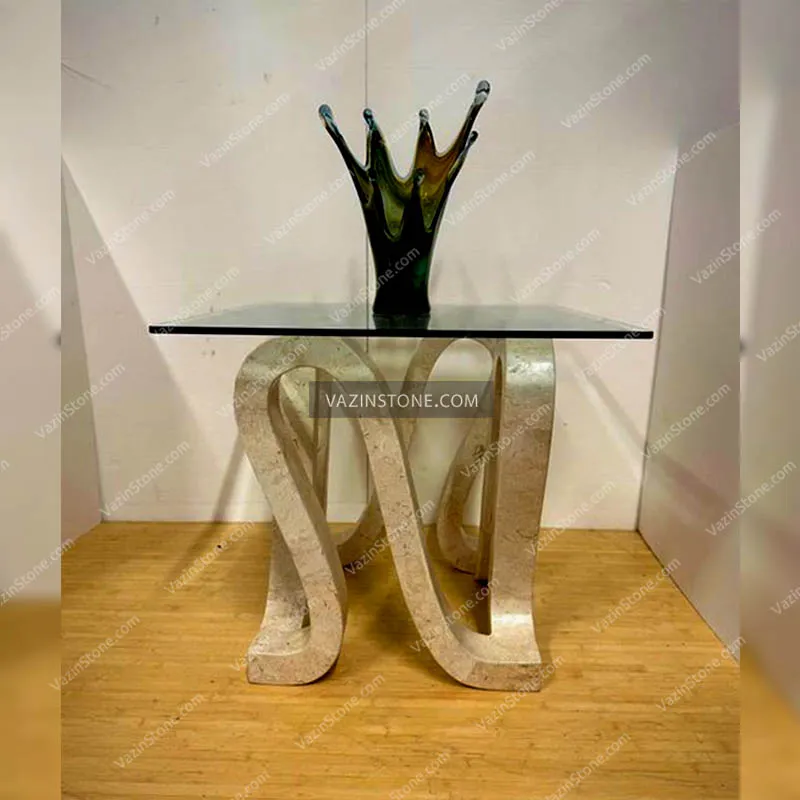
- Without processing: In this case, no special processing is applied to the travertine, and its surface remains matte, lighter in color, and retains the stone’s natural pores. This type of finish is commonly used as a coping stone for wall tops, railing surfaces, or for crafting stone products such as coffee tables, dining tables, and various decorative stone items.
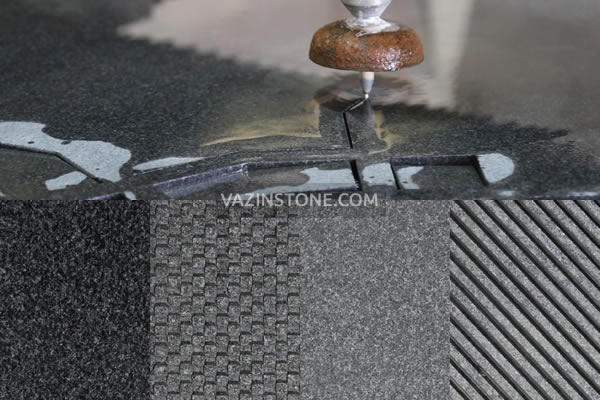
It is worth noting that in polished travertine finishes, which are commonly used for façades and wall applications, the cut surface pores and cavities of the travertine are filled with resin and then treated with epoxy. This process results in a completely smooth, uniform, and glossy surface.
Usage Of Different Travertine Stones
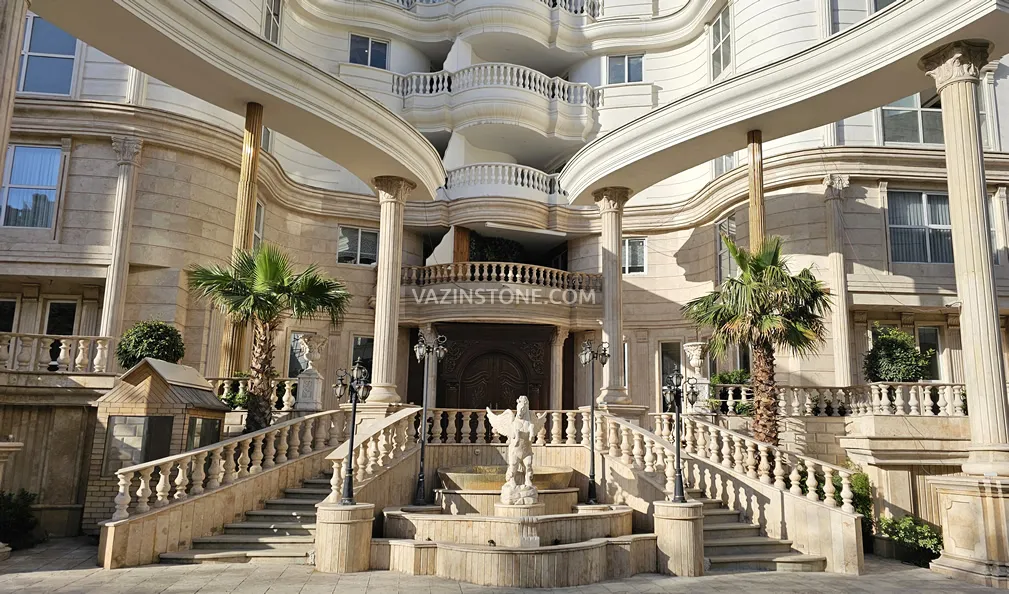
In the following gallery, you can see images of travertine stone used in various sections of the building and its facade:
Travertine is commonly utilized for both stone artifacts and construction materials. Travertine is commonly applied in constructing staircases, typically with a 3 cm thickness, walls, and facades with a thickness ranging from 1.6 to 1.8 cm, and occasionally in slab form with a thickness of 2 cm. Additionally, certain travertine stones can be utilized in interior walls in book-matched and four-matched.
Usage Of Travertine In Buildings
The use of this stone as an exterior building façade is one of its primary applications. This is mainly due to its excellent strength and durability against sunlight, heat, cold, moisture, and acid rain.
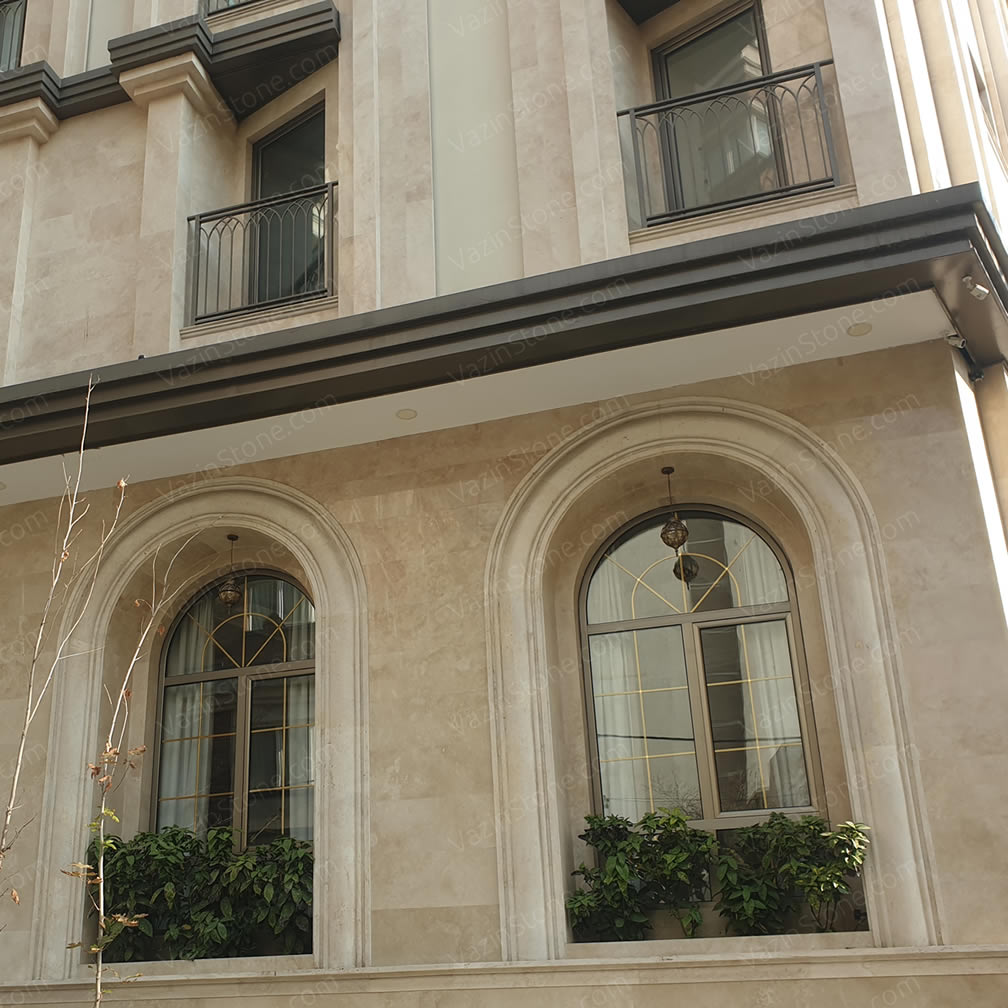
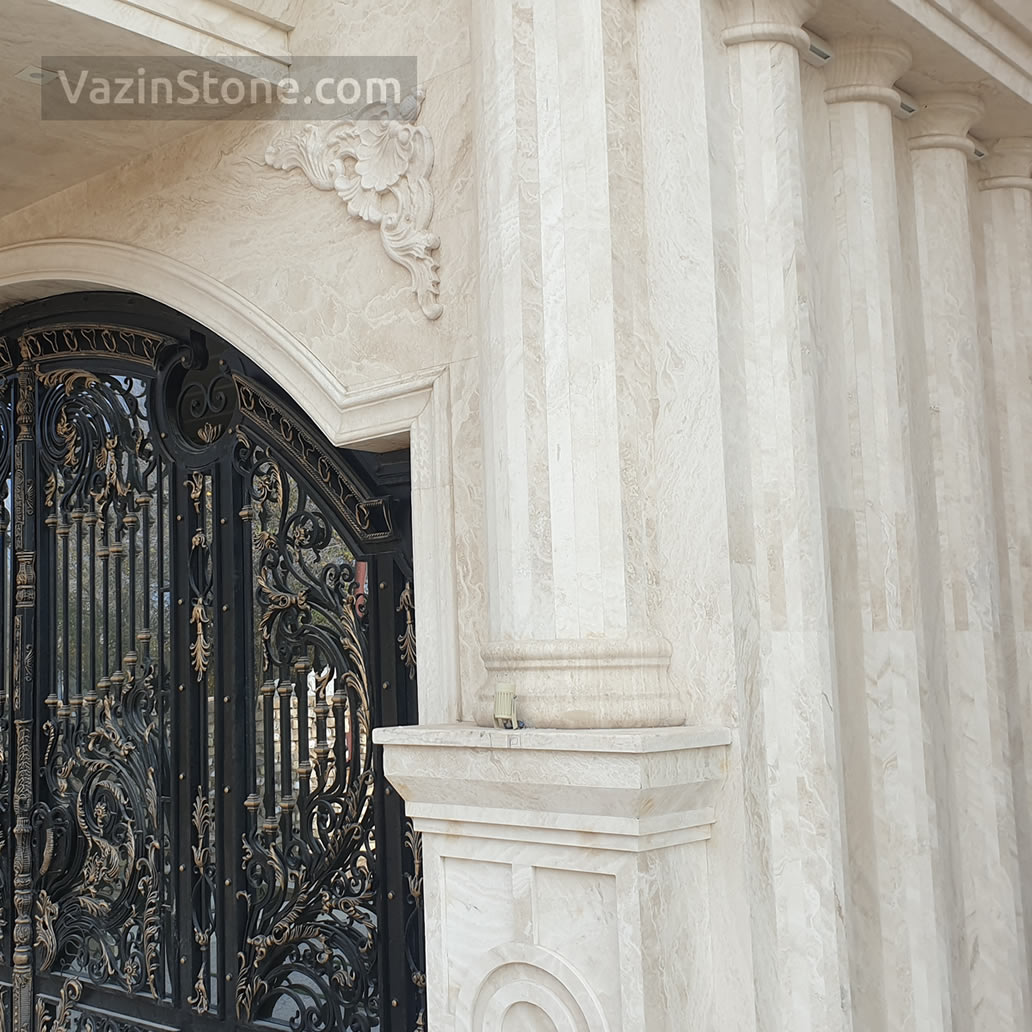
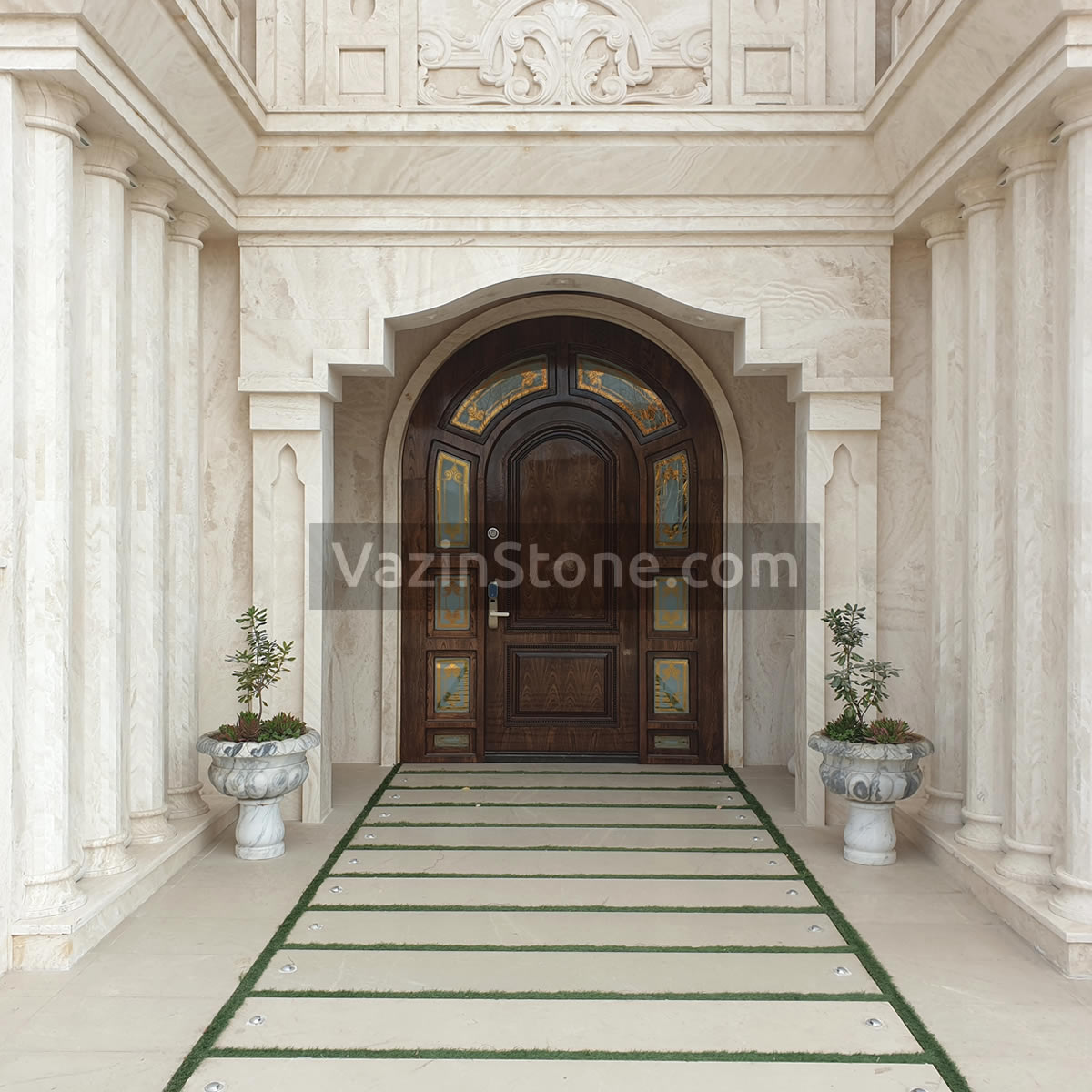
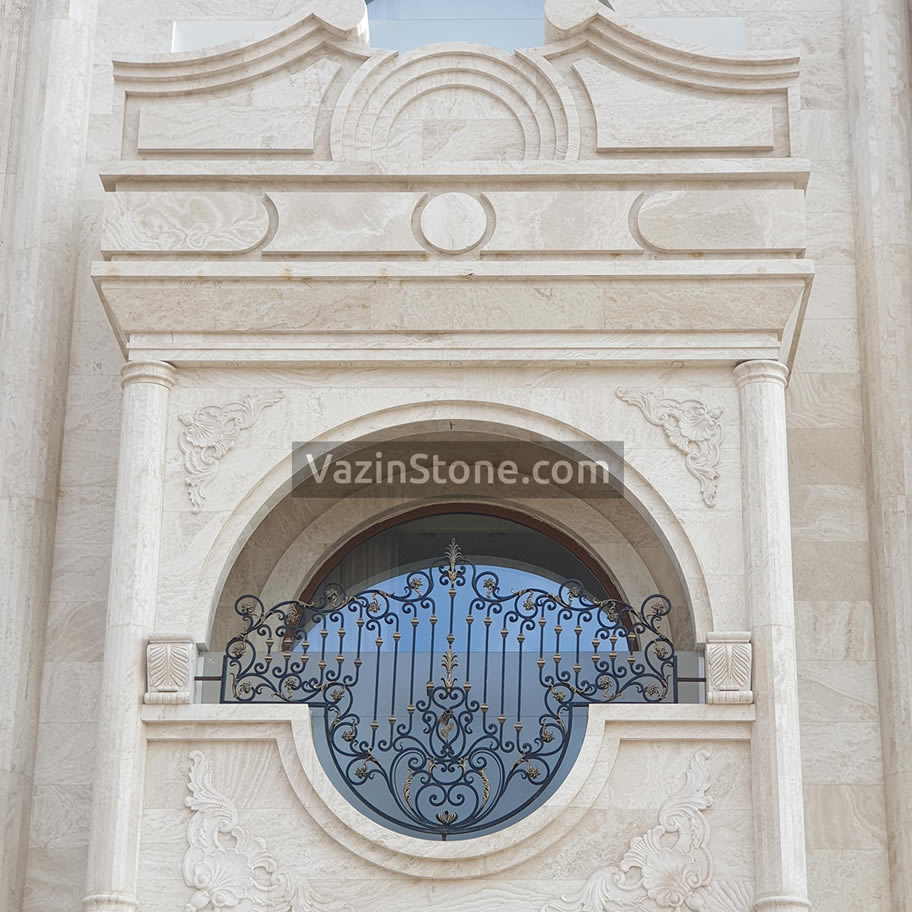
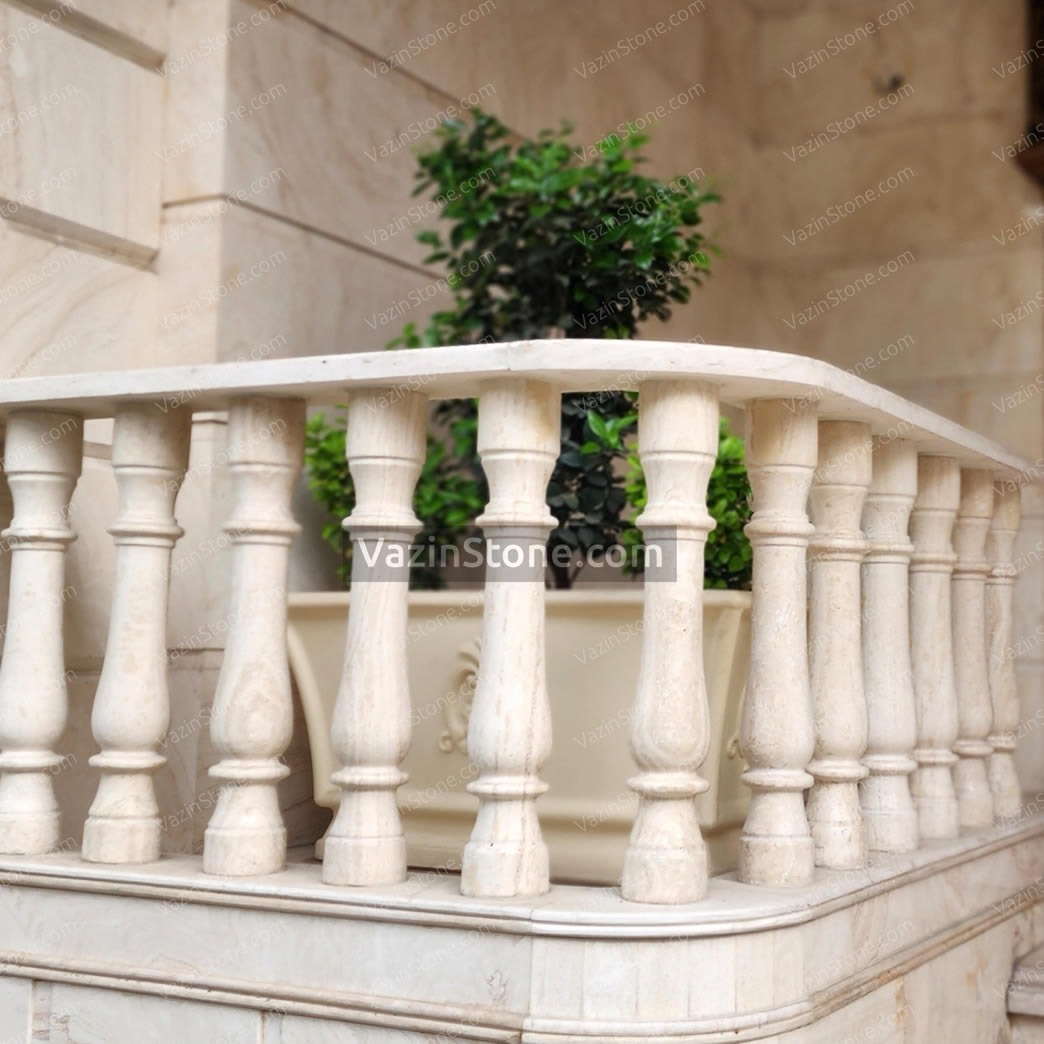
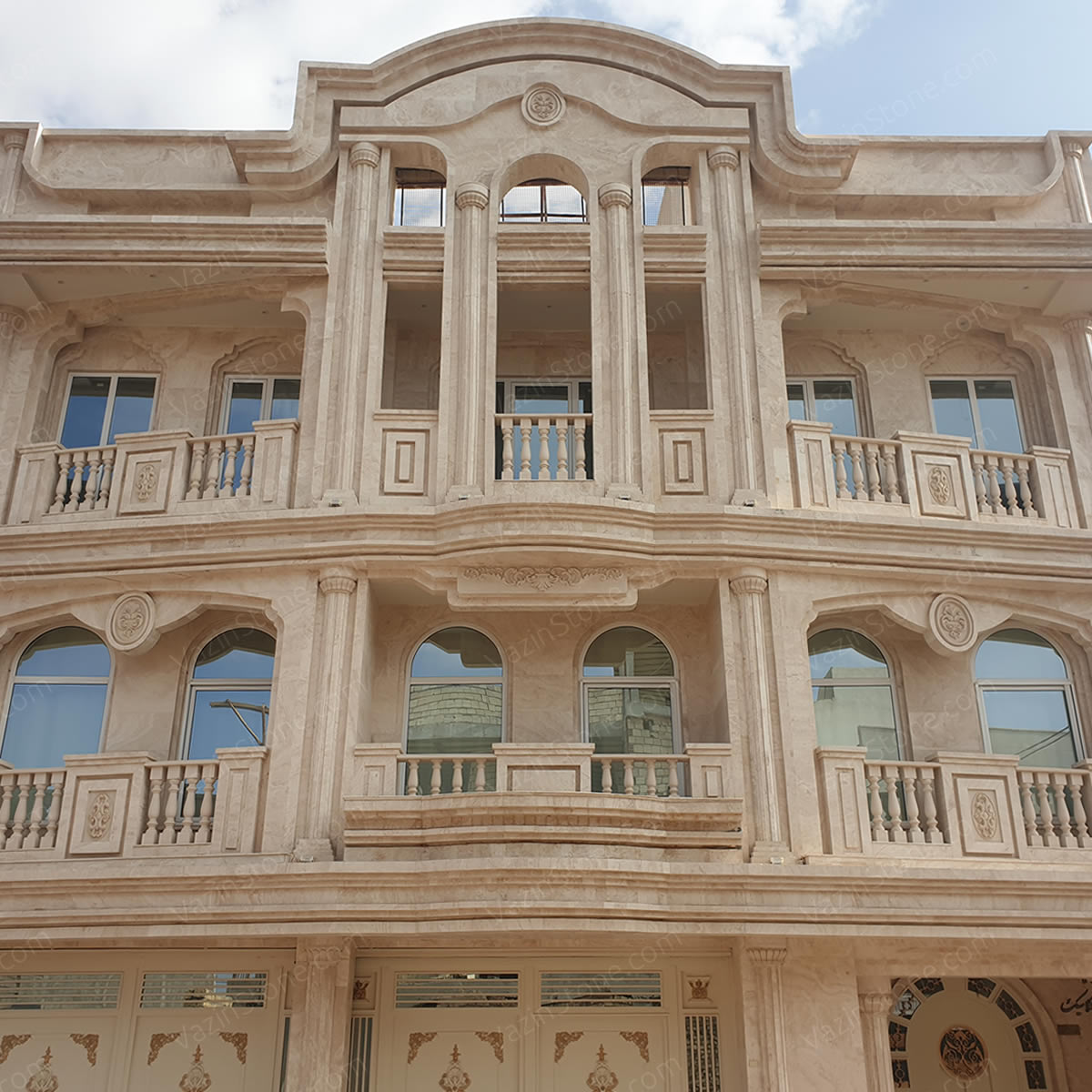
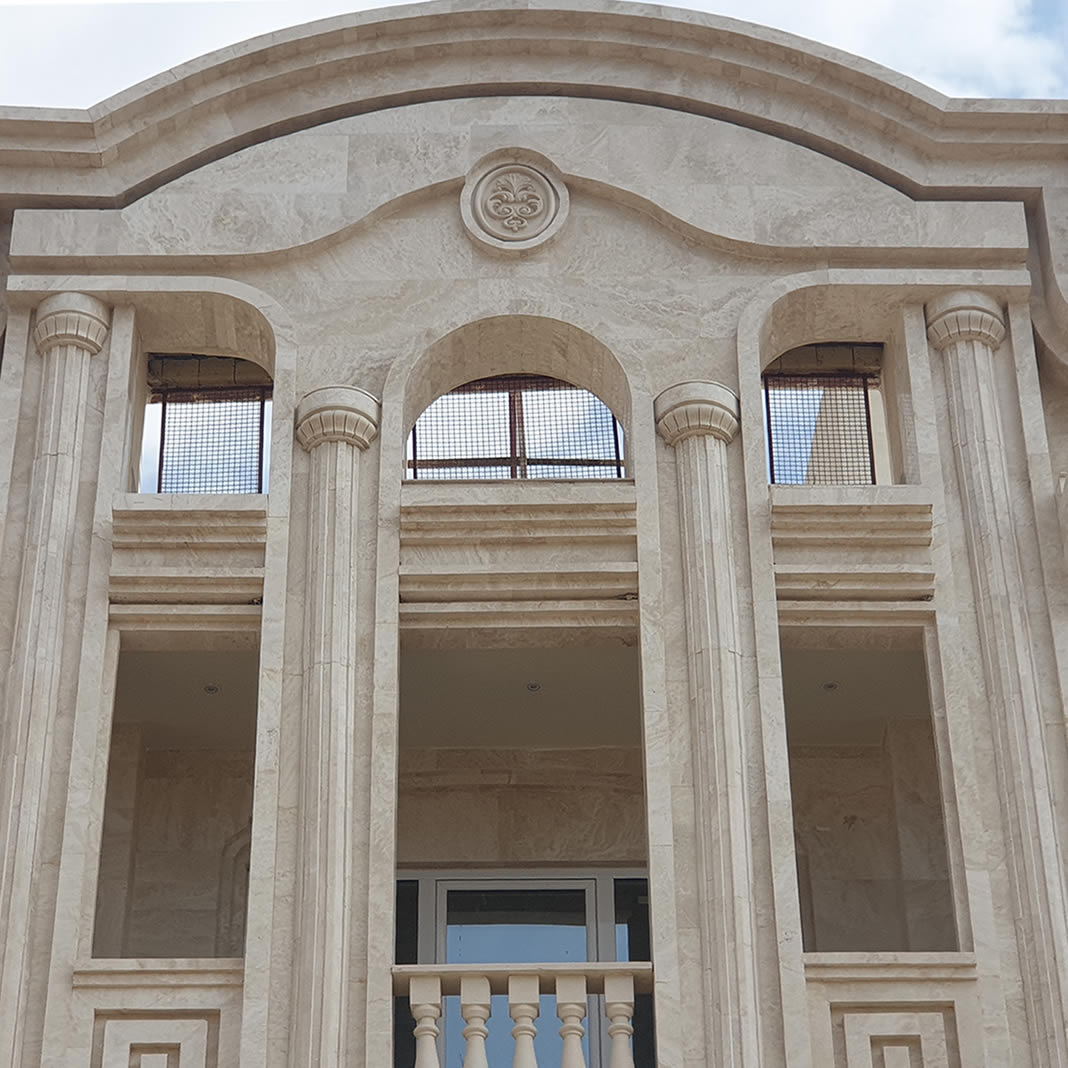
- Travertine stone for building facades
- Interior wall cladding for common areas of the building (corridors, staircases, lobby)
- Stonemasonry in facades, especially in Roman facades
- External wall cladding stone (yard – parking lots) and landscaping
- Capstone (a piece of stone placed on the wall or the edges of the facade)
- Floor stone (commonly in small-sized pieces or 3 cm thickness)
- Stacked stone (decorative stones for use as decorative wall cladding)
Usage Of Travertine In Stone Artifacts
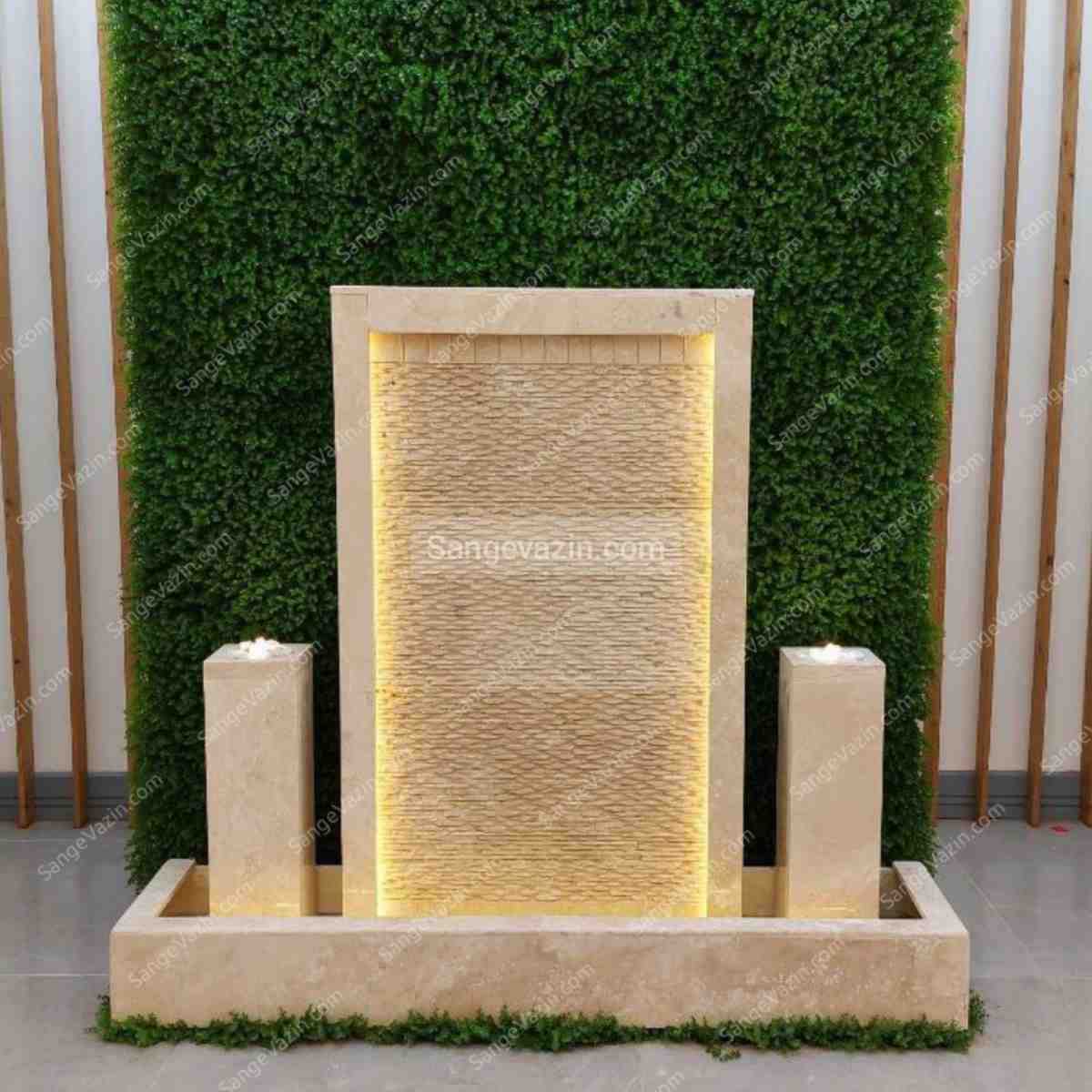
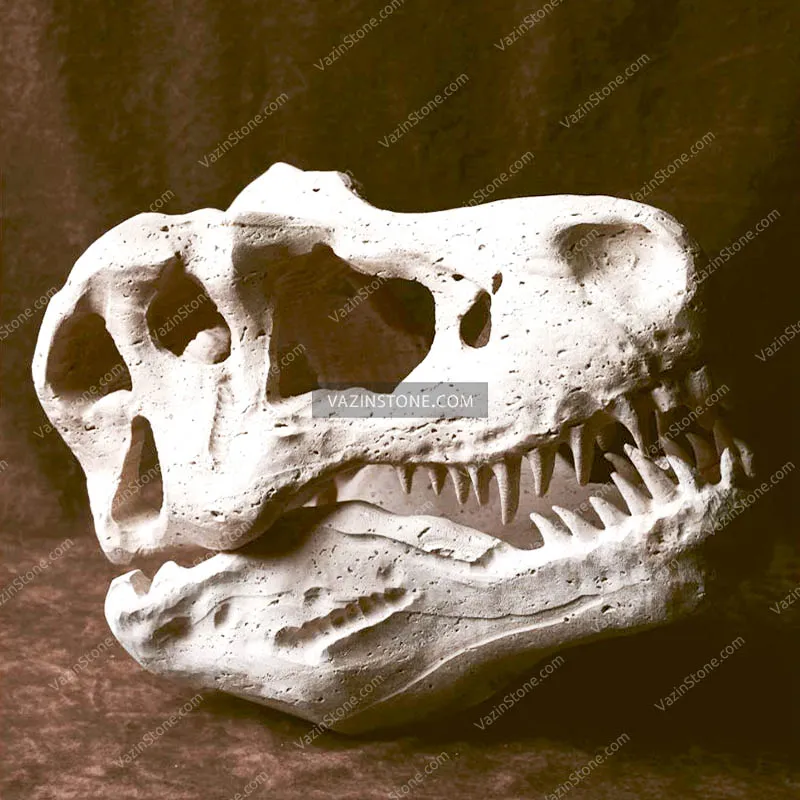
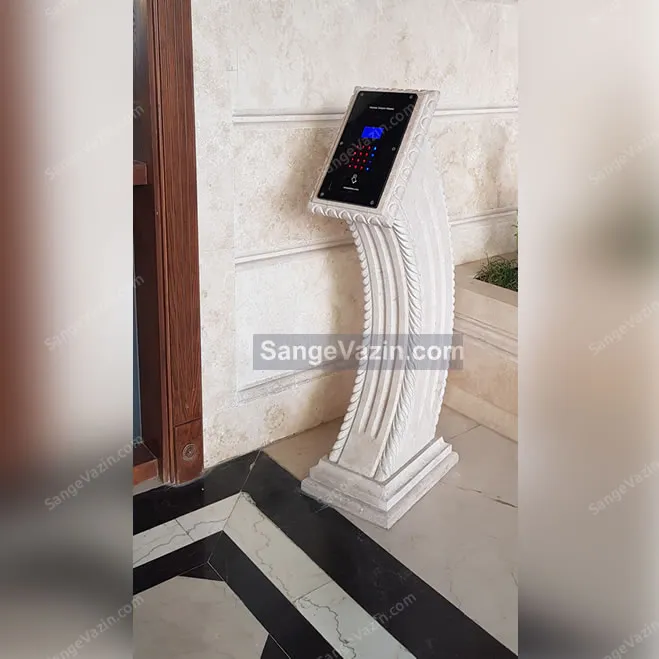
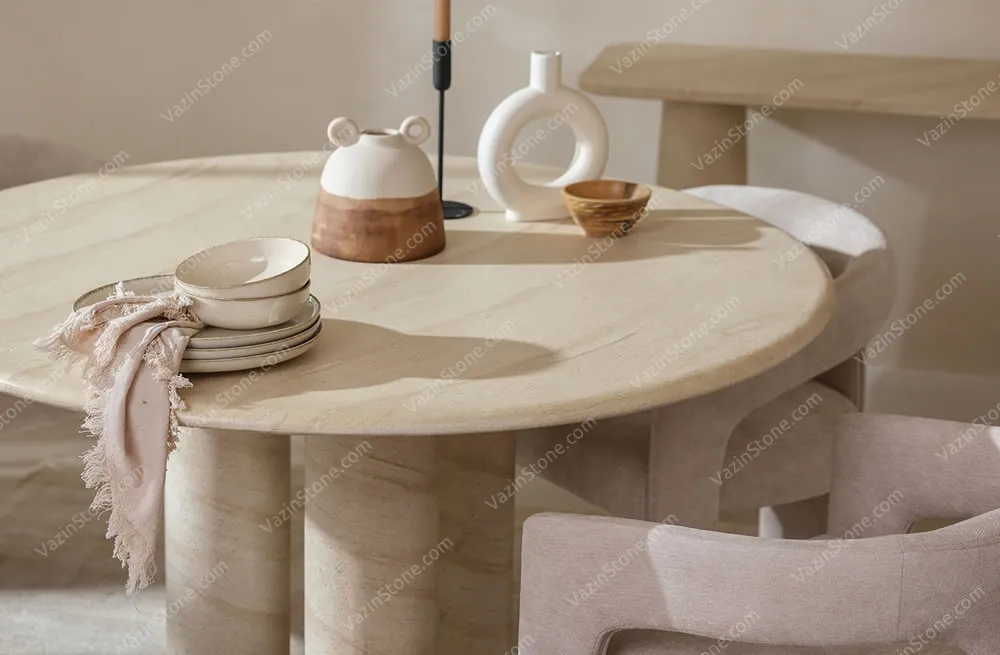
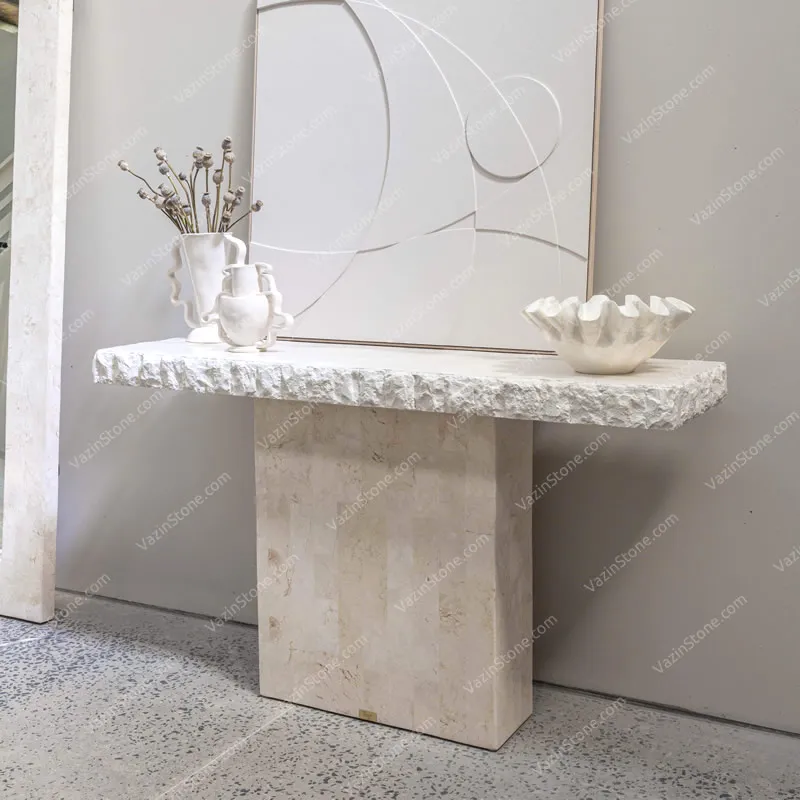
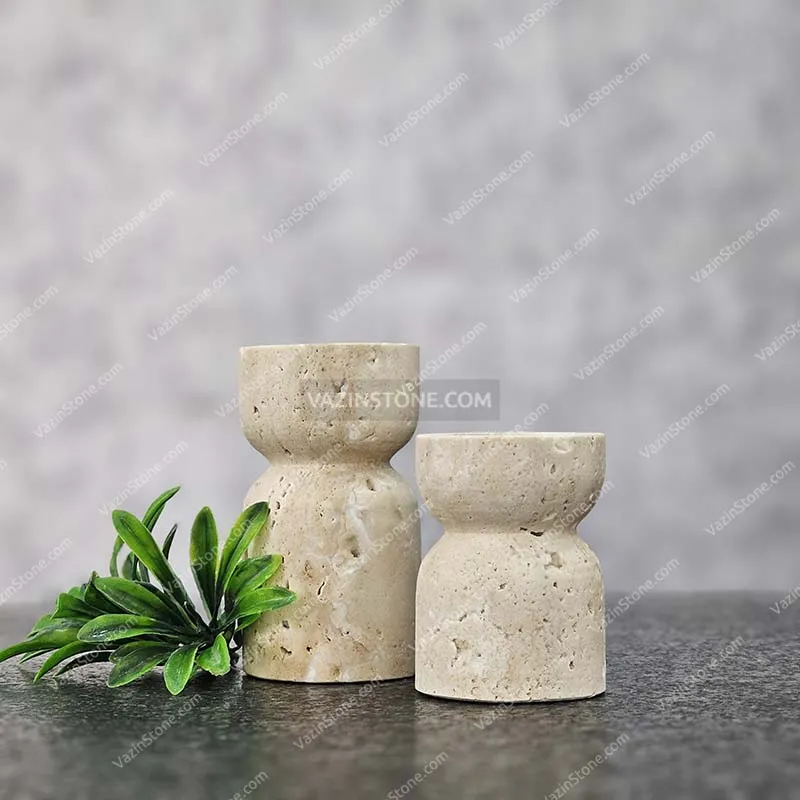
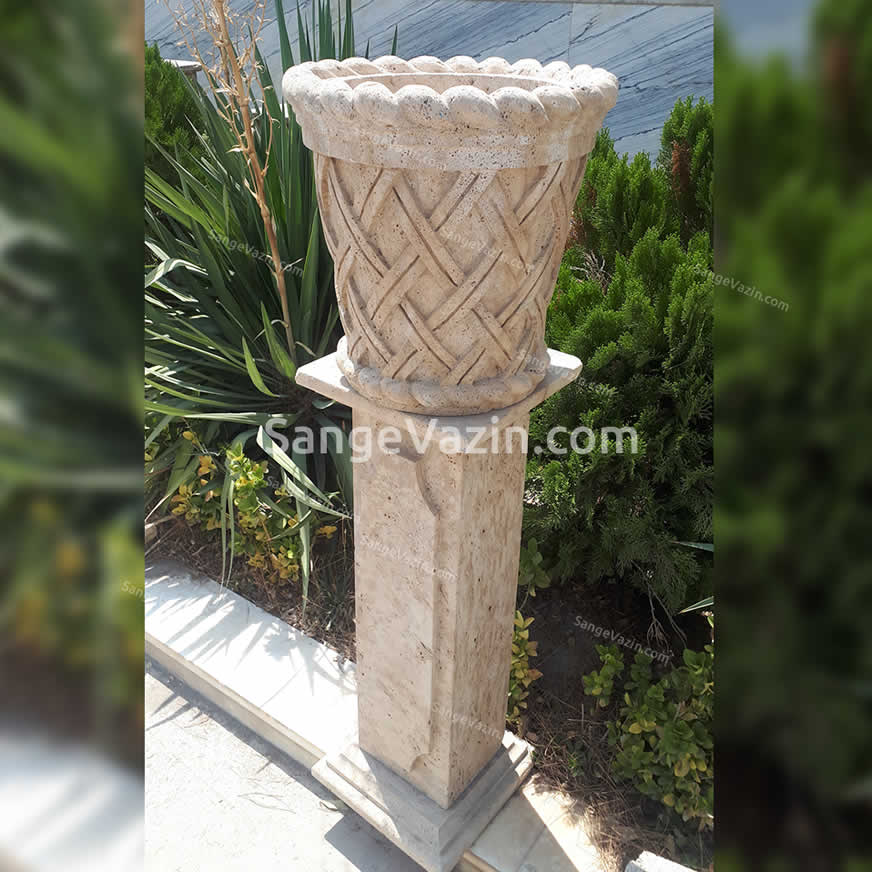
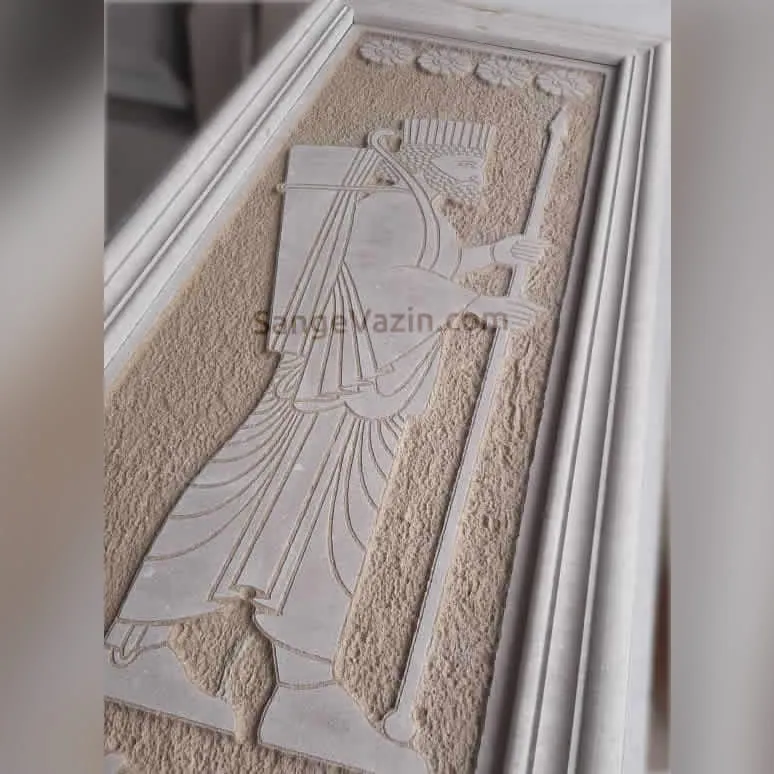
Travertine stone has a variety of uses in creating stone artifacts, like flower pots, sculptures, barbecues, fountains, tables, and handrails.
Sales Honesty Strategy
In line with the sales honesty strategy, we present the benefits and drawbacks of travertine stone without any bias and with fairness. Naturally, each of the construction materials has its strengths and weaknesses, and depending on your circumstances, each of them could be a more suitable option for you.
Advantages Of Travertine
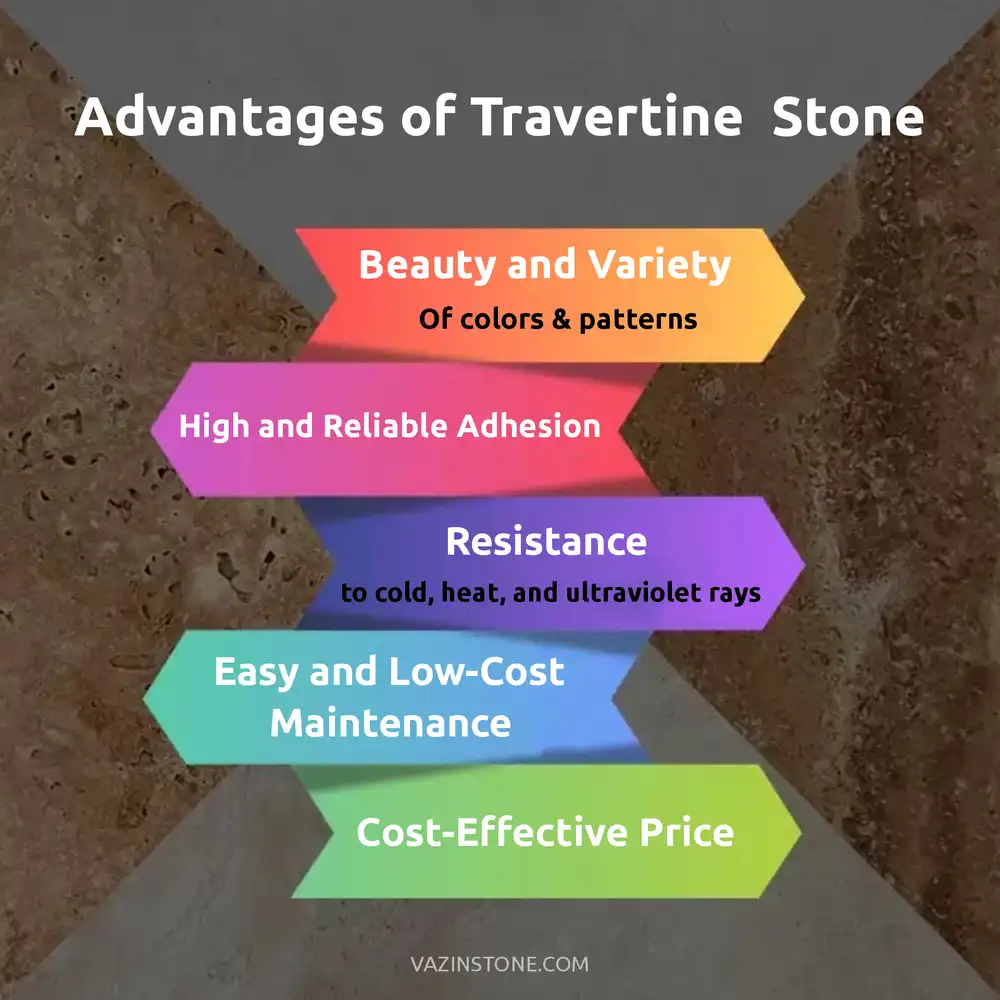
- Beautiful with a wide variety of colors and patterns
- High durability and longevity with easy maintenance
- Lighter weight compared to other stones
- Resistant to sunlight
- Resistant to cold and hot weather and acid rain
- Domestic quarries and reasonable pricing
Disadvantages Of Travertine
- Relatively high price in light-colored varieties
- Unspecified price range due to the wide variety and natural characteristics of the product
- Requires specialized knowledge when purchasing
Price of Travertine
Travertine stone, sourced from various quarries in Iran and provided to consumers, is generally priced at a reasonable and affordable rate.
Factors Affecting Travertine Pricing
The price of stone is influenced by factors such as the presence of veining or patterns, stone color, stone quality and analysis, quality grade, level of porosity, stone thickness and dimensions, as well as the type of processing and cutting. Please note that, in general:
The price of travertine increases with the brightness and transparency of its color. White and streaked travertines are considered the most valuable and pricey varieties on the market, and Abbas Abad stone is a top choice due to its popularity and high quality.
Depending on the quality and size of the stone, the selling price range for per meter of travertine stone on the Vazinstone website ranges from $4 to $100 (last updated in December 2025 ). On the Vazinstone website, you can see the most recent price for white travertine stone for facades.
How To Order Travertine
Paying attention to details and following the correct steps when ordering from Vazin Stone can ensure a satisfying experience. At Vazin Stone, we will stand by you every step of the way with expert guidance and assistance, from selecting the perfect stone to completing your order. The process for ordering stones is as follows:
1/ Dimension calculation: Consult your stonemason to determine the precise or estimated size of the project.
2/ Selection of stone: Select your preferred stone with the assistance of Vazin Stone consultants, considering color, quality, and price.
3/ Registering the order and receiving the invoice: After selecting the stone, the invoice will be sent per your preference.
4/ Completing the order and payment: Once the pre-invoice has been confirmed, the payment method and loading schedule will be decided. Full invoice payment is necessary to finalize and proceed with the final shipment.
Important Points In Buying Travertine
There are some important tips that you should bear in mind when buying travertine stone. These are:
- Ensuring the type of stone quarry and paying special attention to the stone’s texture
- Premium epoxy quality, naturally formed stone, not kiln-fired
- High-quality cuts, stones free from chipping
- Paying attention to the uniformity of stone pieces during loading and unloading
- Check and calculate the cost of the stone at the destination
Travertine Depot in Tehran, Karaj, Isfahan
Various types of travertine are extracted from famous mines such as Abbas Abad, Haji Abad, Azar Shahr, Dara Bokhari, Abyaneh, and Silver Kashan and are exported to other countries. Based on the location of your order, the stone will be loaded and delivered from heavy stone warehouses in Tehran, Karaj, and Isfahan provinces.
What is travertine stone, and how is it formed?
Travertine is a type of sedimentary stone formed through the deposition of minerals and dissolved salts from natural hot springs. This natural process creates distinctive patterns and textures on its surface, giving stone facades and structures a unique appearance.
What colors of travertine stone are found in nature?
Travertine is characterized by its distinctive banded texture and wide range of natural colors, including white, cream, chocolate, yellow, red, and lemon. This rich color diversity has made it widely used in various architectural styles, from classical to contemporary.
What is the difference between Abbasabad travertine and Hajiabad travertine?
Abbasabad travertine is of higher quality with greater surface clarity and is mainly used in luxury facades, whereas Hajiabad travertine, with its light cream and brown tones, is a more economical option and is widely used in mid-range projects.
Is travertine suitable for building facades?
Yes, due to its lightweight nature and high porosity, travertine offers excellent adhesion to mortar and demonstrates reliable performance under various climatic conditions, particularly in Roman and classical architectural styles.
What causes the high porosity in travertine stone, and is this feature considered an advantage?
The porosities result from the natural formation of travertine in hot springs. These voids not only reduce the weight of the stone but also make it a relatively effective insulator against heat and sound.
What are the uses of travertine stone in construction?
Travertine is used as a building material in a wide range of applications, including exterior and interior building facades, stairwell and lobby wall cladding, stair construction (with a 3 cm thickness), decorative facade elements (particularly in Roman-style architecture), wall coping and railings, flooring (in small formats or thicker slabs), as well as antique or split-face (guillotine-cut) stone for wall decoration.
What are the advantages of using travertine stone?
Travertine is an ideal choice for many construction projects due to its aesthetic appeal, high variety in patterns and colors, long durability and lifespan, lighter weight compared to other stones, resistance to sunlight and adverse weather conditions (such as acid rain), and its affordable price (thanks to domestic quarries).
What is the price of travertine stone?
The price range of travertine stone (Vazin Stone) starts from $4 per square meter and, depending on the type and size of the stone, can go up to around $120 per square meter. (Latest update: May 2026). You can view the most up-to-date travertine prices on the Vazin Stone website.