Floor Stone
What you’ll read in this article:
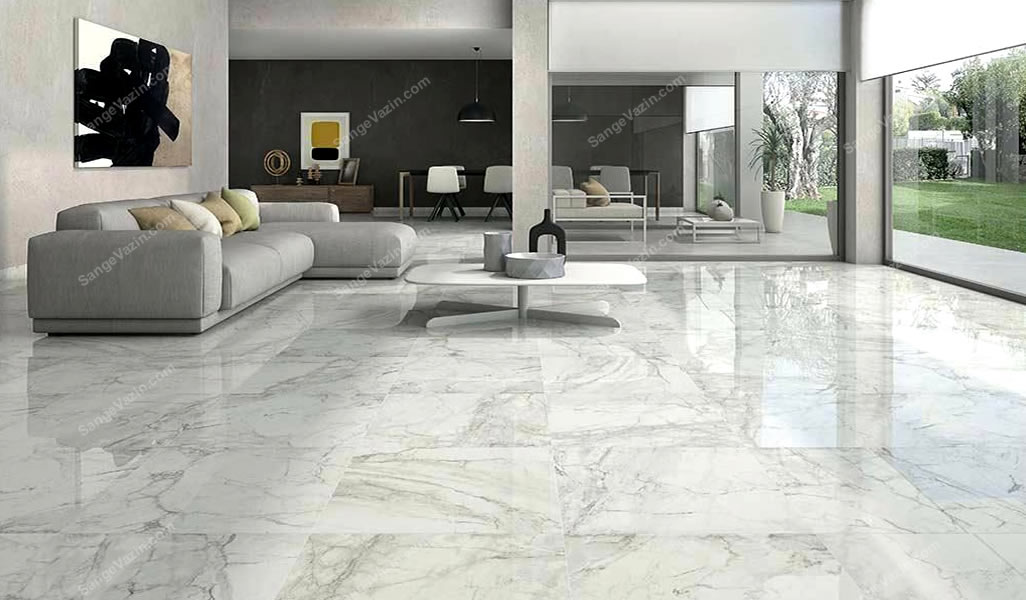
Stone is a widely used material in both indoor and outdoor construction. When the floor stone complements its surroundings, it enhances the aesthetic appeal of the building. In this article, we will assist you in selecting the appropriate floor stone for your construction project.
Buy Floor Stone Online
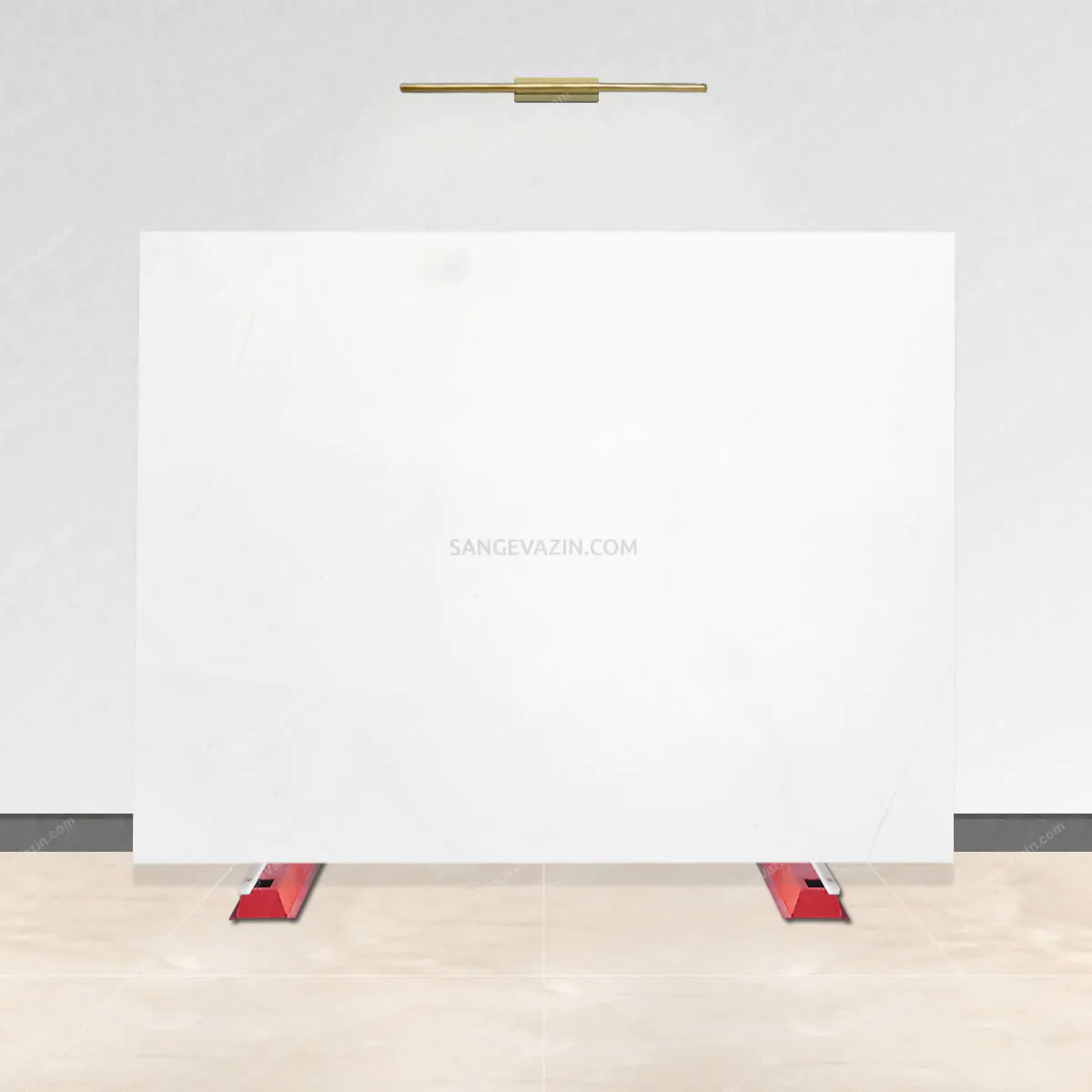
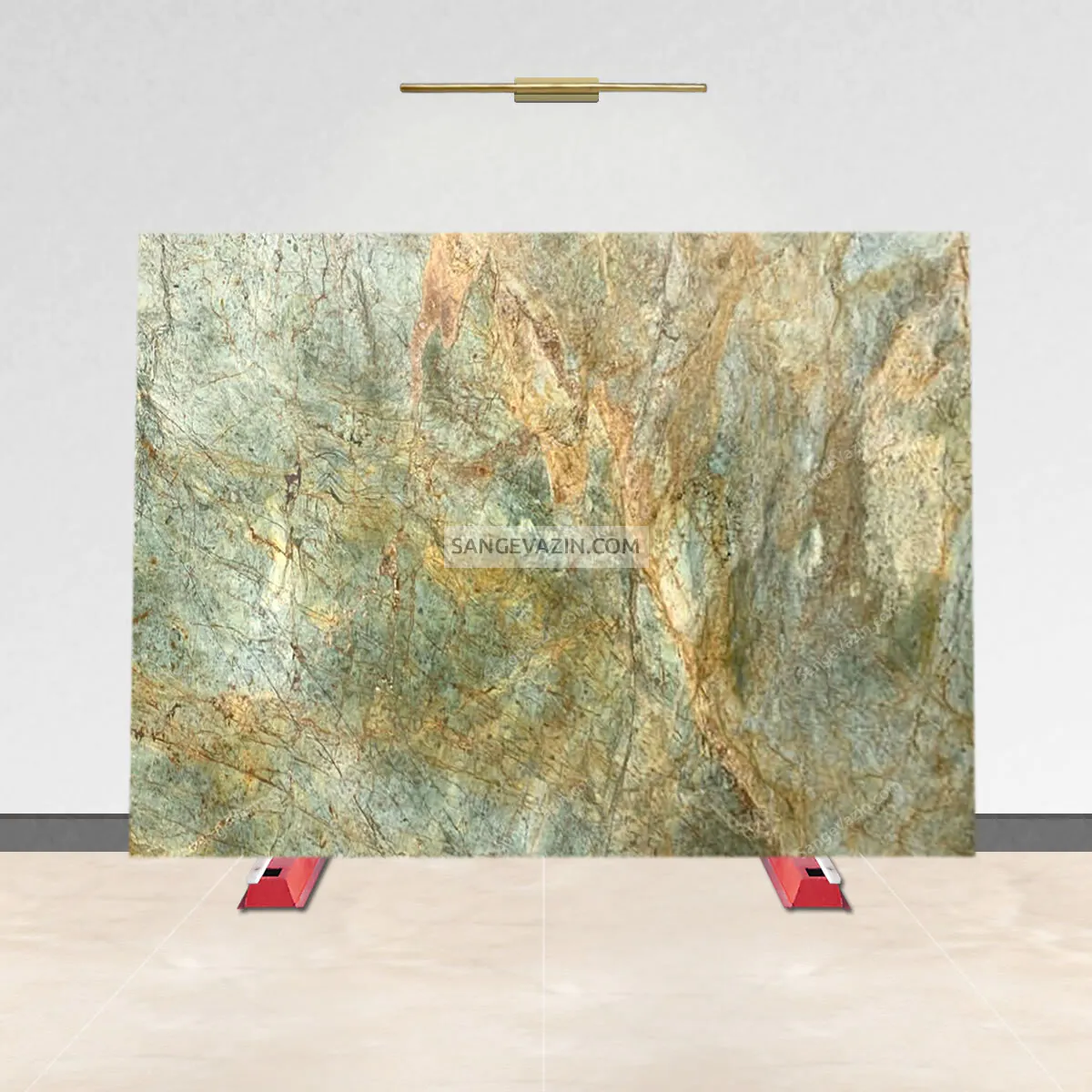
In the list below, you can find the most commonly used stones for floors. To view all stones suitable for floor stone applications, click the link below the list.

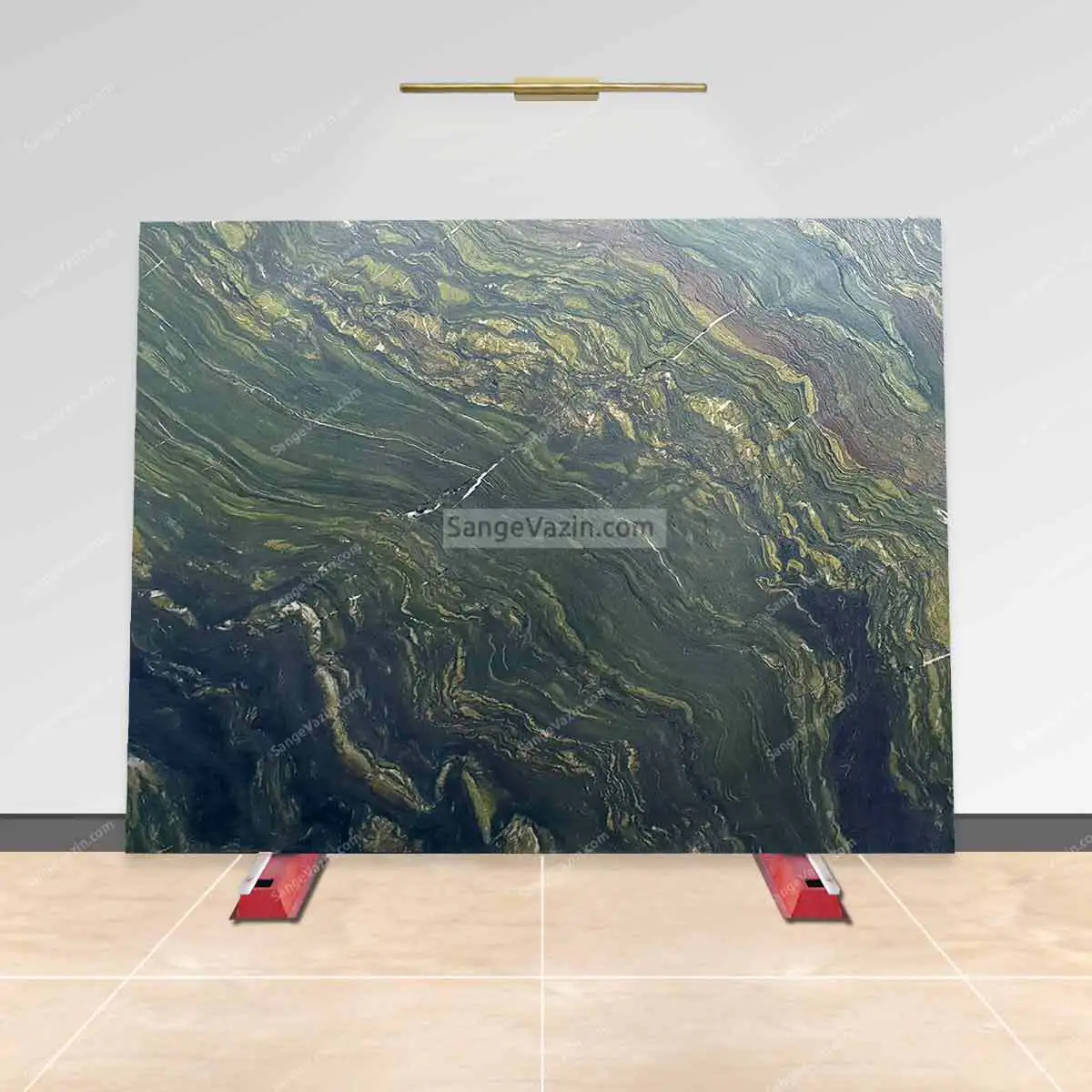
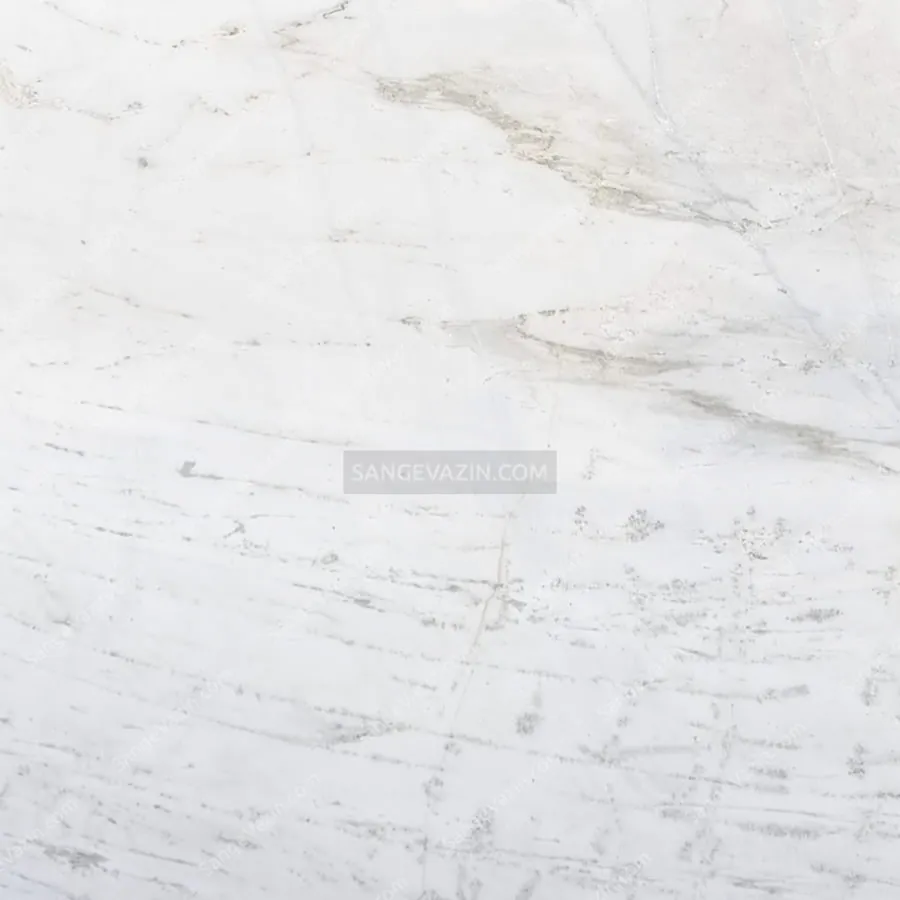
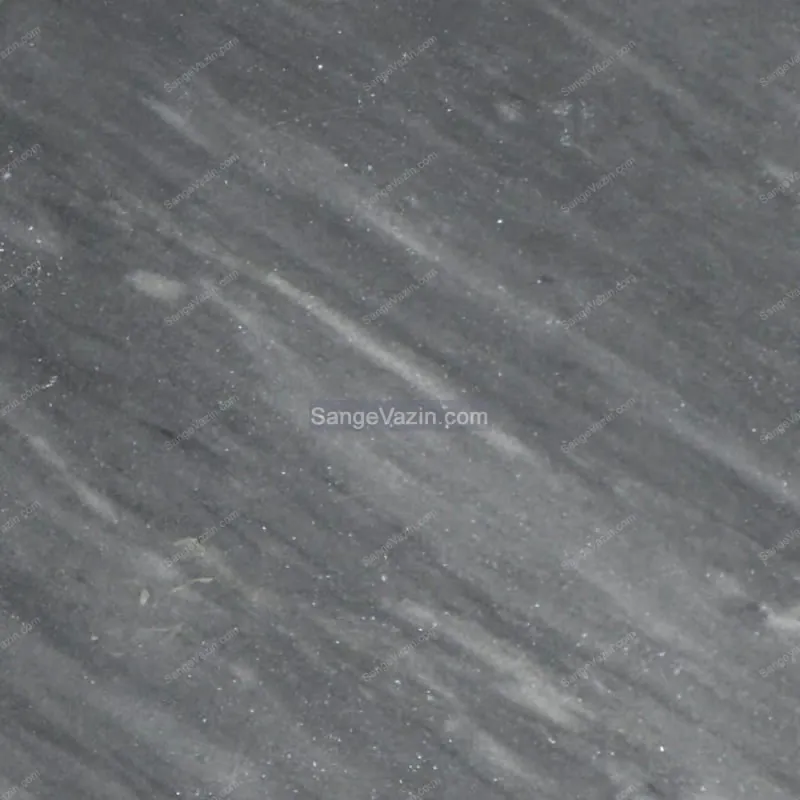
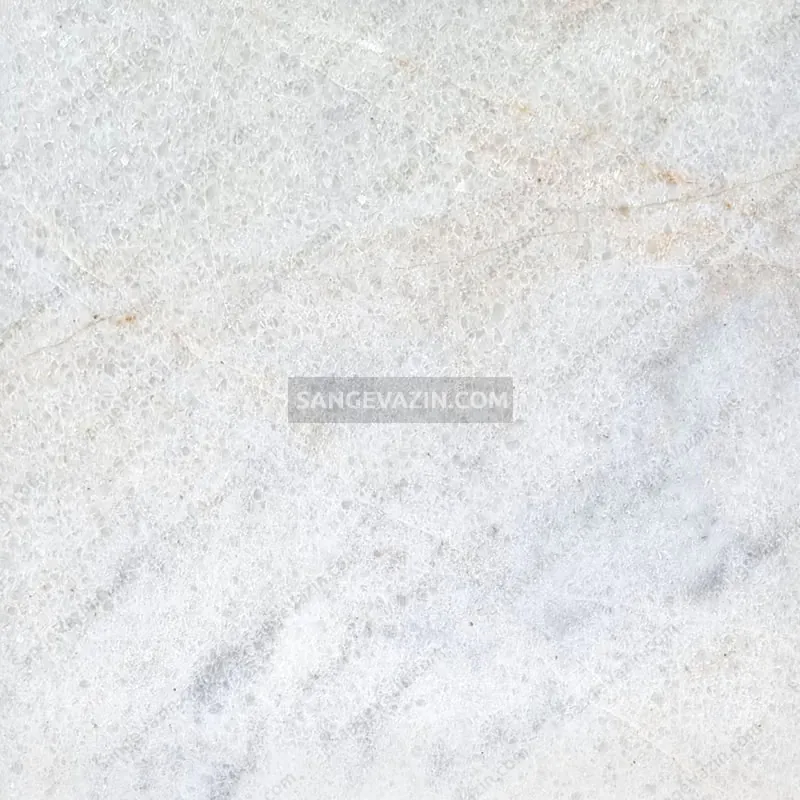
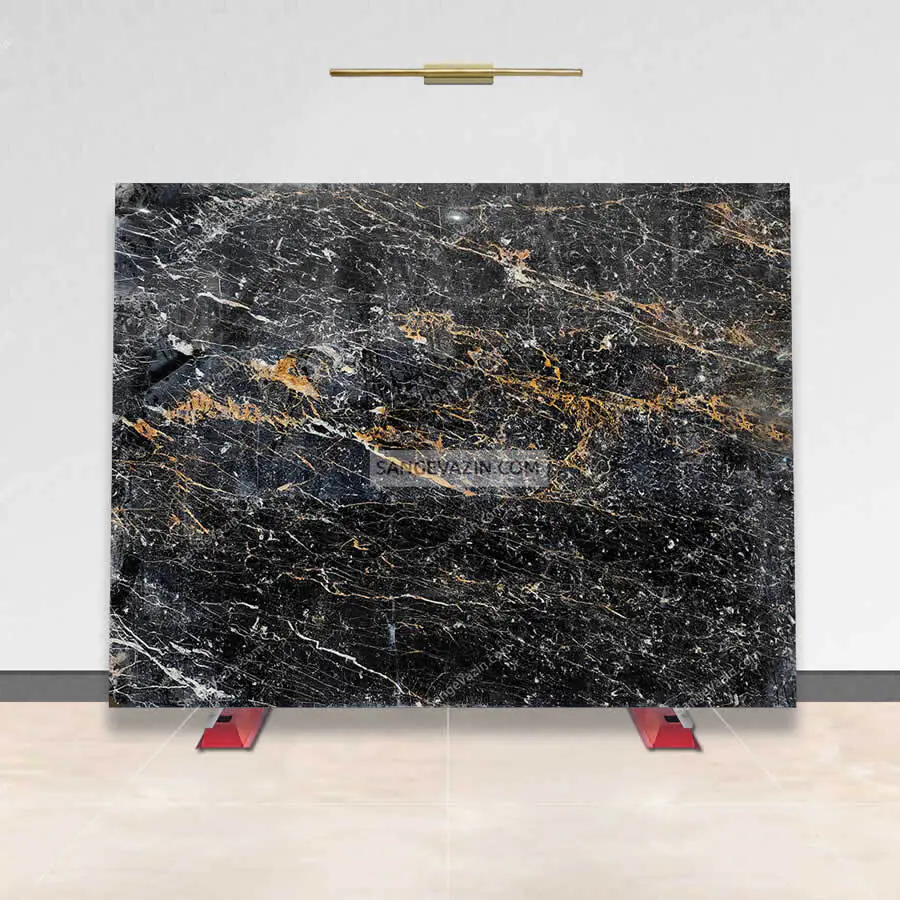
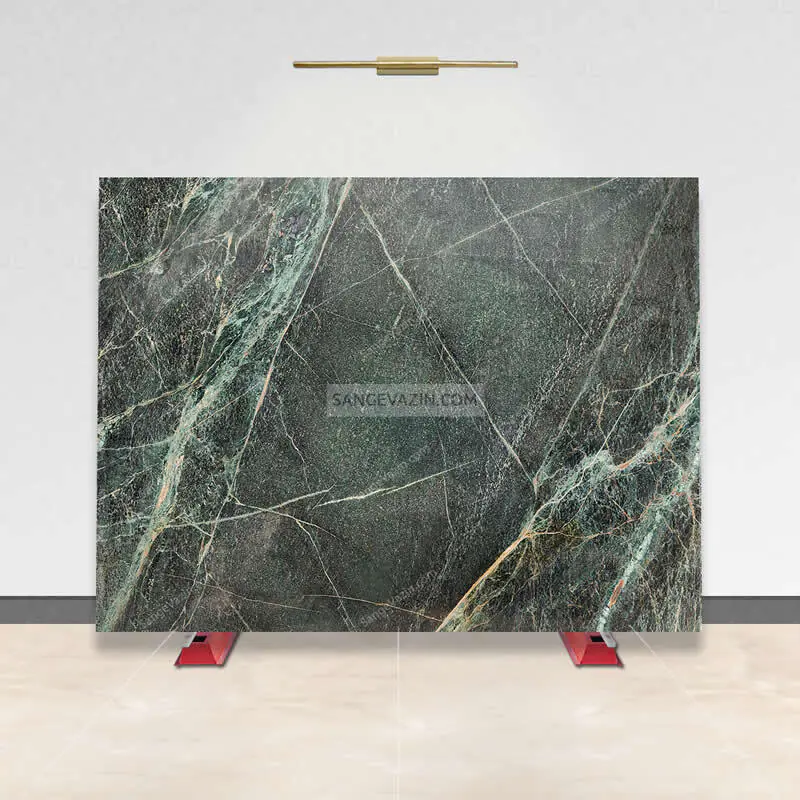
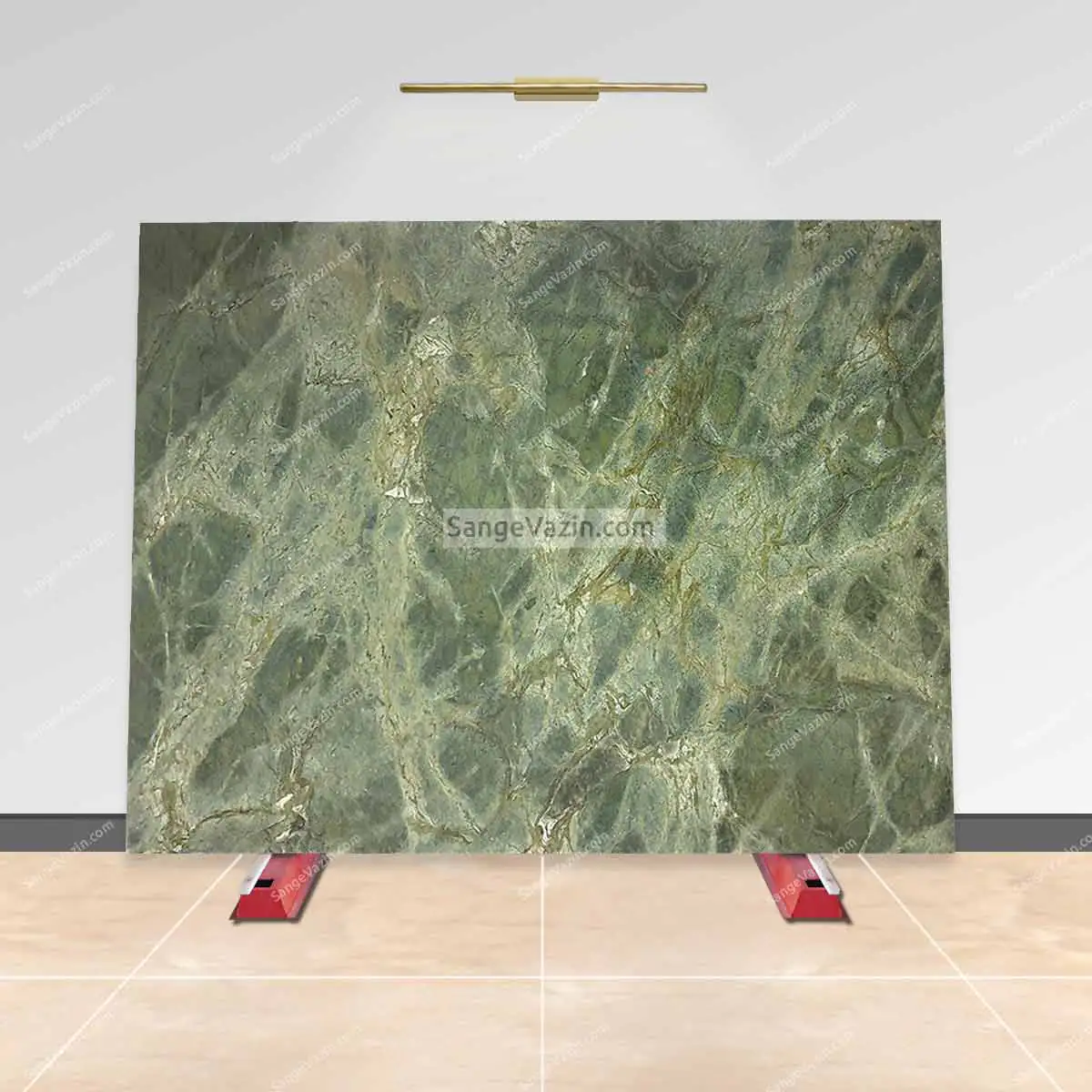
Choosing the Right Floor Stone
Choosing the right and standard floor stone is very important because the possibility of changing and replacing the floor of the building would be very time-consuming and costly.
Stones are used in different types for different purposes. The right stone for a building floor depends on various factors, such as whether the space is indoors or outdoors, the design style, and the intended use.
Honesty in Sales Strategy
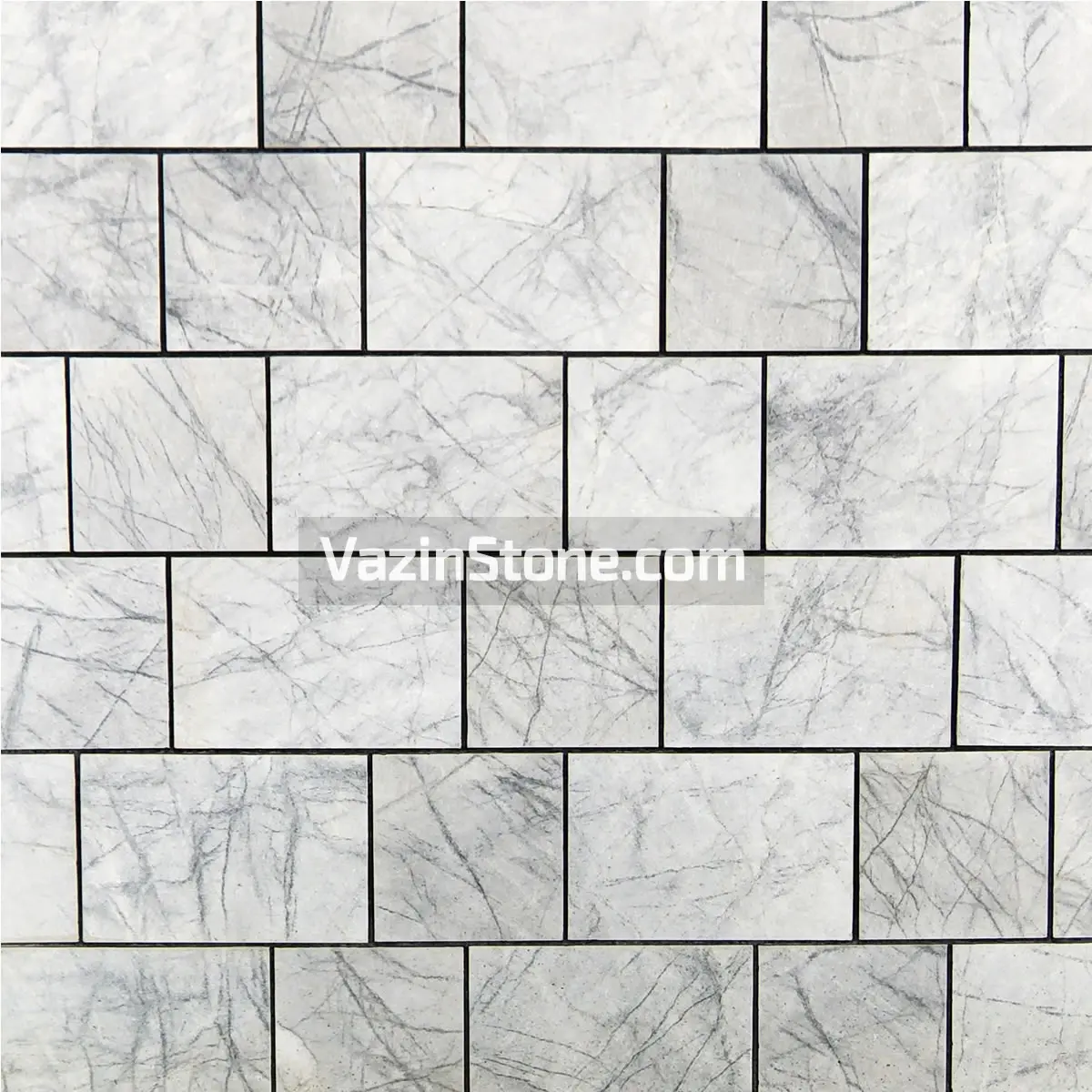
As part of its sales honesty strategy, Vazin Stone presents the advantages and disadvantages of using natural stone for floors with complete impartiality and fairness. Naturally, every building material has its own strengths and weaknesses, and depending on your specific circumstances, each may be a more suitable option for you.
Advantages of Using Stone on Floors
- Beautiful appearance due to its natural patterns and colors.
- The ability to be re-polished and refinished.
- The ability to undergo different types of processing for different applications.
- High durability, strength, and longevity (If used according to standards)
- Variety in sizes
Disadvantages of Using Stone on Floors
- Heavier than ceramic.
- The inherently cold nature of stone.
- The high reactivity of marble stones and their susceptibility to staining.
- Relatively higher cost.
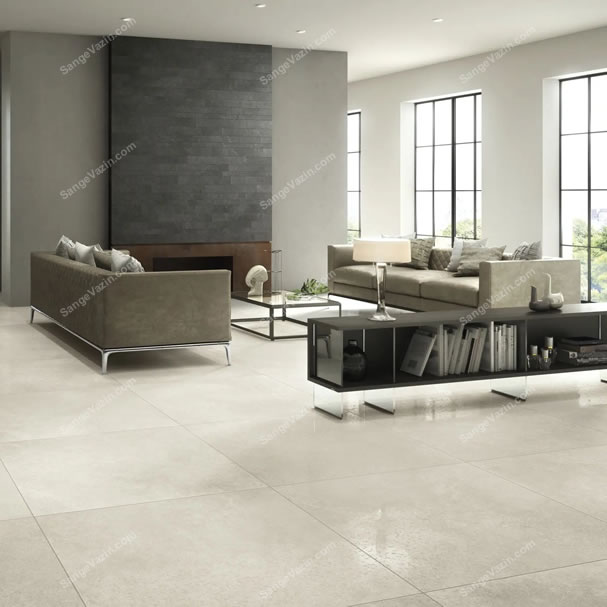
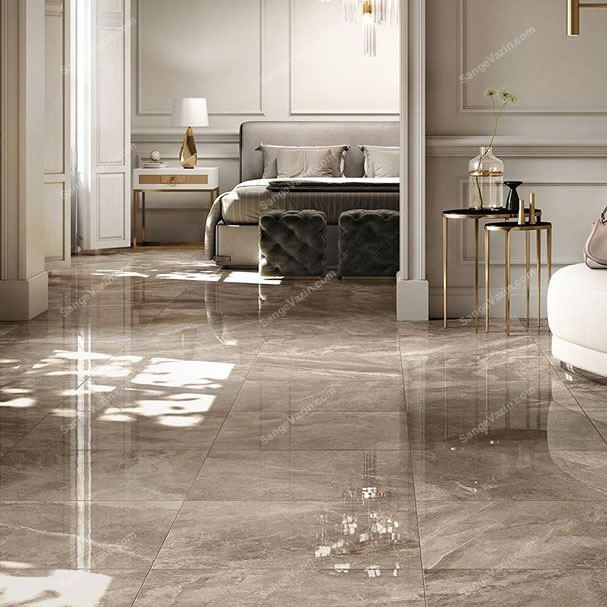
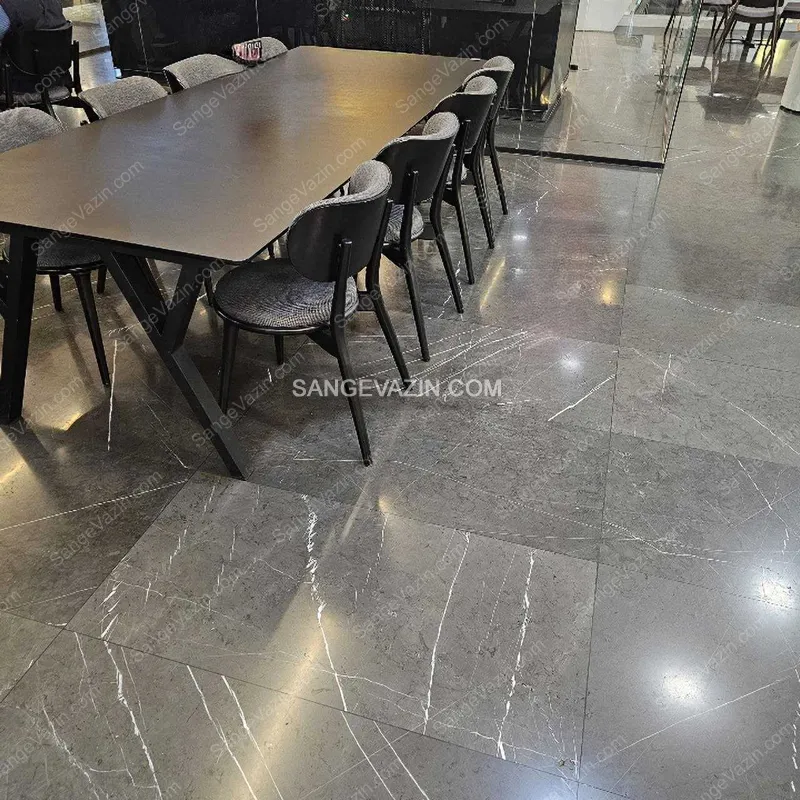
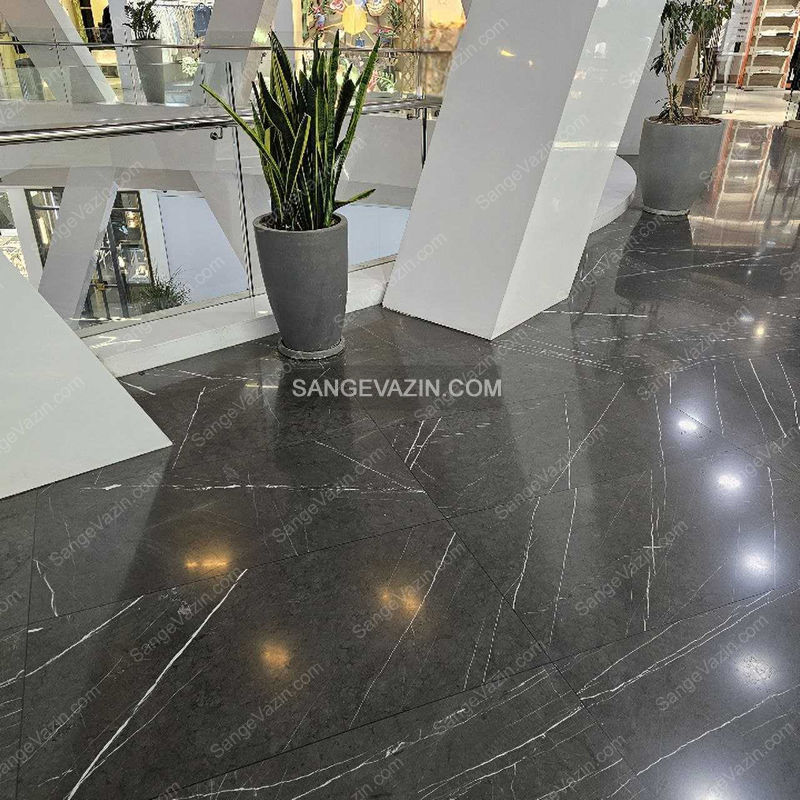
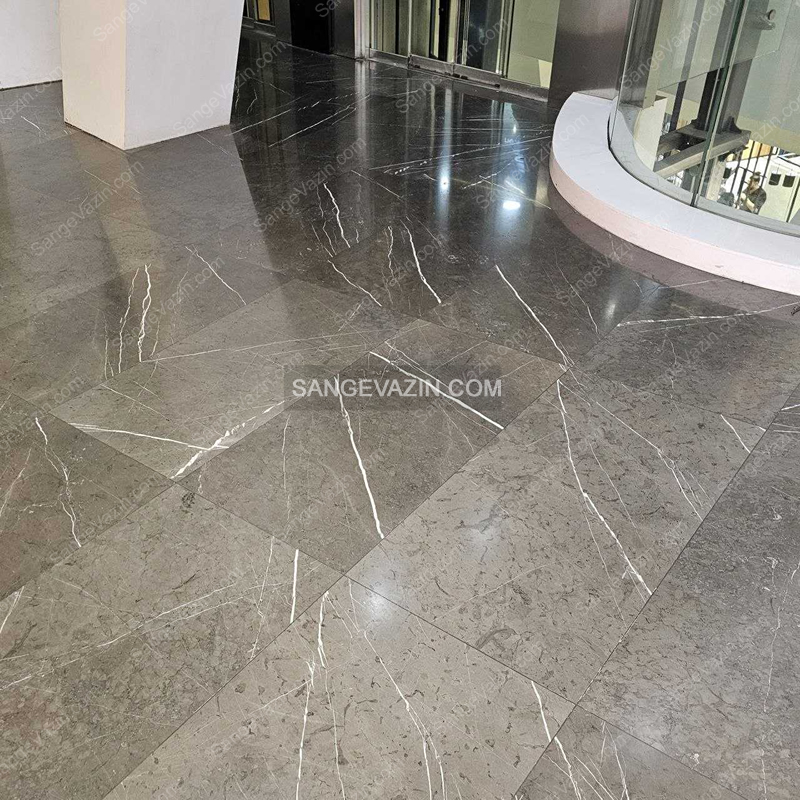
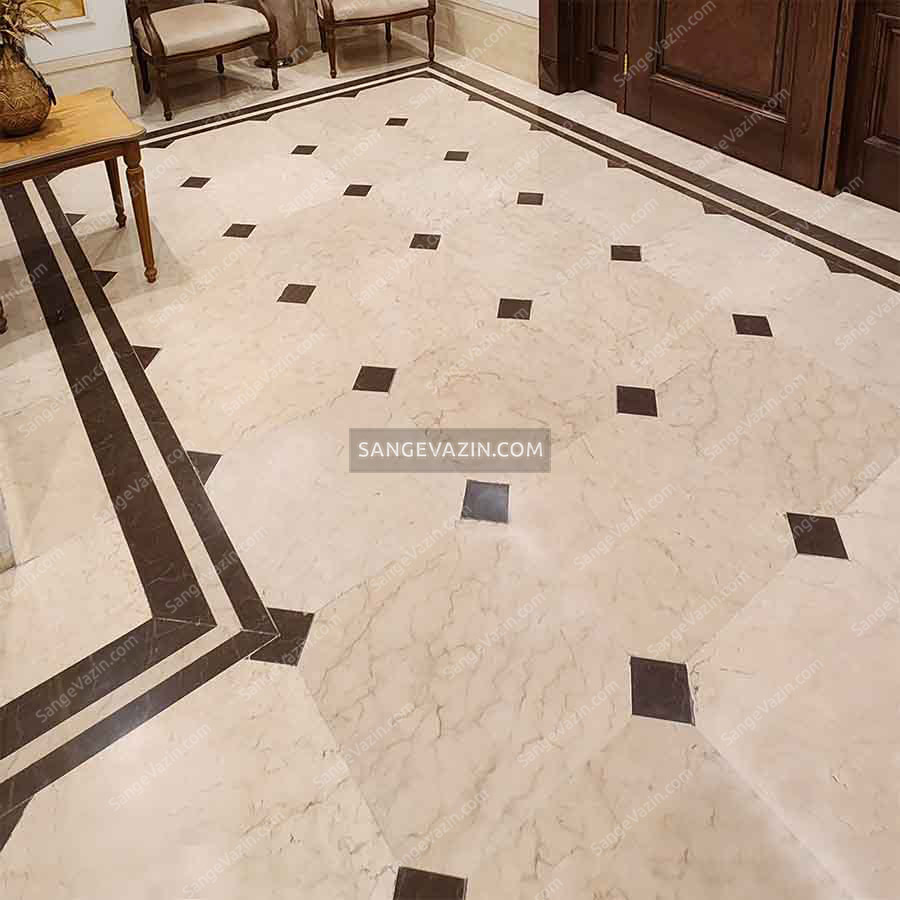
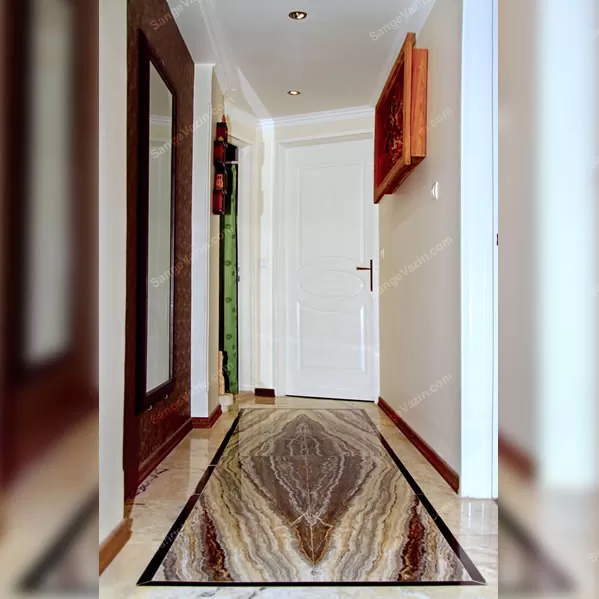
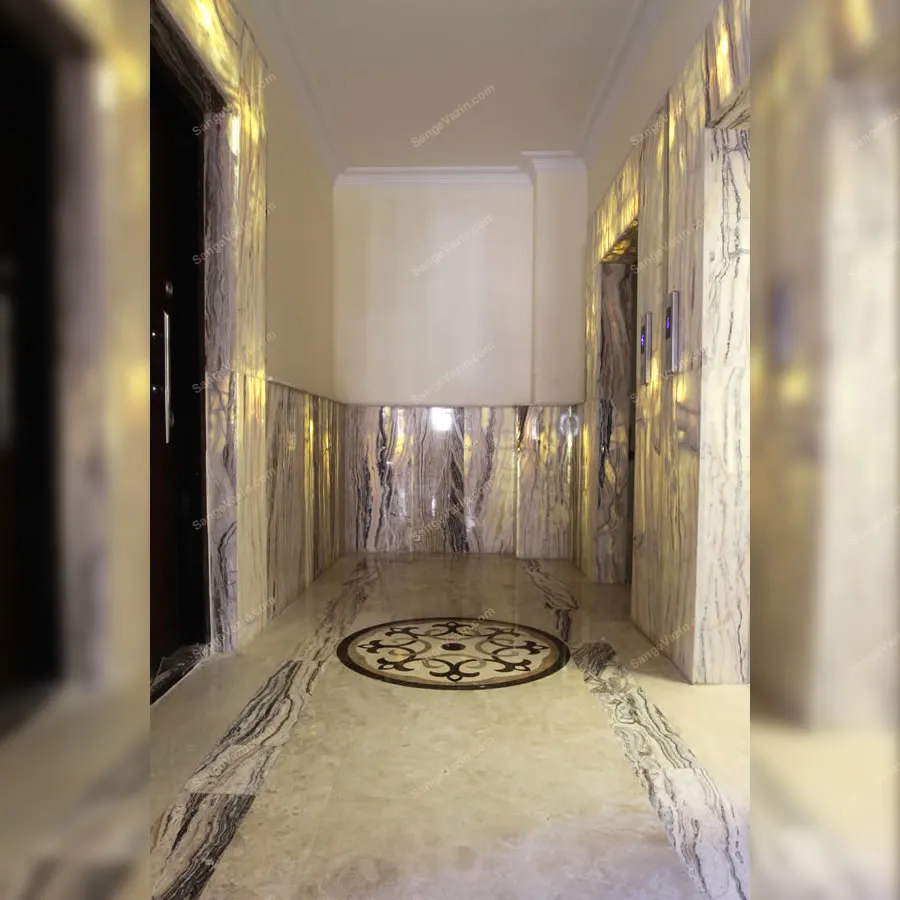
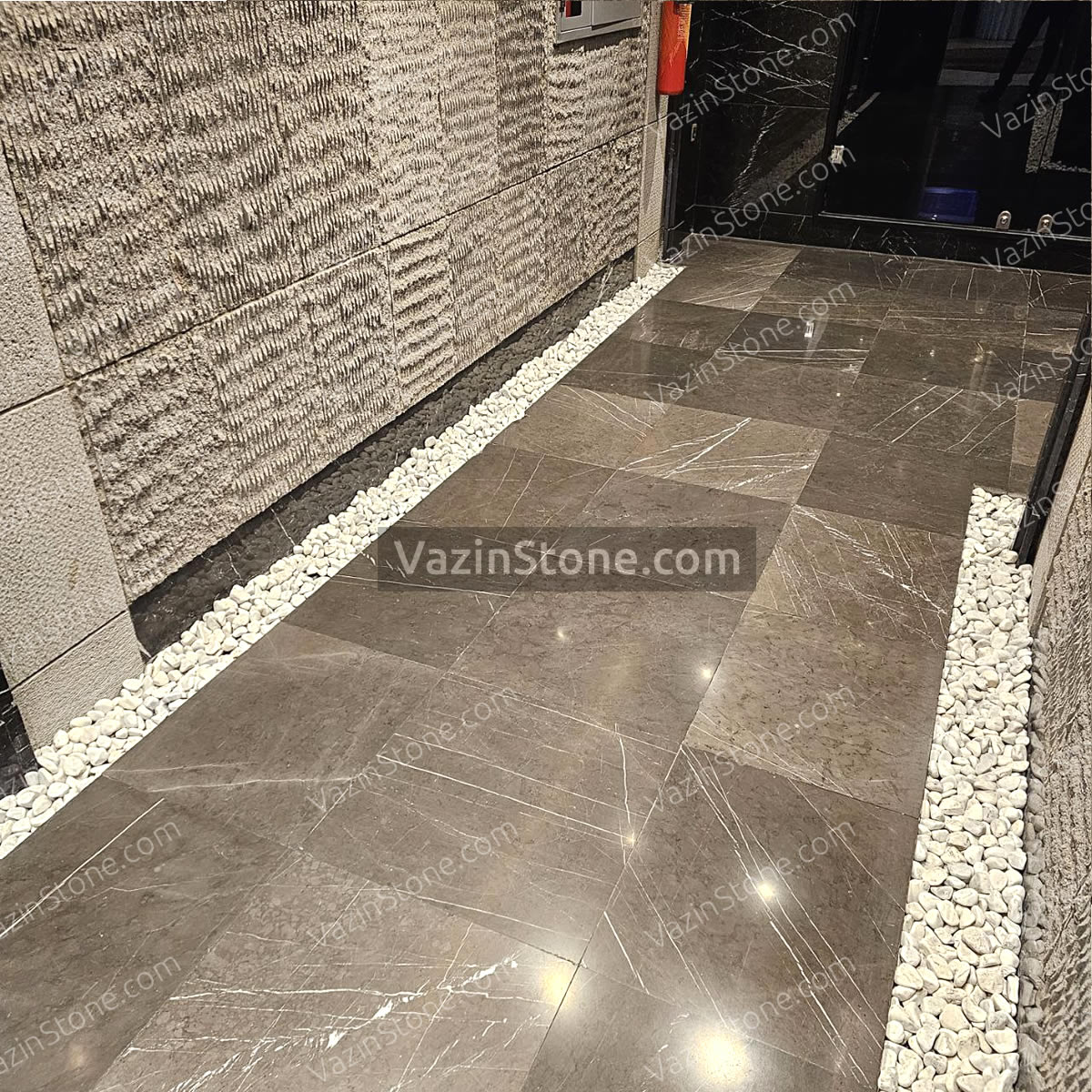
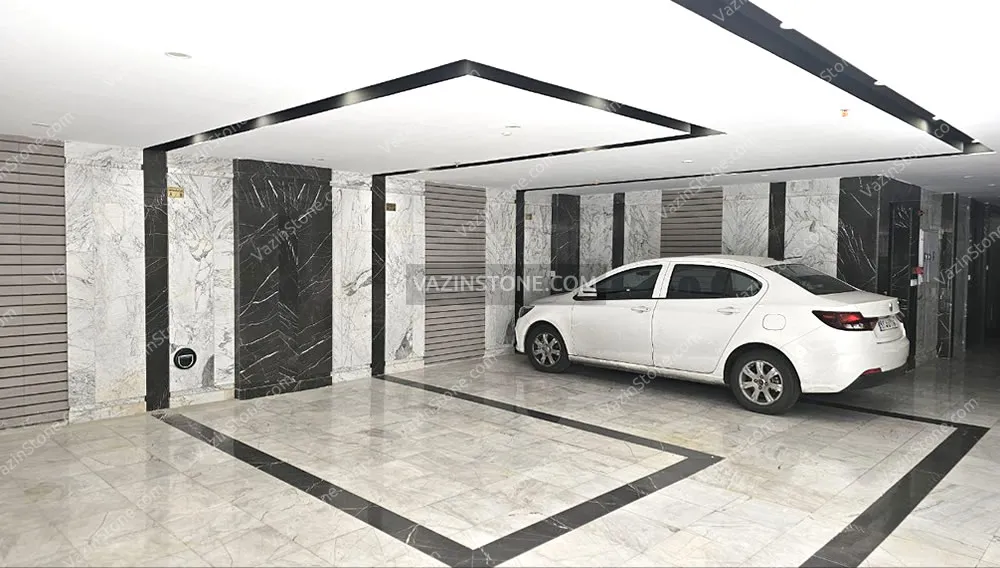
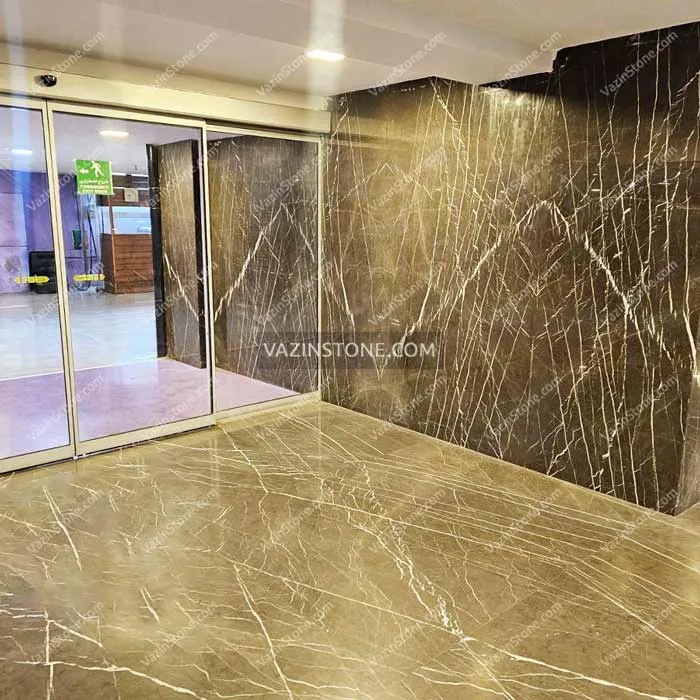
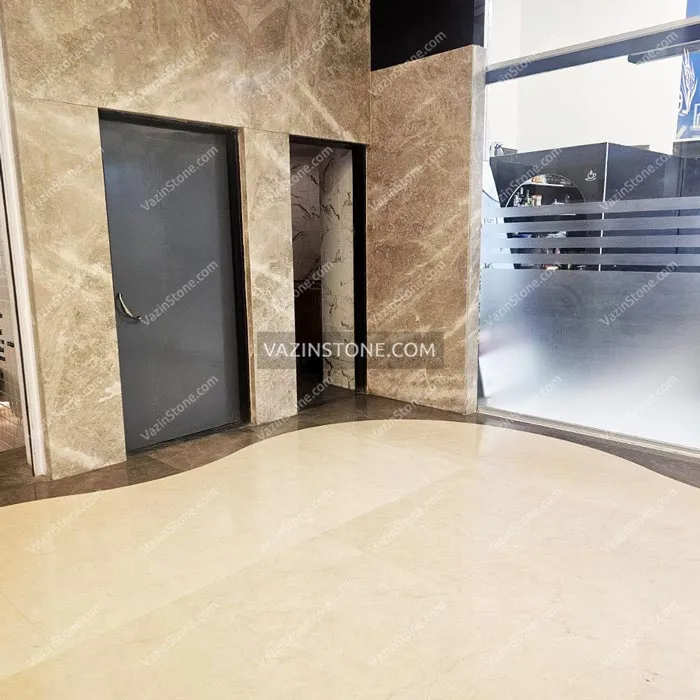
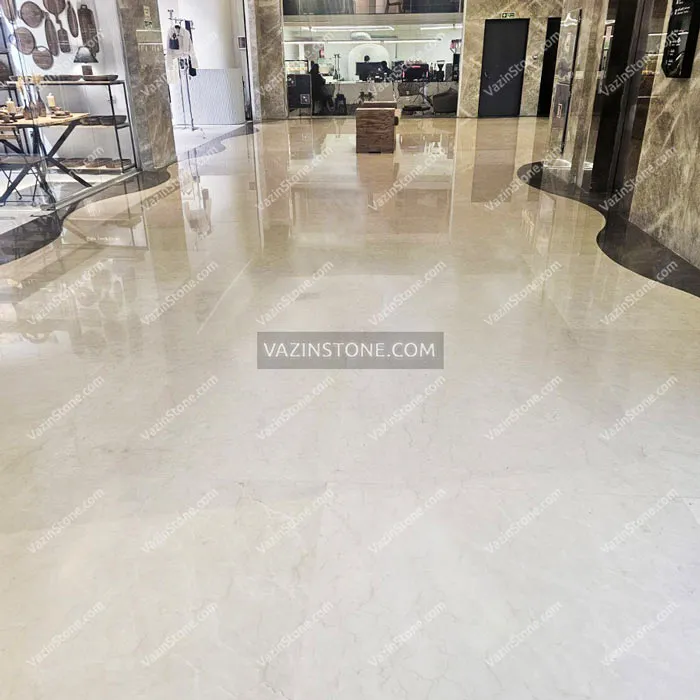
Floor Stone Price
The price of floor stone depends on the type of stone, dimensions, thickness, processing quality, and its technical characteristics. The price range (Vazin Stone), based on the latest update (September 2026), for various types of floor stone is as follows:
- Marble floor stone price: $7 to $15 per square meter.
- Crystal marble floor stone price: $13 to $65 per square meter.
- Granite floor stone price: $8 to $390 per square meter.
Factors Affecting the Price of Floor Stone
- The impact of stone type on price: Naturally, the type of stone is one of the most important factors determining its price. Stones that offer greater beauty, durability, lower water absorption, and so on are more expensive.
- The impact of stone thickness and dimensions on price: Stone thickness is one of the key factors to consider when purchasing and ordering floor stone. Greater thickness provides increased strength and, consequently, results in a higher price. In general, the larger the stone dimensions, the higher the price.
- The impact of cutting and processing quality on stone price: Regardless of the intended application or type of stone, the quality of cutting and processing is always one of the factors influencing the price of stone. The quality of surface polishing, squareness, and uniform thickness are among the key factors in stone processing.
- The impact of abrasion resistance on floor stone price: Due to heavy foot traffic, floor stone is frequently exposed to scratches and abrasions. The higher the stone’s abrasion resistance, the greater its surface hardness and, consequently, the higher its price.
- The impact of water absorption on floor stone price: Flooring is one of the areas where various liquids may be spilled onto the surface. Therefore, the stone used for floors should have low water absorption. Stones with lower water absorption rates tend to have higher prices. Therefore, the price of courtyard floor stones should be taken into consideration, as it can represent a considerable cost.
- The impact of epoxy mesh backing on the price of floor stone: Epoxy mesh increases the stone’s adhesion and provides greater flexural strength. Stones sold with this feature are priced higher.
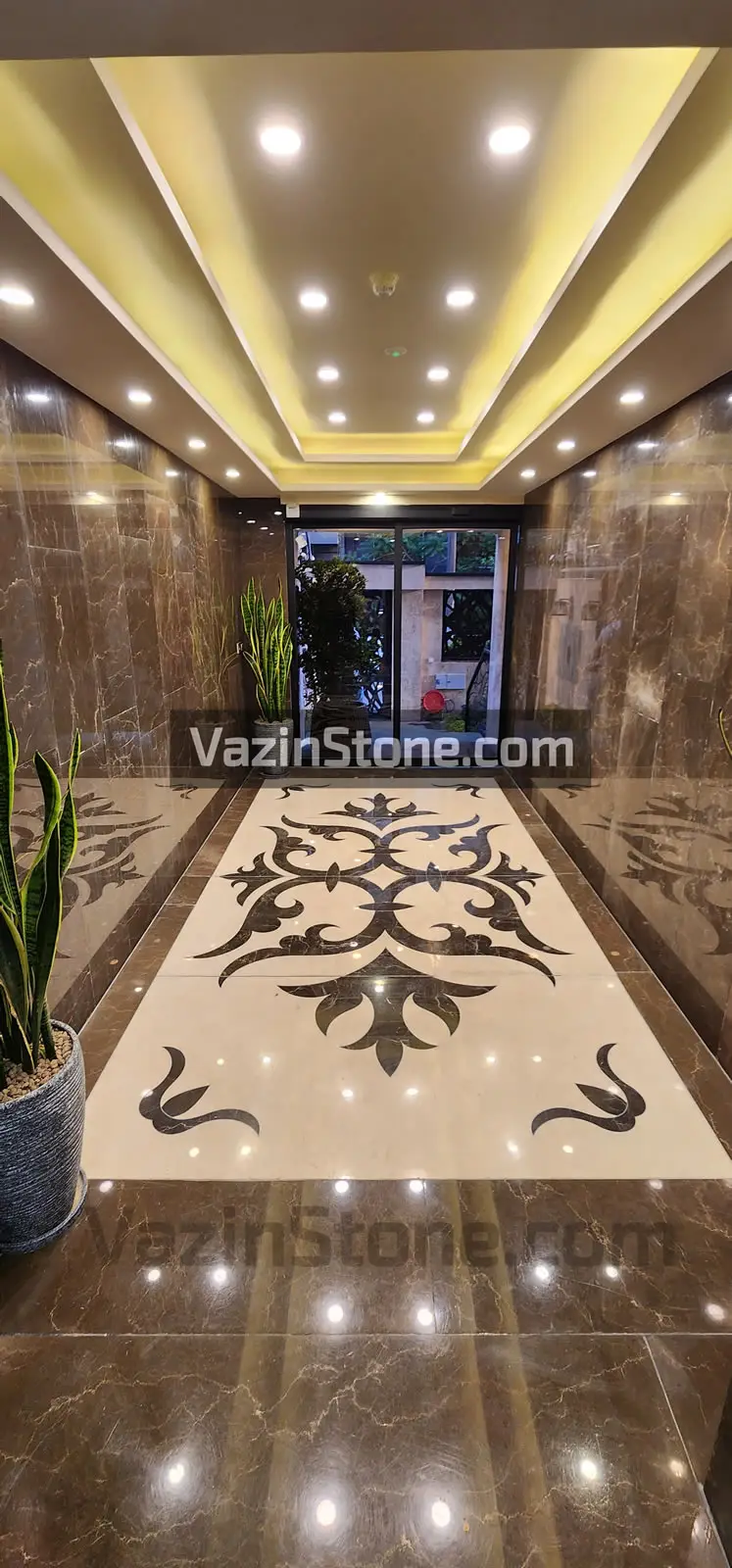
Outdoor Floor Stone
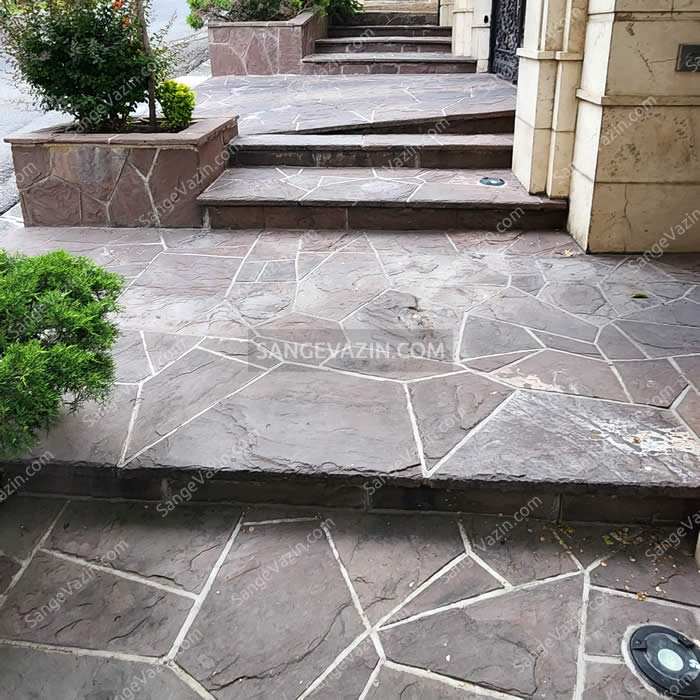
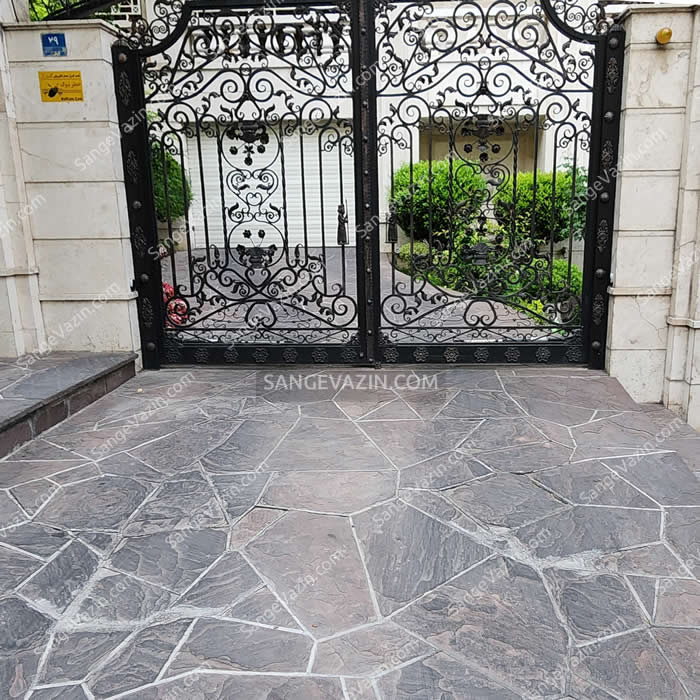
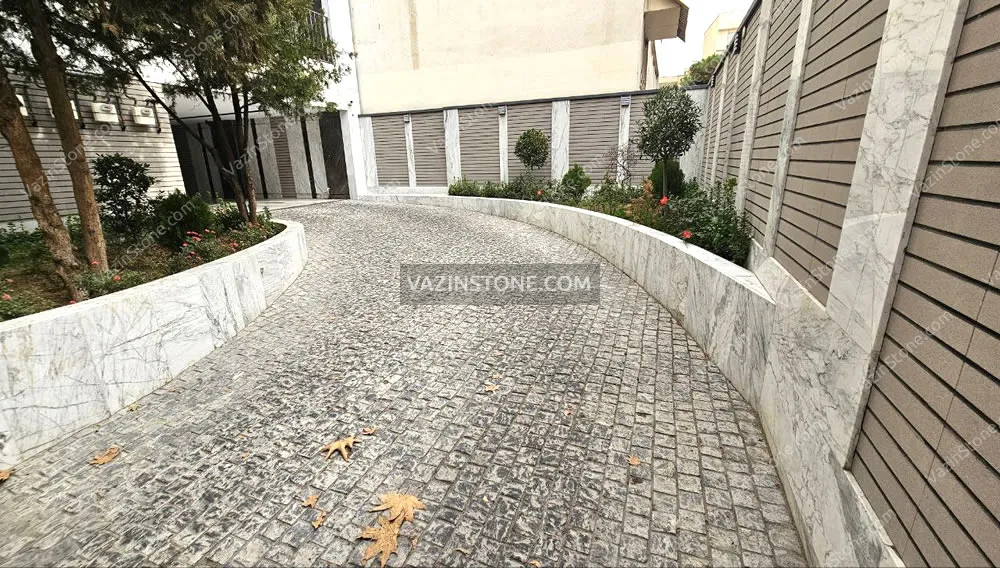
Floor stones in the exterior of the building, such as in the yards and sidewalks. should be resistant and stable to different environmental conditions (heat, cold, sunlight, humid environment, acid rain, traffic) and should not wear out, break, or deform over time. Generally, outdoor floor stone should have the following characteristics due to the difficult conditions faced.
- It should be thicker than 20 mm.
- This is because the stone must be able to withstand heavy loads and surface pressure without breaking or deteriorating.
- It should have an acceptable friction and surface adhesion.
- A glossy surface finish means a polished surface, which means a slippery surface during rain and snow.
- The flame sandblasting operation on stone may solve the problem of slipperiness, but this will increase the cost again, and still does not eliminate the slipperiness completely.
- The polished and glossy surface becomes scratched when exposed to harsh conditions(At this stage, a floor grinding machine can be used to resolve this issue)
- It should be beautiful with all the above conditions.
- The lack of a polished surface finish and high thickness may reduce the beauty of the stone, but choosing the right color and design can compensate for these drawbacks.
- The price should be reasonable
- Outdoor spaces in gardens, courtyards, and sidewalks are generally large, and the price of suitable floor stone will greatly affect the overall cost.
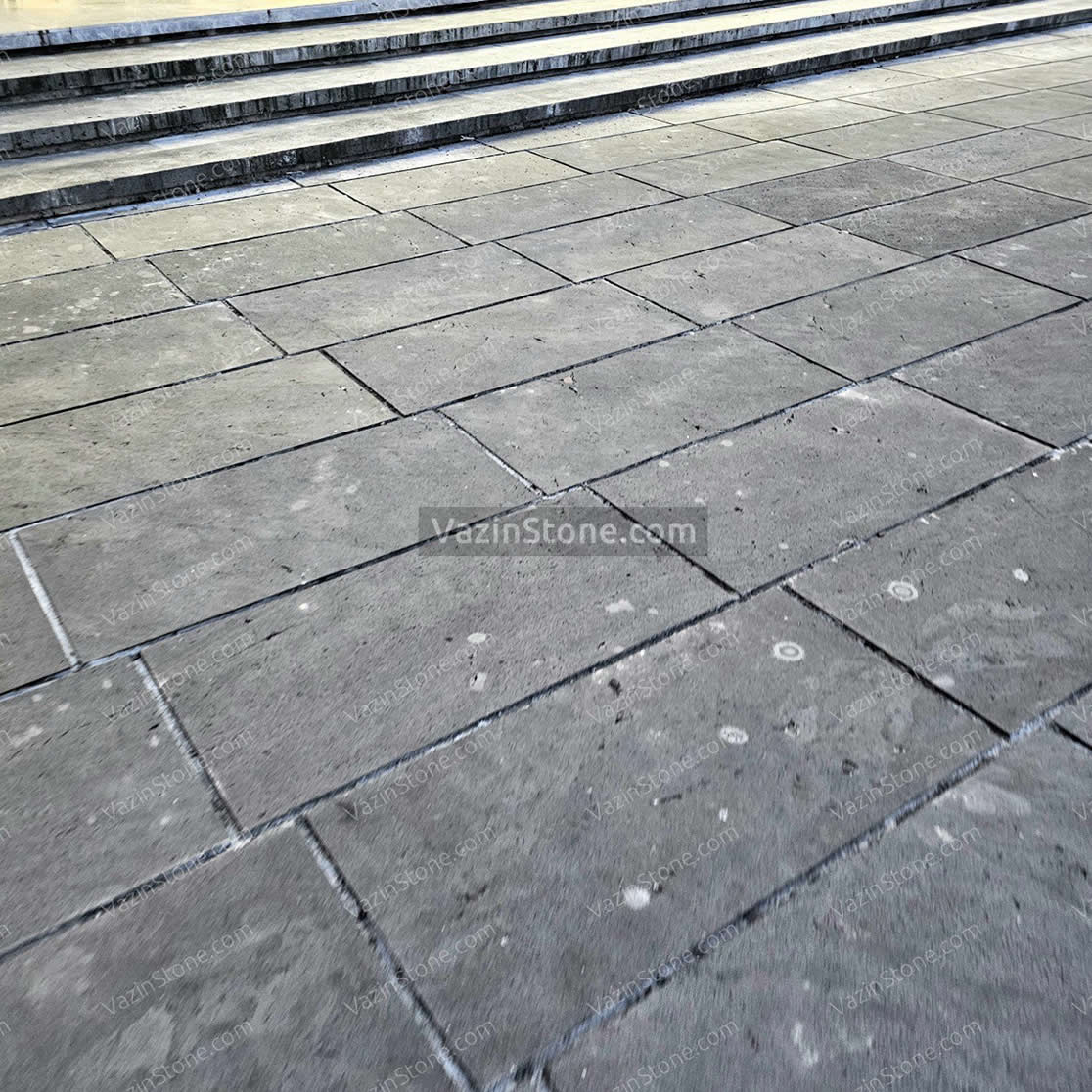
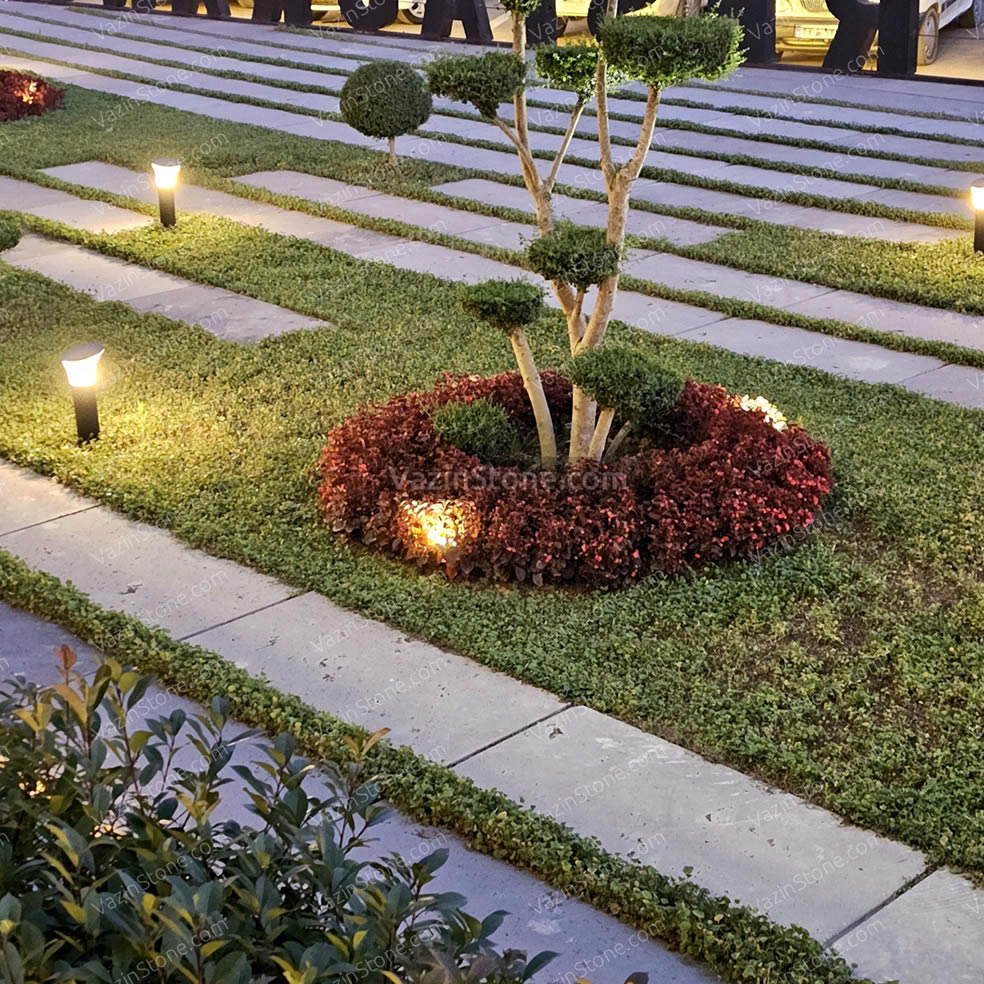
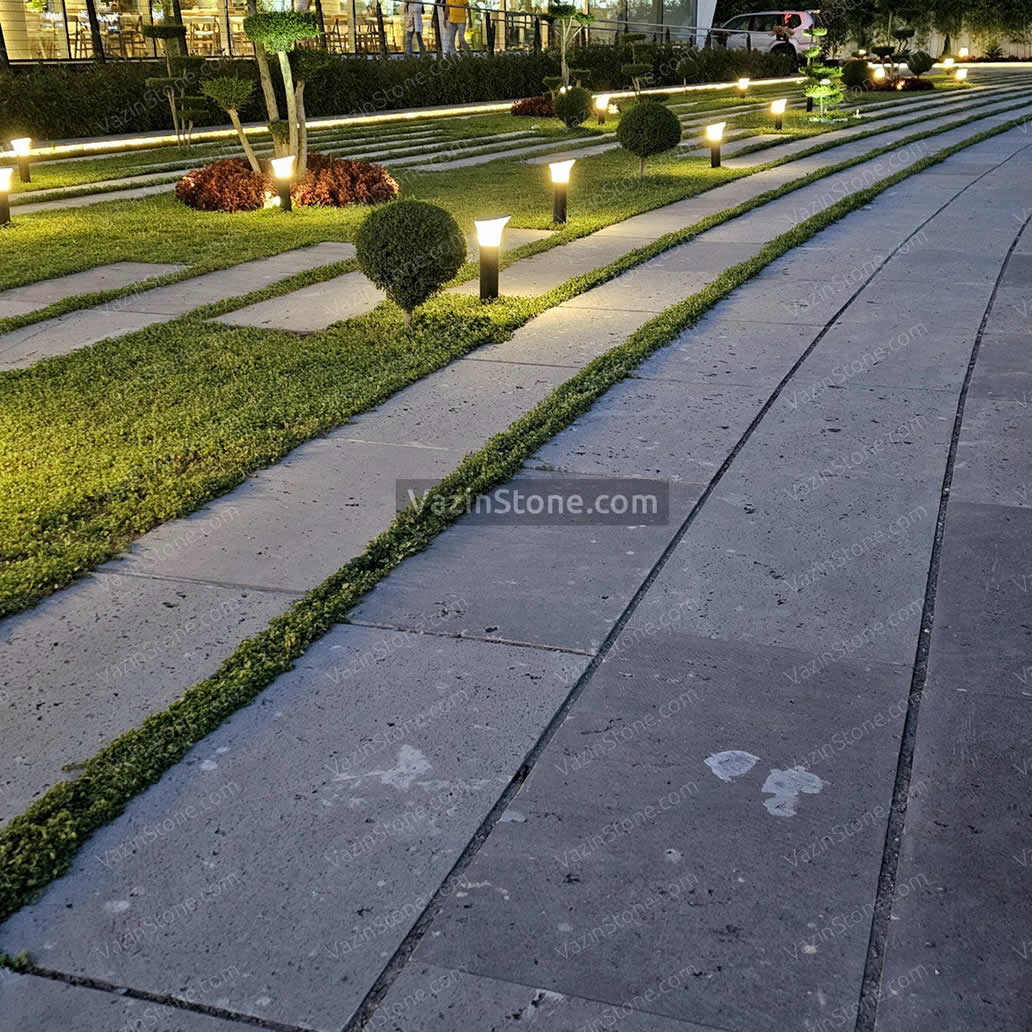
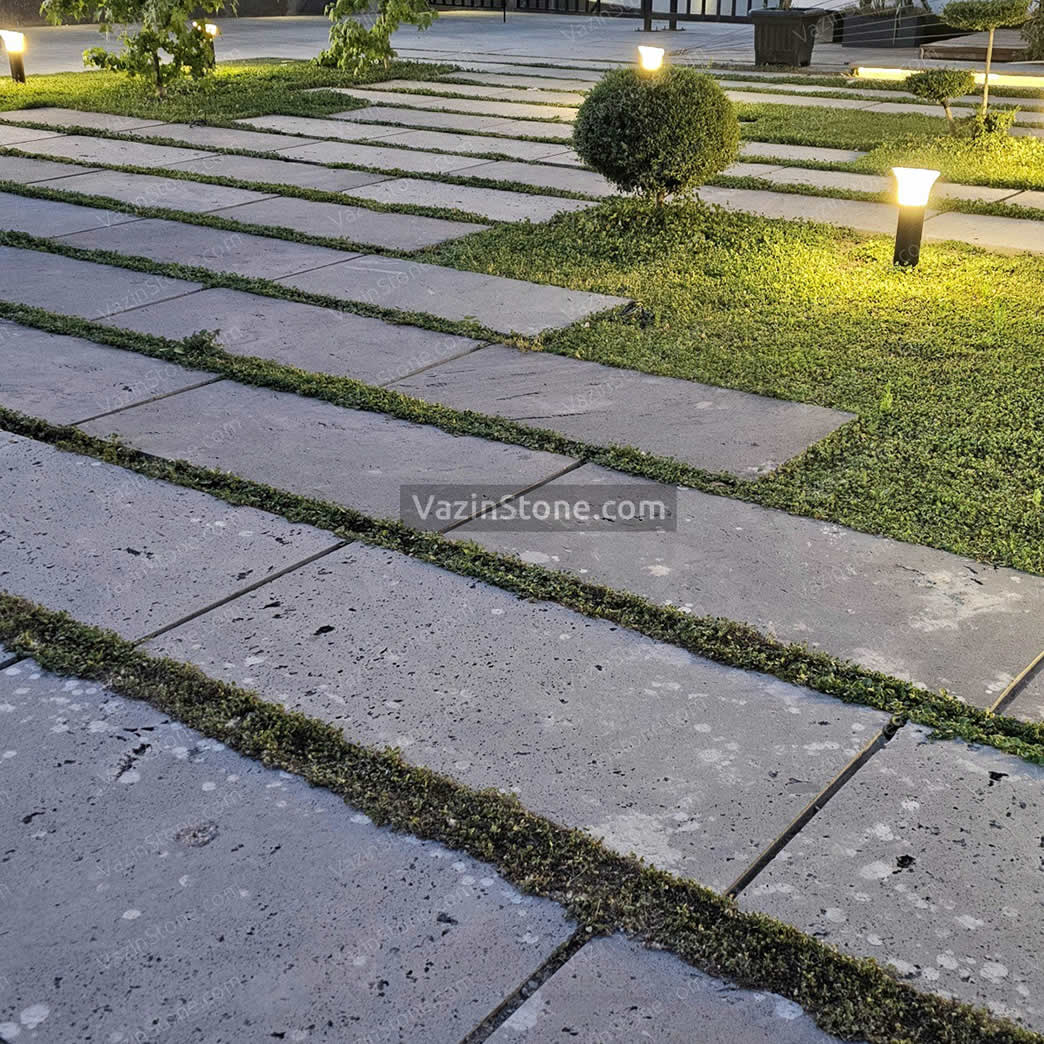
The most widely used stones in the exterior of residential buildings, offices, and commercial complexes are granites with non-polished processing (to have surface friction), basalt, and some marbles.
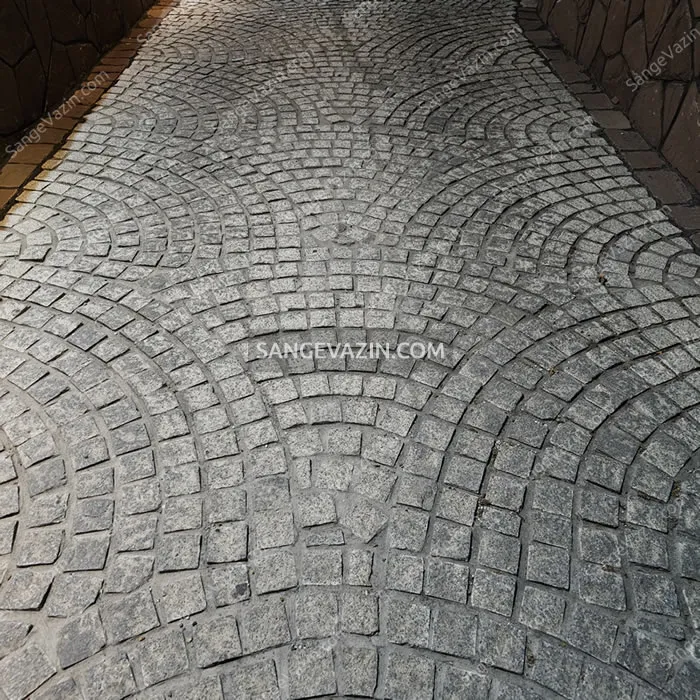
One of the most widely used stones for using the floors of the exteriors of parks, villas, and gardens is the porphyry pavement of Malone stone, or slate stone, and cubic stone. You can also use pebble stones for outdoor landscaping environments.
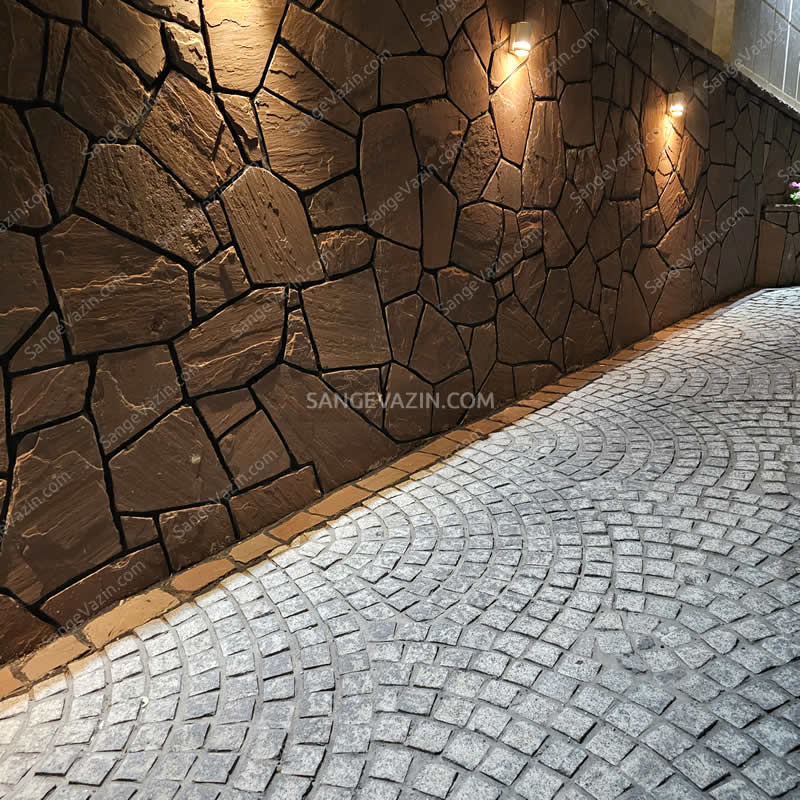
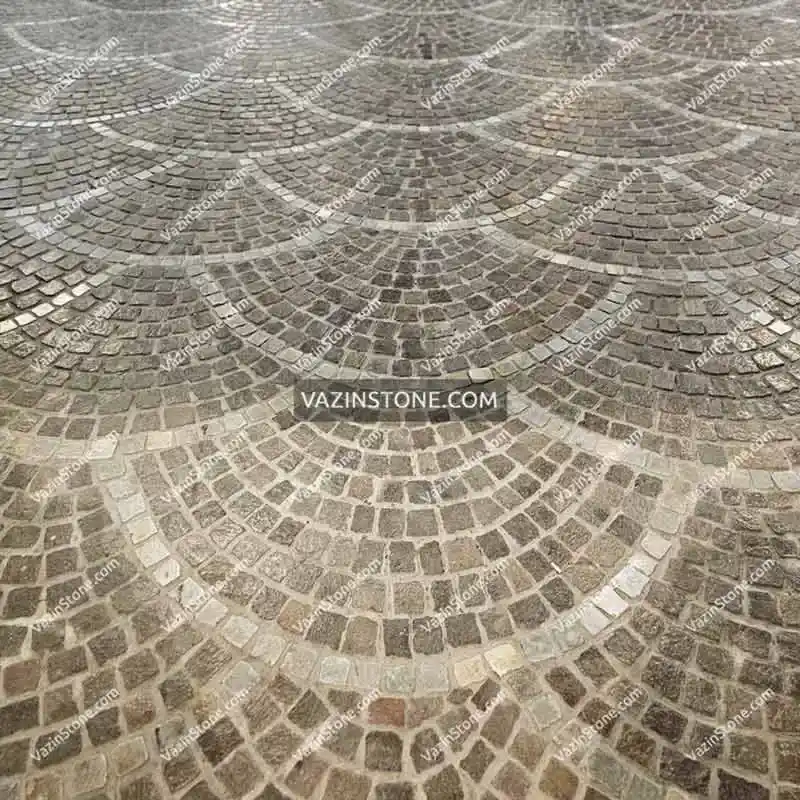
Indoor Floor Stone
The interior floor area consists of two parts: home floor stone (indoor space) and public areas, including parking lots, lobbies, hallways, and stairs.
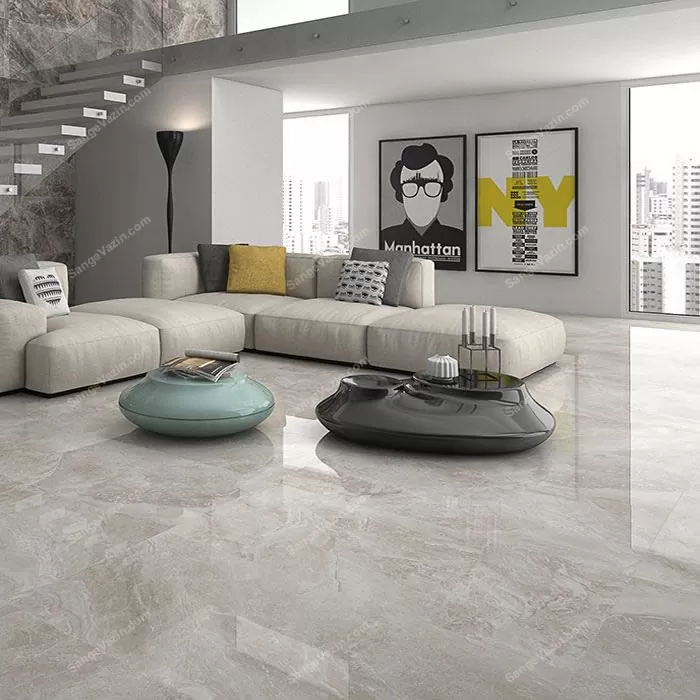
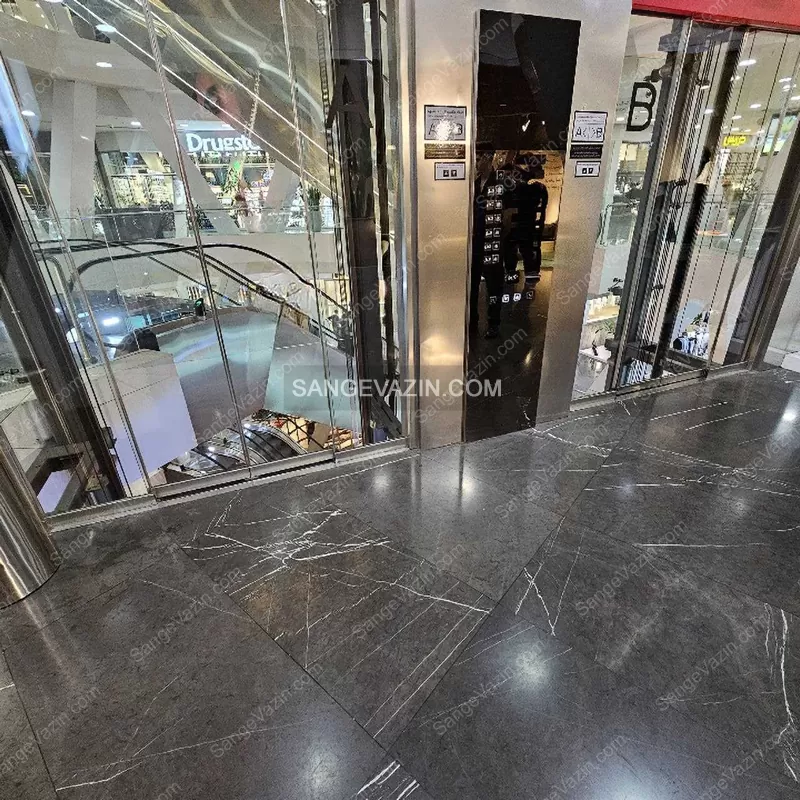
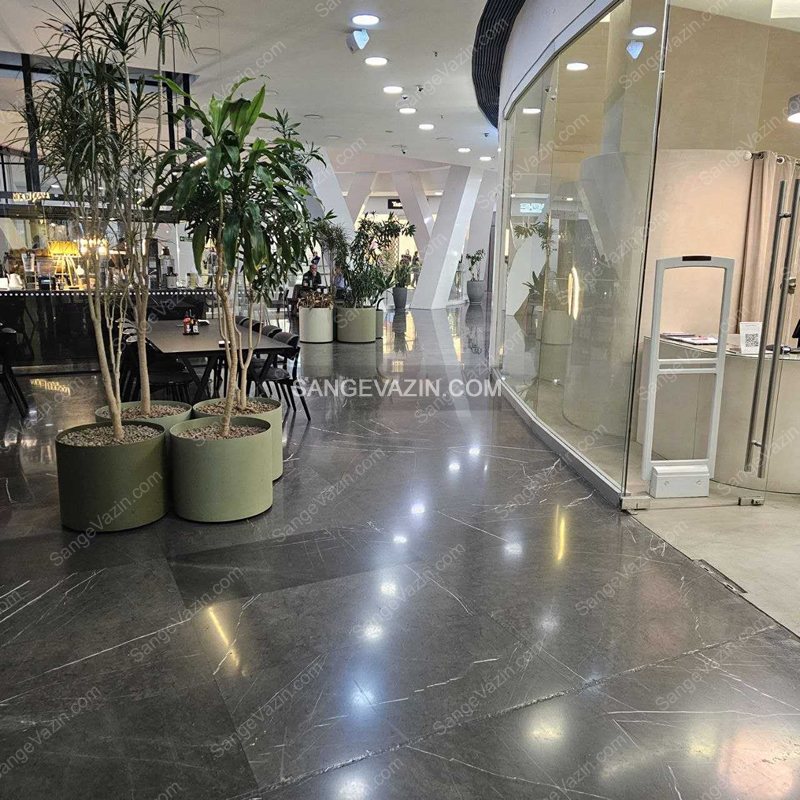
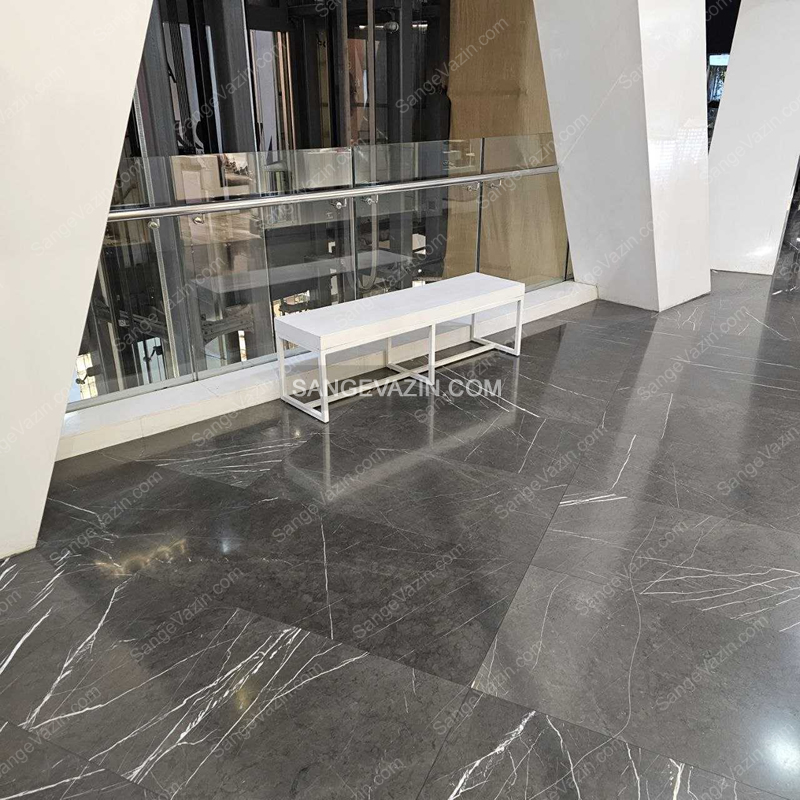
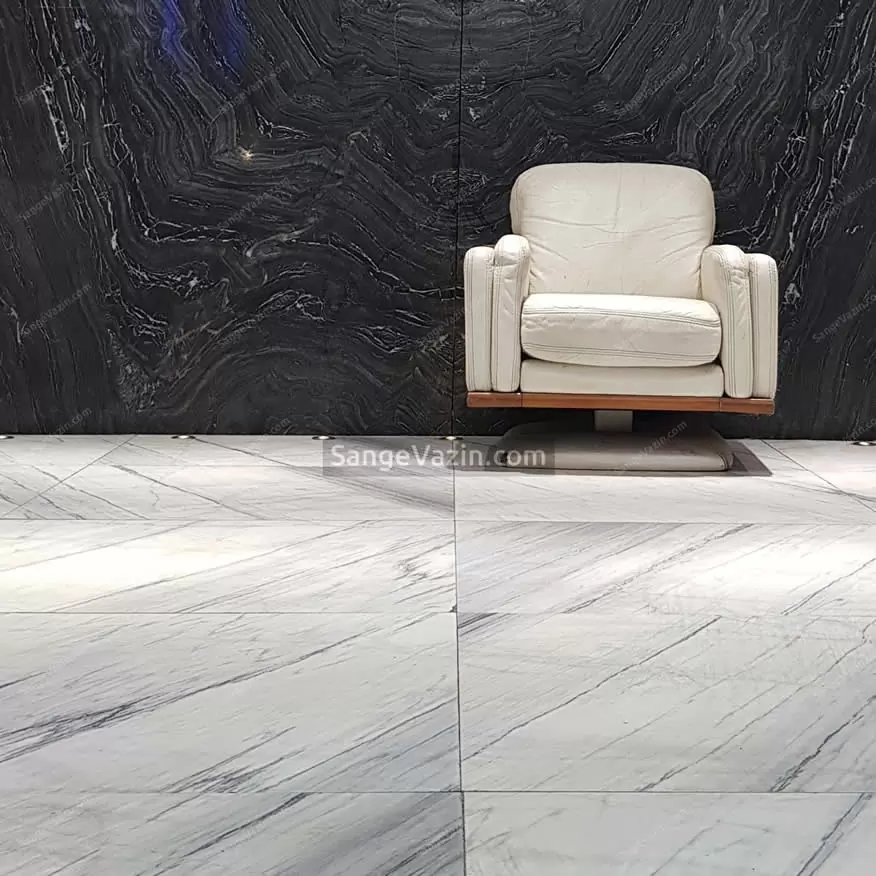
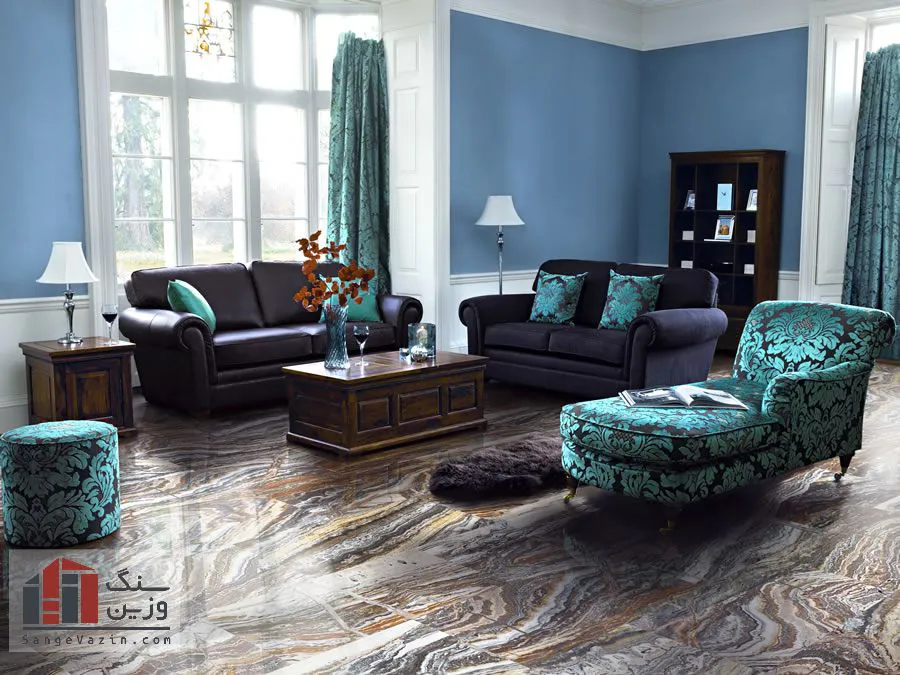
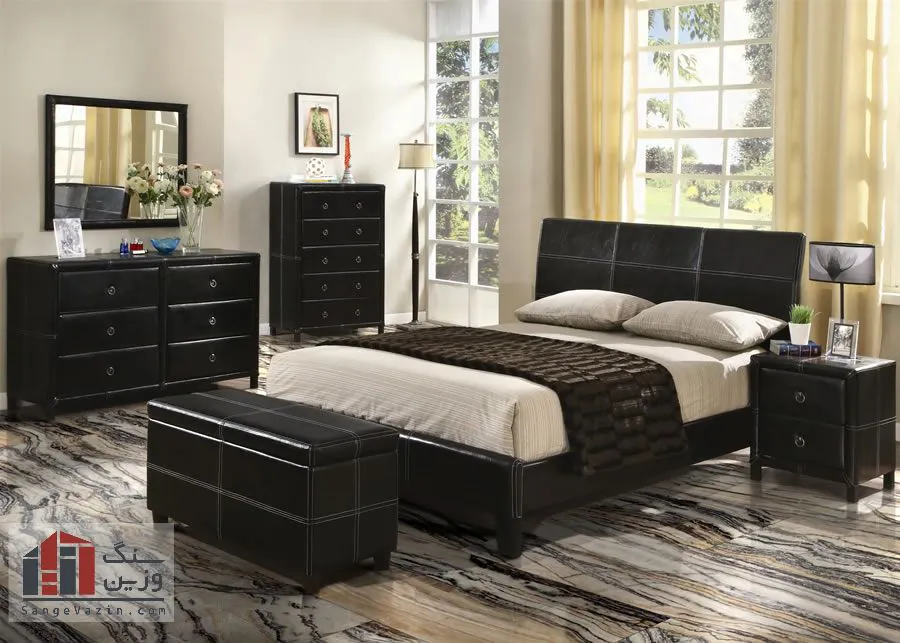
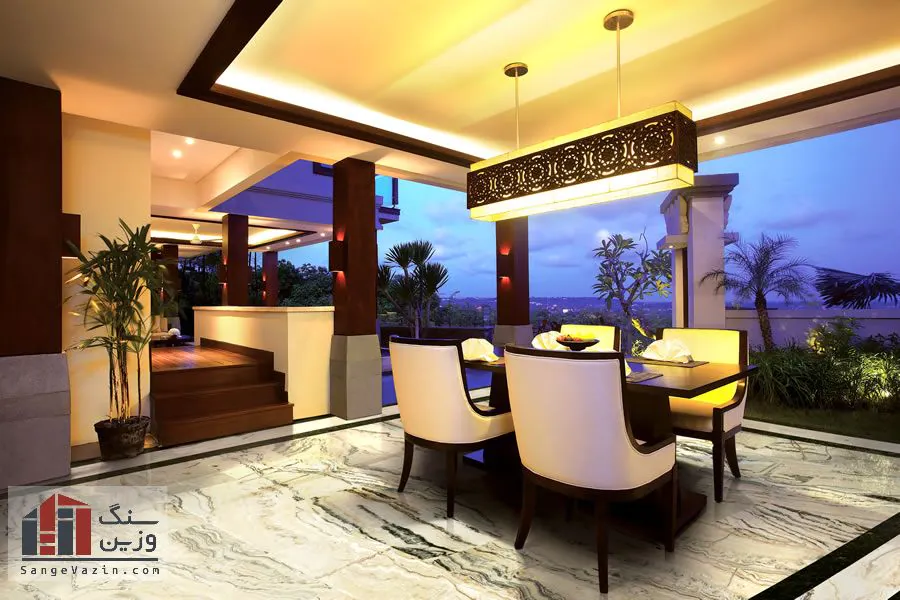
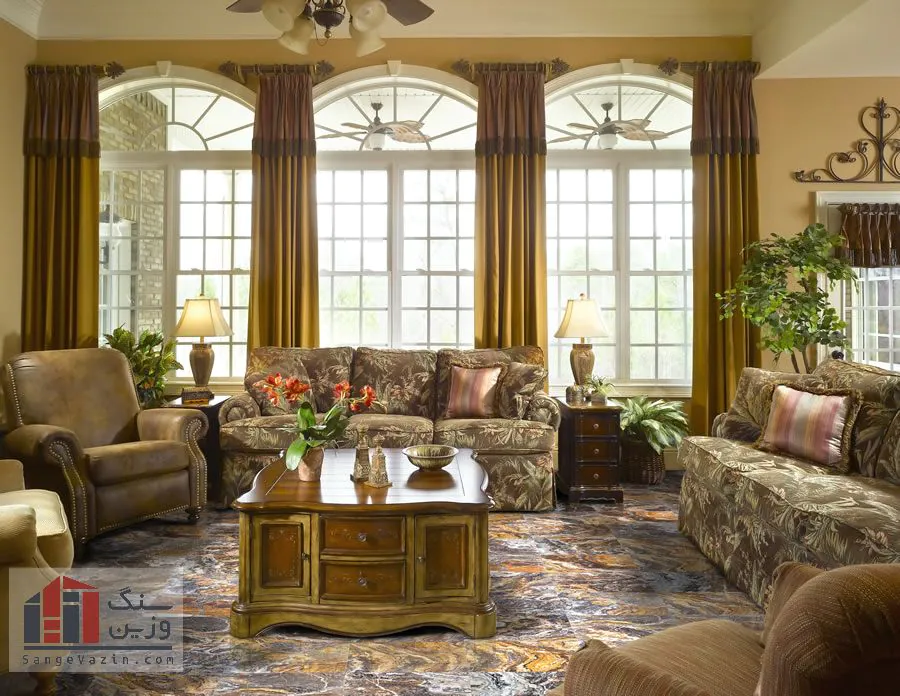
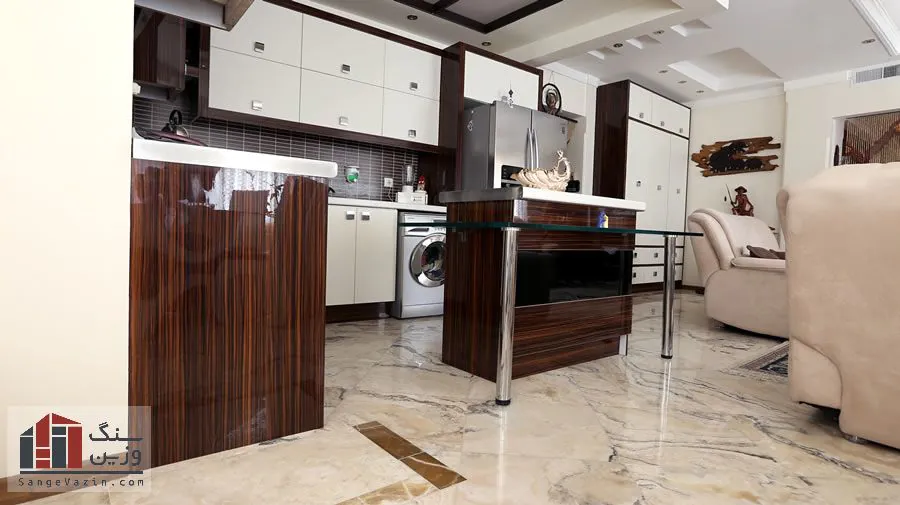
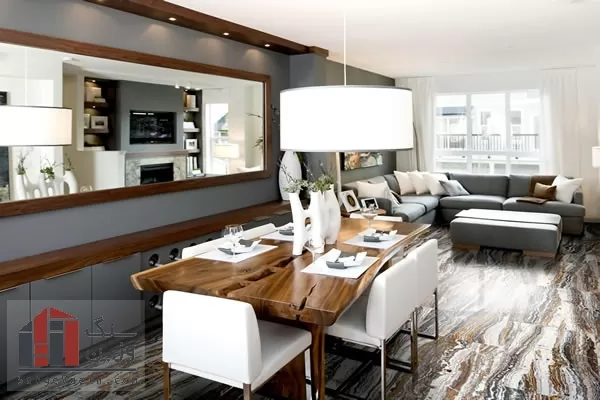
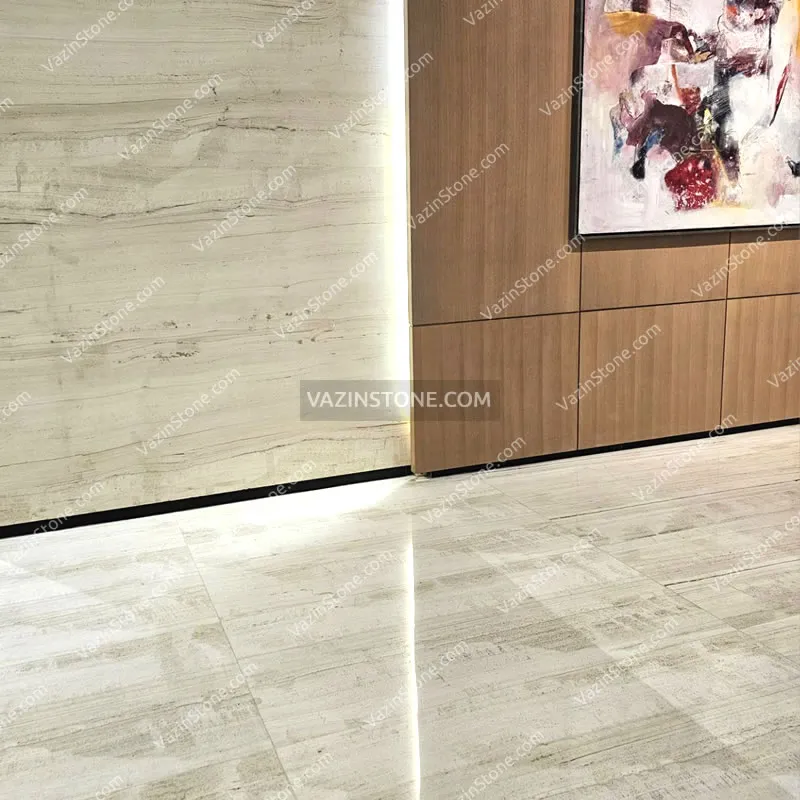
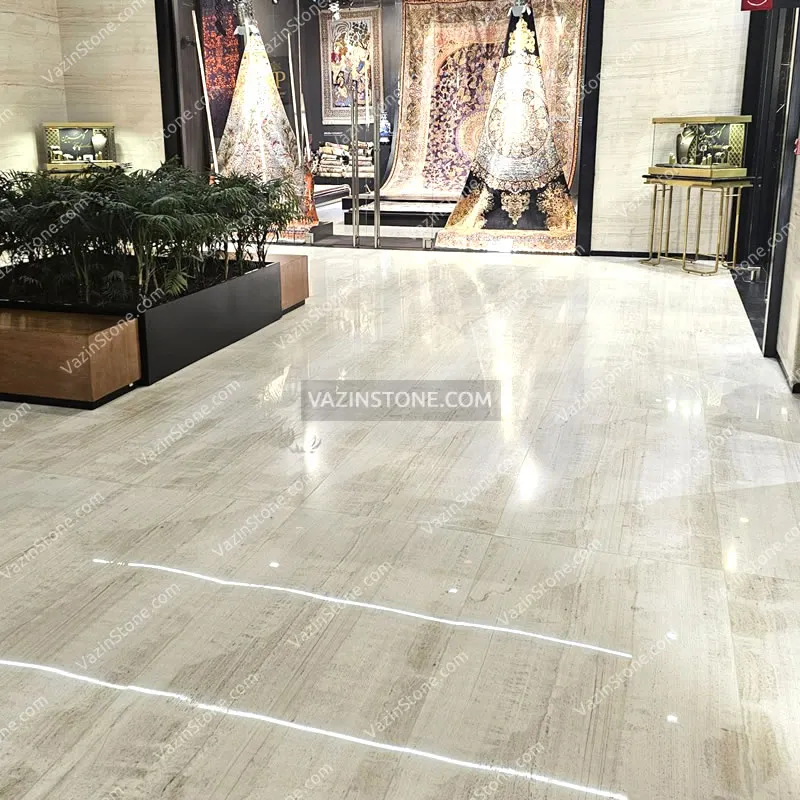
Marble tiles can be used for indoor floor areas, living rooms, and other rooms. In this regard, we can use light and bone colors of Dehbid stones (known as Crema Marfil Marble), Abadeh waveless marble, crystal marble, and other types of marble stone.
You can also use marble slabs in book-matched and four-matched patterns for floors, creating a highly elegant and visually striking effect in the space.
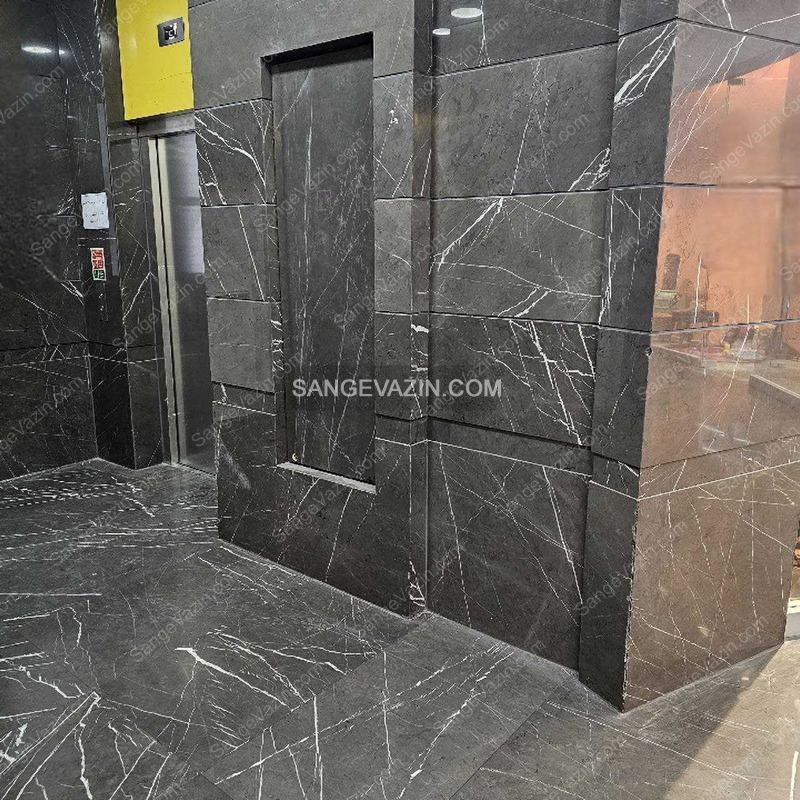
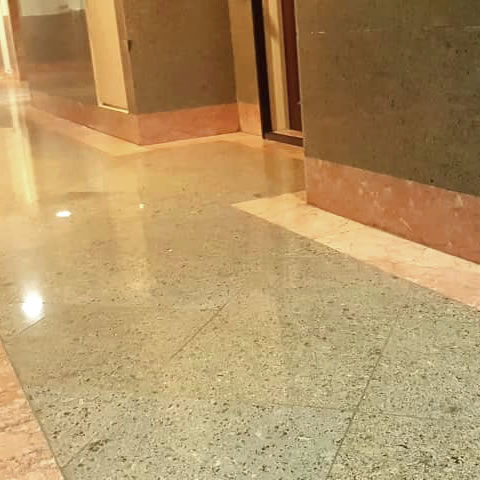
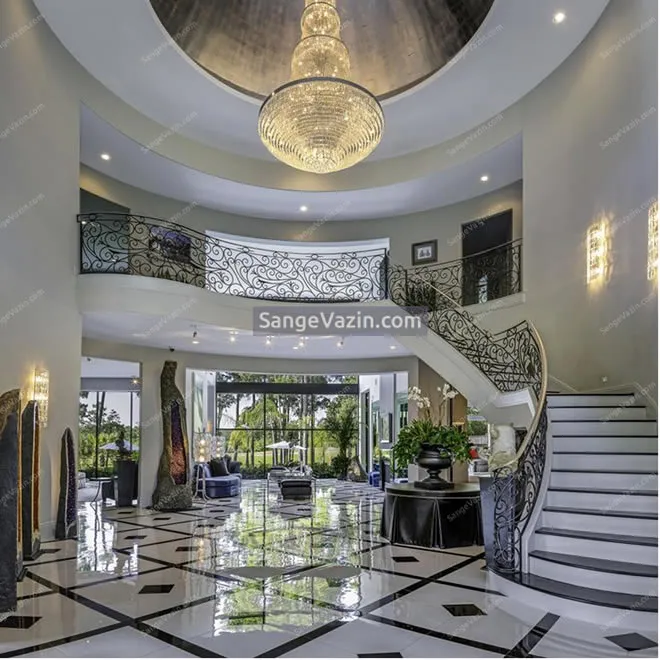
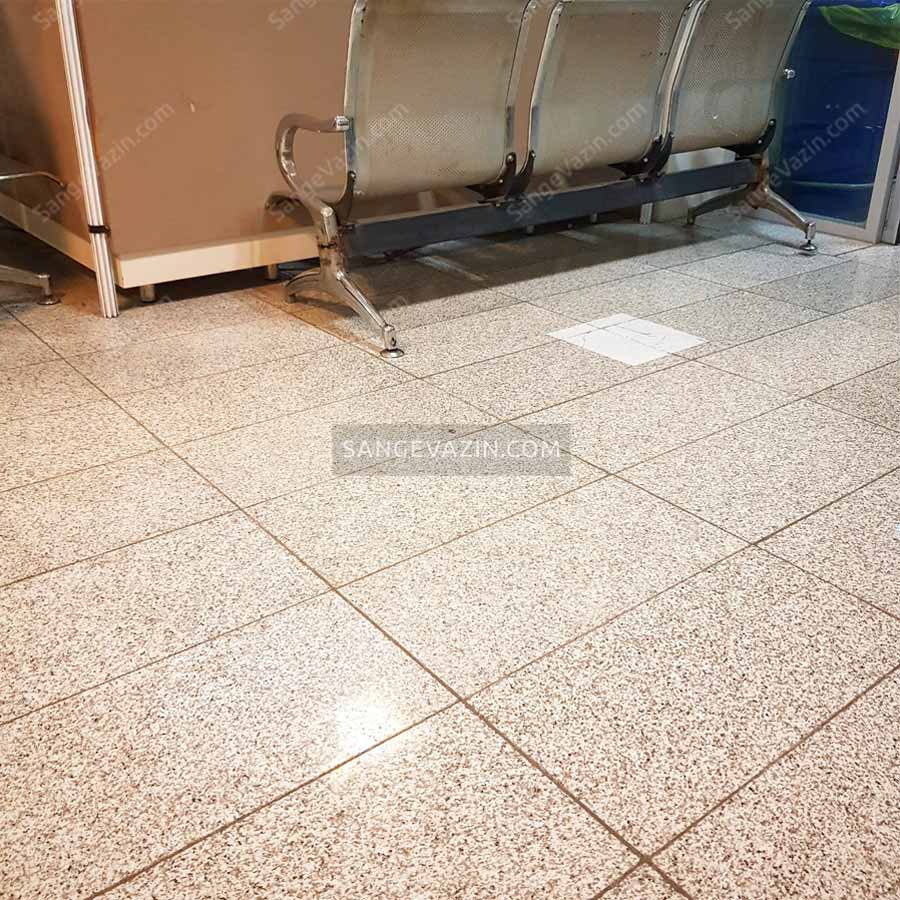
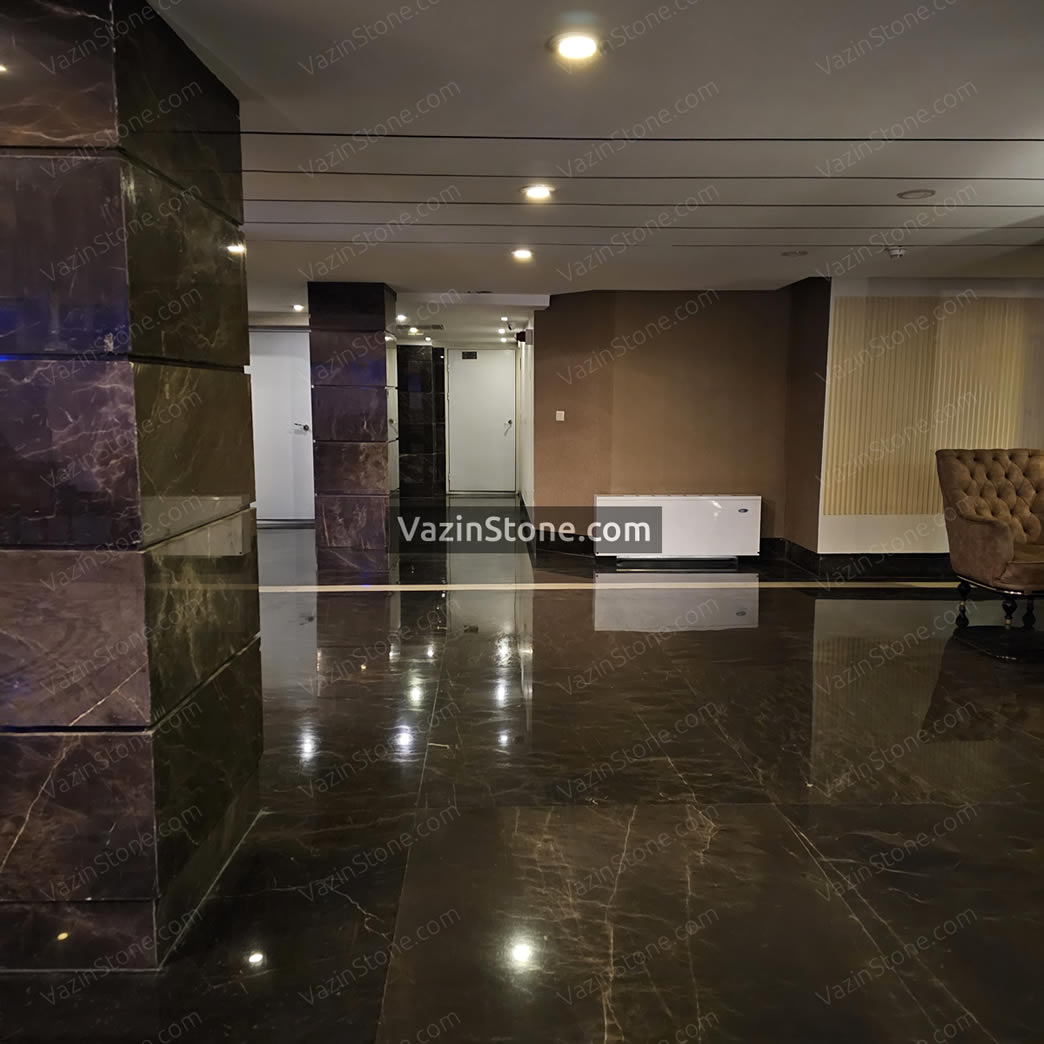
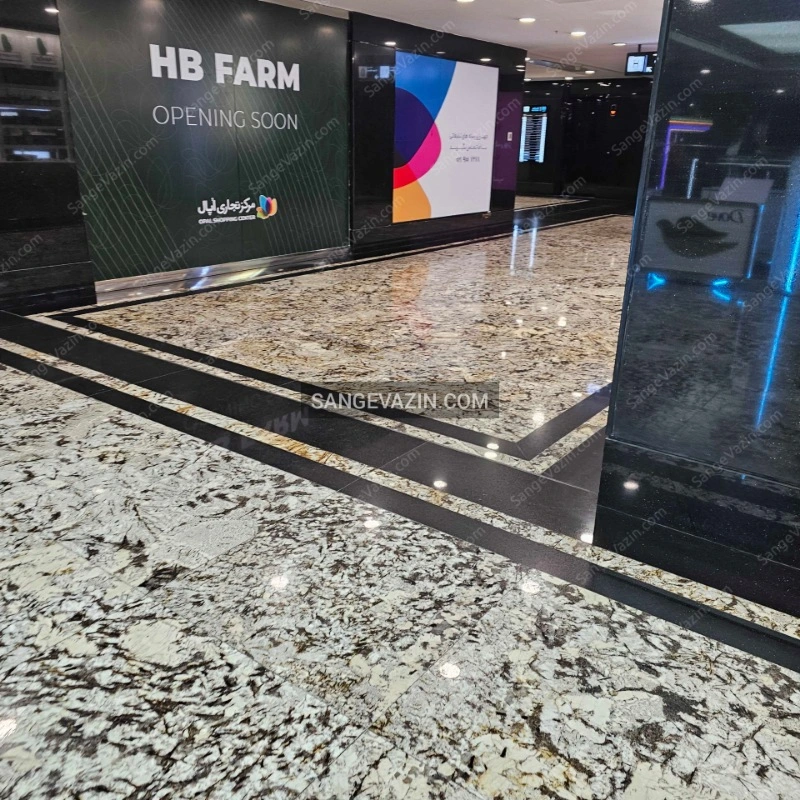
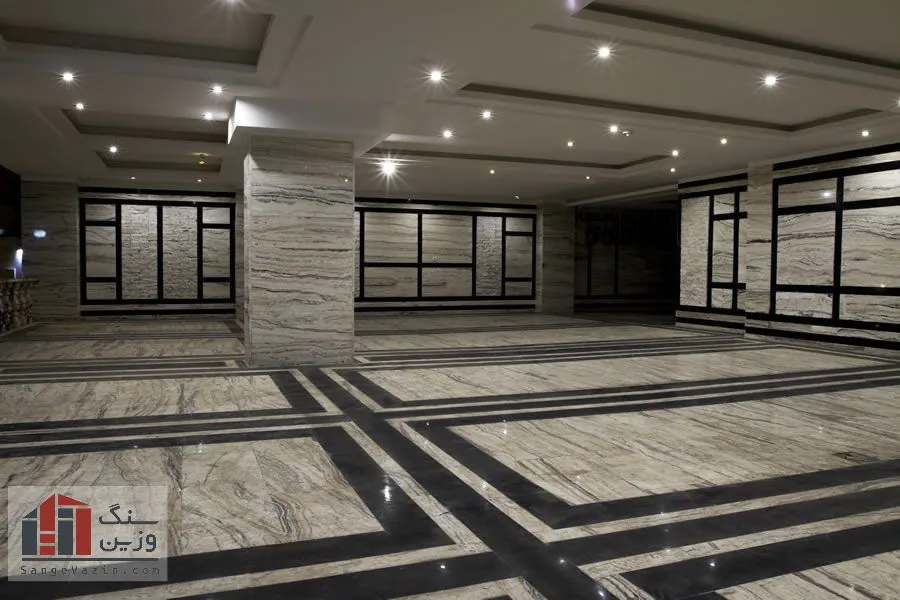
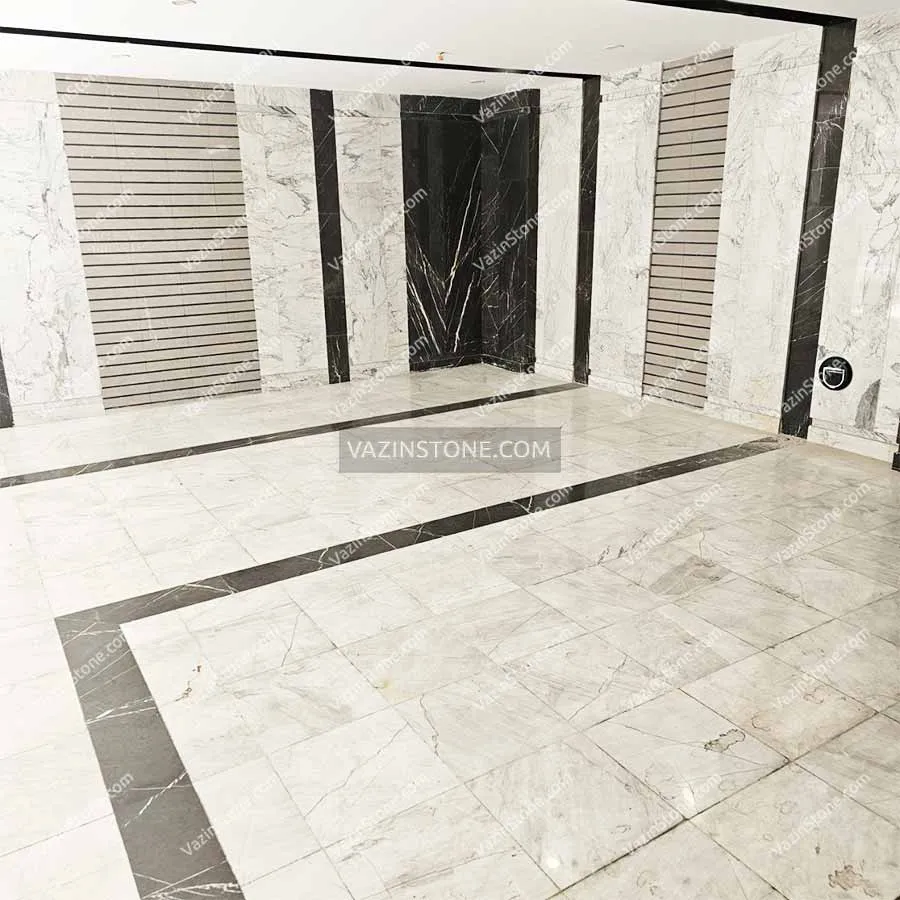
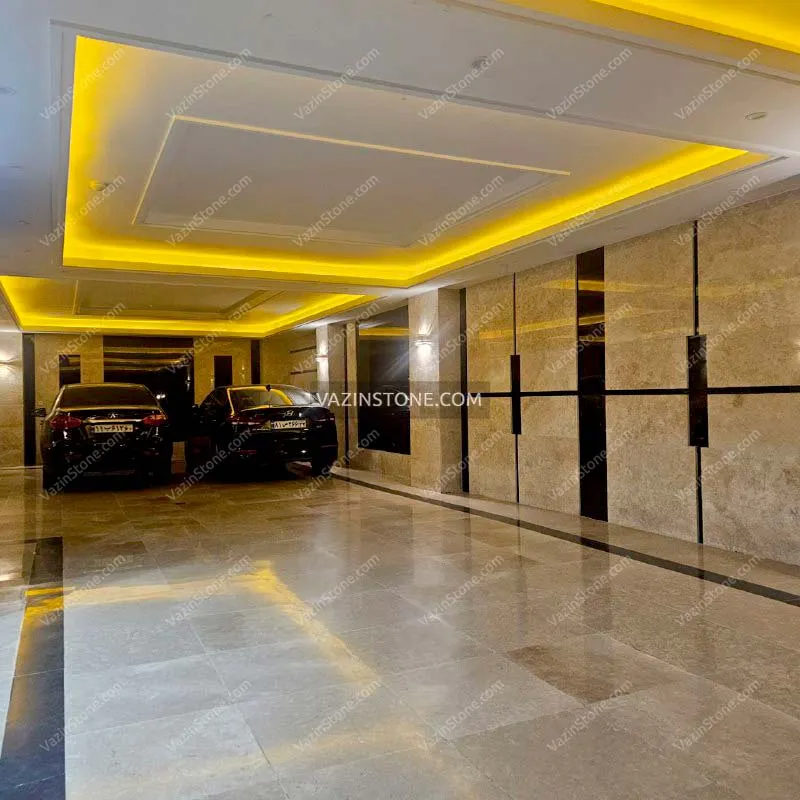
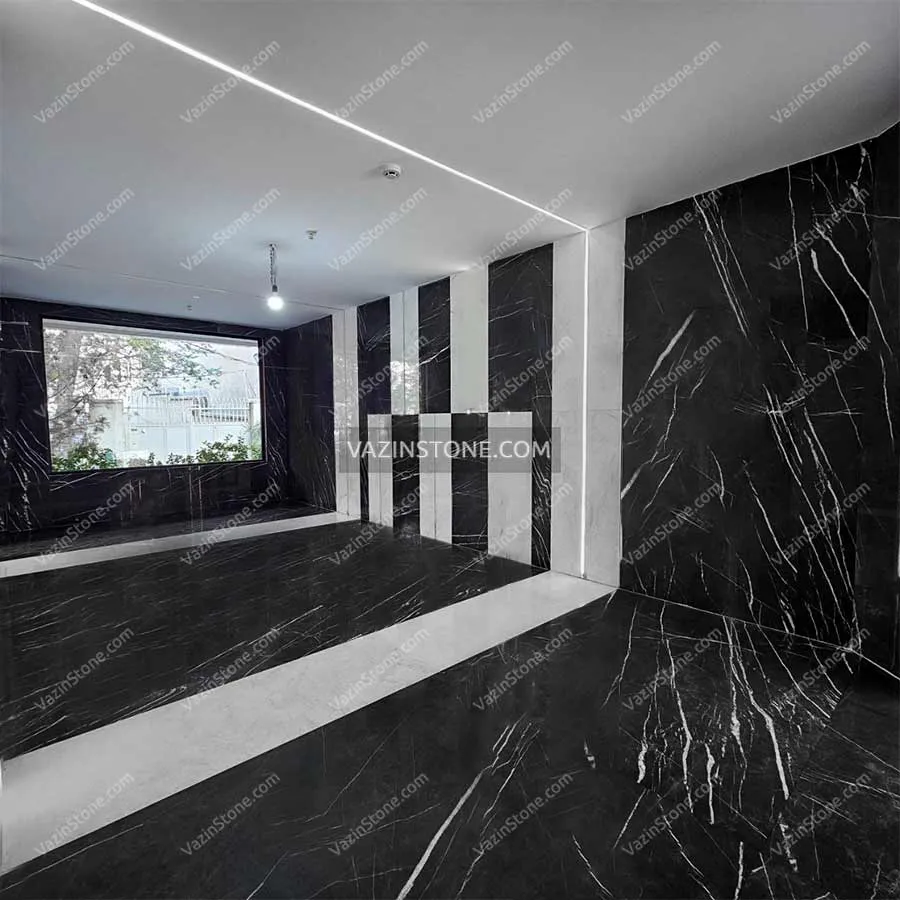
For public spaces, it should be noted that a stone with a surface more resistant to scratches should be used due to more traffic than inside the houses. It is recommended to use granite in the parking lots. In hallways and lobbies, marble and granite can be good choices.
Another public space in which the choice of stone is of special importance is the floor stone of the elevator.
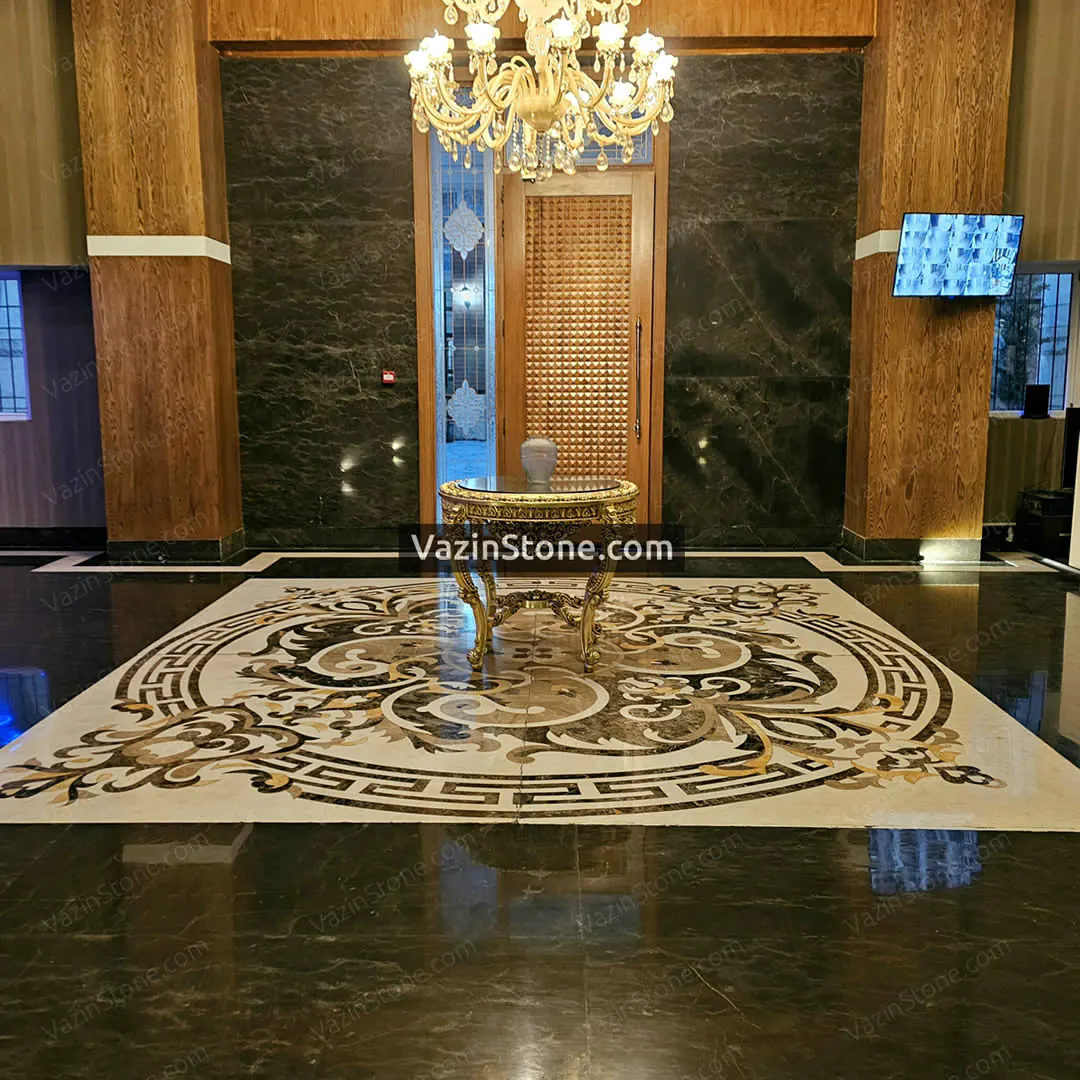
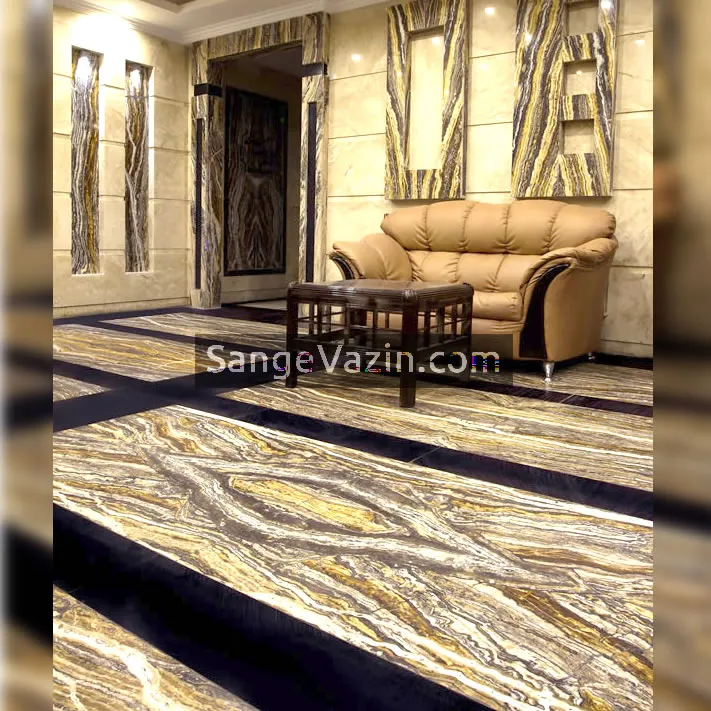
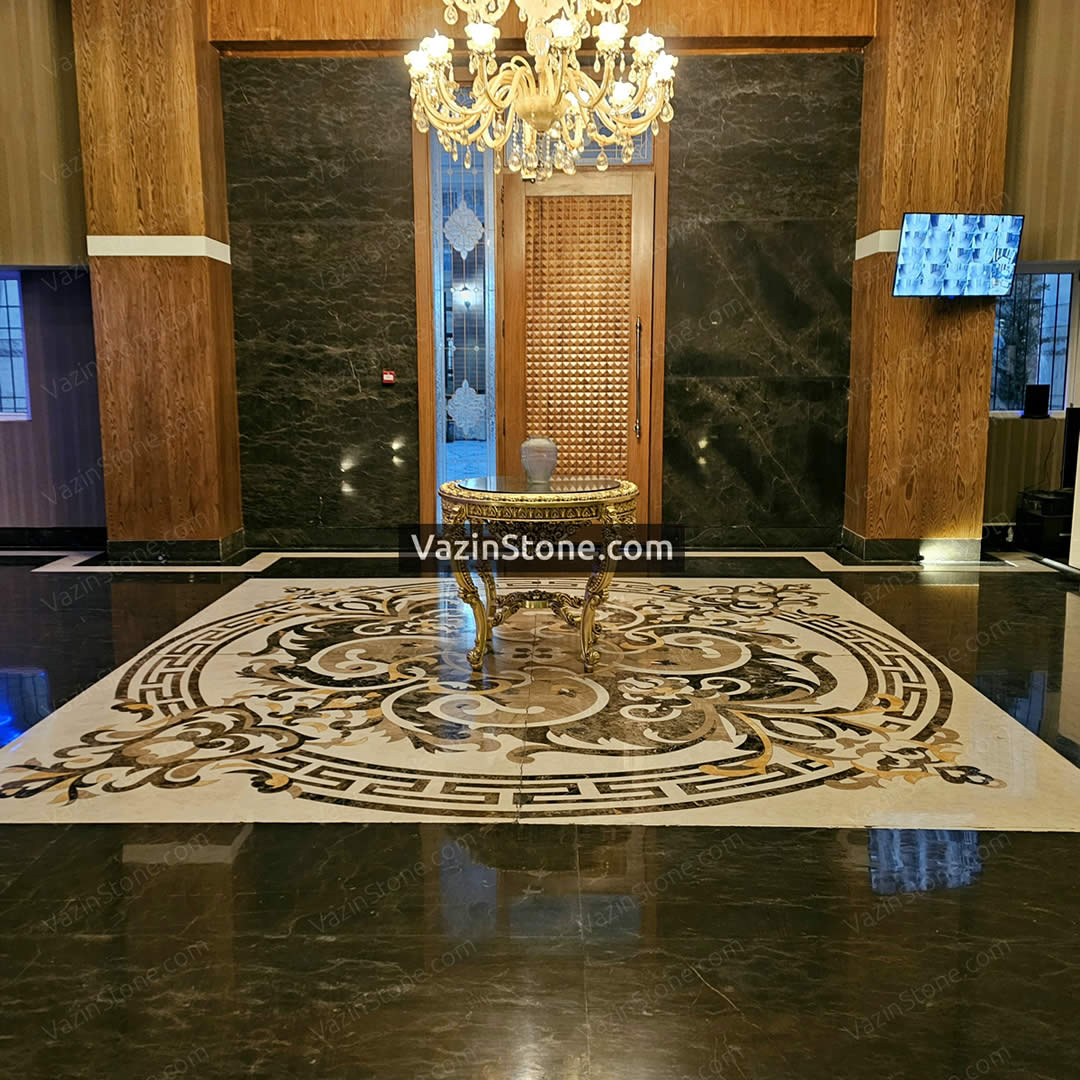
Stone marquetries are also commonly used in floors, particularly in lobbies and residential spaces. Since stone mosaics are available in a wide variety of patterns, including floral, Versace, and Islamic arabesque designs, they are also commonly known as “floor stone floral designs” or “patterned stone.” For more information, please refer to the link below.
Types of Stones for Building Floors
Travertine, marble, granite, onyx stone, Limestone, Traonyx, and Sandstone can be used in building floors. Onyx is not used as a floor stone very often due to its high price and sensitivity to scratches and stains. In this section, we will introduce you to three examples of the most important floor stones suitable for use in indoor and outdoor floors:
Marble Floor Stone:
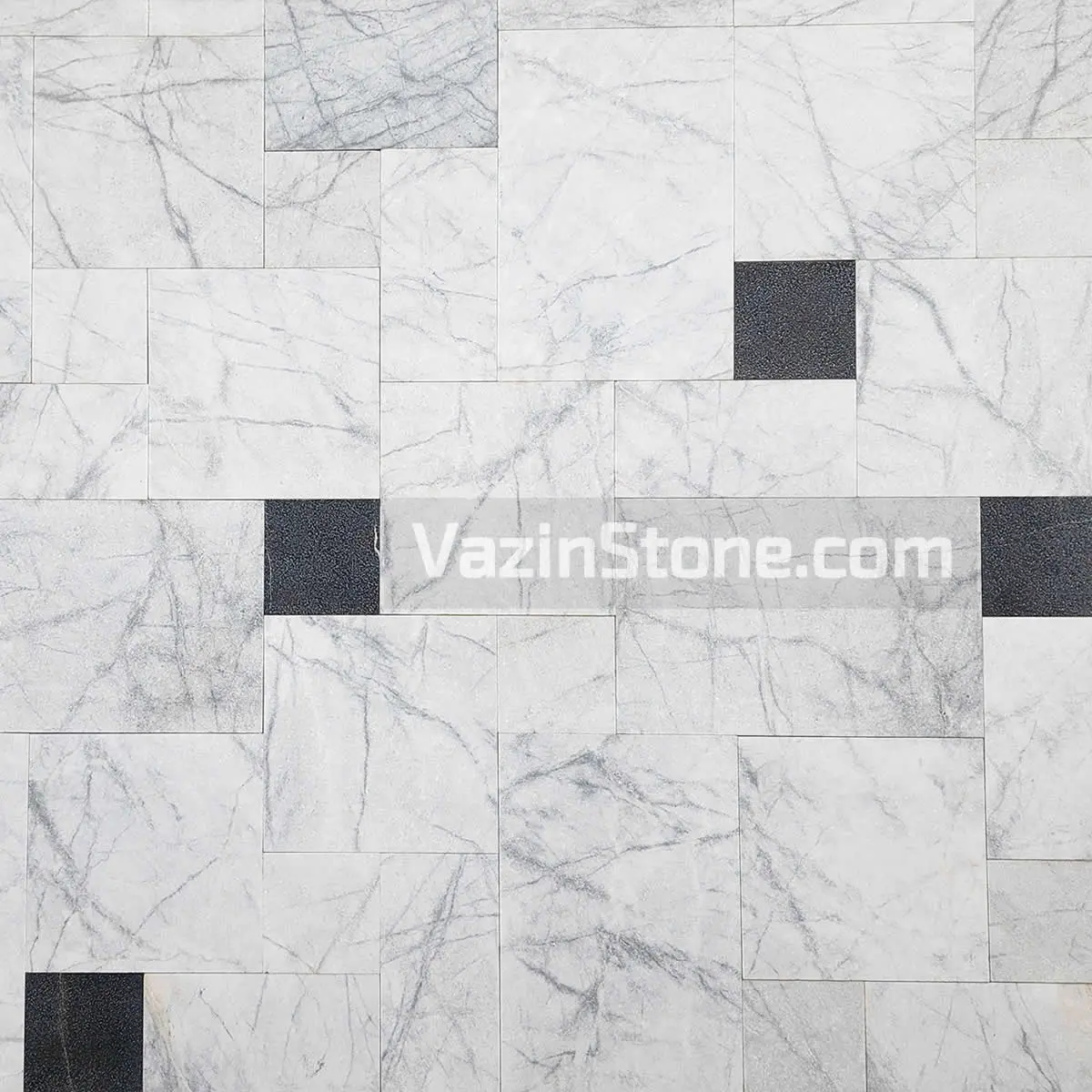
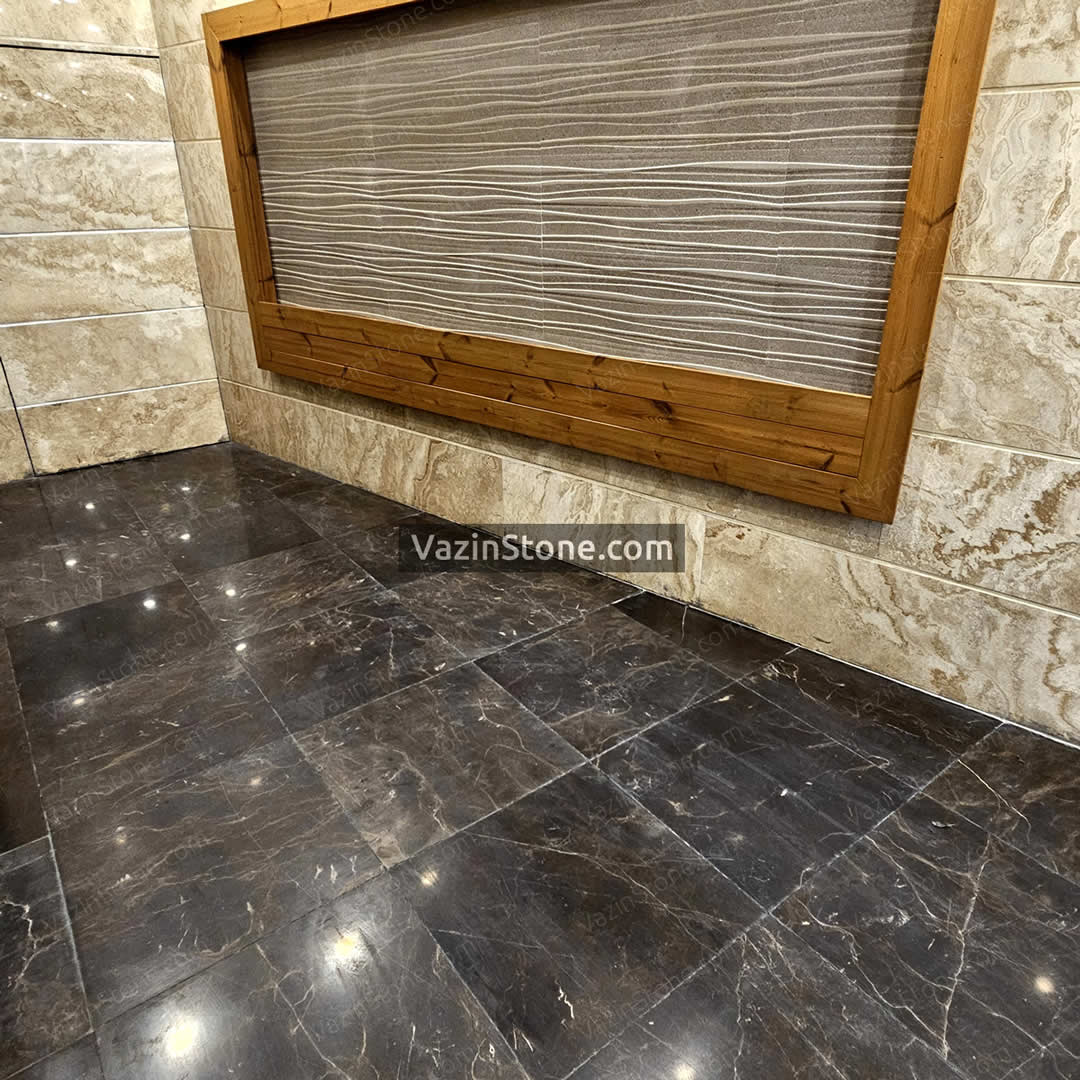
One of the most common materials used in interior floor stone is marble. Once it has the right thickness and processing, this stone will be one of the best and most standard options for floor covering because it has the strength and beauty to be used on the floor at a reasonable price.
Travertine Floor Stone :
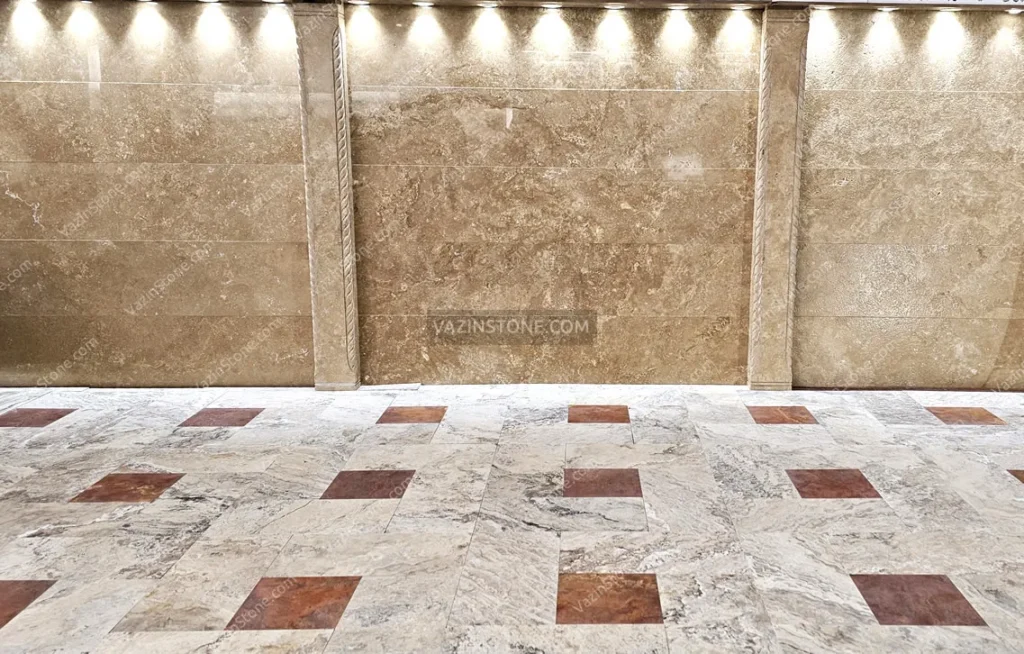
The use of travertine for floor stone is also relatively common. However, we should know that this stone is lower in hardness than marble. Travertine is used for floor covering as a tile with a thickness of 2 to 3 cm and as a paving stone with a thickness of 3 to 6 cm. This stone is generally used for facades.
Granite Floor Stone:
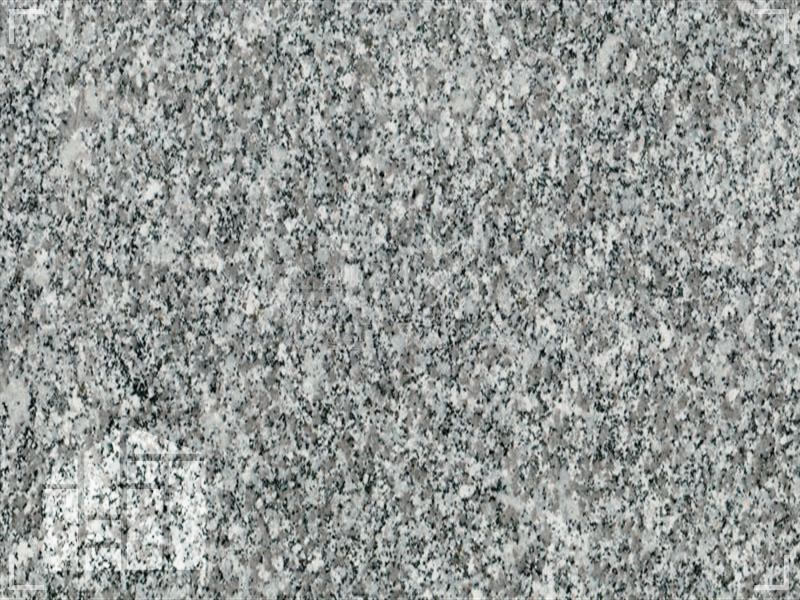
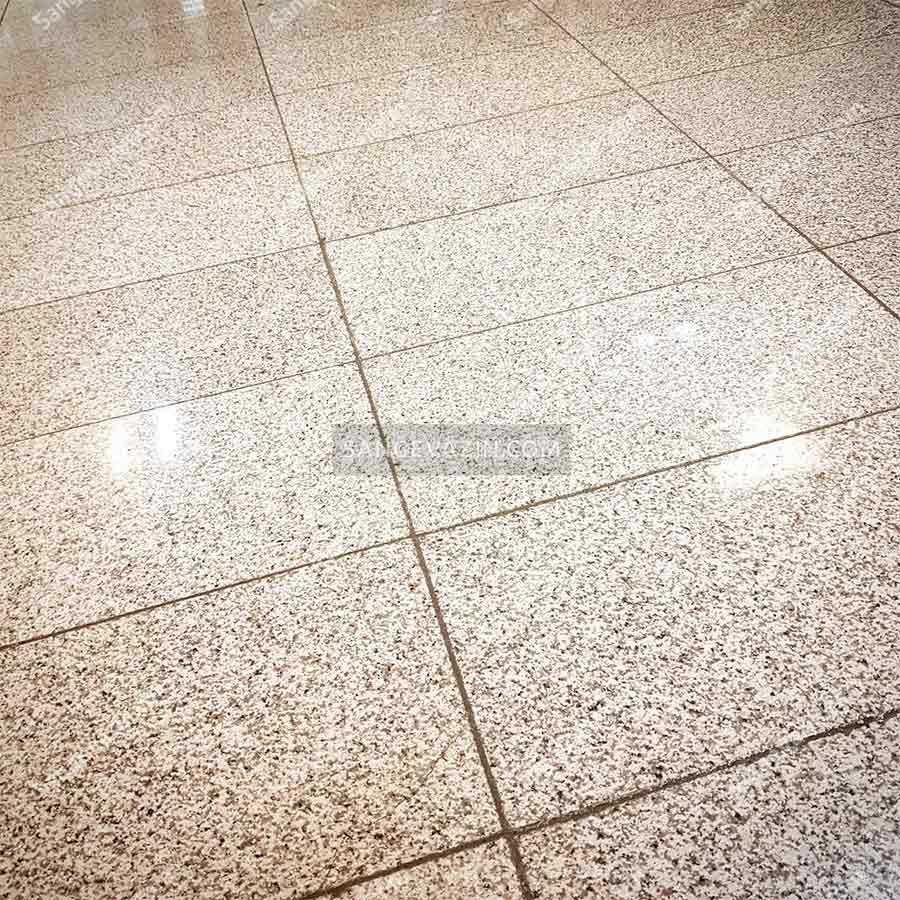
Granite is a highly durable stone due to its resistance to weathering and impact. It will be suitable for indoor and outdoor spaces with high traffic. Granite can have a polished surface finish. Flame sandblasting can be used to increase friction and surface traction. This treatment is recommended when granite is used outdoors.
Stone for Different Uses
Note 1: Different uses, such as residential, hospitals, chemical laboratories, or industrial workshops, have unique features. For example, the amount of traffic in the hospital is very high. In an industrial workshop, there is a possibility of heavy objects falling or spilling acids and oils on the floor.
All these factors and features make it necessary to choose the proper type of floor stone for each of these uses. As the first and most important part of a building, the floor of the building is directly related to human activities. In each of the mentioned uses, stones with high resistance and a low percentage of water absorption should be used on the floor of the building.
Note 2: In general, one of the most prominent stones in the interior and exterior floor of a building is its cold nature compared to other similar materials. Therefore, in warm climates, this material is used to help keep indoor spaces cool, while its application in colder regions requires the use of various heating systems to warm the building’s floor.
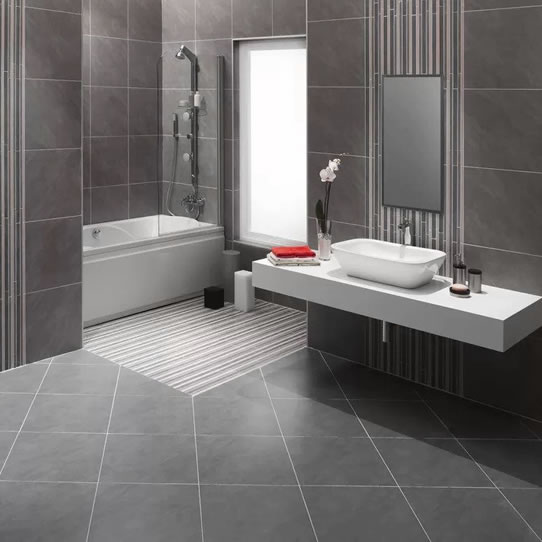
Note 3: Generally, polished and slippery stones are not used in areas such as kitchens, bathrooms, and restrooms that are directly exposed to water and moisture. Once the floor becomes wet, these surfaces can cause people to slip and fall, and it is also difficult to walk comfortably barefoot on this type of slippery stone.
Steps for Ordering & Purchasing Floor Stone
- Calculating the Floor Stone Quantity: Determine the exact area of the space to calculate the amount of stone required for the project.
- Choosing Your Preferred Stone: Select the floor stone based on its color, design, material, durability, and price to suit the intended space.
- Placing an Order: Once you have made your final selection, place your order through the website or by contacting the sales team.
- Reviewing the Pro Forma Invoice: Review the pro forma invoice sent to you and, upon approval, pay the full amount stated on the invoice for the floor stone purchase.
- Preparation and Shipping: To prevent any damage during transportation, the stones will be carefully prepared and packaged before being shipped on the scheduled date.
What is the best stone for building floors?
Choosing the best floor stone depends on where it will be used. For interior spaces, marble and crystal marble stones are generally suitable options, while granite, basalt, and other weather-resistant stones are recommended for outdoor areas.
Is granite suitable for outdoor floor areas?
Yes, granite is one of the best options for outdoor floor areas, walkways, and high-traffic areas, as it offers excellent resistance to abrasion, impact, moisture, and weather conditions.
How is the price of building floor stone calculated?
The price of floor stone depends on factors such as the type of stone, dimensions and thickness, processing quality, abrasion resistance, water absorption rate, and the presence of an epoxy mesh on the back of the stone.
What type of stone should we use for a living room floor?
Light-colored marble, crystal marble, and book-matched and four-matched slabs are commonly chosen for living room floors, as they add a luxurious and elegant look to interior spaces.
What type of stone is more suitable for a parking area?
For parking areas, it is better to use granite or stones with high compressive and abrasion resistance to ensure sufficient durability against vehicle weight and continuous traffic.
Why is the use of polished stone not recommended in bathrooms and restrooms?
Polished surfaces become slippery when wet, increasing the risk of slipping. For these spaces, it is better to use stones with an anti-slip finish or a textured surface.
What is the difference between interior and exterior floor stone?
Interior floor stone focuses more on aesthetics, color, and design, while exterior floor stone must also offer adequate resistance to frost, sunlight, moisture, abrasion, and heavy foot traffic.
How much does floor stone cost?
The price of building floor stone depends on the type of stone, dimensions, thickness, processing quality, and its technical characteristics. The price range (Vazin Stone), based on the latest update (September 2026), for various types of floor stone is as follows:
Marble floor stone price: $7 to $15 per square meter.
Crystal marble floor stone price: $13 to $65 per square meter.
Granite floor stone price: $8 to $390 per square meter.