Building Stone Cutting Types
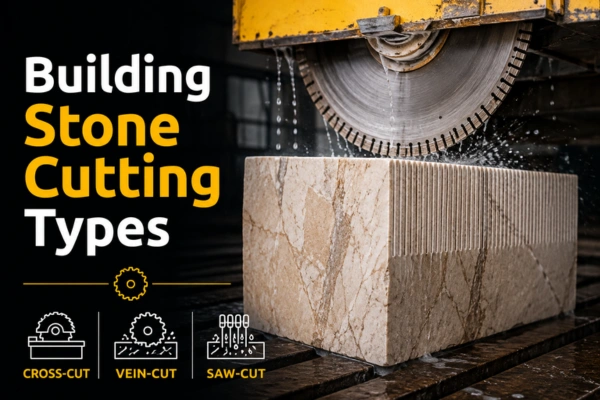
When stone is extracted from a quarry, it enters the factory in the form of large, raw blocks known as stone blocks, where the stone cutting process begins. Depending on the type of factory, the machinery used, and the type of stone, these blocks are cut using one of three methods: cross-cut, vein-cut, and saw-cut. Each of these stone-cutting methods has its own unique characteristics, advantages, and limitations. Choosing the right cutting method can significantly impact the final stone quality, material waste, production costs, and even the appearance and uniformity of the stone. In the following sections, we will examine all three stone-cutting methods in detail.
Table of Contents
Cross-Cut Of Building Stones
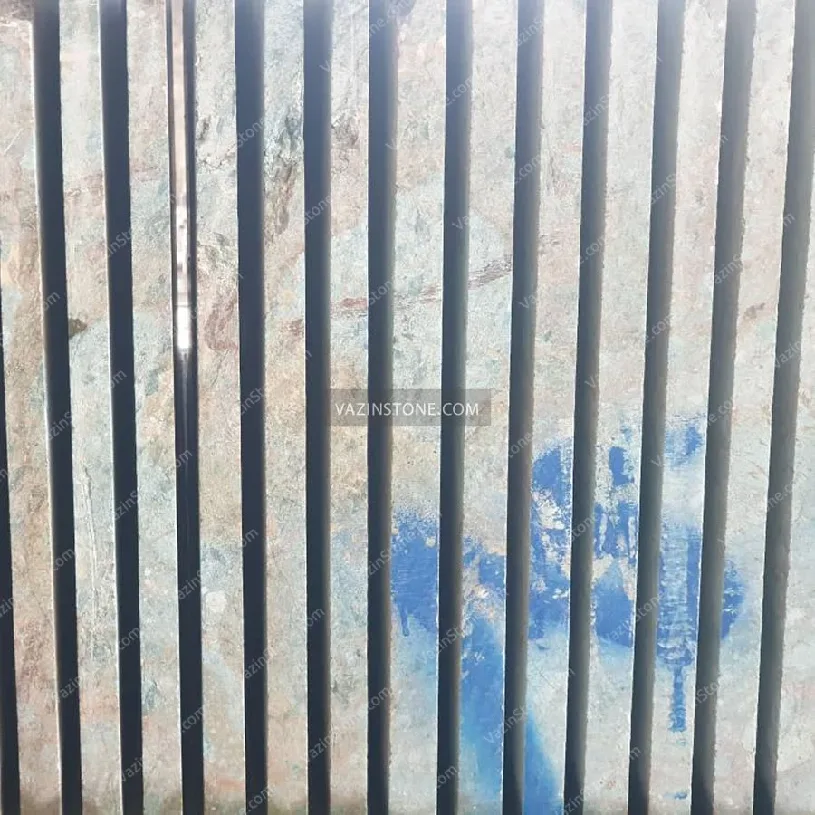
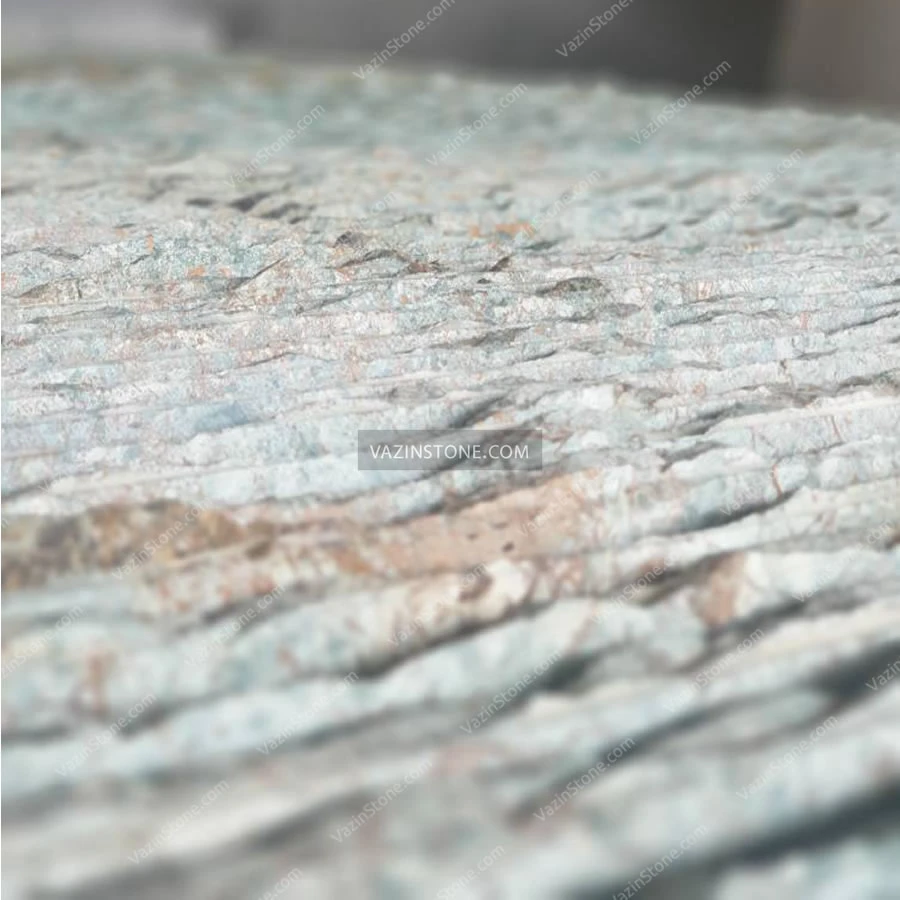
Cross-cut Processing is one of the oldest stone-cutting methods. Today, it is mainly used in traditional stone-processing facilities and for the production of crystal marble varieties such as Neyriz crystal marble and Azna crystal marble.
Process Of Stone Cross-Cutting
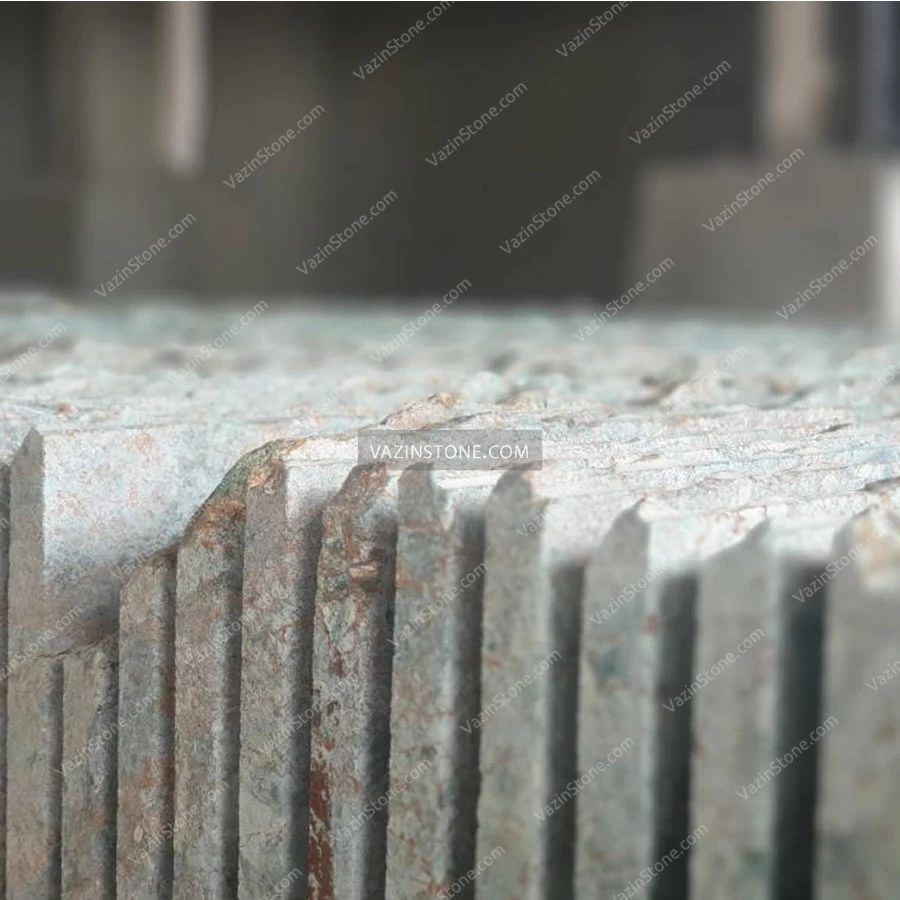
In this stone-cutting method, the stone block is first cut into blocks with a thickness of approximately 4 cm. These blocks are then cut again through the center, resulting in two separate pieces. The machine operates with two rotating circular blades, through which the stone passes, producing slabs with a final thickness of around 2 cm (typically 1.6 cm). Cross-cut machines generally support block widths of up to 40 cm.
Disadvantages Of Stone Cross-Cutting
- High material waste and a greater risk of breakage.
- Back-surface unevenness due to incomplete blade overlap.
- Limited cutting width of up to 40 cm.
Vein-Cut Of Building Stone
Vein-cutting is one of the most widely used stone-processing methods in the industry. Compared to cross-cut processing, this method is more advanced and is typically used for harder stones such as granite and marble varieties, including Abadeh Marble, Salsali Marble, and Adavi Marble.
Stone Vein-Cutting Processing
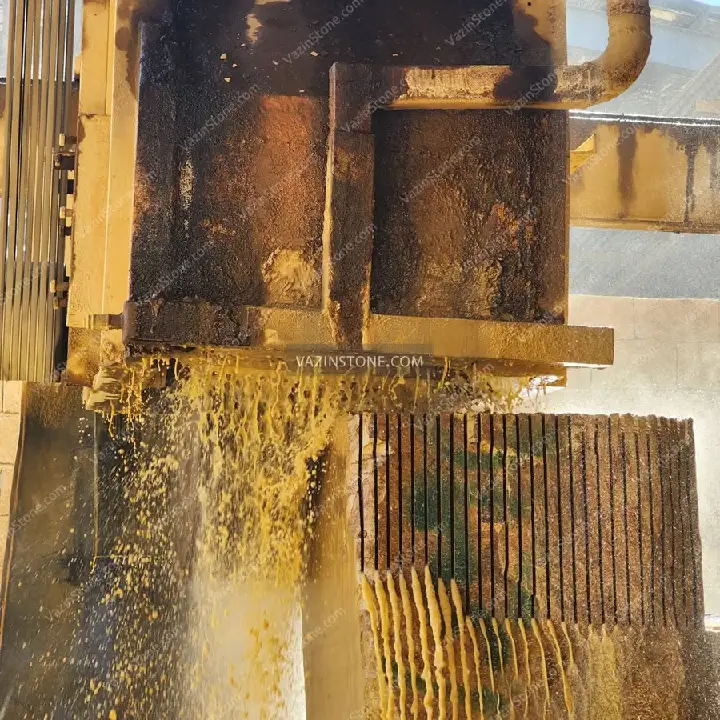
In this machine, a large circular milling cutter with a diameter of 120 or 123 cm starts rotating. The main blade of the machine is approximately 45 cm. Vein-cutting operates in two modes:
- Single-blade mode: mainly used for cutting stone blocks.
- Thirty-Blade mode: 30 blades pass through the stone block(for a 40 cm width).
For cutting widths greater than 40 cm, a milling cutter with a 160 cm diameter is used, capable of cutting up to a maximum width of 75 cm. In this method, in addition to the upper blades, a lower disc also engages in the cutting process.
Since stone blocks are irregular on one side, after the initial cut, they pass through the vein-cutting machine. In this machine, one side is guided by a fixed flat wall while the other side is cut by a disc, ensuring the stone is accurately set to a precise 40 cm width with a perfectly straight finish.
Disadvantages Of Stone Vein-Cutting
- Cutting width of the primary cut: 40 cm to max. 75 cm.
- Low quality and less cutting precision than the saw-cutting method
Read the following article:
Saw-Cut Of Building Stone
The saw-cut process is the most advanced and precise stone cutting method. Large factories use this method to cut their first-grade stones, such as the Crema Marfil marble.
Stone Saw-Cutting Process
In this method, an advanced machine is used that is equipped with a saw containing approximately 70 to 80 long, sharp diamond-coated blades. These blades gradually descend through the stone block, cutting approximately 0.5 cm every two minutes.
In the sawing process, for stones that have cracks or are likely to break during cutting, the “wrapping” method is used to prevent cracking and fragmentation of the stone block. The block is wrapped with fiberglass and epoxy to keep it firmly stabilized, preventing the surrounding areas from breaking during cutting and ensuring that intact slabs are produced. The green or blue colors seen on the edges of the slabs are actually epoxy materials applied to preserve and stabilize the slabs during processing.
Benefits of Stone Saw-Cutting Method
- Ideal thickness: The stone thickness in this method ranges between 1.8 and 2 cm
- Unlimited height: This machine can produce slabs with a height of 170 cm and above, with no height limitation.
- Extremely smooth surface: The polishing and finishing quality of the saw-cut method is significantly higher.
Final Summary & Comparison
| Stone Cutting Method | Features & Explanations | Pros | Cons | Result | Usage |
| Cross-cut | Oldest Method | 1. Widely used in many factories 2. Lower cost compared to advanced methods | 1. High material waste 2. Uneven back surface 3. Limited cutting width (up to 40 cm) | Output slabs with a thickness of 1.6 cm and a width of 40 cm | Crystal marbles like( Azna and Neyriz) |
| Vein-cut | Most Common Method | 1. Moderate quality 2. More cost-effective than the saw-cut method | 1. Lower quality than the saw-cut method 2. Limited cutting width (up to 75 cm) | Output stones with a thickness of 1.5–1.6 cm and a width of 40–75 cm | Marble stones( Salsali and Abade), Granite stones |
| Saw-cut | Most advanced method | 1. Superior quality 2. Very low material waste 3. No height limitations | Higher initial equipment cost | Large stone slabs with a thickness of 1.8 to 2 cm | Luxurious stones (like Crema Marfil marble) |
Finally, the choice of each of these three stone cutting methods depends on the type of stone, the level of factory investment, the target market, and the desired final quality. Although the saw-cut method delivers the highest quality, the other methods are still widely used in the stone industry.
Publish on:
September 15, 2026
Updated on:
September 15, 2026